Saturday, August 13, 2022

Some Cartoons for Saturday Morning #188


 Hello my friends and happy Saturday morning. Once again it is time for some classic cartoons. 

Today's cartoon selection begins with Bugs Bunny in Any Bonds Today (1942). During World War 2, Bugs Bunny was at the height of his popularity. Many historians have stated that they think this is hugely because of two reasons. One of them is that Bugs reflects how America viewed itself at this time. As a nation that didn't want war, but when you messed with it you'd better watch out. This outlook did of course reflect the country during this time as America did not want to enter World War 2, until Pearl Harbor happened. The other reason is that these were not sweet, cute little cartoons and the world was not sweet and cute at they time. I think it is safe to say that another reason was that Bugs Bunny cartoons were very good. Because of this it seemed natural that Bugs would become a symbol of the U.S.A., therefore he was a great candidate to promote war bonds. Any Bonds Today was not released as a Looney Tunes or a Merrie Melodies short but rather as a standalone short. The film was directed by Bob Clampett, who directed many fantastic Looney Tunes cartoons and created Tweety and Beaky Buzzard. The song that is sung in this cartoon was written by Irving Berlin, of God Bless America and White Christmas fame. I do not know who all the animators on this film are, but (according to Devon Baxter on the comments section for Don M. Yowp's blog) the dancing scene was animated by Virgil Ross, and Bugs throwing out war bonds and doing his Al Jolson impression were animated by Robert McKimson.


Now for the third Hoot Kloot film, The Shoe Must Go On! (1973).


Next comes a great early Mickey Mouse cartoon, Barnyard Battle (1929). This cartoon takes place back when Mickey was a simple country mouse. One thing I love about the early Mickey cartoons is these barnyard settings. They provide the films with a good sense of atmosphere and are full of gags that come from the setting. Like the Our Gang kids these cartoon characters make all sorts of inventions out of simple barnyard objects. This gives the films a charm and creativity that the later Mickey's never fully captured. This was also before Walt came up with the idea to do away with some of the more cartoony gags where characters bodies could do impossible things. While I love many of the Disney studio's shorts of the 1940's and 50's I wish these gags didn't fade away because they are a lot of fun. This cartoon features Mickey going to war with a bunch of cats (that all look like Pete) and in many ways feels like a follow-up to such previous Disney war cartoons as Oswald's Great Guns (1927) and the Alice Comedy, Alice's Little Parade (1926). In fact many of these gags would have felt right at home in those pre-Mickey cartoons. This movie would be banned in Germany due to the cat's helmets resembling German army helmets. 


Next we join The Pink Panther in Pinto Pink (1967). The story and some of the gags in this film would later be reused in the made for TV Daffy Duck cartoon, Daffy Flies North (1980). 


Now for a commercial break. 


Now for a silent movie starring Felix the Cat, The Smoke Screen (1928).


Next we see Sylvester in A Mouse Divided (1953). About Sylvester Looney Tunes director, Robert McKimson would state, "He had a real juicy voice, you know. He's the closest I'd say, that Mel [voice actor Mel Blanc] would come to have an original voice and then fitting the character to it. Of course Daffy Duck's voice is the same as Sylvester, only sped. So I guess when Mel recorded Daffy, it sounded like Sylvester."


Next is the Fleischer Brothers Superman cartoon, Billion Dollar Limited (1942). Paramount (the distributors of the Fleischer cartoons) brought the screen rights to the famous superhero in 1940, and gave it to the Fleischers to make a cartoon series out of. The studio was not quite sure about this venture after all animated cartoons had not yet done anything similar to a pure action film. They tried to dissuade Paramount by asking for four times the usual budget for one of the studio's cartoon shorts ($100,000) thinking Paramount would refuse. Shockingly they accepted and the series began production. Voicing Superman himself was Bud Collyer, who was already the character's voice on radio. The famous lines "Look up in the sky- it's a bird - no, it's a plane - no its superman" made their first appearance in Superman lore with these cartoons. 


Today's cartoon selection ends with one of UB Iwerks' Comicolor cartoons, Aladdin and the Wonderful Lamp (1934). These short films were one of many cartoon series of the era to resemble Disney's Silly Symphonies films. These movies though are of special interest to Disney fans since UB Iwerks had been Walt's right hand man in the 1920's, and would later return to Disney to help create the special effects in such feature films as Song of the South (1946), 20,000 Leagues Under the Sea (1953), The Parent Trap (1961) and Mary Poppins (1964).


Thanks for joining me. Come back next week for more animated treasures. Until then may all your tunes be looney and your melodies merry. 

Resources Used

The 50 Greatest Cartoons Edited by Jerry Beck

Of Mice and Magic: A History of the American Animated Cartoon by Leonard Maltin

I Tawt I Taw a Puddy Tat: Fifty Years of Sylvester and Tweety by Jerry Beck.

Walt Disney’s Mickey Mouse: The Ultimate History by David Gerstein and J.B. Kaufman. 

https://tralfaz.blogspot.com/2016/06/any-bonds-today.html


Friday, August 12, 2022

Movie Review: Inu-oh


Michael's Movie Grade: A-

A wonderfully unique anime feature film.

Those of you who are familiar with Masaaki Yuasa's previous movies (The Night Is Short, Walk on Girl (2017), Lu Over the Wall (2017), Ride Your Wave (2019)) know they will be in for a visual treat watching this film. This movie does not let down in this department at all. This film is simply lovely to look at. Every moment is dripping in pure visual delight. This is especially true of the musical numbers. Visually these scenes are as large scale and elaborate as anything Busby Berkley ever did. The numbers also take pure advantage of the fact that this is animation and in animation you can do anything. There is such a wealth of creative ideas in these scenes that give this movie a truly unique and wonderful feel. Speaking of the musical numbers the music is excellent. While normally I am not the biggest fan of modern music being used in period films, I feel it works exceptionally well here. In the fairytale atmosphere of this movie, this music doesn't feel out of place. Plus how many characters state they never heard anything like it before, helps make this feel like it belongs in the movie. The songs are also simply a lot of fun and I could see a lot of people being fans of these songs even if they weren't used in a movie. Yet this film is not simply a matter of style over substance. The film also benefits from a very smart script by Akiko Nogi (who has written for live action movies and TV shows, but for whom this is his animation debut). This script gives an intelligent look at how parts of our history disappear and get forgotten. 

This is a must see for all anime fans. 

Movie Review: Summering


Michael’s Movie Grade: B

A well made film about growing up. 


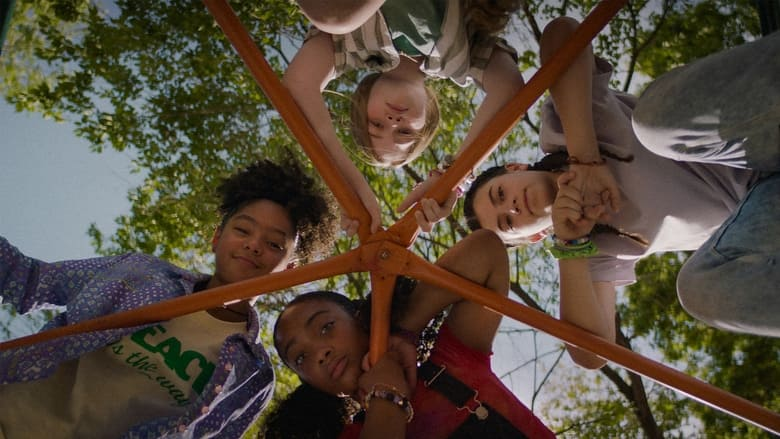
This film in some ways functions as a modern day all girls version of Stand By Me with a group of pre-teen girls discovering a dead body. The mystery of what happened to this dead man though is not the main point of the movie. Instead it is a film about growing up and a fear of loss. The presence of this dead body brings the girl’s fears and anxieties to the forefront. Though many of us romanticize this part of our childhood, we forget just how hard it could be at times. The age between being a small kid and being a teenager is a truly awkward one, where you constantly feel out of place and don't quite know where you belong. These girls simply want to be heard and taken seriously, yet because they are still very much kids this can be quite difficult. This movie captures very well the complete awkwardness of this age and the fear that growing up may not be all you hoped it was. Yet this movie is also a celebration of friendship. Probably the best moments come from the little moments between the girls. Those of you who have listened to or remember how kids this age talk, will see just how well this movie captures the conversations between them. These scenes feel like listening to real kids talk (although let's be fair, kids this age have much fouler mouths then these characters do). They joke and make fun of each other, but they also completely open up to one another about everything in a way we grownups too often feel unable to.   

This movie certainly has its faults though. The ending feels very abrupt, and it feels like there is still much of the story left to tell. While this may be intentional, it doesn't fully work. There are also moments when this film feels quite rushed (including the aforementioned ending). The adults are not as interesting as the kids and whenever the focus changes to the adults, the film gets a little dull. The opening narration also feels a little too heavy handed and kind of nails the point of the movie in too hard. While some of these faults might turn some people off, I feel the charm of the rest of the film easily overcomes this.

Despite its faults, this movie does a great job of capturing what it is like to be the age of these characters.    

Thursday, August 11, 2022

Overlooked Classics: Emma (1932)


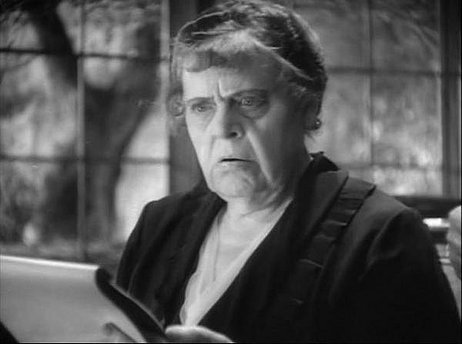
 It amazes me that Marie Dressler and so many of the films she appeared in are so forgotten today. From 1930 to her death in 1934, Marie was voted as the biggest box office drawl in Hollywood. She was not your typical Hollywood star, mostly because she was in her 60's at this time, but she was extremely popular with early 1930's audiences. One of her best performances was in the 1932 film Emma.


This film was directed by Clarence Brown, who had previously directed Marie in Anna Christie (1930, Greta Garbo's first talkie). Brown was a big director of the silent era directing such movies as Flesh and the Devil (1926), Kiki (1926), and The Trail of '98 (1928). He would continue to have a great career in the talkie era with The Yearling (1946), National Velvet (1944), and Conquest (1937), among many others.


In this film Marie plays a nanny named Emma, who is essentially a mother in all but name of the children. After the children grow up, she decides to take a trip to Niagara Falls. She is worried about leaving the family. The family's father (Jean Hersholt) decides to go with her and ends up asking Emma to marry her. The father passes away and leaves the money to Emma. His children are angry and want to sue Emma over this money. The exception to this is Ronnie (Richard Cromwell) who has a stronger connection to her than the other children.


This film also featured Myrna Loy in her first role for MGM. She was also working on two other films at this time and was very stressed. Marie told Myrna "Get your chin up, kid. You've got the whole world ahead of you." Helping Loy to gain back her confidence and put on a great performance. Loy had nothing but nice things to say about Marie Dressler in her autobiography Being and Becoming. She would go on to a great career at MGM especially with the classic Thin Man movie series. 

Emma is an amazing film. Marie Dressler's performance is near perfect, the script is great, the film is fantastically directed, and everything just works. The story is sentimental but is extremely effective and the sentiment never feels forced. This is a must watch movie, for all lovers of classic film.


The movie was a big success at the box office and Marie Dressler was nominated for an academy award for this film (though she didn't win).

Wednesday, August 10, 2022

Overlooked Classics: Music For Millions (1944)


 In 1944 Margaret O'Brien won a special Academy Award for Outstanding Child Actress. One look at her output that year and it is not hard to see why. After all it was the year she played her most famous role, as Tootie in Meet Me in St. Louis. That same year she also acted in Jene Eyre, The Canterville Ghost, Lost Angel and this overlooked gem Music For Millions. There is little need to state that she plays a big hand in making this movie so delightful.

This movie also marks the first time she played sisters with June Allyson. They would later play sisters again in the 1949 film version of Little Women. Their chemistry is very apparent in this film, and in fact so was there chemistry off screen. The two became very close and June Allyson always kept a picture of little Margaret on her dresser. They had even more in common too. They were considered the best actresses at crying at this time and had earned the nickname "The Town Criers". Director Henry Koster (who is best remembered today for directing The Bishop's Wife (1947) and Harvey (1950)) even remembered Margaret O'Brien being able to control how much of her tears would be visible for the camera.

This film boasted another excellent team behind the camera as well. Henry Koster and producer Joe Pasternak. They had previously both helped save Universal from financial problems, with a series of successful musicals starring Deanna Durbin. This was the first film the team had made together after moving to MGM. It was also Koster's first MGM movie. However, it was Pasternak's sixth.

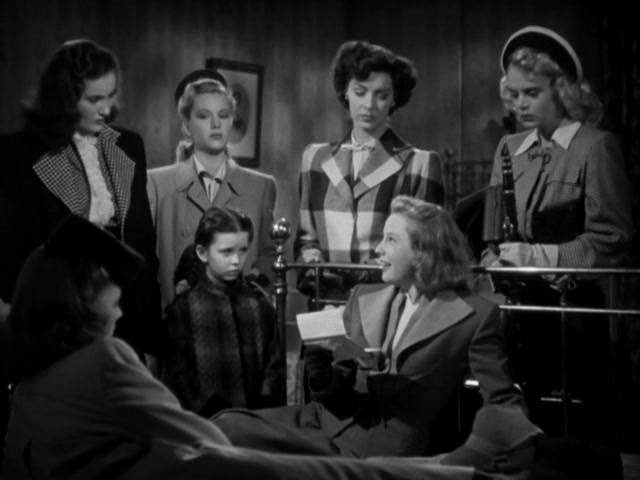
The story revolves around little Mike (Margaret O'Brien) visiting her sister Barbara (June Allyson). Barbara is a member of an orchestra and many of the women in that orchestra take Mike in. Meanwhile though Barbara is waiting for a letter from her husband (who is fighting in World War 2) but no letter comes. 

This film is a tearjerker, but it never feels forced. The storyline always feels real because the characters feel real. This is achieved through a great script (by Myles Connolly) and great performances from the whole cast.


The main stars of the film aren't the only ones who put on great performances. The whole cast does. However Jimmy Durante stands out here as being at his best. His slowly growing to love Mike is very heartwarming. One of the highlights of this film is him preforming a song number called Umbriago. His performance of this song is just dripping with pure energy and enjoyment of what he is doing. I don't see how anybody can not like this scene.


Adding to the musical fun is real life conductor and pianist José Iturbi. He and his orchestra help treat us to some great renditions of various classical music standards including an especially good finale of Handel's Messiah.


Overall this movie is a must see.

  Resources Used
http://www.tcm.com/tcmdb/title/2704/Music-for-Millions/articles.html

Tuesday, August 9, 2022

Overlooked Classics: Meet The Baron (1933)


Like how today movies get made based off TV Shows, back in the 1930's there were movies based off of radio shows. Meet the Baron was based off a comedy radio show about the fictional Baron Munchausen. Jack Pearl, the radio actor for the character was hired here to play the Baron (or at least someone who is believed to be the Baron) for the screen.


This film would be directed by Walter Lang. Walter Lang is a director who is mostly associated with musical films like State Fair (1945), The King and I (1956) There is No Business Like Show Business (1954). One of the writers for this film was Herman Mankiewicz, who is known by film fans today for co-writing Citizen Kane. One interesting thing in here is that there is a mule named Rosebud in this. I am not saying this film would have inspired any of Citizen Kane, but it is still an interesting tidbit. On top of this the film has a great cast including Jimmy Durante, Edna May Oliver and Zasu Pitts. 

However, what this film is most watched today for is that it includes a group soon to be known as The Three Stooges. At this time they were known as Ted Healy and his Stooges. Ted Healy was originally the boss and leader of the group, yet after some personal problems between them they would separate, and the group would become The Three Stooges. Meet the Baron was the first feature film to feature Curly (although he had appeared in some shorts with this team before). Earlier Shemp would appear in these films with Moe, Larry and Ted. However, Shemp was not happy with Ted and left the group. Shemp was replaced by his and Moe's younger brother, Curly. However, when in 1946 Curly would have a stroke, he would be replaced again by Shemp, who now was willing to be part of the team since they were no longer working with Ted. In this film Curly was credited as Jerry Howard, as his real name was Jerome Howard. This is one of the very few times he would be credited as such. Walter Lang would later direct the Stooges again in the feature film, Snow White and the Three Stooges (1961).


Curly wasn't the only star to have Meet The Baron as a feature film debut. This was the film debut (not just feature) of Lynn Bari, who would star in quite a few B-movies including Return of the Cisco Kid and Hotel For Women.


The story begins with the real Baron (Henry Koller) and his two assistants (Jack Pearl and Jimmy Durante) traveling through the jungle. The Baron discovers they are low on supplies and leaves his assistants out to die. At this time some explorers find the two assistants and mistake one for the Baron (Jack Pearl) and take him and his friend to the U.SA. The phony Baron must keep up the facade and not be found out.


This film is very entertaining, it has a good sense of humor, a great cast and even a great musical number. Most of all though this film is just good corny, silly fun.

Resources Used

The Three Stooges: An Illustrated History, From Amalgamated Morons to American Icons by Michael Fleming

Monday, August 8, 2022

Movie Review: Ali and Ava


Michael's Movie Grade: A-

A truly wonderful romantic movie.

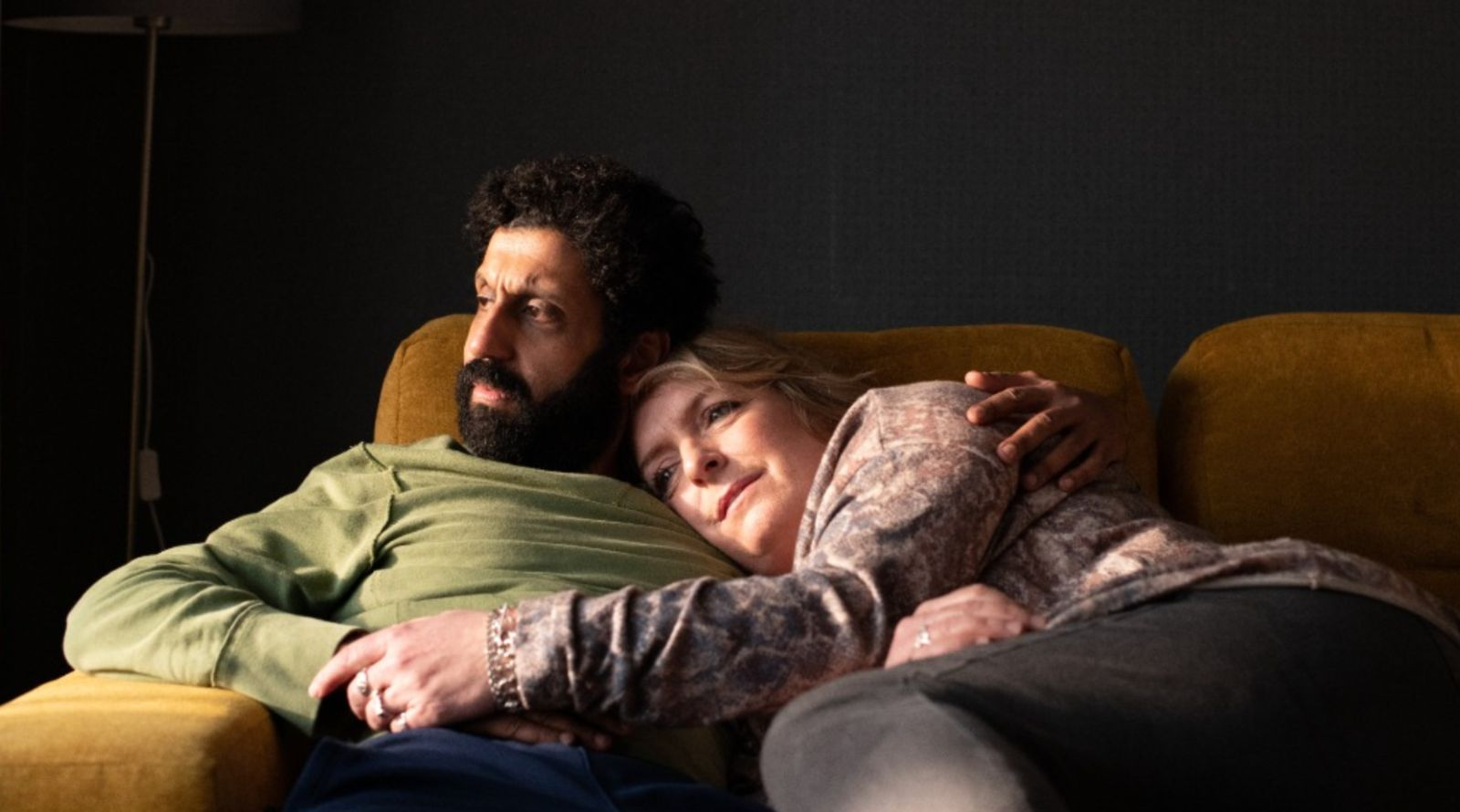
This is not a film with a big story, but that is just what makes it so great. This is a film that focuses on the smaller but more beautiful parts of life. When we look back on our most important relationships in life (whether it be romantic, family or friendship), what we look back on with the greatest happiness is the little-tiny moments between us. Because we know that these are truly the moments that make any relationship in life worth having. This movie understands that and while it goes through some of the conventional romantic movie subplots, those are never the focus. The real heart of the film lies in the tiny moments, like the two discussing music, listening to each other's music, dancing with a bunch of school kids and simply share why they are hurt by what is happening in their lives. These scenes are simply incredibly charming and make us think of the great moments we have had with those we love (romantic or not). Much of this comes through the pure naturalness and unpretentiousness of how these moments are presented (perhaps a result of director, Clio Barnard's experience making documentaries). Much of this also comes from the wonderful performances of Adeel Akhtar and Claire Rushbrook, who are not only completely natural on screen, but have great chemistry with each other. With all this in mind, it can feel like you are watching a documentary about a couple rather than a fictional film. Yet as sweet and charming as this film is, it is also very funny. One problem I have with many "romantic comedies" is that they are not really that funny. This is an exception. I did not come into this movie excepting to laugh out loud and was pleasantly surprised by how much I did.  Music plays a major role in this movie and it is used perfectly. every song on the soundtrack helps tell the story and enhances it. As a Bob Dylan fan, I especially love how well his song, Mama You've on My Mind is used here.  

This is simply a must see.