Tuesday, December 24, 2024

Monday, December 23, 2024
Thursday, November 28, 2024
Happy Thanksgiving from Movies with Michael
Hello, my friends and happy Thanksgiving. Though I am vegetarian and don't eat turkey I have a real soft spot for Thanksgiving. Partly because I love the idea of taking some time to stop and take a look at what we should be thankful for. Also, because Thanksgiving marks the last day before the Christmas season (which many of you know I am obsessed with Christmas).
Though Thanksgiving songs may not be as popular or abundant as Christmas songs, there are some truly fine Thanksgiving songs out there. One of my favorites is Irving Berlin's I've Got Plenty to be Thankful For. This song was written for the classic movie, Holiday Inn (1942), where Bing Crosby sang it.
There aren't a lot of Thanksgiving movies, however Planes, Trains and Automobiles (1987) stands as a true Thanksgiving classic.
Now for a classic Thanksgiving cartoon from the wild mind of Tex Avery.
Plus, one of my favorite scenes from the Harold Lloyd feature film, Hot Water (2024). This scene is especially appropriate for Thanksgiving.
Now for an example of a great Thanksgiving dinner scene in movie history.
Now for a little appropriate Thanksgiving music.


Universal Weekly, 1928
And to you dear reader, I am very thankful for you and hope you are having a wonderful Thanksgiving.
Monday, March 18, 2024
Kitty Carlisle Throws Her Mask Away
To many movie fans today, Kitty Carlisle is best known for being the leading lady in The Marx Brothers film, A Night at the Opera (1935). Fans of old TV will probably recognize her for appearing in tons of episodes of To Tell the Truth. She also worked with Bing Crosby in She Loves Me Not (1934) and Here is My Heart (1934). Much later she would appear in Woody Allen's Radio Days (1987), as well as Six Degrees of Separation (1993) and the made-for-TV movie Kojak: Flowers for Matty (1990).
The following is a 1935 article from Silver Screen about Kitty. If you have any trouble reading the following pages click on them and use your touch screen to zoom in.


Thursday, November 23, 2023
Happy Thanksgiving from Movies With Michael

Motion Picture Daily, 1941
Happy Thanksgiving my friends. While I may not eat Turkey (I am vegetarian), I still have always liked Thanksgiving. It is a wonderful time to reflect on all the blessings we have in life and to let those we love, know how thankful we are for them.
Of course, when it comes to Thanksgiving scenes from the movies nothing tops Charlie Chaplin's The Gold Rush (1925).
Another Thanksgiving movie treat is of course Bing Crosby singing I've Got Plenty to Be Thankful For in Holiday Inn (1942).
While I may not eat turkey, The Three Stooges certainly know all about turkey dinners.
The concert film, The Last Waltz (1978) can be considered a Thanksgiving movie as the concert takes place on Thanksgiving Day and the film ends with a big Thanksgiving dinner for the whole audience.
Of course no Thanksgiving is complete without Thanksgiving cartoons.


Motion Picture Herald, 1936
Now for some music appropriate for the holiday.
I hope you are having a wonderful Thanksgiving my friends.

Monday, July 3, 2023
Honoring Eric Blore
Eric Blore is one of the greatest character actors in the history of the movies. He is certainly one of my favorites. Whether appearing with Fred Astaire and Ginger Rogers in such great musicals as Flying Down to Rio (1933), The Gay Divorcee (1934), Top Hat (1935), Swing Time (1936) and Shall We Dance (1937) or alongside Laurel and Hardy in Swiss Miss (1938), with Bing Crosby and Bob Hope in Road to Zanzibar (1941), The Marx Brothers in Love Happy (1949), voicing Mr. Toad in the Disney animated feature The Adventures of Ichabod and Mr. Toad (1949) or in the Preston Sturges classics The Lady Eve (1941) and Sullivan's Travels (1941), he is always a delight to see (or hear) in any movie.
The following is a page from a 1936 issue of Screenland magazine paying tribute to the wonderful character actor. If you have any trouble reading the following page simply click on it and use your touch screen to zoom in.

Tuesday, January 17, 2023
Alison Skipworth AKA Crosspatch
Alison Skipworth is a too often overlooked character actress of the 1930's. Though her name may not be known by many of you, if you are a fan of old movies, you have most likely seen her. She was in Raffles (1930) with Roland Colman and Kay Francis, Dangerous (1935), The Girl From 5th Avenue (1935) and Satan Met a Lady (1936) with Bette Davis, Doubting Thomas (1935) with Will Rogers, Here is my Heart (1934) with Bing Crosby and the Josef Van Sternberg and Marlene Dietrich film, The Devil Is a Woman (1935). However she is best remembered for the movies in which she worked with W.C. Fields, If I Had a Million (1932), Tillie and Gus (1933), Alice in Wonderland (1933), and Six of a Kind (1934). She proved to be a great foil for the great comedian in the same way that Margaret Dumont was for The Marx Brothers. Though she was an older woman at the time she made these films and the parts she played were hardly glamorous ones, in her younger days on the stage, she was considered a great beauty when she had worked on the stage in her younger days.
The following is a 1933 article from The New Movie Magazine. If you have any trouble reading it click on the pages and use your touch screen to zoom in.


Here is the trailer for a delightful comedy movie she was in.
Saturday, December 3, 2022
Michael's Christmas Movie Guide: White Christmas (1954)

A simply wonderful musical.
This film's storyline is incredibly simple. Two men (Bing Crosby, Danny Kaye) meet in the army and form a song in dance team. After leaving the army the two become major stars. One day they catch a sister act (Rosemary Clooney, Vera-Ellen) and fall in love with these two girls and follow them to Vermont. In Vermont they meet their general (Dean Jagger) in the army. The general is running a struggling inn and the two men decide to put on a big Christmas Eve show at that inn to help him. All the while they have various romantic entanglements with the two sisters.
Within this simple story is an incredible amount of charm. Everything about this film works beautifully. The most obvious praise to give this movie is the great musical numbers. All the songs used in this film were written by the great Irving Berlin and the songs chosen show off the songwriter's work to great advantage. There is not one song here that is not a delight to hear. Yet what is visually happening during these song numbers is just as delightful. Danny Kaye and Vera-Ellen's wonderful dance numbers are a definitely highlight and make the two simply light up the screen during these scenes. Not only is their dancing amazing, but they also bring a wonderfully fun energy to each of these numbers that will even put a smile on the face of those who don't normally like musicals. Danny Kaye performing Choreography, especially puts a smile on my face every time I see it. His dancing there is equally parts comedic and impressive, showing off both his dancing and comedic talents to their fullest. The beautiful singing voices of Bing Crosby and Rosemary Clooney don't hurt at all. The two are in great form and show off why both are such respected singers. To this day there is no one who can sing a Christmas song as well as Bing Crosby. His voice simply fits the season perfectly and when he croons the title song, one gets that unexplainably wonderful Christmas feeling. The final reprise of the title song may be one of the most perfect moments in Christmas movie history. The image of our four main stars in front of a giant Christmas tree decorated in wonderful Christmas outfits with a group of very talented kids dancing and a beautifully snowy backdrop simply feels as warm and cozy as a cup of hot chocolate at home on a Christmas Eve night. Yet this movie is even delightful beyond just the musical numbers. The storyline may be simple and sentimental but it is the type of sentimentality that really works. We truly care about these characters and want to the romances work out and for the general to see how much he has meant to so many of his men. The humor is also fantastic and there are quite a few wonderfully funny moments. The banter between Bing and Danny Kaye's characters is especially fantastic and can still make audiences laugh to this day. However the biggest comedic highlight is the two main male characters doing their own kidding of the sisters' Sisters musical number. If you look at Bing Crosby's face during that scene, you can see Bing trying not to break into laughter. This film being directed by the legendary Michael Crutiz (Casablanca (1942), Yankee Doodle Dandy (1942), The Adventures of Robin Hood (1938)), it is wonderfully paced, giving a warm nostalgic feel while never feeling too slow.
To make a movie revolving around the song White Christmas was a natural idea. The song had been a major hit since it premiered in the movie, Holiday Inn (1942). In fact, that is in understatement. To this day Bing Crosby's version of the song is still considered to be the highest selling song of all time. In fact Bing Crosby had already reprised the song in another feature film, Blue Skies (1946). This movie was originally indented to not only reprise the most popular song from Holiday Inn but it was meant to be a reunion of the two stars of that film, Bing Crosby and Fred Astaire. Both stars turned down the picture. Bing Crosby would change his mind though Fred Astaire did not. Fred's role was then given to Donald O'Connor (who would have been great in this movie). However Donald became very sick before production began so the role was given to Danny Kaye. Danny Kaye luckily was a wonderful choice for the role. Rosemary Clooney would later state that the Sisters number worked because she couldn't dance and Vera-Ellen couldn't sing, but together they could pull it off. Vera-Ellen's voice in this number is actually dubbed in by Rosemary Clooney.
This is simply a wonderful piece of old-fashioned entertainment that will simply put a smile on any movie fan's face.
The following is a 1955 article from TV Radio Mirror where Rosemary Clooney talks about Bing Crosby. If you have any trouble reading the following pages click on them and use your touch screen to zoom in.


Thursday, November 24, 2022
Michael's Christmas Movie Guide: Toyland Premiere (1934)
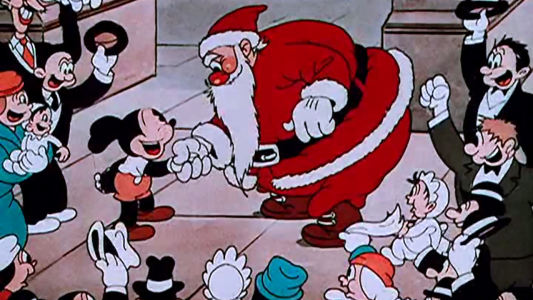
Note: The reason this review is going up on Thanksgiving Day, is because it features Santa Claus taking part in a parade to tell everyone that Christmas is on its way. It is obvious to me that this is a Thanksgiving parade.
With Disney gaining the rights to the character luckily many people today now know about Oswald the Lucky Rabbit, a character that was not that well know not that long ago. Many also know the basic history of his early years. He was created by Walt Disney and Ub Iwerks and starred in various silent cartoon shorts. These shorts were very popular on their release. At this time producer Charles Mintz was hiring away Walt's crew behind his back. Mintz then told Walt that he would either make these shorts on a much smaller budget or he would not be able to work with the character anymore. This was because despite creating him, Walt never owned the rights to Oswald. Walt refused and he would co-create a brand-new character again with Ub Iwerks called Mickey Mouse. This is where however the history most Disney fans hear seems to end, but Oswald's cartoon career continued for a while afterwards. At first Charles Mintz made a few cartoons with Oswald using the crew that Walt had been using. However soon Mintz would lose the rights to make Oswald when Universal (the studio distributing these shorts) would start its on cartoon studio and put Walter Lantz in charge of the character.
By 1934 when this Christmas cartoon was released, Lantz was making two different series of animated shorts. These were the Oswald shorts and the "Car-Tune" shorts. The difference between these two series was pretty much the same as the difference between Disney's Mickey Mouse and Silly Symphonies series. The Oswald shorts would star Oswald and the Car-Tune shorts would feature miscellaneous characters. Toyland Premiere was a tiny bit of an exception. This Car-Tune short would feature Oswald in it; however, Oswald does play a smaller role here and the real star of the film is Santa Claus.
Santa is the star attraction of the Toyland parade. After the parade is over Oswald invites Santa to a party at his department store. Also attending the party are various Hollywood stars including Al Jolson, Shirley Temple, Bing Crosby, Boris Karloff, Johnny Weissmuller and Laurel and Hardy. Oddly enough Laurel and Hardy are made the cartoon's villains, as they try to steal a chocolate cake made for the party. This ends up causing a food fight that Santa enjoys very much.
This is a very charming cartoon and a delight to watch. The animation while not up to Disney standards is quite good. This is animation above the usual standard of Lantz cartoons at this time. The early scenes at the North Pole may remind Disney fans of the 1932 Disney Silly Symphony, Santa's Workshop. I have no proof as to if they were inspired by that film, this is just an observation. The whole cartoon also moves a brisk pace and has a nice Christmas-y feeling to it.
Cartoon buffs may be interested to know Santa Claus in this film is voiced by Tex Avery. Before he became a director and revolutionized the Warner Brothers cartoons, Tex was an animator at Lantz studio, and with his boisterous laugh it was only naturally for him to voice Santa. This by the way was not the last time he would voice Santa. He would return to voicing the character for a brief gag in a 1943 cartoon he himself directed called Who Killed Who.
Monday, December 20, 2021
Michael's Christmas Movie Guide: Holiday Inn (1942)

A near perfect movie musical comedy.
Despite the fact that this movie has become a Christmas tradition for so many, Christmas is only one of the holidays featured in this film. The storyline revolves around an inn that is open only on holidays and each holiday features a live show with singing and dancing. This allows us to get 14 musical numbers that feature some of the great musical talents of the early 1940's. Though these songs are about holidays all over the calendar, two have become Christmas classics, White Christmas and Happy Holidays. With this in mind is it any wonder this has become considered a Christmas movie.
This is the fourth film in which director Mark Sandrich, songwriter Irving Berlin and star Fred Astaire made together. They had previously all worked on the Astaire-Rogers pictures, Top Hat (1935), Follow the Fleet (1936), and Carefree (1938). The idea for this film had its birth with Irving Berlin. Berlin and playwright Moss Hart had had a major hit with the 1933 Broadway musical, As Thousands Cheer. They to follow this up with a musical play based on various holidays. However, this play never came to be. The idea stayed fresh in Berlin's mind though. When in 1941 he ran into Sandrich (who was now working at Paramount), he pitched this idea to the director as a vehicle for Paramount star, Bing Crosby. Sandrich loved the idea, and a story quickly began to take shape. Sandrich decided that the perfect person to play the second male lead was Fred Astaire. Paramount disagreed feeling that they already had one big star with Bing Crosby and the Astaire would cost too much money, However Sandrich was insistent and would get his way. He would tell the press, "I call this picture the A B C of American musical comedy. Astaire, Berlin, Crosby. Get it?" It is worth noting that the two main male stars of this movie would later star in a film with a song from this film as the title song. Bing Crosby would star in White Christmas (1954) and Fred Astaire would star in Easter Parade (1948). Both of those films would also be Irving Berlin songfests. However, when it came to cast the female leads, the studio would have its way. Big name actresses were discussed for these roles (including Ginger Rogers and Rita Hayworth), but the studio insisted that lesser-known actresses should be used since they were already using Bing Crosby and Fred Astaire. Marjorie Renyolds had previously been working in B-westerns and when she got this role the Paramount publicity department dubbed her, "Saddle Cinderella." Virginia Dale was a nightclub dancer who had only appeared in very tiny movie roles. However, both of them were perfect in their roles and I can't see how bigger stars could have improved upon their performances.
Everything about this movie works beautifully. The musical numbers are all excellent. As mentioned before Irving Berlin has 14 songs used in this movie and there is not one song that misses the mark. Each musical number is also perfectly suited to the performers. Though White Christmas has been recorded by many artists, none ever come close to what Bing Crosby has done with the song. This song is just so perfectly suited to Bing Crosby's voice that no other singer could ever recapture the magic. Fred Astaire shows his magic in the Let's Say it With Firecrackers dance number. Despite the fact that he required 38 takes to get it just right, it comes off as so effortlessly perfect and natural that you can't help but get caught up in the pure charm of the dance. This is just as much pure magic as Bing Crosby singing White Christmas and something that could never be replicated. Both of their talents come together perfectly for Be Careful, It's My Heart. Bing Crosby is singing the song beautiful and doesn't notice Fred Astaire and Marjorie Renyolds doing an incredible dance behind him. This scene is perfectly choreographed but like the rest of this movie seems effortlessly so. The storyline may be mostly an excuse for the musical numbers, but it is fill of a sense of lighthearted fun that I find irresistible.

The Film Daily, 1942
The movie was not only a smash hit when released but remains just as delightful today.
For more Michael's Christmas Movie Guide click here.
Resources Used
Christmas In the Movies by Jeremy Arnold
https://www.tcm.com/tcmdb/title/78199/holiday-inn/#articles-reviews?articleId=29971
Friday, October 30, 2020
Monday, July 6, 2020
Movie Music Monday: I'm An Old Cowhand
The song would return to the movies when Gene Autry and Mary Lee sang it in the feature film, Back in the Saddle (1941).
Roy Rogers (who had previously been a member of the Sons of the Pioneers and appeared as such in Rhythm on the Range (including the scene that introduced this song) sang it in the movie, King of the Cowboys (1943).
The same year that Rythym on the Range was released both Bing Crosby and The Sons of the Pioneers, did solo versions of the song.
Also in 1936 the overlooked country music pioneer Carlson Robison did a version of this song.
Frank Sinatra recorded the song in 1945.
Jazz saxophonist, Sonny Rollins did an instrumental version of this song on his 1957 album, Way Out West.
The Mills Brothers did an excellent version in 1961.
When The Charlie Daniels Band did an album of cowboy songs, By the Light of the Moon (1997).
-Michael J. Ruhland
Thursday, September 12, 2019
A 4 Page Advertisement For "Going My Way" (1944)


Now enjoy one of the classic songs from this movie, Swinging on A Star. Unfortunately I could not find the movie version on You Tube.
The song would later be used in a Little Lulu cartoon, A Bout With a Trout (1937). Obviously Paramount couldn't limit a song this good to just one film.
-Michael J. Ruhland
Friday, August 30, 2019
Rereleasing "King of Jazz"

The following page from Universal Weekly shows various ways this movie was advertised upon its rerelease.


The following is a 1933 article about the film from Universal Weekly.


Next is an advertisement for King of Jazz from the Universal Weekly.

As you can see by this follow page of Universal Weekly this was not the only 1930 Universal movie rereleased in 1933. Also rereleased that year was All Quiet on the Western Front (1930) and Captain of the Guard.


Now let's enjoy some great music from the movie. First is George Gershwin's Rhaposdy in Blue.
Now for So the Bluebirds and the Blackbirds Got Together. This song is performed by The Rhythm Boys (Bing Crosby, Harry Barris, Al Rinker)
We end our post with the cartoon segment for the movie. This was created by the Walter Lantz studio, and at the time their starring character was Oswald the Lucky Rabbit who can be seen briefly here.
Friday, May 3, 2019
Bing Crosby Songs From the Movies
Our first song is from Bing's film debut, a delightful movie that is just starting to get the attention it deserves recently, King of Jazz (1930). This movie is pretty much the movie equivalent of a TV variety show. There is no story, but instead just a bunch of musical numbers and comedy skits. The film would star the man who at that time was known as the King of Jazz, Paul Whiteman and his orchestra. At this time Bing had not yet begun his solo career instead he was part of the vocal trio The Rhythm Boys. At this time the group was touring with Paul Whiteman so they ended up appearing in the picture. The following is a song from the movie that featured them. This is the extremely catchy Happy Feet written by Milton Ager and Jack Yellen. If this song doesn't make you want to dance nothing ever will. Now we have a delightful song from the often overlooked movie Double or Nothing (1937). This song, The Moon Got in My Eyes features Bing performing without any instruments but instead with a band of singers taking the place of the backing instruments. In the film they were called the sing band. This song was written by Johnny Burke and Arthur Johnson. A year before this film, Bing had recorded another song by these two, one of his most popular songs, Pennies From Heaven. Next comes Bing performing one of my favorite songs he recorded, Moonlight Becomes You. Johnny Burke served as one of the writers on this song as well. He cowrote it with James Van Heusen. The would also write together such major hits for Bing as Swinging on a Star, Sunday Monday or Always and Going My Way. This version of Moonlight Becomes You is from Road to Morocco, one of the series of fantastic "Road" movies Bing made with Bob Hope. Last is Bing Crosby performing the Cole Porter song, That's Jazz with Jazz legend Louis Armstrong in the movie, High Society (1956), a musical remake of the classic The Philadelphia Story (1940). I admit to preferring The Philadelphia Story but this is a great musical number.
-Michael J. Ruhland
Saturday, April 13, 2019
Some Cartoons For Saturday Morning #12
Last week's Saturday Morning Cartoon post began with a Betty Boop cartoon which featured the voice of Cab Calloway. Cab Calloway was not the only jazz singer to sing for Betty Boop cartoons however. Another who had this honor was the great Satchmo, Louis Armstrong. A typically great and highly creative Betty Boop short, this film's appeal is only heightened by the work of a music great. The brief live action appearance of Armstrong in the opening was one of the first time the earliest appearances of the jazz legend. So enjoy I'll Be Glad When Your Dead You Rascal You (1932).
The earliest Merrie Melodies cartoons had their own sperate reoccurring staring character from the Looney Tunes. This was Foxy. If Bosko (the first starring Looney Tunes character) was a bit of a knockoff of Mickey Mouse, Foxy was more so. Just take the pointy ends off his ears and get rid of the bush tail and you've got Mickey. Despite any unoriginality though, the character's cartoons are actually excellent films, full of fast paced fun energy. The character would only last for three Merrie Melodies (Lady Play Your Mandolin, Smile Darn Ya Smile and One More Time (all 1931)). My favorite of the three, One More Time is the cartoon we have coming up next. The music here is provided by a very popular jazz band leader of the 1920's, 30's and 40's, Abe Lyman. His music here is extremely fun and adds tons of energy to this film. Abe and his band would also provide the music for other early Merrie Melodies cartoons and those would be just as delightful.
My fellow Bing Crosby fans might like to know that Bing made a great recording of the title song of the previous cartoon in 1931 backed up by Gus Arnheim and his orchestra. As a little bonus here that is.
Next up comes a great early Mickey Mouse cartoon, Mickey's Follies (1929). This cartoon brought about the first original song written for a Disney cartoon, Minnie's Yoo Hoo and Mickey ends the cartoon singing it himself. An instrumental version of this song would become the main theme for the Mickey Mouse cartoons through 1933. Singing this song would also become a ritual at the various Mickey Mouse clubs that formed in neighborhood theaters starting in 1929. Walt would create a sing along short including just the song number. Film historian and huge influence on me, JB Kaufman wrote about that short here.
The whole internet seems to be obsessed with providing nostalgia for 80's and 90's kids (I'm a 90's kid myself). Here is my conforming to that. Here are various bumpers for the early years of Cartoon Network. Man I wish Cartoon Network was still like it was back then.
Stay tooned for more classic cartoons next week. Until then peace love and cartoons.
-Michael J. Ruhland
Friday, April 5, 2019
A Bing Crosby - Barry Fitzgerald Comic

As an added bonus here is a song from Top o' the Morning called You're in Love With Someone. Bing is singing and the song is written by Jimmy Van Heusen and Johnny Burke. These two had written quite a few songs that Bing had sung in the movies, including Moonlight Becomes You, Going My Way, Swinging on a Star, Road to Morocco and Sunday, Monday and Always.
Here is a studio non-movie version of the song also sung by Bing.
-Michael J. Ruhland
Sunday, December 9, 2018
The Bells of St. Mary's (1945) at the Old Town Music Hall

Like always at the Old Town Music Hall, the feature film did not take up the whole show. Before this Bill Field played us a medley of Christmas carols on the Mighty Wurlitzer Organ (a pipe organ that dates back to 1925 and was designed to accompany silent movies), this was followed by a sing along of classic Christmas songs including Santa Claus is Coming To Town, Frosty the Snowman, Silent Night, Jingle Bells, and White Christmas.
After this we were treated to a 1923 silent version of A Christmas Carol entitled Scrooge. This film was accompanied by Bill Field on the Mighty Wurlitzer Organ. Now if you have never seen a silent movie with live musical accompaniment I must urge you to do so. There is nothing quite like it and it is a completely different experience from watching these films on DVD or TCM. The short itself is a fascinating one. It is a short film that condenses the story to a 25 minute short. As such there is quite a bit of the story we all know not included here. For instance Bob Cratchit's family is never seen and this includes Tiny Tim. The ghosts all show Scrooge only one vision each and seem to disappear as quickly as they appear. Still it is quite a good film in its own right. Russell Thorndike is delightful as Scrooge giving a very human performance and the special effects are quite good and hold up very well.
After a brief intermission came our feature film and what a great movie it is. Leo McCarey is one of my all time favorite directors and this movie shows perfectly why. It blends gentle comedy, sentimentality, great characters and an excellent sense of atmosphere perfectly. Bing Crosby is excellent in the main role (who had earlier appeared in Going My Way (1944)) and shows that he was an incredible actor as well as a singer. Speaking about his singing, he sings some great songs here. Ingrid Bergman is also fantastic in her role. She has perfect chemistry with Bing and provides some of this films most charming moments. Though these two often get all the praise for the movie's great acting, but young Joan Carroll as Pasty is just as amazing here. Her performance is amazingly human and hits every mark from comedy to sentimentality perfectly.
This movie has a very light story, but this is a major part of this film's charm. The film isn't about some big storyline instead it is about these characters. The characters are so real and human. This is also an uplifting movie that can never fail to put a smile on my face. A cynic can argue that the things that happen in this movie could never happen in real life, but the rest of us will fall completely under its spell. This is a movie that shows there is good in all humanity, and all one needs to do is look for it to make it evident. If you can get rid of the cynic inside you for just a tiny bit, it is not hard to fall in love with this movie's sentimentality and believe in good once again (even if it is only for 2 hours and 6 minutes). McCarey was a devout Catholic and that leads this movie to have a charm many directors could not have brought to it, as it is a movie about the rewards of faith and patience showing this with an honesty and respect that few directors could have bought to the screen so effectively. As a Christian myself (though protestant) this message fully hit home with me.
This is a movie of undeniably charm and it is full of fantastic little moments such as Pasty's report on the sixth sense, Sister Mary teaching a young boy how to box (despite knowing nothing about it herself) and the school Christmas pageant. These scenes are so charming they might even win over those cynics I mentioned earlier.
The Old Town Music Hall is one of my favorite places to watch old movies and if any of you go to (or live in) Southern California, I couldn't recommend it more. To look at their schedule click here.
Merry Christmas and God bless.
-Michael J. Ruhland
Thursday, November 29, 2018
Christmas at Old Town Music Hall Starts Tomorrow

Important news for old movies lovers in Southern California. Starting tomorrow the Old Town Music Hall in El Segundo, California begins showing classic Christmas movies. Below are the dates.

November 30, December 1 & 2
Holiday Inn (1942)
Staring Bing Crosby and Fred Astaire
Directed by Mark Sandrich
Friday, November 30: 8:15pm.
Saturday, December 1: 2:30 pm & 8:15 pm
Sunday, December 2: 2:30 pm

December 7, 8 & 9
The Bells of St. Mary (1945)
Staring Bing Crosby and Ingrid Bergman
Director: Leo McCarey
Friday December 7: 8:15 pm
Saturday December 8: 2:30 pm and 8:15pm
Sunday December 9: 2:30pm

December 14, 15 & 16
Annual Christmas Festival
Will include Babes in Toyland (1933) with Laurel and Hardy as well as multiple Christmas themed short subjects.
Friday December 14: 8:15 pm
Saturday December 15: 2:30 pm and 8:15pm
Sunday December 16: 2:30pm
Each movie will feature live music on the Wurlitzer Organ, a sing-a-long of classic Christmas songs as well as a short subject. On November 30th, Jeremey Arnold, film historian and author of Christmas in the Movies: 30 Classics to Celebrate the Season and The Essentials: 52 Must See Movies and Why They Matter will introduce the film and sign copies of his books. Tickets are $10 and $8 for seniors.
I will be writing on this blog about each showing I attend, so stay tuned for that.
The address is 140 Richman Street, El Segundo California, 90245.
For more information click here.
-Michael J. Ruhland