Charles Laughton is an actor who I am sure many people reading this blog are well acquainted with. He was a fine actor who was trained at London's Royal Academy of Dramatic Art. He began appearing on stage in 1926 and naturally it would not be too long until the movies came knocking. Though he is known for his larger than life and theatrical roles, he was also quite capable of more subtle performances including the terrifyingly cold and mostly emotionless mad scientist in the horror classic, Island of Lost Souls (1932). His filmography includes such classics as The Old Dark House (1932), The Sign of the Cross (1932), The Private Life of Henry VIII (1933), Ruggles of Red Gap (1935), Mutiny on the Bounty (1935), The Hunchback of Notre Dame (1939), The Paradine Case (1947), Witness for the Prosecution (1957) and Spartacus (1960).
He only directed one movie. However, that film is a masterpiece, The Night of the Hunter (1955). He would however direct multiple Broadway plays including The Fatal Alibi (Feb 08, 1932 - Mar 01, 1932), Don Juan in Hell (Nov 29, 1951 - Dec 31, 1951) (Apr 06, 1952 - May 24, 1952), John Brown's Body (Feb 14, 1953 - Apr 11, 1953), The Caine Mutiny Court-Martial (Jan 20, 1954 - Jan 22, 1955) and Major Barbara (Oct 30, 1956 - May 18, 1957).
Here is an article from The New Movie Magazine (dated December 1934). If you have any trouble reading it click on the pages below and use your touch screen to zoom in. If you don't have a touch screen, click here.
Though being best known as a dramatic actor Laughton had a gift for comedy. This can be seen in the film, Abbott and Costello Meet Captain Kid (1952).
Watch a full movie with Charles Laughton below. The film is Jamica Inn (1939) and was directed by none other than Alfred Hitchcock.
Walter Woolf King is best remembered today for his work with two of the movies' greatest comedy teams. He appeared with The Marx Brothers in A Night at the Opera (1935) and Go West (1940), as well as Laurel and Hardy in Swiss Miss (1938). He is perfect as the villain in the two Marx Brothers movies, truly making us want to hiss at him whenever he comes on screen. Unfortunately, he is much weaker in Swiss Miss. This is not because of his acting but rather the role he is given. He is supposed to be the romantic lead in this film but the way his character is written makes him seem much more like a villain. Swiss Miss has some great comedic bits for Laurel and Hardy but whenever the attention drifts away from them, it becomes much less interesting.
Motion Picture, 1935
However, Walter Woolf King's career was so much more than these three films. He also appeared in such movies as Golden Dawn (1930), One More Spring (1935), Call It a Day (1937), Melody for Three (1941), Smart Alecks (1942), The Helen Morgan Story (1957) and Rosie! (1967). He also appeared in two episodes of Alfred Hitchcock Presents (Our Cook's a Treasure (1955), The Percentage (1958)) and three episodes of The Alfred Hitchcock Hour (The Dark Pool (1963), A Nice Touch (1963), Isabel (1964)).
King was also a quite successful stage actor, who was especially known for his baritone singing voice. Here is a list of some of the plays he was in and when they ran.
Florodora (Apr 05, 1920 - Aug 14, 1920)
The Midnight Rounders of 1920 (Jul 12, 1920 - Nov 27, 1920)
The Last Waltz (May 10, 1921 - Oct 29, 1921)
The Lady in Ermine (Oct 02, 1922 - Apr 21, 1923)
The Passing Show of 1923 (Jun 14, 1923 - Sep 15, 1923) The Dream Girl (Aug 20, 1924 - Nov 29, 1924)
Artists and Models (Jun 24, 1925 - May 07, 1926) Princess Flavia (Nov 02, 1925 - Mar 13, 1926)
Countess Maritza (Sep 18, 1926 - Jun 25, 1927)
The Red Robe (Dec 25, 1928 - May 20, 1929) /
Ladies All (Jul 28, 1930 - Dec 13, 1930)
The Great Man (Apr 07, 1931 - Apr 1931)
Experience Unnecessary (Dec 30, 1931 - Feb 1932)
Red Planet (Dec 17, 1932 - Dec 1932)
Melody (Feb 14, 1933 - Apr 22, 1933)
May Wine (Dec 05, 1935 - Jun 06, 1936)
As well as appearing in movies, TV and stage, King also hosted the CBS radio show Flying Red Horse Tavern. Here is a 1936 article about that from Radio Mirror. If you have trouble reading the following pages click on them and use your touch screen to zoom in. If you don't have a touch screen, click here.
Scott Eyman is becoming one of my favorite film historians. After reading his biography of Cary Grant, I am even more of a fan. This biography is a gripping read that I always hated to put down. It is incredibly well-written, very informative and always fair when examining its subject.
One of the main points this book makes is that the persona of Cary Grant was a creation of Grant himself. While it did not fully resemble the man who was born Archie Leach and would later bear the name of Cary Grant, it was the creation of the star not the studio. As well as digging into Cary Grant and his movie career, this book also greatly discusses who Archie Leach was. Probably the highlight of this book is the early chapters discussing Archie's life before becoming Cary Grant. As most writings about the Hollywood star tend to focus on his movie career, this is where I learned the most about the man born as Archie Leach. These early chapters are not only very well researched and informative but also where Scott Eyman's writing is at its best. We feel completely engrossed in this bygone world of English Music Halls and American vaudeville. The picture painted of a very vivid picture of this world, and it is easy to understand how it shaped Archie Leach, well into the years he would be known as Cary Grant.
As well as starting strong, this book also finishes very strong. Most movie star biographies tend to wind down when the reach the years when the star retired. That is far from the case here. Eyman digs heavily into these years painting a very vivid picture of an older man, who finally find much of the peace and joy that he looked for through much of his life (especially due to the love he felt for his daughter Jennifer). These chapters give us probably our greatest understanding of who the man is.
Though the middle section may not be as strong as the start or finish, it is still quite well worth the read. This is especially true because of the chapters when it talks about Grant's working and personal relationships with his three favorite and possibly best directors, Alfred Hitchcock, Howard Hawks and Leo McCarey. The book provides a very well-researched look into the making of his best work. It also provides a very smart and well-written critical examination of his filmography as a whole. Eyman argues that Grant's reluctance to take risks with many of his roles, hurt his career at times causing him to make inferior films while passing up movies that would have been perfect for him. At the same time Eyman is not short in his praise of Grant's best work, acknowledging that his best films are true cinematic masterpieces of the highest order.
This book is highly sympathetic to Grant and often times paints a positive picture of the man. However, this does not mean that it overlooks or excuses Grant's worst flaws. Still for every story about his ego or selfish behavior, there are two more about how he took chances with newcomers he believed in or how much he truly loved his daughter.
Annette Insdorf's brilliant study of the films of the great French director, François Truffaut is a must read for anyone interested in film analysis.
As many of you probably know Truffaut (like many members of the French New Wave) started as a critic before becoming a filmmaker himself. As a critic one of the ideas that he championed what he referred to as auteurs. These were filmmakers whose own personal stamp was deeply evident in most (if not all) of their films. He felt that directors should be the author of movies and that their individual films could be analyzed not only by themselves but as a part of the directors' greater work. That there should be themes and visual motifs that ran through their work that would make a great filmmaker's work constantly interesting, even in their weaker films. Though Truffaut was an auteur himself, his own personal stamp can be harder to identify than those of his peer Jean Luc Goddard or his idol Alfred Hitchcock. That is why this book is incredibly important to anyone studying the great French director's films. The point of this book is to study and analyze the various themes and motifs that run through Truffaut's work. Through brilliant writing and insight, simply reading this book can give one a greater understanding of his work as a whole. Digging into not only the filmmaker's films but also his personal life, his influences and his critical writings, we begin to see how through his film's Truffaut has painted a rather complex and articulate self-portrait. After reading this book, I grew an even greater appreciation for someone who was already one of my favorite filmmakers and gave me a strong desire to revisit his movies. I can't wait to rewatch these films and see them in a brand-new light.
The first chapter examines Truffaut's transition from a critic and movie lover to a filmmaker. The second chapter examines the influence of Alfred Hitchcock on his work. The third examines the influence of French director Jean Renoir on his work. The fourth takes a look at the evolving role of women in his films. The fifth involves the role of children in his films (Truffaut has been praised for his honest and understanding depiction of children more than anything else). The sixth chapter takes a look at the autobiographic nature of his movies as well as the use of literary text. The seventh chapter was added to later additions and features a deep delve into his final five films, which were not around when Insdorf wrote the original version of the book.
This is simply a must read for any Truffaut fan, and anyone interested in well written and though out film analysis.
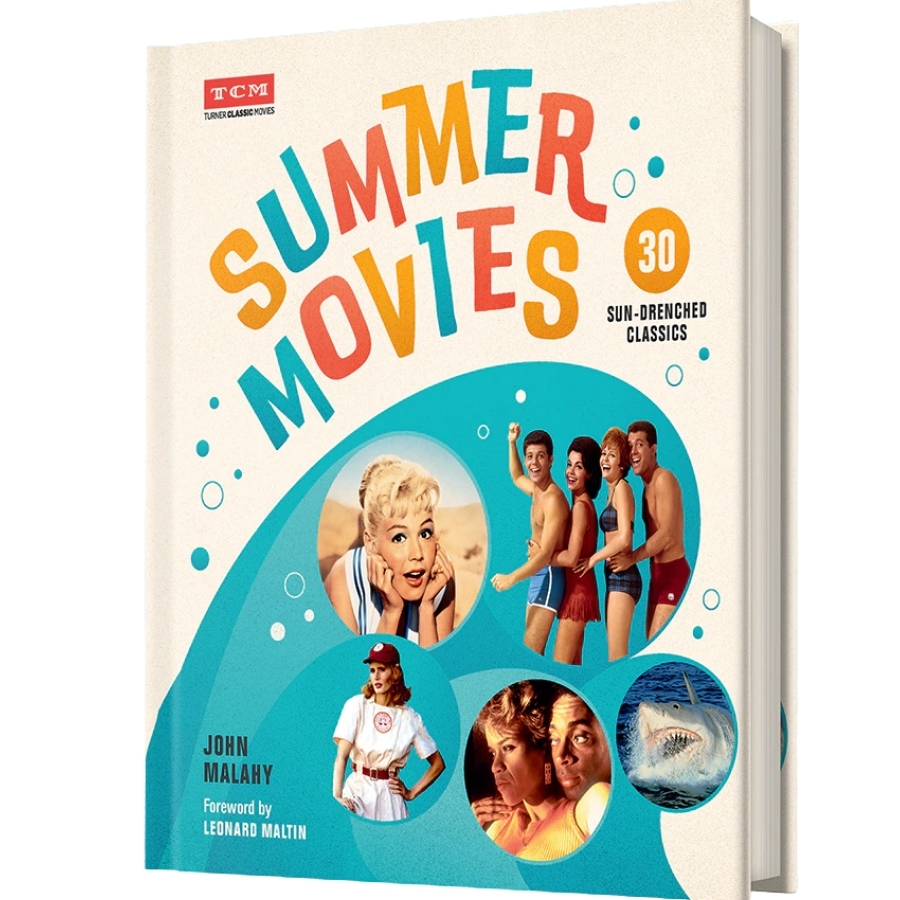
This book from TCM explores the tradition of the summer movie. Author John Malahy takes a very broad approach to this subject. Such lighthearted summer fun as Gidget (1959), The Parent Trap (1961) and Beach Blanket Bingo (1965) co-exist with the likes of Ingmar Bergman's Smiles of a Summer Night (1955), Alfred Hitchcock's Rear Window (1954) and Spike Lee's Do the Right Thing (1989). Also included are the part-silent part-talkie Lonesome (1928), the Andy Hardy movie You Only Live Once (1937), Jaques Tati's Monsieur Hulot's Holiday (1953) and of course the original summer blockbuster Steven Spielberg's Jaws (1975) as well as many more. This broad approach makes this book a must for both causal movie fans and hard boiled cinephiles (who might even discover a film or two from this book).
The writing style and format of this book makes it a light and breezy read, while still having quite a bit of substance. Malahy's tone is warm, causal and inviting. Yet at the same time he offers some great critical insight and historical background for these films that causes us to look at movies we have seen before in a new way.
A nostalgia-soaked introduction by Film Historian and Critic Leonard Maltin only adds to the great fun of this book.
Guess what my friends, today is my birthday. I am officially 33 years old.
I celebrated my birthday yesterday with a small group of good friends. We all went to my personal favorite place in the world, Old Town Music Hall to see the classic silent Alfred Hitchcock film, The Lodger (1927). Though this was Hitch's third film as a director, it is the movie that the master of suspense would refer to as the first real Hitchcock film. Not only is it his first suspense movie but it is the film that would introduce many of the themes that would play a major role in his most popular work. The film was accompanied live on the Mighty Wurlitzer Pipe Organ, which was being played by the wonderfully talented musician, Robert York. Some of my friends had never seen a silent movie before and I am very happy to report that they very much enjoyed it.
Of course, I have long been a fan of Hitch's British films, many of which hold their own with his more famous Hollywood work.
As someone who is passionate about both movies and country music, I love that I share my birthday with both Turner Classic Movies and Loretta Lynn.
On the topic of Loretta Lynn, I still consider Coal Miner's Daughter (1980) to be the best musical biopic.
Also mentioning TCM, I am extremely excited about the TCM Film Festival, later this month. The schedule is already up and there are tons if great films lined up. /
Though TCM is still my favorite TV channel. However, METV Toons is now running a close second. This new channel is truly a godsend for cartoon fans everywhere. This is the type of cartoon channel; I have wanted to exist for my whole life. Rather than being aimed at kids, this channel is aimed at an audience that I fall perfectly into. This is the audience of film buffs who love cartoons. It is filled with cartoons that range from beloved classics to compete obscurities.
On the subject of animation, lately I have also been on a real Disney kick, especially old school Disney.
I am of course always on a silent comedy kick.
/
/
What is a better way to end this post than with one of the greatest short comedies ever?
This past weekend was one of the highlights of any movie fans year, the TCM Classic Film Festival in Hollywood, CA.
While unfortunately it is impossible to see every film at this festival (as many of them play at the same time at different theaters), I am very satisfied with the great selection (and great variety) of films I saw this year.
I started this festival on the right foot, watching one of the greatest crime movies ever made, White Heat (1949). This film (featuring one of James Cagney's best performances) looked simply incredible on the big screen at the historic Egyptian Theater. Speaking of looking incredible on the big screen, a new restoration of the great John Ford and John Wayne western, The Searchers (1956) on 70mm film was one of the most beautiful sights I have ever seen projected on a screen. As the film started my jaw dropped at how beautiful it looked. Having an introduction by one of the great modern-day directors, Alexander Payne made this only better, especially as he mentioned that members of the Wayne family were in the audience. That was not the only great western I saw there as I also saw the very underrated and unjustly obscure pre code western, Law and Order (1932) starring Walter Houston and Harry Carey. I had not seen this movie before and to say I was impressed, would be an understatement. If you stretch the definition of a western, I also saw a great 35mm nitrate print of the really fun musical Annie Get Your Gun (1950). I also saw a great 35mm nitrate print of the underrated film noir (starring Edward G. Robinson), The Night Has a Thousand Eyes (1948). Being a huge Hitchcock fan I had to see the two Hitchcock screenings. They were of two of his greatest classics, Rear Window (1954) and North by Northwest (1959). I was also pleased to see a classic foreign picture, Fredrico Fellini's La Strada (1954), one of my favorite movies of all time.
Naturally for someone like me the highlights of the festival were the animation and silent film screenings. On the animation side there was Disney's 101 Dalmatians (1961) and a screening of various newly restored theatrical cartoon shorts. 101 Dalmatians was made more impressive by having an interview with the great classic Disney animator Floyd Norman. In my mind he is one of the coolest guys living today. His insights into the Walt Disney animation studio at this time period where simply fascinating to listen to. The classic cartoon shorts (mostly from the Fleischer studio) were introduced by Family Guy creator, Seth MacFarlane (who does sound just like Brian Griffin), whose passion for these classic cartoons (and film history in general) could be felt throughout. He also helped fund the restorations of these films. Speaking of the restorations they looked simply incredible.
The first of the two silent film screenings began included the Edward Evert Horton short film, Dad's Choice (1928) and the Raymond Griffith feature Paths to Paradise (1925). To see such little-known silent gems on the big screen felt like heaven to me. The laughter of the audience during the climax of the feature showed why these films should be seen with a full audience. Great accompaniment by Ben Model didn't hurt either. The other silent film screening ended the festival on a high note for me. It had two classic Buster Keaton films, the short The Goat (1921) and the feature Sherlock Jr. (1924). These films had the whole audience in hysterics. Even though I have seen these films countless times, seeing it with such an appreciative audience made me laugh myself silly too. The live accompaniment by the Mont Alto Motion Picture Orchestra was simply beautiful and helped make these 100-year-old and 103-year-old films feel completely new and fresh.
Also adding to the fun was a wonderful panel by Arthur Marx, grandson of Groucho Marx (on his dad's side) and songwriter Gus Kahn (on his mother's side). He not only talked about both of his great grandfathers but performed many of Gus Kahn's songs asking the audience to sing along with him. It is also wonderful to talk to many of the others at the festival. There is something about old movie fans when they meet. They have a true kinship with each other that shows just why these movies are so important.
If you have not been to the TCM Film Festival yet, it is a must for every classic movie fan.
Spooky season is coming and that means it is time to watch classic horror movies. If you live around the Southern California area, there is no better place to do this than Old Town Music Hall in El Segundo (140 Richmond Street El Segundo, CA 90245). This is an incredible movie theater that in many ways tries to recreate the experience of going to the movies back in the 1920's and 30's. It is also the home of the Mighty Wurlitzer Pipe Organ, a wonderful instrument that was used to accompany silent films. Every October, Old Town Music Hall becomes Old Town Music Haunt. The whole theater is decorated with Halloween decorations and they show classic spooky themed films. The selection for this year is simply wonderful. It includes some scary horror movies as well as some spooky themed comedies. The majority of these feature length films will be proceeded by live music on the organ and a classic cartoon. The silent films will be accompanied on the Mighty Wurlitzer.
Here is the list of spooky movies that will be showing this year. Again if you are living in the Southern California area, you don't want to miss this. If you want to get tickets please go to Old Town Music Hall's website.
Saturday, September 30th
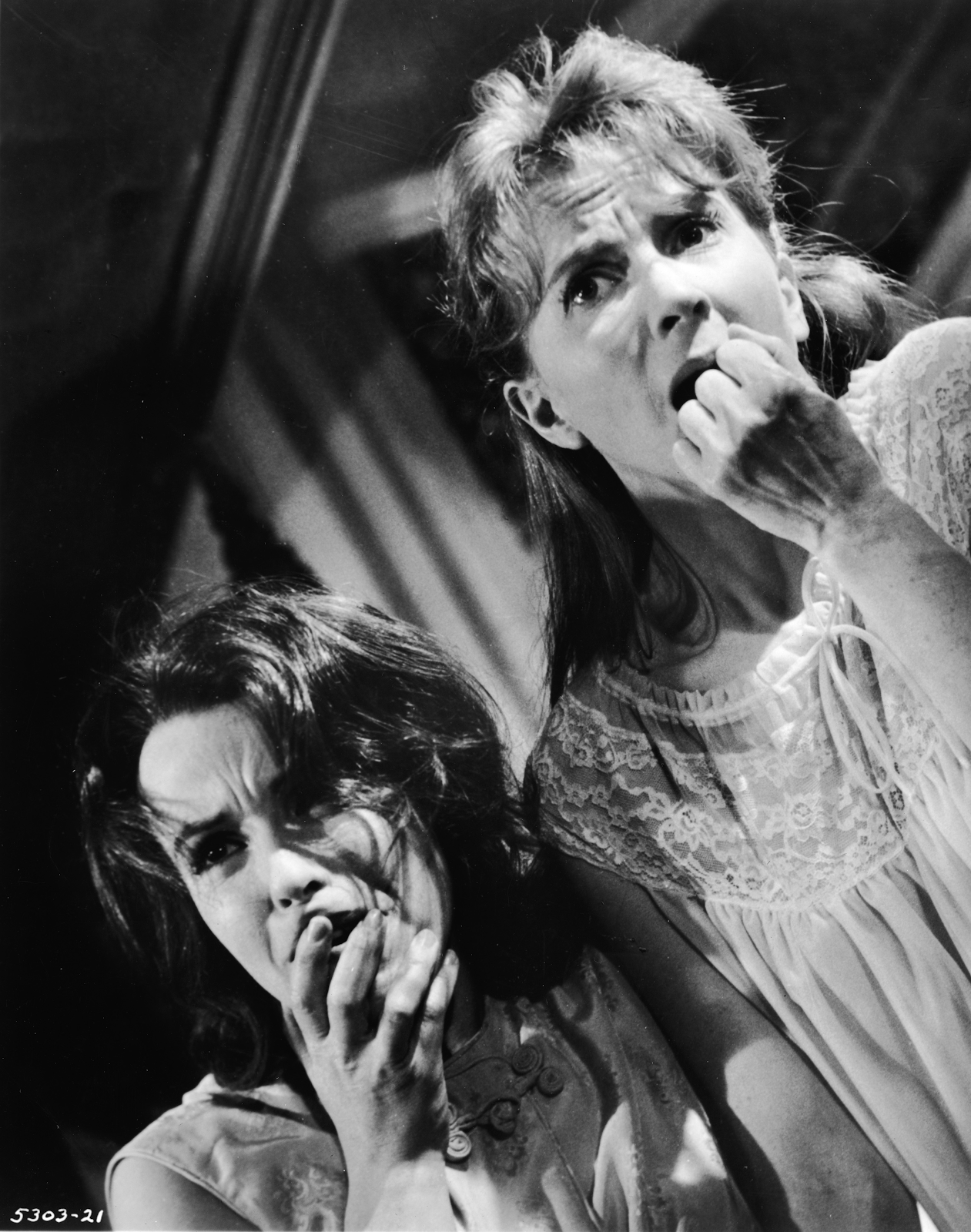
What Ever Happened to Baby Jane (1962)2:30pm
The Haunting (1963) 7pm
Sunday, October 1st
Faust (1926-silent film) 2:30pm
The Shining (1980) 7pm
Saturday, October 7th
Invasion of the Body Snatchers (1956) 2:30pm
Rosemary's Baby (1968) 7pm
Sunday October 8th
The Cabinet of Dr. Caligari (1920-silent film) 2:30pm & 7pm
Saturday October 14th
The Wolf Man (1941) 2:30pm
An American Werewolf in London (1981) 7pm
Sunday October 15th
The Mummy (1932) 2:30pm
Psycho (1960) 7pm
Saturday October 21st
Abbott and Costello Meet Frankenstein (1948) 2:30pm
Frankenstein (1931) 7pm
Sunday October 22nd
Young Frankenstein (1974) 2:30pm & 7pm
Saturday October 28th
Dracula (1931) 2:30pm & 7pm
Sunday October 29th
The Phantom of the Opera (1925-silent film) 2:30pm & 7pm
Hello once again my friends. I know many of you, like me, are big fans of both silent movies and TCM. Because of this, here is a list of all the silent films that TCM is showing this September.
Sunday, September 3
City Girl (1930). Director: F. W. Murnau. Starring: Charles Farrell and Mary Duncan. 9:45pm Pacific. 12:45am Eastern.
Sunday, September 10
The Sea Hawk (1924) Director: Frank Lloyd. Starring: Milton Sills and Enid Bennett. 9:15pm Pacific. 12:15pm Eastern.
Sunday September 17
The Smart Set (1928). Director: Jack Conway. Starring: William Haines and Alice Day. 9:15pm Pacific. 12:15pm Eastern.
Sunday, September 24
Downhill (1927) Director: Alfred Hitchcock. Starring: Ivor Novello and Ben Webster. 9:45pm Pacific. 12:45pm Eastern.
Friday, September 29
The Symbol of the Unconquered (1921) Director: Oscar Micheaux. Starring: Iris Hall and Walker Thompson. 3am Pacific. 6am Eastern.
Oscar Micheaux: The Superhero of Black Filmmaking (2021) (a documentary about silent film) Director: Francesco Zippel. 4am Pacific. 7am Eastern.
Scaramouche (1923) Director: Rex Ingram. Starring: Alice Terry and Ramon Novarro. 5:30am Pacific. 8:30am Eastern.
Souls for Sale (1923) Director: Rupert Hughes. Starring: Eleanor Boardman and Mae Busch. 7:45am Pacific. 10:45am Eastern.
The Pilgrim (1923) Director: Charlie Chaplin. Starring: Charlie Chaplin and Edna Purviance. 9:30am Pacific. 12:30pm Eastern.
A Woman of Paris (1923) Director: Charlie Chaplin. Starring Edna Purviance and Adolphe Menjou. 10:30am Pacific. 1:30pm Eastern.
Dogs of War! (1923) Director: Robert F. McGowan. Starring: Our Gang and Harold Lloyd. 12pm Pacific. 3pm Eastern.
Safety Last! (1923) Directors: Sam Taylor, Fred Newmeyer. Starring Harold Lloyd and Mildred Davis. 12:30pm Pacific. 3:30pm Eastern
Why Worry? (1923) Directors: Fred Newmeyer, Sam Taylor. Starring Harold Lloyd and Jobyna Ralston. 2pm Pacific. 5pm Eastern.
I Was Born, But... (1932) Director: Yasujirô Ozu. Starring: Tatsuo Saitô and Mitsuko Yoshikawa. 3:15pm Pacific. 6:15pm Eastern.
Perhaps her name is not as well known among modern movie fans as it should be but Sara Allgood is an actress who greatly enhanced any movie she was in. It didn't matter what type of film it was, she was always wonderful and brightened up the movie when she came on. Though many may not know her name, old movie fans may recognize her for appearing in such films as Blackmail (1929, Alfred Hitchcock's first talkie), Dr. Jeckyl and Mr. Hyde (1941), How Green Was My Valley (1941), Jane Eyre (1944), Cluny Brown (1946), Challenge to Lassie (1949) and Cheaper by the Dozen (1950).
The following is a 1950 article about Sara Allgood from Focus: A Film Review. If you have trouble reading the following article click on the pages below and use your touch screen to zoom in.
Hello my friends. For those of you who don't know, last weekend is one of the highlights of a film buff's year, the TCM Classic Film Festival. It was four days of classic films and movie related delights presented at historic Hollywood sights (including Grauman's Chinese Theater, The Hollywood Roosevelt Hotel (where the first Academy Awards were held)). There were major special guests (including film historians and big time Hollywood stars and filmmakers), the most enthusiastic audiences you have ever seen and of course lots of classic movies. Also for classic film fans it is one of the few times that we can be surrounded by people who are just as passionate about them as we are.
There were so many highlights for me this year. One of the biggest was the wonderful 100th anniversary screening of The Hunchback of Notre Dame (1923) with Lon Chaney. I have seen this film before in only cheap public domain prints and liked it well enough. However seeing a great print of this film and seeing it in a movie theater, made me realize just what a great movie it is. I found myself emotionally moved by the film in a way I never had been before. Another great silent film experience was seeing the delightful silent movie, Clash of the Wolves (1925) with canine star Rin Tin Tin. It may seem strange to some (who haven't seen his films) that Rin Tin Tin was one of the biggest box office draws of his day and pretty much saved Warner Brothers from bankruptcy before The Jazz Singer (1927)and Al Jolson. However when you watch one of his movies, you fully understand. That are such fun movies and a pure delight to watch. Listening to the audience reaction to this film shows how these movies are still sure-fire audience pleasers. Adding to the fun was the wonderful silent film historian and composer Ben Model, accompanying the film live with a truly terrific score. Speaking about audience pleasers, there were no better audience pleasers than Harvey (1950) (which was introduced by the wonderful movie director Joe Dante) and a selection of Laurel and Hardy shorts. Speaking about shorts it was also a delight to watch a panel hosted by Jerry Beck and Randy Haberkamp about Looney Tunes shorts and the Oscars (which included some full cartoons). One of the most delightful surprises was a delightful film Warner Brothers made in Britian, Mr. Cohen Takes a Walk (1935). I had never even heard of this movie before, but I was soon completely won over by its charms. If you ever get a chance to watch this film, I highly recommend it. Leonard Maltin introduced the movie and said that he personally picked it for the festival and I am very grateful to him for picking it. To turn the attention to special guests, I got to see some great ones there. Dave Krager interviewed Richard Dreyfus and Candy Clark before American Graffiti (1973) and Ann Margert before Bye Bye Birdie (1963) and it was wonderful to watch those movies knowing the stars were in the same theater. Brain Henson (son of Muppet creator Jim Henson and the director of The Muppet Christmas Carol (1992) and Muppet Treasure Island (1996)) introduced a screening of Muppets Take Manhattan (1984) (which was another audience pleaser). As an Alfred Hitchcock fan I was delighted to see two wonderful Alfred Hitchcock movies on the big screen, Shadow of a Doubt (1943) and The Man Who Knew Too Much (1956).
This was simply a wonderful four days and I wish it never had to end. If any of you are debating about going next year, do so.
Run Time: 86 minutes. Studio: British International Pictures. Director: Alfred Hitchcock. Writers: Alfred Hitchcock, Walter C. Mycroft, Eliot Stannard. Main Cast: Betty Balfour, Jean Bradin, Ferdinand von Alten, Gordon Harker. Cinematographer: Jack E. Cox.
When François Truffaut did his book long interview with Alfred Hitchcock, Hitch described Champagne as "the lowest ebb in my output." As much as I love Hitchcock as a director, I have to disagree with him here. Sure, this is not at the level of say Rear Window (1954) or Notorious (1946), but it is nowhere near being a bad movie. Truffaut also did not agree with his hero's assessment saying, "That's not fair. I enjoyed it. Some of the scenes have the lively qualities of the Griffith comedies." It has to be asked then why did Hitch view this film with such distain? The answer is actually quite simple in my opinion. Hitch was a director who wanted to make movies his own way. Throughout that book long interview, the pictures he dismissed and didn't wish to talk about were the ones that were not his idea and or the ones where he could not exercise the amount of creative control he wanted to. The movie Alfred Hitchcock wanted to make would have been vastly different. Hitch envisioned a story about a French girl working in a factory bottling champagne. She associates this champagne with glamor and sophistication, two things she is longing for. However, a trip to the city shows her quite the opposite and that this romantic drink only leads to violence, misery and drunkenness. When she returns to her job, she now views this drink as poison. British International Pictures had little interest in such a story and Hitch and his cowriters wrote this romantic comedy pretty much on the cuff, sometimes only finishing writing a scene minutes before that scene needed to be shot. With this in mind, it is easy to see why the director may not have been too fond of this picture.
In this light comedy, a spoiled heiress (Betty Balfour) has a fiancée that her father, known as "The Champagne King" (Gordon Harker) does not approve of. Because of this he decides to teach her a lesson by making her think that they have lost all their money.
This is only Hitchcock's 8th picture, but he is clearly already a master filmmaker. He shows a technical mastery of the film medium that is truly incredible. Watching this movie, it is easy to see why even today, young filmmakers study Alfred Hitchcock's movies so closely. It is hard to find a better teacher for filmmaking than Hitchcock. Hitch and cinematographer Jack E. Cox (who worked on many of Hitch's British movies) create images and visual moments that stay in one's mind long after the movie is over. Even those who do not like this movie will have to admit it is technically well made. The story is typical of Hitch's light comedies of this time. It is fast moving, breezy and never overstays its welcome. The characters are quite likable and charming, and the actors are quite good in their roles. With a few exceptions (a scene with a drunk on a boat stands out) this film may not be laugh out loud funny, but the humor is quite charming and always puts a smile on my face. It may not be anything especially memorable or original, but it certainly is fun.
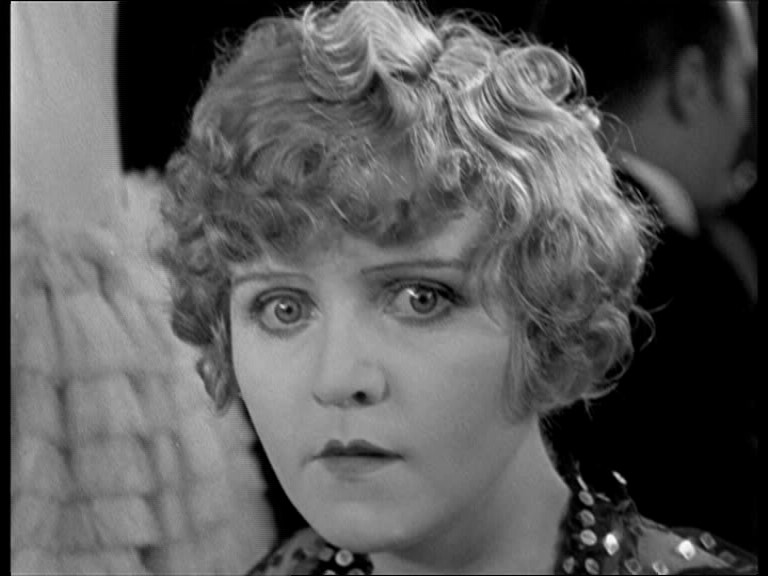
Betty Balfour was a popular comic actress in Britian around this time and the studio insisted on her being in this movie. Hitch and her did not get along at all and he would later refer to her as a "piece of suburban obscenity." Despite this though she does turn in a fine performance as the lead character. It is certainly easy to see why she was so popular in her day. Balfour was referred to as ‘Britain’s answer to Mary Pickford’ and ‘Britain’s Queen of Happiness’. Her most famous character was a cockney flower girl with a heart of gold named Squibs Hopkins. She played this character in five movies, Squibs (1921), Squibs Wins the Calcutta Sweep (1922), Squibs M.P. (1923), Squibs' Honeymoon (1923), Squibs (1935). The last of these was a talkie remake of the original film in the series. Sadly only Squibs (1935) and Squibs Wins the Calcutta Sweep exist today. Gordon Harker, while far from a household name, may be familiar to fans of Alfred Hitchcock's silent films. This is his third movie for Hitch, as he had previously been in The Ring (1927) and The Farmer's Wife (1928). He would later appear in one more Hitchcock movie, this time a talkie, Elstree Calling (1930).
If you are looking for a forgotten Hitchcock classic, you should look elsewhere. However if you want a fast paced and fun movie that features some masterful visual filmmaking, this is a really delightful movie.
Hello my friends. It is October and as all of us film fans know, this is a month that exists simply to watch old monster movies, especially those from Universal Studios. To celebrate the month here are some advertisements for classic horror films.
Variety, 1935
The Exhibitor, 1938
Universal Weekly, 1933
Showman's Trade Review, 1943
Universal Weekly, 1933
Exhibitor's Trade Review, 1924
Variety, 1931
Now for some movie trailers for classic horror films.