Showing posts with label Buster Keaton. Show all posts

Thursday, July 2, 2026

Old Town Music Hall Schedule for July 2026


My personal favorite place to see a movie is at Old Town Music Hall (140 Richmond St, El Segundo, CA 90245). Decorated as a mini-movie palace of the 1920's, this theater has been providing classic films nearly every weekend since 1968. The centerpiece of the theater is the Mighty Wurlitzer Pipe organ, a 1925 instrument that was created to accompany silent movies. Though in recent years, the theater has expanded what decades are defined as a classic (some movies even are as late as the early 21st century), they still play silent movies here with the organ accompanying it live. For those newfangled talking pictures, the organ still plays beforehand. As well as movies, this place also hosts concerts, mostly of the jazz variety. 

Here is the list of what this wonderful theater is playing this July. 


July 5th


The General (1926) 

Silent starring Buster Keaton. 

One of the most beloved silent comedies of all time, this film was a box office disappointment upon its original release. Yet over the years, movie lovers, the world over discovered what a masterpiece it is. Filled with great laughs, exciting action scenes (which hold up marvelously today) and a larger-than-life epic scale, this is comedian Buster Keaton at his absolute best. 

With live accompaniment by organist David Marsh and an introduction by film historian Randy Haberkamp. 

Sunday July 5, 2:30pm.

Get tickets here.


July 11th

Grease
(1978)  

Directed by Randal Kleiser. Starring John Travolta and Oliva Newton-John.

Probably the most popular movie musical of the 1970's. The unpretentious lighthearted feel makes endears this movie to new generations as well as old. The songs especially are a lot of fun. Who cares if the actors are obviously older than high school age. 

Saturday July 11th, 2:30pm

Buy tickets here.


Laura (1944)

Directed by Otto Preminger. Starring Gene Tierney and Dana Andrews.

 
One of the all-time great film noirs. This spellbinding movie pulls you in from the opening scene. Style overflows from this classic with many images that stay in the minds of movie lovers long after they watch. A great cast, a well-written mystery and a great score by David Raksin makes this a true masterpiece of the genre. 

Introduced by author and filmmaker Steven C. Smith.

Saturday July 11th, 7pm.

But tickets here.


July 12th

Forbidden Planet (1956)

Directed by Fred M. Wilcox. Starring Walter Pidgeon, Anne Francis and Leslie Nielson.

One of the most beloved sci-fi movies of all time. Made at a time when science fiction was treated as a children's genre, this film is anything but kiddie fare. Inspired by Shakespeare's The Tempest, this film is an intelligent and thought-provoking masterpiece that explores deep and dark themes dealing with the dark side of human nature. Still remains just as powerful today as it was back in the 1950's.

Introduced by special effects artist Craig Barron. 

Sunday July 12th, 2:30pm 

Buy tickets here.


Toons and Tunes

Part concert and part cartoon show, these special shows are pure delights. Hosted by singer Janet Klein, animation historian Jerry Beck and organist Randy Woltz, this show is filled with live music (featuring songs from the 1920's and 30's) and some classic 1930's cartoon shorts. A must see. 

Sunday July 12th, 7pm

Buy tickets here


July 18th

Robin Hood (1922)

Silent, directed by Allan Dawn and starring Douglas Fairbanks and Alan Hale

Before the immortal Errol Flynn version, the most popular action star of the 1920's, Douglas Fairbanks, played the famous character in this still exciting 1922 silent adaption. A pure treat for the whole family as well as the first movie to receive a Hollywood premiere (at the Egyptian Theatre in 1922). 

Accompanied by organist Robert York. Introduced by stand-up comedian (and great-granddaughter of Alan Hale), Samatha Hale.  

Saturday July 18th, 2:30pm

Buy tickets here.


The Good, The Bad and the Ugly (1966)

Directed by Sergio Leone. Starring Clint Eastwood and Eli Wallach. 

The most famous spaghetti western is also one of the definitive screen westerns. The final entry in The Dollars Trilogy (preceded by A Fistful of Dollars (1964), For a Few Dollars More (1965)), this features Clint Eastwood in his most famous role as The Man with No Name. With stylish direction by Sergio Leone and an iconic musical score by Ennio Morricone, this is a cinematic delight, even for those who think they may not actually like a western. 

Saturday July 18th 7pm 

Buy tickets here


July 19th

The Awful Truth (1937)

Directed by Leo McCarey. Starring Cary Grant and Irene Dunne.

One of the definitive 1930's screwball comedies. This film is directed by one of the greatest Hollywood comedy directors, Leo McCarey, who worked with Laurel and Hardy, The Marx Brothers and Charley Chase on some of their best films. He would win an Oscar for Best Director for The Awful Truth, and it is easy to see why. This is absolutely hilarious and can hold its own with more famous screwball comedies. Of course, this is helped by an incredible cast headed by Cary Grant (for whom this would help cement his screen image), Irene Dunne and Ralph Bellamy. The chemistry between Grant and Dunne makes them one of the greatest pairings in screwball comedy history. 

Introduced by author and filmmaker Steven C. Smith

Sunday July 19th, 2:30pm

 Buy tickets here.


July 25th

WALL-E (2008)

Animated Pixar classic directed by Andrew Stanton.

This is everything a Pixar movie should be. It is smart, funny, creative and very moving. Among the animated sci-fi fun is a surprisingly touching and lovely romance between the two main robots. Without saying anything but their names, these two characters feel so real to us and move straight into our hearts. 

Saturday July 25th 2:30pm.

Buy tickets here.


Hairspray (1988)

Directed by John Waters. Starring Sonny Bono and Ruth Brown.

John Waters' most mainstream film is also one of his most enduring. This musical comedy is so much fun that it would later become a very popular Broadway musical. 

Introduced by film historian Randy Haberkamp. 

Saturday July 25th, 7pm 

Buy tickets here


July 26th

Double Indemnity (1944)

Many consider this to be the greatest film noir of all time. It is easy to see why. Featuring all the hallmarks of the genre, legendary director Billy Wilder creates a movie that is possibly a definition of film noir. This dark and thrilling ride is held together by brilliant cinematography, great writing and a top-notch cast. Included in this top-notch cast is Fred MacMurray in one of his best dramatic roles, Edward G. Robinson at the top of his game and Barbara Stanwyck who gives a powerhouse of a performance. 

Introduced by film historian Antonia Carlotta. 

Sunday July 26th, 2:30pm

Buy tickets here


Saturday, January 31, 2026

Some Cartoons for Saturday Morning #266

 Hello my friends and happy Saturday morning. Once again it is time for some classic cartoons. 

Today's cartoon selection begins with Sylvester the cat in A Mouse Divided (1953). Though best known for his cartoons with Tweety and Speedy Gonzales, the cat has shown many times that he is more than capable of making a great cartoon without any famous co-stars. This is one of those. The story of Sylvester wanting to eat a small animal until it considers him its parent and then protecting it would be repeated much later in Father of the Bird (1997). A Mouse Divided was directed by Friz Freleng, who directed the Tweety and Sylvester cartoons. 


Next comes Tweety in Birdy and the Beast (1944). This is the second Tweety cartoon. The first three Tweety cartoons were directed by Bob Clampett and feature the bird with other cat antagonists than Sylvester. After Friz Freleng directed the award winning short Tweetie Pie (1947), which first paired Tweety and Slyvester, Tweety would only appear in theatrical cartoons with Slyvester. 


Next comes the first Mickey Mouse cartoon made, Plane Crazy (1928). This was back in the days when Mickey was still a simple country mouse who went around barefoot and didn't wear gloves. These early Mickey cartoons have a genuine rural feel to them (partly because Walt always considered himself a farm boy at heart) that I personally find irresistible and definitely prefer over the later and bland suburban settings featured in his later cartoons. In this film Mickey dreams of being a pilot and makes himself a homemade plane that would make the Our Gang kids jealous. This is because aviation was a popular topic around this time due to the fame of Charles Lindbergh (briefly caricatured here) after his New York to Paris flight of 1927. Walt had already had his earlier star, Oswald the Lucky Rabbit in an aviation themed cartoon with The Ocean Hop (1927). This cartoon began production in March 1928. The production of this cartoon was done in secret due to the fact that Walt was still under contract to make Oswald cartoons for Universal. Animator Ub Iwerks (who animated the film by himself) was separated from the artists working on the Oswald shorts so that he could not be seen by them. Hugh Harman later described this saying, "They curtained off part of the studio with a great black drop, black skim of some kind, so that I and a few others who were leaving couldn't see the great secret that was going on." Ub Iwerks was one of the fastest animators of the time and finished this cartoon in only a matter of weeks. It has been said that he made as many as 700 drawings in one day. This cartoon was originally made as a silent film, yet you will notice the opening title card says, "Sound Cartoon." The reason for this is that after the success of Steamboat Willie (1928) with sound, a soundtrack was added to this cartoon. 


Now for the silent Aesop's Film Fables cartoon, Snapping the Whip (1929). 


Now it is time for a commercial break. 


Next comes the New Three Stooges cartoon, A Flycycle Built for Two (1965). The Stooges voice themselves in this made for TV cartoon. In this cartoon, the Stooges try to create a flying bicycle. The live action wrap around segment here is reminiscent of the classic Stooge short, The Ghost Talks (1949). 


Now for the Mighty Mouse cartoon, Hero for a Day (1953). 


If you asked me to pick a cartoon that perfectly shows what the style of the Fleischer Studio was, I would pick, Bimbo's Initiation (1931). This cartoon has everything that makes the Fleischer Studio one of the most unique animation studios of all time. The film has a lot of surreal humor, a very detailed look, a dark and dangerous atmosphere, and was definitely intended more for adults than kids. One thing the Fleischers strived for was to put a gag in every moment of the film and this cartoon has that in abundance. Bimbo was a star character at this time, but his star was soon to be eclipsed by another character in this film, Betty Boop. Betty had made her debut a year earlier with Dizzy Dishes (1930). It wouldn't be long until Bimbo would be playing supporting roles in Betty Boop cartoons. Eventually Betty's films would drop Bimbo. Betty would also later own a dog making her one of the few cartoon characters to both own and date a dog (and even be a dog in her earliest appearances). This cartoon was placed at 37 in Jerry Beck's book, The 50 Greatest Cartoons.


Now let us close with a song. 


Thanks for joining me. Come back next week for more animated treasures. Until then may all your tunes be looney and your melodies merry. 

Resources Used

Hollywood Cartoons: American Animation in its Golden Age by Michael Barrier

Of Mice and Magic: A History of the American Animated Cartoon by Leonard Maltin

The 50 Greatest Cartoons by Jerry Beck

https://mediahistoryproject.org/


Sunday, November 9, 2025

The Complete Films of Buster Keaton (1993)


Many writings on Buster Keaton tend to focus on his silent movie work. It is very easy to see why. During the silent era, Buster enjoyed the most creative freedom over his films. It was also during this time that Buster released what are considered his greatest masterpieces. However, Buster had a much longer career, and one should not overlook his sound films. Even if his sound films never reached the heights of his silent work, there are moments of Keaton brilliance found in them.

This is why I greatly appreciate Jim Kline's book, The Complete Films of Buster Keaton. As the title states, this book covers every single film Buster Keaton ever made ranging from The Butcher Boy (1917) to The Scribe (1966). After an introduction giving an overview of Buster's career, this book adopts a very simple format. It goes over each film individually and in order. For each film Kline provides a list of credits, a story synopsis, his own personal opinion on the film and some background information. All this makes for a fun, easy and approachable read. While I greatly enjoyed reading about the all the classic silent films here, it was the looks at the underdiscussed talkie films that made me love this book. Though very well-written everything he has to say about the silent films has also been said in other books. However, to read such well-written reviews of such little discussed films from the career of one of the movies' finest comedic talents is truly fascinating. I especially enjoyed his reviews of Buster's shorts for Colombia, where Three Stooges director/producer Jules White gave Buster material more fitting of the Stooges (though as us Stooge lovers know, White was hardly the Stooges' best director). However with his writings about Buster’s silent era work, I enjoyed what the author had to say about the early shorts he made with Roscoe "Fatty" Arbuckle as he gives great insight into how both comedians' personal styles came together to create these films. 

One thing you can't hold against this book is that there has been a lot of research done since it was written, therefore film buffs may know more about Buster's most popular films than is said here. 

This is a delightful read for any fan of classic movie comedy. 


Saturday, October 4, 2025

Buster Keaton: A Filmmaker's Life (2022)


Jame Curtis' biography of Buster Keaton is one of the finest movie star biographies, I have ever read. At over 700 pages, this is a massive read. Yet it never once feels boring or get repetitive. Once more I hated every time I had to put this book down. 

This book hooked me from the very beginning. Buster's childhood is an endlessly fascinating subject. He grew up on the stage as part of his parents rough and tumble comedy act becoming the star of the act himself when he was still a little kid. Luckily this book covers Buster's childhood in the most informative and engaging way I have ever read. The stories contained in this portion feel larger than life but are still completely real. Yet this book still continues extremely strong as Buster reaches adulthood. Due to the length of the book, Curtis is able to cover each of Buster's silent films in great detail and with excellent critical commentary, while also giving us a great portrait of his personal life. Even massive Keaton-philes will learn a great deal here and come away with an even greater appreciation of the man and his films. The book continues to give in depth looks at the majority of his talkie films in a very honest way. The book offers many criticisms of his talkie work. As many of you know by the talkie era, Buster no longer had great creative control over the majority of his work, and his talkie work rarely lived up to his silent masterpieces. Yet at the same time the book does not fully dismiss these films, the way other writings on Buster Keaton do. Just because they don't reach the height of his silent work, doesn't mean they can't be fun. And this book is just as quick to praise his talkie work as it is to criticize it, making this the fairest look at these films I have ever read. At the same time this book paints a fascinating picture of Buster as a person. He could be a more complex person than he himself (being a completely unpretentious guy) would have given himself credit for. Curtis captures both his virtues in his flaws making a truly human look at this cinematic giant, who can sometimes seem beyond human to movie lovers. Even when looking at his flaws though, the book remains sympathetic and makes us care for Buster for reasons beyond that he made great films. 

This is a must read for any movie lover. 


Monday, September 29, 2025

Happy National Silent Movie Day

 Hello everybody. It is once again that wonderful holiday, National Silent Movie Day. 

Let us start this holiday themed post with the most famous name in silent movies, Charlie Chaplin. 


Charlie Chaplin is considered to be one of the big four of the silent film comedians. The other three are considered Buster Keaton, Harold Lloyd and Harry Langdon. 


Of course there are other great silent movie comedians including Mabel Normand, Roscoe "Fatty" Arbuckle, Laurel and Hardy and of course the Keystone Cops. 


Of course there were some great dramatic filmmakers during the silent era such as D.W. Griffith, Lois Webber and F.W. Murnau. 


I am a big fan of J.B. Kaufman and Russell Merritt's book, Walt in Wonderland: The Silent Films of Walt Disney


Now for some of Walt Disney's silent films themselves. 


Of course I am an avid watcher of TCM's Silent Sunday Night. 


My favorite place to watch silent movies is Old Town Music Hall in El Segundo, California, where all silent films are accompanied by the Mighty Wurlitzer Pipe organ. 


Wednesday, July 2, 2025

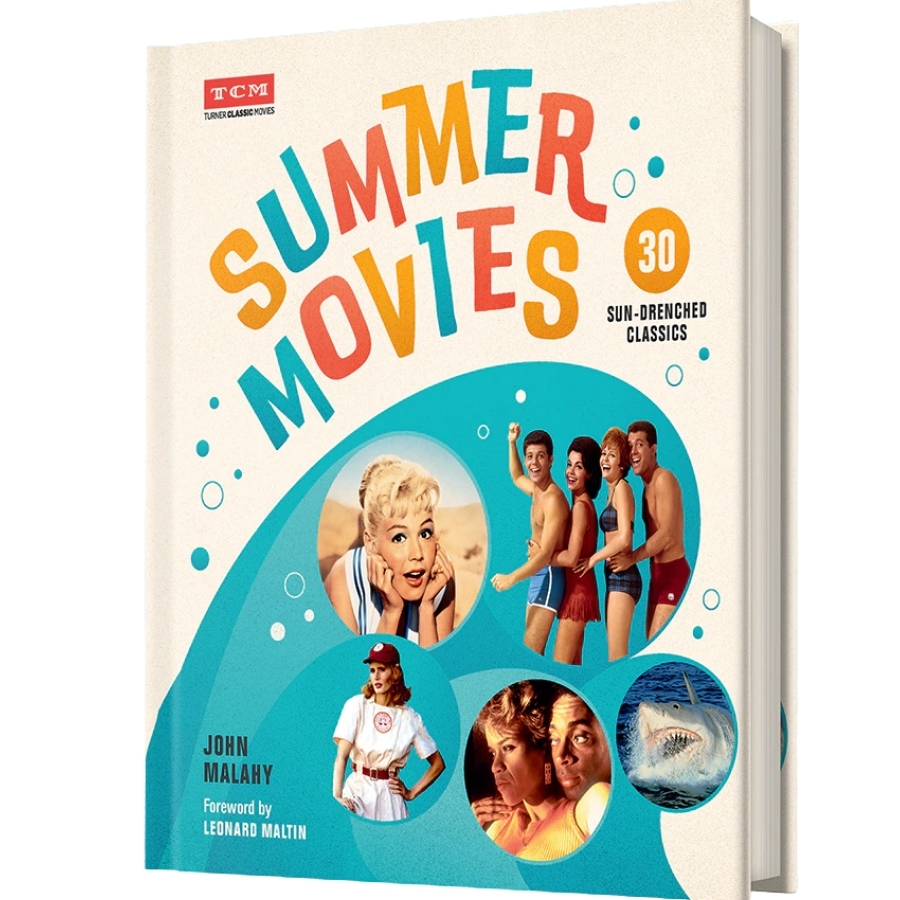
Summer Movies (2021)


This book from TCM explores the tradition of the summer movie. Author John Malahy takes a very broad approach to this subject. Such lighthearted summer fun as Gidget (1959), The Parent Trap (1961) and Beach Blanket Bingo (1965) co-exist with the likes of Ingmar Bergman's Smiles of a Summer Night (1955), Alfred Hitchcock's Rear Window (1954) and Spike Lee's Do the Right Thing (1989). Also included are the part-silent part-talkie Lonesome (1928), the Andy Hardy movie You Only Live Once (1937), Jaques Tati's Monsieur Hulot's Holiday (1953) and of course the original summer blockbuster Steven Spielberg's Jaws (1975) as well as many more. This broad approach makes this book a must for both causal movie fans and hard boiled cinephiles (who might even discover a film or two from this book). 

The writing style and format of this book makes it a light and breezy read, while still having quite a bit of substance. Malahy's tone is warm, causal and inviting. Yet at the same time he offers some great critical insight and historical background for these films that causes us to look at movies we have seen before in a new way. 

A nostalgia-soaked introduction by Film Historian and Critic Leonard Maltin only adds to the great fun of this book. 

Sunday, June 8, 2025

The Great Movie Shorts (1972)


Leonard Maltin's The Great Movie Shorts is a seminal book on classic short subjects. While this book is still incredibly enjoyable and informative today, to truly appreciate it, you must put into the context of the time it was written. At this time most writings about movie focused on "important" films, nearly all of which were feature length. A whole book long study of the live action short subject of the 1930's and 40's was something virtually unheard of. Today there have been many books written about classic short subjects (Leonard Maltin would even co-write another on (with Richard W. Bann), The Little Rascals: The Life and Times of Our Gang). As such this could have been a very basic history and still been an important book. That this is such a well-researched and incredibly informative (even today) book at this time makes it all the more impressive. 

This book is broken up into multiple different sections. The first of these is brief history of each major (and some not so major) Hollywood studio and their output in the short subject field. The second is a survey of many of the classic short subject series. This section makes up the bulk of the book and as well as the surveys each series gets a filmography giving you a list of each film, acting and directing credits and a plot summary. This section includes the most popular and famous series such as Laurel and Hardy, The Three Stooges, Our Gang (AKA The Little Rascals), Joe McDoakes, Pete Smith (whose shorts play on TCM regularly) and Charley Chase. Also included are the sound shorts of the beloved silent comedians Buster Keaton and Harry Langdon (the talkie work of legendary silent comedy producer Mack Sennett is even chronicled in this book). Here you get a great picture of an overlooked part of the work of some true Hollywood legends. There are also many series here that even the most avid cinephiles will not have seen or maybe even heard of. Not all the series listed here are comedies as we also get a look at such series as Crime Does Not Pay, John Nesbit's Passing Parade and Screen Snapshots. After this comes surveys of various genres that were not talked about in depth elsewhere in this book (newsreels, travelogues, musicals and sports). 

With all this the book marks a perfect introduction to those who wish to get further into classic short subjects, letting you know all aspects of the classic live action short subject, so that whatever your interests may be, you will know when to start. Maltin's writing also often fully reflects his passion for the subject and will make you want to seek out many of the films he has written about. Yet this book is equally essential to seasoned movie buffs. It's in-depth filmographies, look at obscure films (as well as the better-known ones), surprisingly in-depth histories and especially its quotes from many of those who worked on these films (many of whom Maltin talked to firsthand) make this just as essential reading for true cinephiles. Beyond this the book is simply a lot of fun to read. 

This book would be reissued and updated in 2015, when it would be retitled Selected Short Subjects" From Spanky to the Three Stooges

This book should have a treasured place in every movie buff's library. It certainly has a very cherished place in mine. 


Sunday, June 1, 2025

Silent Film of the Month: The Saphead (1920)


Run Time: 77 minutes. Studio: Metro Pictures Corporation. Directors: Herbert Blaché, Winchell Smith. Writer: June Mathis.  Producers: John Golden, Marcus Loew, Winchell Smith. Main Cast: Buster Keaton, Edward Jobson, Beulah Booker, Edward Connelly, Edward Alexander. Cinematographer: Harold Wenstrom. Art Director: F.H. Webster.

The Saphead is a rarity in Buster Keaton's filmography. It is a silent feature film that Buster had little to no creative control over. As many of you know during the silent era, Buster was very much in charge of most of his films and even if others worked on them, Buster was the main creative force. This changed during the talkie era, when working for MGM and other studios, he found himself often employed as an actor rather than a filmmaker. 

In this film, Buster plays Bertie Van Alstyne, the son of millionaire Nicholas Van Alstyne (William H. Crane). He is in love with his adopted sister Agnes Gates (Beulah Booker). He spends all night out gambling and partying thinking that it will win her heart. However instead his father disowns him. His father gives him one million dollars, throws him out of the house and tells him that he can't marry Agnes until he makes something of himself. 

The storyline of this film is mostly simply melodramatic fluff. If you watch enough silent movies, there is nothing here that you haven't seen before and there are times when it can feel like a filmed play. However, these is still quite a bit of fun to this movie. It is clever how various parts of the storyline come together and there is quite a bit of fun to be had in the movie's melodramatic trapping. The climax is legitimately exciting allowing Buster to show off his physical agility. Despite the rest of the film being rather slow paced this climax moves at a very fast pace and features all the great silent action one could want from a Keaton feature. If it wasn't for Buster Keaton, this would be just another enjoyable but not especially memorable melodrama of the time period. However, adding Buster Keaton to the proceedings makes this a must watch for movie lovers. Buster is excellent in this straighter role as he brings his unique charm and likability to this rather standard role. Of course, for movie buffs it is also fascinating to see Buster Keaton in such an unusual role for him, making one wonder if Buster could have been successful as a dramatic actor. That fact that this was Buster's first feature length movie also adds some historical importance and enjoyment for movie lovers. This may be more of a curio than a great film, but it is a delightful little curio.  

Buster began his movie career (after being on stage since early childhood) working with the popular screen comedian Roscoe "Fatty" Arbuckle. He appeared alongside Arbuckle in many of Roscoe's greatest short films. Over the course of working with Arbuckle, he began to be an important asset to Arbuckle behind the camera as well as in front of. When Arbuckle moved to feature films, producer Joseph Schenk would sign Keaton up for his own series of comedy shorts. At the same time Schenk would also assign Buster to a very unexpected role, a feature film adaption of a popular Broadway play. It was on good recommendation that Buster was offered the role. The Broadway play starred none other than Douglas Fairbanks, who personally recommended that the role went to Buster Keaton. The short films that Keaton would start making after Arbuckle went into features would be pure unadulterated Keaton, showing his filmmaking genius at its fullest. On the other hand, what amounted to Buster's first feature film had the comedian employed strictly as an actor, giving him no say in the story or filmmaking. This film ended up reaching theaters before his more Keaton-esque shorts making this the first-time movie audiences saw Buster in a lead role. 

The directors of this film were Herbert Blaché and Winchell Smith. Herbert Blaché is probably best known today for having been married to the legendary early cinema director Alice Guy Blaché. His own directing credits include The Song of the Wage Slave (1915), A Prisoner in the Harem (1913), The Million Dollar Robbery (1914) and The Divorcee (1919). The Divorcee starred none other than Ethel Barrymore. This movie marked the only screen directorial credit for Winchell Smith. Smith was however a very successful playwright whose plays included Brewster's Millions,  Lightnin'The Last of Mrs. Cheyney and Waterloo Bridge. He also co-wrote the play The New Henrietta, upon which The Saphead was based.


The New Henrietta was a play with an interesting history. In 1887, playwright Bronson Howard's play The Henrietta hit the stage. It became very popular with both critics and audiences and was hailed by many as the playwright's masterpiece. The play had such a charm over those who had seen it that in 1913, it would receive a modern updating. This new play would be called The New Henrietta and would be written by Winchell Smith and Victor Mapes. Mapes was a playwright and novelist, who also co-wrote the play The Hottentot with Smith. This new play would feature original actor William H. Crane reprising the role of Nicholas Van Alstyne and Douglas Fairbanks in the role of Bertie. Before The Saphead Douglas Fairbanks had previous been in a very loose film adaption of the play entitled The Lamb (1915). In 1919 Fairbanks became interested in bringing a more faithful adaption to the screen. Fairbanks brought Winchell Smith over to direct this film version as well as writer June Mathis to help write the screen play. He planned to bring much of the play's cast to this movie version. This however took longer than expected and Fairbanks grew less interested in the picture, especially as he began work on The Mollycoddle (1920), a more typical Fairbanks action film. It was then Marcus Loew purchased the property from Fairbanks as well as Winchell Smith, June Mathis and original Broadway actor, William H. Crane. At this time Loew was the head of Metro Pictures Corporation, who distributed Joseph Schenk's films.  

Upon its release critics praised Buster Keaton's performance but were less fond of the often-melodramatic storyline.  

In Jim Kline's 1993 book, The Complete Films of Buster Keaton, the film historian writes, "Unlike Fairbanks [in The Lamb], Buster us totally convincing both as sheltered Milquetoast and as a spirited dynamo. His vaudeville experience, where he was not only exposed to an endless variety of acting styles but also played several assorted parts himself, gave him the resources to adapt to the role, Seeing Keaton create a fully developed screen character, knowing that for the previous three years he had been indulging in roughhouse slapstick with Arbuckle, is a revelation, proving that Buster was a gifted actor as well as a superb comedian. Like Fairbanks, he was fond of the Bertie character and based many - arguably all - of his feature film portrayals on this type, one who appears weak and dim-witted at first but becomes the strongest, most resourceful and dynamic figure of all."   

Despite this Buster wasn't as sure about how well he fit the role. In an interview with the Los Angeles Times, Buster would state, "Don't know why they chose me for the part anyhow. Only I've got a blank pan. Saw a nice, fluffy pie on the set the other day that would have looked good on the hero's face, but he got away just in time. Winchell Smith watches me all the time. He's the author and is afraid I'll do something all wrong. I had to be shaved in a scene the other day, and Mr. Smith was scared to death. He thought I might try to get funny and eat the soap! Mr. Smith certainly does worry about me." 

Here is an exhibitor's review from a 1921 issue of Exhibitors Hearld. "The Saphead, with Buster Keaton. - Play not so much but Keaton's 'never smile' role was thoroughly enjoyed. - Giacoma Bros., Crystal Theatre, Tombstone, Ariz. - General Patronage." 

The following is an article from an issue of Motion Picture News dated January 8, 1921. "Along with 'The Saphead' the only feature film Buster Keaton ever made, exhibitors have also played a Keaton two-reeler. These exhibitors report phenomenal success states Metro. The owner of the Broadway theatre, Springfield, Mass, was the first to see the advantages of playing the Keaton and the William H. Crane feature along with a Keaton comic two-reeler. The success attained through a tremendous box office showing attracted the attention of other exhibitors, who have also seen fit to play 'The Saphead' along with a Keaton short film. At Loews Stillman in New York, and again in Cleveland, 'The Saphead' and 'The Scarecrow' were teamed to furnish the entertainment for the week. In each instance the receipts were tremendous, declares a message from Metro headquarters." 


Who's Who on the Screen, 1920


For anyone interested in watching this film, you can do so below on YouTube. The movie is also available on a Kino DVD and Blu-ray that also includes two classic Keaton shorts. 


Who's Who on the Screen, 1920


                                                                    Resources Used

Buster Keaton: A Filmmaker's Life by James Curtis, 

The Complete Films of Buster Keaton by Jim Kline

https://www.tcm.com/tcmdb/title/499859/the-saphead#articles-reviews?articleId=430503

Wednesday, May 21, 2025

The Great Movie Comedians (1978)


Well written and well researched Leonard Maltin's 1978 book remains essential reading for all fans of classic movie comedy. 

The book starts with an introduction that discusses the work of silent film comedians that do not receive their own chapters later in this book. This introduction is just as much essential reading as what follows. Offering a brief history of some of these forgotten clowns and how they contributed to the broad history of screen comedy, while also explaining what keeps them from entering into the pantheon of "Great Movie Comedians" like those that receive their own chapters here makes for compelling reading. Quotes for those who worked with these comedians firsthand provide even greater insight to who these comedians were and what comedy filmmaking was like in the silent era. This is one of the rare books where I wish that the introduction had gone on longer. 

The actual chapters cover 22 of the best comedians (or comedy teams) to ever grace the silver screen. These are Charlie Chaplin, Mabel Normand, Roscoe "Fatty" Arbuckle, Buster Keaton, Harold Lloyd, Harry Langdon, Charley Chase, Raymond Griffith, Marie Dressler, Laurel and Hardy, Will Rogers, Joe E. Brown, The Marx Brothers, W.C. Feilds, Mae West, The Three Stooges, Abbott and Costello, Bob Hope, Danny Kaye, Red Skelton, Jerry Lewis and Woody Allen. Each of this chapters provides a brief history of the comic's career, some critical insight and a filmography. The critical insight truly shows Maltin's talent as a critic and a writer. He has great admiration for the talent of each of these performers, while also allowing himself to critique the flaws in some of their work. While I may not agree with all his critical opinions (I have a much higher opinion of Harry Langdon's self-directed efforts), they are all well written and insightful. Naturally the history may not be as in depth as what you might read in an entire book dedicated to one of these comics, but for the brevity of these chapters, they are surprisingly insightful. The quotes from those who worked with these comics are invaluable even to film buffs, who may know the majority of the information in this book. Though today, we may take the filmographies for granted it is important to remember how in the pre-internet days, how valuable a simple list of each of these performer's films was to any film buff. 

If I were to find fault with any of these chapters, it would be the one about Harry Langdon. This is the rare occurrence where Maltin gets his film history wrong. He gives too much credit to Frank Capra and too little to Langdon himself for the creation of Langdon's screen character. However, this is not completely Maltin's fault. One must remember that at the time this book was written there was still a lot of research to be done on Langdon, and his films were not easy to see. Because of this it is easy to have believed Frank Capra's claims to have been instrumental in the creation of Langdon's character. I can't say that I wouldn't have made the same mistake at the time. Today one can see that Langdon's character was already on his way to being formed by the time that Frank Capra began working on Langdon's films. Yet even with this, I am very grateful to Leonard for calling attention to Langdon at this time period. 

This is a truly excellent book.         


Monday, April 14, 2025

Happy Birthday to Me

Guess what my friends, today is my birthday. I am officially 33 years old. 


I celebrated my birthday yesterday with a small group of good friends. We all went to my personal favorite place in the world, Old Town Music Hall to see the classic silent Alfred Hitchcock film, The Lodger (1927). Though this was Hitch's third film as a director, it is the movie that the master of suspense would refer to as the first real Hitchcock film. Not only is it his first suspense movie but it is the film that would introduce many of the themes that would play a major role in his most popular work. The film was accompanied live on the Mighty Wurlitzer Pipe Organ, which was being played by the wonderfully talented musician, Robert York. Some of my friends had never seen a silent movie before and I am very happy to report that they very much enjoyed it. 


Of course, I have long been a fan of Hitch's British films, many of which hold their own with his more famous Hollywood work. 


As someone who is passionate about both movies and country music, I love that I share my birthday with both Turner Classic Movies and Loretta Lynn. 


On the topic of Loretta Lynn, I still consider Coal Miner's Daughter (1980) to be the best musical biopic. 


Also mentioning TCM, I am extremely excited about the TCM Film Festival, later this month. The schedule is already up and there are tons if great films lined up. /


Though TCM is still my favorite TV channel. However, METV Toons is now running a close second. This new channel is truly a godsend for cartoon fans everywhere. This is the type of cartoon channel; I have wanted to exist for my whole life. Rather than being aimed at kids, this channel is aimed at an audience that I fall perfectly into. This is the audience of film buffs who love cartoons. It is filled with cartoons that range from beloved classics to compete obscurities. 


On the subject of animation, lately I have also been on a real Disney kick, especially old school Disney. 


I am of course always on a silent comedy kick. 


/
/


What is a better way to end this post than with one of the greatest short comedies ever?


Monday, March 31, 2025

Silent Films on TCM for April 2025


As I know many of you, like me, are fans of both silent movies and TCM. Here is a list of silent films that on playing on TCM this April.

Wednesday April 2nd

Sherlock Jr.
(1924) Director: Buster Keaton. Starring Buster Keaton and Kathryn McGuire. 1am Pacific. 4am Eastern. 

Sunday April 6th

The New Klondike (1926) Director: Lewis Milestone. Starring Thomas Meighan and Lila Lee. 9pm Pacific. 12am Eastern. 

Sunday April 13th

The Oyster Princess (1919) Director: Ernst Lubitsch. Starring Ossi Oswalda and Harry Liedtke. 9pm Pacific. 12am Eastern. 

Thursday April 17th

The Life and Passion of the Christ (1907) Director: Ferdinand Zecca. 4am Pacific. 7am Eastern. 

Sunday April 20th

Ben Hur: A Tale of the Christ
 (1925) Director: Fred Niblo. Starring Ramon Novarro and May McAvoy. 9pm Pacific. 12am Eastern. 

Sunday April 27th

Dogs of War
(1923) Director: Robert F. McGowan. Starring Our Gang. 8:30pm Pacific. 11:30pm Eastern. 

The Temptress (1926) Director: Fred Niblo. Starring Greta Garbo and Antinio Moreno. 9pm Pacific. 12am Eastern. 

Monday April 28th 

The Mysterious Island
(1929, part talkie) Director: Lucien Hubbard. Starring Lionel Barrymore and Jacqueline Gadsden. 11:45am Pacific. 2:45pm Eastern. 


Saturday, March 22, 2025

Some Cartoons for Saturday Morning #223

 Hello my friends and happy Saturday morning. Once again it is time for some classic cartoons. 

Today's cartoon selection starts with a very important film to all animation fans, Gold Diggers of '49 (1935). This black and white Looney Tune is so important because it is the first cartoon on which Tex Avery (here billed as Fred Avery) is the credited director. Though his timing has not quite reached the legendary level it would with his later more famous films, this is certainly a very fast paced cartoon for its day, and you can see how Tex would soon help redefine the Looney Tunes style of humor. This movie also marks the second speaking role for Porky Pig and the only one where he has the deeper speaking voice that you hear here. The real star of this movie though was Beans the Cat. Porky and Beans had both made their big screen debut in the color Merrie Melodies cartoon, I Haven't Got a Hat (1935). It seemed like many of those working at Warner Brothers felt that Beans would be the next big cartoon star for the studio, as he became the star of their Looney Tunes series for a short while, before Porky Pig would take over the series. 


Now for an educational short from the UPA studio, Look Who's Driving (1954). This film was directed by Bill Hurtz, whose other work for the UPA studio included A Unicorn in the Garden (1953) and Hotsy Footsy (1952) with Mr. Magoo. He would go on to be a director for the Jay Ward studio working with such characters as Rocky, Bullwinkle, Super Chicken, Dudley Do Right, George of the Jungle, Hoppity Hooper, Mr. Peabody and Sherman. 


Up next comes Adventures of an * (1956). This was the first film that husband-and-wife team, John and Faith Hubley made together. The work that these two did together are some of the most artistically brilliant, animated shorts of all time. 


Here is a little animation that John and Faith Hubley did that appeared on Sesame Street


Up next is a classic Fleischer Brothers Screen Song cartoon, Please Keep Me in your Dreams (1937). Be sure to sing along each and every one of you. 


Now it is time for a commercial break. 


The cartoons continue with one of the most famous cartoon shorts of all time, Steamboat Willie (1928). While contrary to popular belief this was not the first sound cartoon, there is no doubt that no cartoon before had used sound as well as this film did. This was the short that opened up the door for what sound cartoons could be and its effect could soon be felt on almost every sound cartoon being made. Though this was not the first Mickey cartoon made either (Plane Crazy and The Galloping Gaucho were both made before it), this was the film that made Mickey a true movie star. In fact, after the success of Steamboat Willie the two earlier Mickeys were given synchronized soundtracks because of Willie's success as a talkie. Willie brought about the idea that unlike early live action talkies (which often sparsely used music outside of musical numbers), sound cartoons would use music as just as important a part of the storytelling as the visuals. Even when studios like the Fleischer studio and Warner Brothers would make cartoons in their own style, this principal was largely employed. Walt would later recall "When the picture was half finished we had a showing with sound. A couple of my boys could read music and one of them [Wilfred Jackson] could play a mouth organ. We put them in a room where they could not see the screen and arranged to pipe their sound into the room where our wives and friends were going to see the picture. The boys worked from a music and sound effects score. After several false starts sound and action got off with the gun. The mouth organist played the tune and the rest of us in the sound department bammed tin pans and blew side whistles on the beat. The synchronization was pretty close. The effect on our little audience was nothing less than electric. They responded almost instinctively to this union of sound and motion. I though they were kidding me. So they put me in the audience and ran the action again. It was terrible but it was wonderful! And it was something new." The reaction from audiences when the film hit theatres was if anything even greater. It is hard to overstate just how incredible the reaction to this cartoon was when released. While this cartoon cannot have the feeling of newness or startling innovation it once had, it still works today wholly on an entertainment level. The truth is that this cartoon is still a lot of fun and the gags remain charming and clever over 90 years later. The film received the #13 spot in Jerry Beck's book, The 50 Greatest Cartoons. November 18, 1928, marked Steamboat Willie's debut at New York's Colony Theater and that date is now widely considered to be Mickey's birthday.


Up next is the Terry Toons cartoon, Pastry Panic (1951). This movie stars the character Little Roquefort and was directed by Mannie Davis, one of the Terry Toons studio's most prolific directors. While this film may not reach the same heights as the Tom and Jerry shorts, it is a fun little movie. 


Now for one of Walt Disney's silent Alice Comedies, Alice Gets Stage Struck (1925). This film stars Margie Gay, the third child actress to play Alice. The movie features Alice and her friends putting on a show of Uncle Tom's Cabin. A later Disney short (Mickey's Mellerdrammer (1933)) would feature Mickey Mouse and his friends putting on a performance of the same play. Uncle Tom's Cabin would be a comedy staple in many films both animated and live action. The live action portions of the Alice Comedies would be heavily inspired the silent Our Gang (or Little Rascals) shorts. The Our Gang kids had already briefly put on a version of the play in The Big Show (1923) and would soon take another stab at Uncle Tom in Uncle Tom's Uncle (1926). The Our Gang kids would return to Uncle Tom in the talkie era with Spanky (1932). Like all Alice Comedies, Alice Gets Stage Struck would be directed by Walt Disney himself. 


Today's cartoon selection ends with The Simpsons in Echo Canyon (1989). This short was made for The Tracey Ullman Show before The Simpsons got their own TV series. 


Thanks for joining me. Come back next week for more animated treasures. Until then may all your tunes be looney and your melodies merry. 

Resources Used

Of Mice and Magic: A History of the American Animated Cartoon by Leonard Maltin.

The 50 Greatest Cartoons by Jerry Beck

Hollywood Cartoons: American Animation in its Golden Age by Michael Barrier.

https://www.cartoonbrew.com/brewfilms/look-whos-driving-3035.html


Tuesday, March 18, 2025

According to Al St. John

 If you are a fan of either silent comedy or B-westerns than you are probably familiar with Al St. John. As the nephew of Roscoe "Fatty" Arbuckle, he was a regular presence in the comic's classic comedy shorts, including those featuring Buster Keaton. In the talkie era, he would appear often in B-westerns as a comic-relief character named Fuzzy Q. Jones. As this character he would appear in films starring such B-western stars as Bob Livingston, Buster Crabbe, Bob Steele, Fred Scott, Jack Randall and Lash La Rue. 

The following is a 1920 article from Motion Picture Magazine about Al St. John. If you have trouble reading the following article, click on the pages and use your touch screen to zoom in. If you don't have a touch screen click here


Here is a classic short film featuring Roscoe "Fatty" Arbuckle, Buster Keaton and Al St. John, The Butcher Boy (1917)


Here is a classic B-western featuring Al St. John in the title role, Fuzzy Settles Down (1944), also starring Buster Crabbe.