Showing posts with label Three Stooges Feature Film. Show all posts

Wednesday, May 18, 2022

The Outlaws is Coming (1965)


The Outlaws is Coming is the last feature film, The Three Stooges ever made, and it was certainly a high note to go out on. 

The crew behind the scenes on this film include some who had worked on other Stooges films of the 1960's. These included writer-director-producer Norman Maurer (also Moe's son in law), who had worked on the past few Stooges feature films starting with The Three Stooges Meet Hercules (1962). With that film he was a writer and producer. With The Stooges previous movie, The Three Stooges Go Around the World in a Daze (1963), he would move to the director's chair. The Outlaws is Coming was the second and last time he directed one of the Stooges features though he would go on to direct the Stooge TV pilot, Kook's Tour (1970).  After his brief directorial career, he would become a writer for Hanna-Barbera cartoons. He would appropriately write the episodes of The New Scooby-Doo Movies (1972-1973) where the Mystery Inc. gang would meet the Stooges. He would also create the short lived TV series, The Robonic Stooges (1978) and would write episodes of Scooby's Laff-A Lympics (1977-1979), which would feature the voice of former Stooge Joe Besser. Also returning on this movie was co-writer Elwood Ullman. Ullman had co-written the four Stooges feature films that directly preceded this one . He started writing for The Stooges in 1937 and had written many of the trio's best short films starting in the Curly era and ending in the Joe Besser era (his last Stooges short was Guns a Poppin! (1957)). The Stooges were not the only comedy team Ullman wrote for. He also wrote for Martin and Lewis (The Stooge (1951)), Abbott and Costello (Lost in Alaska (1952)), Ma and Pa Kettle (Ma and Pa Kettle at Waikiki (1953)) and The Bowery Boys (The Bowery Boys Meet the Monsters (1954), Jungle Gents (1954), Bowery to Bagdad (1955), High Society (1955), Jail Busters (1955), Spook Chasers (1957)). He had also been a writer on Elvis Presley's most slapstick movie, Tickle Me (1965).  Also returning from the previous Stooge feature films of the 1960's was composer Paul Dunlap. Irving Lipman had been the cinematographer for the directly previous Stooge feature film and had also shot some of the trio's short films from the late 1950's.

Norman Maurer remembered this being one of the easiest times he ever had selling a script. "I was riding an elevator in Columbia's New York office when Leo Jaffe, the company's chairman of the board, saw the cover artwork on my script outline for The Three Stooges Meet the Gunslingers [the working title for this film]. He looked at it and said, 'That's funny! Let's make this picture.'"


In this movie Boston newspaper editor, Kenneth Cabot (Adam West) is sent out west to stop a slaughter of buffalos. For this mission he is accompanied by three clumsy and accident-prone printers (who the publisher simply wanted to get rid of). On this mission the foursome become the target of nearly every gunslinger in the west. Luckily they have some help from Annie Oakley (Nancy Kovac).

You read that story desciption right. The boys co-star with the great Adam West in this film. A year after this movie, Adam West would become TV's Batman and would go down in pop culture history (desrvedly) as an icon. West's career as Batman would not end with the 1966-1968 live action TV series. He would voice the character in various TV cartoons including Filmmation's  The New Adventures of Batman (1977), Hanna-Barbera's SuperFriends: The Legendary Super Powers Show (1984), The Super Powers Team: Galactic Guardians (1985). The last of those shows listed would feature the first time the death of Bruce Wayne's parents would be addressed in an animated cartoon. He would also do guest voices for various Batman TV cartoons such Batman: The Animated Series (1992-1995), The Batman (2004–2008) and Batman: The Brave and the Bold (2008-2011). He returned to the role of Batman in the delightful direct to video movies, Batman: Return of the Caped Crusaders (2016) and Batman vs. Two-Face (2017). Besides Batman his other best known character is the mayor in Family Guy (1999-present). He had only the best of things to say about working on The Outlaws is Coming, "The Outlaws IS Coming. What a wonderful experience! Our first meeting at the Columbia ranch, one morning quite early, and I went in to makeup and got on my western duds and came out in the street. And I saw Larry Fine sitting in a chair and I think his wife was yelling at him about something. Actually, the guys were very serious off camera, their demeanors. They were very serious artists in their own way and I was surprised how quiet they were in respect to their screen personae.
I think the funniest little incident of the picture that I remember, the main thrust of the plot was that we were trying to save the buffalo and I was the young lawyer from Boston and we had the same interests and that's how we got together. So we spent the movie trying to save the buffalo. The wrap party at the end of the movie and Moe says, 'Ok, everyone's invited to my place in Bel Air for a buffalo barbecue!' And that sort of typifies these three restless knights. I never really spent much time with them away from the set. People don't do that often in Hollywood, you know, you're doing a series and you spend eighteen hours a day with people and you just kind of want to get away from them, it's probably more helpful that way. I wanted to go home with the Stooges every night, but they wouldn't let me!"

Out of all the later day Stooge feature films, this is probably the one that most closely resembles their classic short films. The storyline takes second place to the slapstick and satire and there is nothing too silly to happen in this movie. Like the short films, this movie is simply a live action cartoon and what more could one want from a Stooge film. This is apparent even before The Stooges first appear on screen. The film opens with the clever idea of an outlaw blasting away the letters in the opening credits. This is followed by some great narration (by Paul Frees, voice of Ludwig Von Drake (Donald Duck's uncle) and Boris Badenov (the evil spy from Rocky and Bullwinkle), as well as the Ghost host for Disneyland's Haunted Mansion ride) that delightfully parodies TV westerns of the day. As soon as The Stooges appear they start taking place in the classic slapstick that made their short films so popular. It is also important to note that as soon as The Stooges appear, they become the center of attention for the film. While there are a couple side-plots, they truly take a backseat to The Stooges' wackiness and this Stooge fan couldn't love that more. The jokes come fast and furious in this picture and many of them are quite funny. Watching this movie keeps a smile firmly planted on my face for the entire runtime. As well as the slapstick, the satire is quite good and funny, especially for those familiar with TV westerns of this era. I also love how the side characters are quite zany on their own, as this is reminiscent of the best Stooges shorts. No wonder both Moe Howard and Norman Maurer considered this their favorite Stooge feature.  

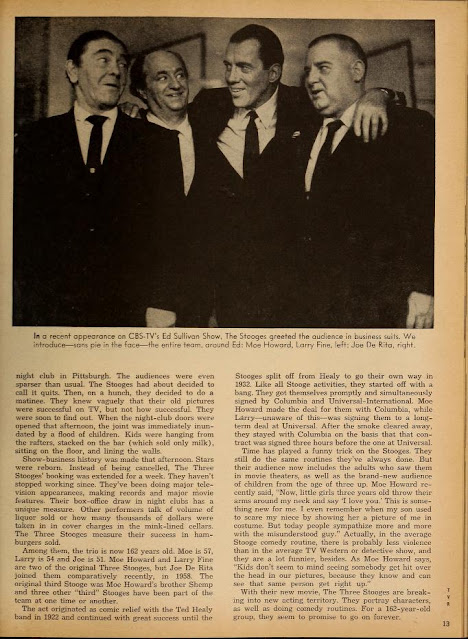
The following is from an issue of The Exhibitor dated December 16, 1964. "Tom Powers, city manager, Cinema Arts Theatres, announced that the world premiere of The Three Stooges latest comedy, 'The Outlaws is Coming,' will be held on Jan. 13 at the Texas [in San Antonio]. Formal ceremonies include a downtown parade and the premiere screening for local dignitaries. The show will be open to the public beginning Jan. 14. On hand for the premiere will be Moe Howard, Larry Fine and Joe De Rita, The Three Stooges. They are scheduled to arrive in Texas Jan. 11 to appear in Dallas and travel to Lost Valley Resort Ranch Inc., and Lost Valley Frontier Town near Bandera on Jan. 12." The following is from an issue of The Exhibitor dated January 27, 1965. "Richard Vaughn has announced that the next attraction at the Texas will be the Three Stooges in 'The Outlaws is Coming.' Tentative plans announced some time back for a world premiere of the film have been dropped for unannounced reasons." The following is from an issue of The Exhibitor dated January 27, 1965. "Bill Camfield, who appears on KTVT-TV in Fort Worth, Tx., as Icky Twerp, is seen as Wyatt Earp in the current motion picture featuring The Three Stooges, 'The Outlaws is Coming.' A multiple opening was held at 12 theatres in the Dallas area and two in the Fort Worth area." He was not the only TV hosts to be featured in this movie. As The Stooge shorts films had a revival in popularity due to be played on various kiddie shows on TV, the hosts of those kiddie shows would guest star as famous wild west figures in this movie. These included Officer Joe Bolton (Rob Dalton), Hal Fryar (Johnny Ringo), Johnny Ginger (Billy the Kid), Wayne Mack (Jesse James), Ed T. McDonnell (Bat Materson), Bruce Sedley (Cole Younger), Paul Shannon (Wild Bill Hickok) and Sally Starr (Belle Starr). Officer Joe Bolton had previously appeared in a bit role in The Stooges compilation feature film, Stop Look and Laugh (1960), as you can see below he also introduced many kids to The Our Gang (or Little Rascals) short films. These TV hosts are quite good in this movie playing the character with a real zaniness that I find hard to resist. I especially love the scenes with Johnny Ringo and Jesse James, the later of which cracked me up.

TV Radio Mirror, 1955


TV Radio Mirror, 1961


The Exhibitor, 1965


This film had 11 shooting days. Shooting began on Wednesday May 6, 1964 and continued straight to Friday May 8. After a weekend off, shooting resumed on Monday May 11 and continued to Friday, May 15. After another weekend off the shooting would continue from Monday May 18 to Friday May 22. The last day of shooting would be Monday May, 25. The scene with the US calvary riding to the rescue was reused from The Stooge short film, Out West (1947). The movie was shot at the Columbia Ranch (Stages 30, 32, 33) and at Bar-B-Buffalo ranch near Gilette, Wyoming. The movie would gross $1 million dollars at the box office. The film's title came from a promotion tagline for Alfred Hitchcock's The Birds (1963), "The Birds is coming!" 

Being a Stooge fan, I am so glad that they got to end their cinematic career on such a high note. This movie is a lot of fun and a pure Stooge film. After this the boys would voice themselves in a series of TV cartoons and would make a TV pilot, Kook's Tour (1970).  

Resources Used

The Three Stooges Scrapbook by Jeff Lenburg, Joan Howard Maurer and Greg Lenburg.

https://three-stooges.fandom.com/wiki/The_Outlaws_Is_Coming

https://www.imdb.com/

https://mediahistoryproject.org/


Tuesday, May 3, 2022

The Three Stooges Go Around the World in a Daze (1963)


Naturally after the success of their previous feature films for Columbia Pictures, The Three Stooges would have to follow up with another feature length movie. The result is my personal favorite Stooge feature, The Three Stooges Go Around the World in a Daze

With this film Norman Maurer (Moe's son in law) moved from being a producer and writer of Stooges films to being the director. This was not only his first time directing a Stooge film but it was his first time directing a movie of any kind. His career as a director would be very brief. He would direct the Stooges' next and last feature length film, The Outlaws is Coming (1965) as well as the Stooges TV pilot Kook's Tour (1970). He would as direct the short, Star Spangled Salesman (1968). This short would feature many TV stars (including the Stooges) essentially advertising United States Savings bonds. After his brief directorial career, he would become a writer for Hanna-Barbera cartoons. He would appropriately write the episodes of  The New Scooby-Doo Movies (1972-1973) where the Mystery Inc. gang would meet the Stooges. He would also create the short lived TV series, The Robonic Stooges (1978) and would write episodes of Scooby's Laff-A Lympics (1977-1979), which would feature the voice of former Stooge Joe Besser. Maurer also co-wrote this movie with Elwood Ullman. Ullman had co-written the three Stooges feature films that directly preceded this one (Snow White and the Three Stooges (1961), The Three Stooges Meet Hercules (1962) and The Three Stooges in Orbit (1962)). He started writing for The Stooges in 1937 and had written many of the trio's best short films starting in the Curly era and ending in the Joe Besser era (his last Stooges short was Guns a Poppin! (1957)). The Stooges were not the only comedy team Ullman wrote for. He also wrote for Martin and Lewis (The Stooge (1951)), Abbott and Costello (Lost in Alaska (1952)), Ma and Pa Kettle (Ma and Pa Kettle at Waikiki (1953)) and The Bowery Boys (The Bowery Boys Meet the Monsters (1954), Jungle Gents (1954), Bowery to Bagdad (1955), High Society (1955), Jail Busters (1955), Spook Chasers (1957)). He had also been a writer on Elvis Presley's most slapstick movie, Tickle Me (1965). Also returning from the previous Stooge feature films of the 1960's were composer Paul Dunlap and editor Edwin H. Bryant. Cinematographer Irving Lippman had also been the cinematographer on some of the Stooges short films from the late 1950's.


Boxoffice, 1963

This movie's story is a semi-sequel to the classic adventure tale. In it The Stooges play servants to Phileas Fogg the 3rd (Jay Sheffield). A con artist (Peter Forester) decides to make some money off of Fogg's great grandfather's great accomplishment of going around the world in 80 days. He tells our hero that his grandfather only was able to make the trip because of his wealth. He then bets that our hero couldn't make it around the world and 80 days without paying for transportation. The Stooges join Fogg for this journey and they find much trouble along the way. Naturally as well, the con artist is not going to play fair and attempts to sabotage every chance our heroes having of winning this bet.  


Joe De Rita considered this his favorite of the Stooge films he worked on and I wholeheartedly agree. I absolutely love this movie. This has the best story of any of The Stooges features with the possible exception of Snow White and the Three Stooges. While it would still clearly be a B movie, one could see the storyline making for a fun serious adventure film. Our main non-stooge character is quite likable and easy to root for. The romance is surprisingly well handled even if it takes a back seat to the comedy and adventure. The film even does a good job building up a bit of suspense and creating the feeling of going on a big adventure. Unlike Snow White however this movie has a lot of more typical Stooge humor. The story does an excellent job of working in some great Stooge routines. These routines are reminiscent of their best work in short films. Many of them made me laugh out loud and the ones the didn't kept a smile firmly planted on my face. In these scenes you get to see The Stooges fully in their element and it is obvious that age took away none of their great comedic gifts. These set pieces are very well integrated into the story and as funny as they are the always move the story forward. This is part of the reason the story works so well and that the film moves by at a very fast speed.

There is a clever in-joke that I truly love. When a trio of "psychiatrists" try to brainwash the Stooges, the boys end up brainwashing them instead. The "psychiatrists" then turn into Stooges themselves. When one of them does an eye poke, Moe tells him, "We don't do that anymore." This is a reference to how due to The Stooges work being more aimed at children, they had taken this act of violence out of their act.   

Stooge fans know that the boys were never above reusing routines they had done in previous films and that is evident in this movie. Luckily this movie borrows one of my favorite Stooge routines the Maharaja routine. This skit always cracks me up whenever I watch it so I was delighted to see it here. The boys first performed the skit when they played a supporting role in the feature length musical Time Out For Rhythm (1941). Below is the boys performing this skit in their classic short film, Three Little Pirates (1946). 


A running gag in this movie is that when Joe DeRita hears Larry play Pop Goes the Weasel, he goes crazy and seems to gain extra strength. This gag was the premise of The Stooges second short film for Columbia, Punch Drunks (1934). In this movie the essentially rework the climax of that film except instead of having Curly in a boxing match, Joe is in a sumo wrestling match. While this scene is not as laugh out loud funny as the earlier short, it is still a fun scene and works well enough. 


This movie had more working titles than any other Stooge film. These titles include The Three Stooges Go Around the World on Eighty Cents, The Three Stooges Go Around the Globe on Eighty Cents, The Three Stooges Circle the Globe on Eighty Cents, Around the World on Eighty CentsThe Three Stooges Circle the World on Nighty-Nine Cents, The Three Stooges Go Around the World on Seventy-Nine Cents, The Three Stooges Go Around the World on $1.89, The Three Stooges Meet Phenious Fogg and Merry Go Round the World. The reason for this is quite simple. United Artists which made the 1956 movie version of Around the World in Eighty Days, objected to early titles because they were too close to their film's title. This is a bit strange because the book was in the public domain, but that is how the movie world works. Eventually all parties would agree to the title the film has today. This movie had 13 days of shooting. Shooting began on Thursday May 9, 1963, and Friday May 10. Shooting resumed Monday May 13 to Friday May 17. After another weekend off shooting would continue Monday May 20 to Friday May 24. The last day of shooting would be Monday May 27. It was shot at Stages 12, 12A and 14 at Columbia Studios and on the Columbia Ranch. The film would be released September of 1963. 


The Exhibitor, 1963

This was the feature film debut for Jay Sheffield (who played Phineus Fogg the 3rd). Like many actors who worked in the Stooges' feature films of the 1960's, he did most of his work on TV. He had played the character of Steven Brent on the TV show Tammy (1965-1966), a role he would also play in the feature length movie, Tammy and the Millionaire (1967). He also appeared on various episodes of Hogan's Heroes (1965–1971), where he would play different characters on his multiple appearances. Joan Freemon (who played his love interest) also did a lot of work of TV. She played waitress, Elma Gahrigner, in the show Bus Stop (1961–1962), Dr. Sue Lambert in the series, Lassie (1954-1974) and Barbara Robinson in Code R (1977). On the movie side of things, she had acted alongside Elvis Presley and Barbra Stanwyck in Roustabout (1964) and Don Knotts in The Reluctant Astronaut (1967). Peter Forster who played the villain had done most of his work playing uncredited roles in movies and one off apperances in various TV shows like The Loretta Young Show (1953–1961), The Untouchables (1959-1963), Hazel (1961-1966), The Rockford Files (1974–1980) and Little House on the Prairie (1974-1983). One of his rare credited movie roles was in Escape from the Planet of the Apes (1971).


After this movie, The Stooges would only star in one more feature film, The Outlaws is Coming (1965). However they would have cameo appearances in the feature films, It's a Mad, Mad, Mad, Mad World (1963) and Four For Texas (1963).  

Resources Used

The Three Stooges Scrapbook by Jeff Lenburg, Joan Howard Maurer and Greg Lenburg.

https://www.imdb.com/?ref_=nv_home

https://mediahistoryproject.org/


Monday, April 11, 2022

The Three Stooges in Orbit (1962)


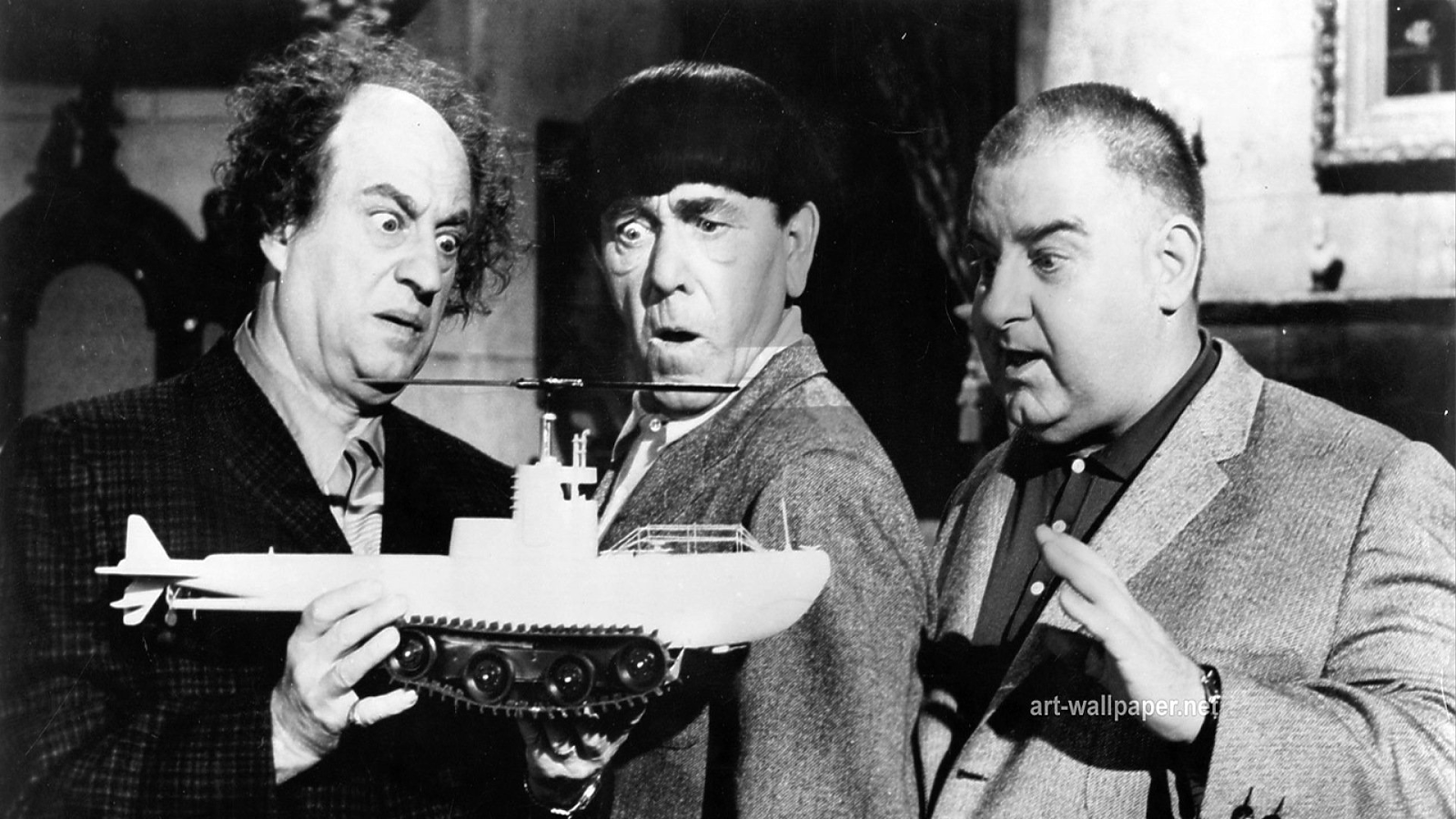
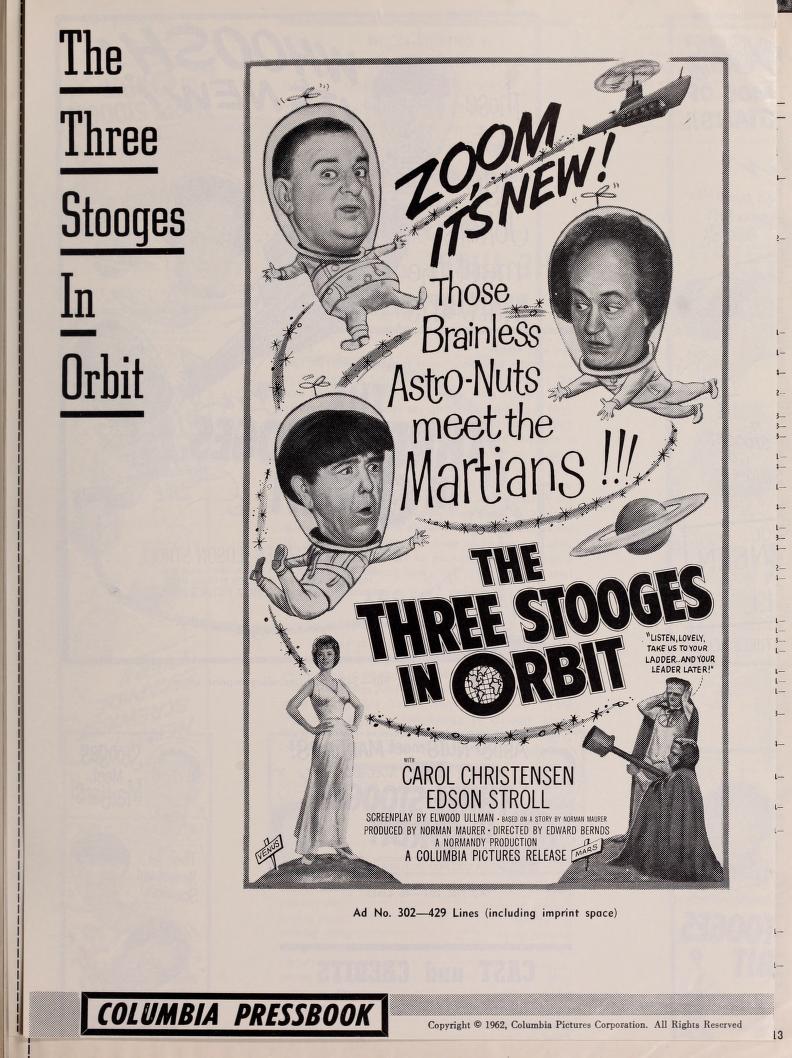
After the major success of The Three Stooges Meet Hercules (1962), it was only natural that Columbia Pictures would quickly follow with another feature film starring The Three Stooges. The film would be The Three Stooges in Orbit. This movie would have the boys facing off against aliens as they had previously done in their feature film Have Rocket Will Travel (1959) and their short film Outer Space Jitters (1957). To this movie's credit it never once feels like it is repeating anything from those previous pictures. 

With the desire to recapture the success of Hercules, this film would have many members of the behind-the-scenes crew return. Edward Bernds would return to the director's chair, Norman Maurer and Edwood Ullman would once again co-write the movie, Paul Dunlap would again do the music and Edwin H. Bryant would again be the editor. Edward Bernds, Norman Maurer and Edwood Ullman, all had history with The Stooges' characters, predating Hercules. His first time directing the trio was Micro-Phonies (1945), a film considered by most Stooge fans to be a real classic. Though he started directing the Stooges in the Curly-era most of the Stooges shorts he directed were during the Shemp era. In my opinion he was my favorite director of the Stooges during that time period and his Shemp films were often my favorite Shemp shorts.  However, working with the Stooges was only part of a long and varied career for Bernds. To quote Leonard Maltin, "He was never a household name, even in Hollywood, but I defy you to think of anyone else who worked with both Mary Pickford and Sam Peckinpah, wrote for Shemp Howard and Elvis Presley, and directed Hugh Hurbert and Zsa Zsa Gabor." Ellwood Ullman's first time writing a Stooges film was with Cash and Carry (1937) and he continued writing Stooges short films through 1957 ending with the Joe Besser short, Guns a Poppin (1957). He would continue to work with the Stooges on all their following starring feature films. Elwood Ullman and Edward Bernds would cowrite such movies as The Bowery Boys Meet the Monsters (1954, which Bernds also directed), Bowery to Bagdad (1954, which Bernds also directed), Jail Busters (1955) and Tickle Me (1965). The two of them working on Tickle Me probably explains why it is Elvis' most slapstick movie. Norman Maurer was Moe's son in law and at this time The Stooges' manager. Before ever working on a Stooge film, he had written The Three Stooges comic books. He would work on all of The Stooge films following this one and would even write for The Stooge characters as a writer for the Hanna-Barbera cartoon studio. There he would write the episode of The New Scooby-Doo! Movies, where the Mystery Inc. Gang met The Stooges and create the series The Robotic Stooges.   

The Stooges start off this movie down on their luck. Their landlady (Marjorie Eaton) has had enough of their antics and kicked them out. Meanwhile their TV show is in danger of being cancelled unless they can come up with a new gimmick. Having been kicked out of their apartment the boys rent a room with Professor Danforth (Emil Sitka) and his daughter Carol (Carol Christensen). The professor is an inventor who believes evil aliens are after his invention. He agrees that if the boys help him out with his alien problem, then he will help them out with trying to save their TV show with his new invention, electronic cartoons. 

While this may not be the best of The Stooges' later day feature films, it is still highly entertaining. Despite their ages, The Stooges prove to be just as great at delivering the slapstick goods as they were in their younger days. Each slapstick moment is delivered very well, and you can see that these old pros still knew how to make a joke work to its fullest advantage. It is true that this movie may not be as consistently hilarious as the best of their short films, there are quite a few good laughs to be found. This film even gives Curly Joe DeRita sone of his best moments with the Stooges as he gets a handful of pretty good lines. Also, while not every joke may be laugh out loud hilarious, none of them really fall flat either and they all help add to the joyful silliness of the movie. The fact that Stooge style silliness is the main goal of this film is also a great asset. While there is a romantic subplot (a sadly pretty bland one), it is fully kept in the background allowing The Stooges to fully be the stars of the picture. This is something that this Stooge fan loved. There are also some pretty clever gags in all this silliness. I loved The Stooges reading the Martians' subtitles to understand what they were saying, as well them saving Disneyland, Moe and Larry telling Curly-Joe how to make a hole in the wall and Joe practicing his TV speech.   

However, if I were to complain about this film, my biggest complaint would be the Martians themselves. These are rather bland and boring villains that neither feel that funny or frightening. They are just typical evil movie aliens with nothing to distinguish them. 


Boxoffice Magazine, 1962

This movie also benefits from a good supporting cast. This was the last feature film for Carol Christensen, who had begun her movie career only two years earlier with Freckles (1960). Edon Stroll, who played Prince Charming in Snow White and the Three Stooges (1961), returns to play Captain Tom Andrews here. TV fans will know him best for playing Virgil Edwards in McHale's Navy (1962-1966). George N. Neise who played the villain in The Three Stooges Meet Hercules again plays a villain in this film, as the alien Ogg. His partner Zogg is played by Rayford Barnes, like many of the costars of these 1960's Stooges movies, the majority of his career was spent on TV shows. His TV career began with a 1952 episode of Racket Squad (1950-1953) and ended with a 2000 episode of Touched By an Angel (1994-2003). Most of the time he played characters who only appeared in one episode of a show. In some shows, he would appear in multiple episodes as different characters in each episode. He appeared in two episodes of the show, The Invaders (1967-1968) and in both he plays aliens like he did in this film. One of the rare reoccurring roles he played on a TV show was as Ike Clanton in The Life and Legend of Wyatt Earp (1955-1961). Stooge fan favorite Emil Sitka has a large supporting role in this movie. He first worked with The Stooges in Curly's last short film Half Wits Holiday (1947). During the Shemp-era and the Joe Besser-era he would become a regular face in The Stooges' short films. He will be forever beloved by Stooge fans for his immortal role in the short film, Brideless Groom (1947) where he delivered the immortal line, "Hold hands you love birds." He is a rare supporting player who appeared in Stooge films with all six of The Three Stooges. 

The first day of shooting for this movie was April 6, 1962 and the last was April 27, 1962. However it is unknown what days the boy's were filming and what days no filming was being done. To save money on special effects some footage was reused from the sci-fi B-movie, Earth Vs. the Flying Saucers (1956). 

Comic book adaptions were made for most of The Stooges' feature films of the 1960's. However, The Three Stooges in Orbit's comic book adaption was especially interesting because it used live action frame blow ups from the movie for its pictures. 

With the Stooges' short films experiencing major popularity on TV in the late 1950's and early 60's, it was only natural that The Stooges would try to have their own half hour TV series at this time. One of the attempts for this was called The Three Stooges Scrapbook. The idea for this show was similar to the team's later TV series, The New Three Stooges (1965). It would feature the Stooges in both live action and animated segments and would be produced by The Stooges and Norman Maurer's Normandy Productions. TV Spots Inc. would agree to make 78 5-minute cartoons for the show. Each episode would feature two of these animated segments one with The Stooges as adults and one entitled Li'l Stooges, which would feature kid versions of the characters. Because the Stooges were becoming much more popular with children due to TV, parent groups were complaining about the violence of their films. However cartoons with equal amounts of violence were also popular with children and there were (at this time at least (by the 1970's this would have changed drastically) far less complaints about children watching these. So the plan was that the live action segments would feature much less violence while the cartoons would be more typically violent Stooges slapstick. Moe would speak about this in an interview for the show stating, "In the live portions of these films, we will cut out the deliberate physical horseplay and substitute unintentional violence - if you have to call it violence. In other words I won't purposely clunk Larry or Curly-Joe, but if I'm carrying a ladder, let's say and I make a quick turn, it could accidently clip Curly on the bean. The deliberate stuff will only be seen in the cartoon segments. That will make everybody happy." The TV series was never to be though. Though some sponsors were interested in the show, a good time slot could never be found. The only timeslots offered for the show would be after 10pm. Since The Stooges were hugely popular with children and had been aiming their act more at younger audiences at this time then they had been before, this slot would have alienated a huge portion of the show's audience. This was simply past kids' bedtimes and unacceptable for that reason. Because of this the sponsors that were interested in it all pulled out leaving the show to be shelved. However, this was not the end of the story. A pilot episode entitled Home Cooking (1960) had been shot. Much of the live action portions of that pilot appear in this movie. In fact, it is out of the pilot being unsold that this movie would be made. Norman Maurer would later state, "I approached the Columbia executives with the half-hour Scrapbook film (a $30,000 investment), and an expanded storyline, and they bought it." Though the pilot was shot in color and featured a laugh track, in this movie the footage appears in black and white and (thankfully) sans laugh track. 


Resources Used

The Three Stooges Scrapbook by Jeff Lenburg, Jean Howard Maurer and Greg Lenburg. 

https://mediahistoryproject.org/

https://www.imdb.com/?ref_=nv_home


Thursday, March 17, 2022

The Three Stooges Meet Hercules (1962)


After the huge departure of Snow White and The Three Stooges (1961), The Three Stooges Meet Hercules saw The Stooges return to more typical fare. This more than their previous two features with Curly Joe DeRita resembles the team's classic short films. Looking at the credits make it clear to stooge fans what one major factor in this change was. The movie was directed by Edward Bernds, who had a long career with The Stooges. His first time directing the trio was Micro-Phonies (1945), a film considered by most Stooge fans to be a real classic. Though he started directing the Stooges in the Curly-era most of the Stooges shorts he directed were during the Shemp era. In my opinion he was my favorite director of the Stooges during that time period and his Shemp films were often my favorite Shemp shorts. This did not even mark the first time Bernds directed a feature film with the Stooges. He directed the B-Western, Gold Raiders (1951), which featured The Stooges as comedy reliefs to George O'Brien's western hero. After Hercules Bernds would direct another Stooge feature film, Three Stooges in Orbit (1962) as well as the live action wraparounds for the Stooges' TV cartoon show, The New Three Stooges (1965). However, working with the Stooges was only part of a long and varied career for Bernds. To quote Leonard Maltin, "He was never a household name, even in Hollywood, but I defy you to think of anyone else who worked with both Mary Pickford and Sam Peckinpah, wrote for Shemp Howard and Elvis Presley, and directed Hugh Hurbert and Zsa Zsa Gabor." Besides his films with the Stooges movie comedy fans might know Bernds for directing some of The Bowery Boys movies. 

Another reason this film is a return to The Stooges' roots is because of its producer and co-writer Norman Maurer (who was also Moe's son in law). Though Norman had not worked on a Stooges film before he had worked with the Stooge characters before in their comic book adventures. By the time Norman Maurer made comics with the Stooges, he was already well established in the industry having worked on Daredevil comics and Boy Comics. His good friend since childhood, Joe Kubert had made a deal with Jubilee Publications' owner, Archer St. John, to produce and edit comics for the company. Joe called Norman suggesting that he would become his partner. In the same conversation, he suggested they make comics using the Stooges. Norman began negotiating with the boys about using them as subjects for these comics and in May of 1947, a deal was made. The first Three Stooges comic book though wouldn't appear until February of 1949 with Norman as the writer, editor and illustrator of the series. At first these comics were adaptions of the boys' short films, but in time the comics would come to tell original stories. Over the course of making these comics, Norman got a real handle on who these characters were and made comics that are truly delightful for fans of their films. By the time this movie was made, Norman had become the Stooges' manager. When Columbia made a Stooge feature, Stop! Look! and Laugh! (1960) without any involvement from the actual Stooges, The Stooges tried to sue. This ended up being settled out of court, with The Stooges being given a contract to make a feature film for them with Maurer as producer. This would end up not only applying to The Three Stooges Meet Hercules but all the Stooge features to follow. During the 1970's and 80's, Norman would work as a writer for Hanna-Barbera's TV cartoons. His work during this time would also have its Stooge connections. He would be a writer on The New Scooby-Doo! Movies (1972-1973) including the episodes where The Mystery Inc. Gang would meet The Three Stooges. He also created a short-lived series for the studio called The Robonic Stooges (1978), which would feature the trio as animated superheroes. He would also write for Scooby's All Star Laff-A-Lympics (1977-1979) which featured a genie named Babu, who was voiced by former stooge, Joe Besser. 


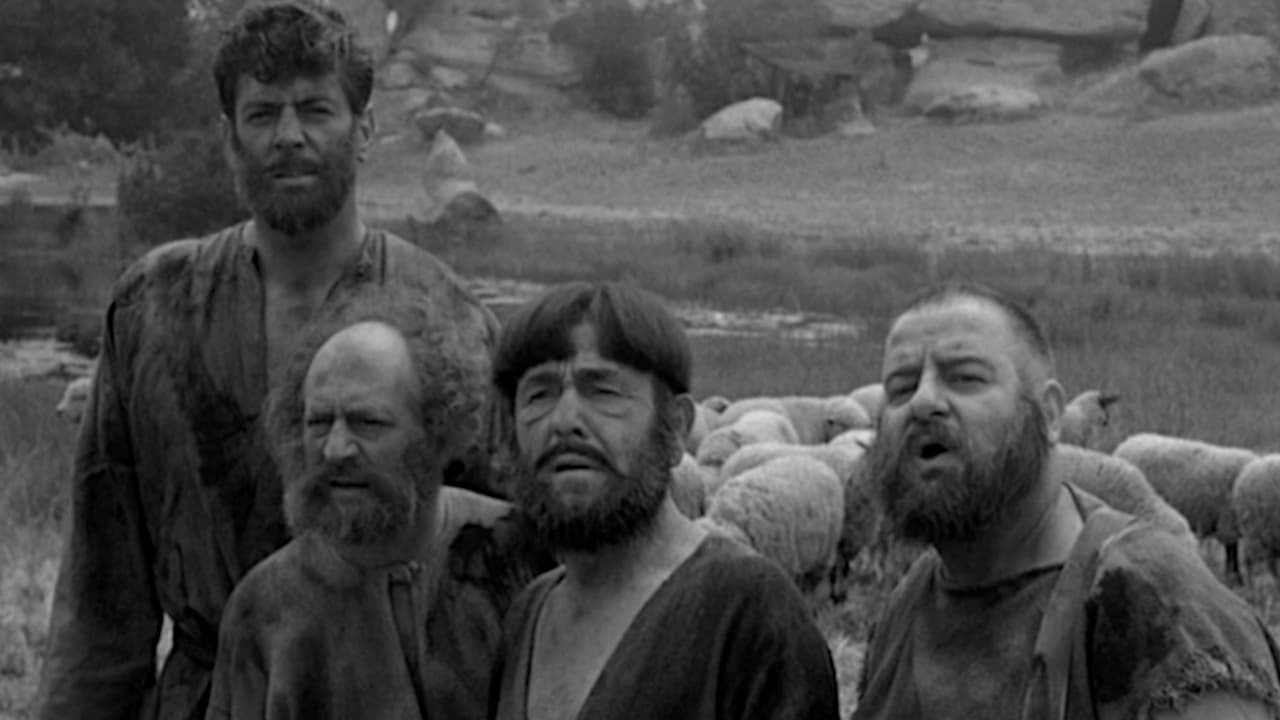
In this film The Stooges are druggists working for a real jerk named Dimsal (George N. Neise). They become friends with their next door neighbor a shy introverted inventor Skyler (Quinn Redeker), who is working on a time machine. The boys decide to help Skyler with his invention with some not helpful advice from Dimsal who hates and bullies Skyler. By accident the boys, Skylar and Skylar's girlfriend (Vicki Trickett) end up traveling back to ancient Greece, where they accidently help put the evil Odious (who looks and acts a lot like Dismal (and is played by the same actor)) on the throne. The boys and their friends have to set history right and contend with the powerful Hercules (Samson Burke (how perfect is it that the person playing such a strong man has the first name Samson)) who is being used by Odious. 

Larry named this as his favorite of the feature films, The Stooges made and it is easy to see why. This is sa fast moving and very fun movie that is sure to put a smile on my face every time I watch it. As should be true of every Stooges, this is a movie with no pretentions about being high art and never takes itself even the slightest bit seriously. This is a movie after all that features a villain named Odious (who Curly Joe even refers to as a skunk) and manages to put some pie throwing in a story about accident Greece. And it is this light breezy feeling that makes this movie so delightful. This movie accomplishes what should seem impossible and that is to keep the energy of a Stooge short going throughout a feature length run time. This movie never runs out of energy and becomes dull nor does the slapstick become too repetitive. Now to be fair, this may not be as laugh out loud funny as The Stooges' best shorts, but none of the jokes really fall flat either and many of them really do put a smile on your face. Though The Stooges were no longer young when they made this film and their antics have been toned down as their films were more aimed at children at this time, the trio show that they are still top-notch slapstick comedians. They carry out each gag as old pros, who know this material inside and out, but have never lost their passion for it. Even though there is a love story between the supporting characters and some B movie monsters (yes, the film does show its low budget during these scenes), The Stooges remain the film's focus and with that in mind I can't help but recommend this movie to Stooge fans everywhere. While it certainly has the faults that many B movies around this time have, there is more than enough for this Stooge fan to love. 


This movie also benefits from a strong supporting cast. The boys' inventor friend was played by Quinn K. Redeker, who just beginning a long career that is going on today. Like many actors in The Stooges' feature films, he has done much of his work for TV. In the 1960's and 70's he was mostly playing one off roles in episodes of various TV shows like Bonanza (1959-1973), Mannix (1967-1975), Adam 12 (1968-1975) and The Rockford Files (1974-1980). He became a much more familiar face to TV watchers starting in 1979 with his regular roles in Days of Our Lives (1968-present) and The Young and the Restless (1973-present). He would appear in over 800 episodes of Days of Our Lives and over 100 episodes of The Young and the Restless. Vicki Trickett, who plays his love interest on the other hand had a very brief career in front to the camera. She only appeared in 4 feature films (including this one). Her other movies were Pepe (1960), Gidget Goes Hawaiian (1961) and The Cabinet of Caligari (1962). George N. Neise who was excellent as the villain was mostly acting in TV playing one off characters on various shows like  The Rifleman (1958-1963), Have Gun Will Travel (1957-1963), Wagon Train (1957-1965)  and Get Smart (1965-1970). He would again play a villain in The Stooges' next feature film, The Three Stooges in Orbit (1962). Long time Stooge supporting player Emil Sitka has a small part as a Shepard. He first worked with The Stooges in Curly's last short film Half Wits Holiday (1947). During the Shemp-era and the Joe Besser-era he would become a regular face in The Stooges' short films. He will be forever beloved by Stooge fans for his immortal role in the short film, Brideless Groom (1947) where he delivered the immortal line, "Hold hands you love birds." He is a rare supporting player who appeared in Stooge films with all six of The Three Stooges. The King of Rhodes is played by the immortal Hal Smith. TV comedy fans will know him from his reoccuring role as Otis the drunk in The Andy Griffith Show (1960-1968). Cartoon fans will know him for doing voices in various Hanna-Barbera TV cartoons including The Flintstones (1960-1966), Scooby Doo, Where Are You! (1969-1970), The Peter Potamus Show (1964-1966) and The Huckleberry Hound Show (1958-1961). He also voiced Elmer Fudd briefly after Arthur Q. Bryan's death and did various voices for The Stooges' TV cartoon show, The New Three Stooges (1965).  Director Edward Bernds was not impressed with Samson Burke who played Samson. Bernds talked about him stating, "He was a through amateur! Scene after scene, his eyes would seek me out for direction! Eventually it got so bad that I had to hide from his view. Samson was a bit on the timid side. I would say Moe was braver doing all this physical stuff than this might mass of muscle."

This movie was shot in 13 days with everyone have weekends off from shooting. The first days of shooting were Tuesday June 6, 1961, through June 9. Shooting continued on Monday June 12 through Friday June 16. The last batch of shooting was done from Monday June 19 through Thursday June 22. This is quite a contrast to their classic shorts which were often shot in 3 or 4 days. Because of this movie's low budget, clips from other movies were used at times. These clips came from the Columbia feature films, You Can't Take It With You (1938), Slaves of Babylon (1953) and Salome (1953). Clips were even used from a couple of Stooges short films, What's the Matador (1942) and Half Shot Shooters (1936). This movie was the biggest hit of any of the Stooges features yet grossing $2 million worldwide. With this in mind it is no wonder that Columbia would sign on the Stooges to make more feature length movies for them.     

This is by far one of The Stooges' best feature films. 


Independent Exhibitors Film Bulletin, 1962


 Resources Used

The Three Stooges Scrapbook by Jeff Lenburg, Joan Howard Maurer and Greg Lenburg

Leonard Maltin's Movie Crazy by Leonard Maltin.

https://mediahistoryproject.org/


Thursday, March 10, 2022

Snow White and the Three Stooges (1961)


Between making Have Rocket Will Travel (1959) and The Three Stooges Meet Hercules (1962) for Columbia, The Stooges would make their first and only movie for 20th Century Fox, Snow White and the Three Stooges

Originally set to direct this movie was Frank Tashlin. Tashlin would have been a perfect Stooge director. He began his film career working in cartoons. Though he worked for Van Bueren, Disney and Columbia, Tashlin did his best cartoon work for Warner Brothers. His Looney Tunes and Merrie Melodies cartoons rank among some of the best the studio ever made. Wholly Smoke (1938), Plane Daffy (1944), Porky Pig's Feat (1943), Scrap Happy Daffy (1943), Nasty Quacks (1945), Swooner Crooner (1944), and The Stupid Cupid (1944) all appear in Jerry Beck's book, The 100 Greatest Looney Tunes Cartoons and with good reason. As a cartoon director Frank Tashlin has easily earned a place among such greats as Tex Avery, Chuck Jones and Jack Kinney. In the 1950's Tashlin moved into live action filmmaking. Here he also had great success. He directed some of the best movies Bob Hope (including the brilliant Son of Paleface (1952)) and Jerry Lewis ever made as well as such gems as Will Success Spoil Rock Hunter? (1957) and The Girl Can't Help It (1956). Imagining what a Frank Tashlin Three Stooges movie is a comedy buff's dream. Yet this was not to be. Fox replaced Frank Taslin with Walter Lang. Walter Lang was a great director and one with a well-established reputation. Starting his career in the silent era Lang had directed such classics as The Red Kimona (1925), The Little Princess (1939), State Fair (1945), Cheaper by the Dozen (1950), The King and I (1956) and Desk Set (1957). Snow White and the Three Stooges was not the first time Lang had directed the stooges. He had directed them in the movie, Meet the Baron (1933) in which the stooges played a smaller but quite memorable role. Snow White and the Three Stooges would be the last film of Lang's long career. While certainly a great director, Lang had never been particularly suited to slapstick comedy, which explains quite a bit about this movie. Along with the change of directors, the cost of this film also changed drastically. Under Tashlin this film was planned to be made on a budget of $750,000. However with Lang as director the cost would amount to 3 and a half million dollars. 

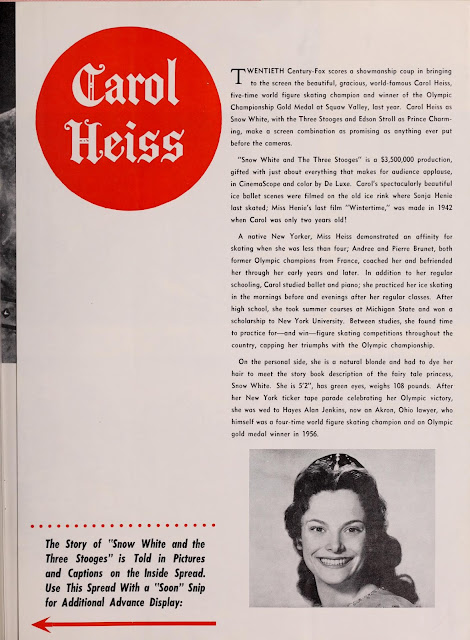
To play Snow White, Fox hired Carol Heiss. Carol Heiss had not been a professional actress. The world knew her much better as a figure skater. At this time she was at the high point in her career and had the previous year won the gold medal for the 1960 Olympics. So with her being on top of the world, it is no wonder Hollywood came calling. This was to be her first movie as well as her only movie. 20th Century Fox would offer her another film role after this one, but she would turn it down and move back to Ohio. 


Boxoffice, 1961

The Wicked Queen was played by Patricia Medina, who had been working in the movie since the late 1930's. This was not her first time acting with a slapstick comedy team. She had also worked with Abbott and Costello in their feature film, Abbott and Costello in the Foreign Legion (1950). Her other movies included the first of the Francis the Talking Mule films, Francis (1950), The Three Musketeers (1948), Aladdin and His Lamp (1952), Valentino (1951) and The Secret Heart (1946). In later interviews, she stated that her and Carol Heiss did not get along and that Heiss tried to get her fired. Medina was also the wife of Joseph Cotton, who many film buffs will know from his role in Citizen Kane (1941) among other classics. Prince Charming was played by Edson Stroll. Stroll would not have much of a movie career appearing in very few films and sometimes in uncredited roles. He would however go on to much more success on TV playing the character of Virgil Edwards on McHale's Navy (1962-1966). He would appear once again with the Stooges in the feature film, Three Stooges in Orbit (1962). Quinto the ventriloquist puppet was voiced by the one and only Mel Blanc, who is best known today for voicing the majority of the male Looney Tunes and Merrie Melodies characters. 


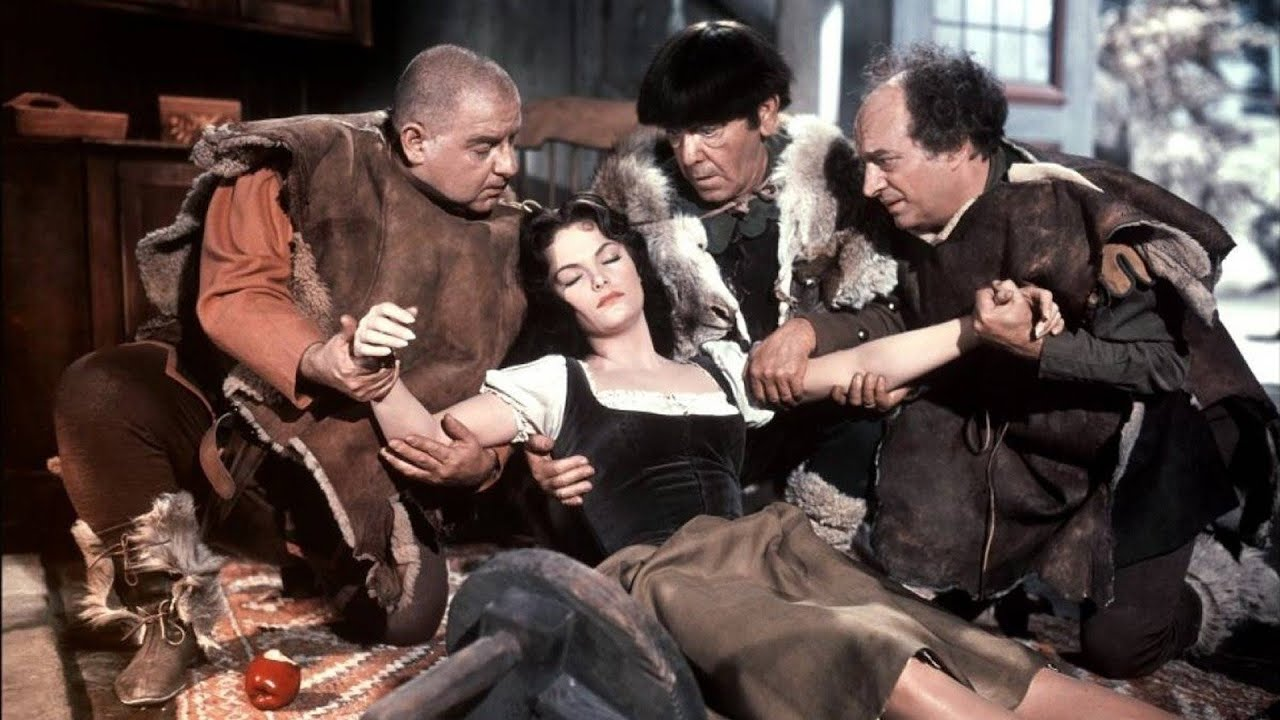
Out of every film The Three Stooges made, Snow White and The Three Stooges feels the least like a Stooge picture. Despite being advertised as a Three Stooges picture, The Stooges come off as supporting characters in their own movie. This film is much more Snow White than it is Three Stooges. In fact, there are times when it feels like the filmmakers don't really know what to do with The Stooges. Still just because this movie doesn't work as a Stooge comedy doesn't mean, it doesn't work as a Snow White film. Judging this as a Snow White movie rather than a Three Stooges picture, the film actually works pretty well. It may not be on the same level as the Disney version but it is quite entertaining in its own right. 

This was the highest budget Stooge film (and the only one in color) and none of that budget went to waste. This film looks beautiful. This is not a movie that ever takes color for granted, but instead uses it to enhance the fairy tale feel to this story. The use of color in the ice ballet scene towards the latter part of the movie is epically fantastic. These visuals draw you further and further into the magical world of fairy tales making this by far the most atmospheric movie The Three Stooges ever appeared in. 

What this movie actual does better than any other film adaption of Snow White is how it handles Prince Charming. Not only does he have more personality here than in most movie versions, but he also has an interesting backstory. The Queen was to have him murdered as a small child and the Huntsman (Buddy Baer) was hired to do the job. However, The Three Stooges rescue him from this fate, but not without the prince receiving a bump on the head which causes him to lose his memory. So, the Stooges raise him and take care of him. Since Prince Charming is often times the most boring part of this story this is certainly refreshing. Plus there is a real sweetness with his relationship to the Stooges that automatically endures all four characters to us. 

This movie also has one of my favorite film versions of the wicked queen (second only to the animated Disney version). Patricia Medina plays this part perfectly. She perfectly captures the sheer evil of this character, but in such a way that you can easily believe that she was able to hide it from so many for so long. She can turn from charming and glamorous to evil and menacing in the drop of a hat. This makes her a far more terrifying version of the character than many other movie and TV versions. As the witch she is able to drop this guise and be pure giddy evil. Her scenes as the witch are genuinely creepy without being too scary for the young audience this film was intended for. All in all, she is everything a fairytale villain should be. With this in mind is interesting to note that the witch scenes had some initial problems.  When Walter Lang saw the original rushes, he felt the way the witch looked was horrible. Her hat looked like a dunce cap and the makeup department had failed to age the actress' hands. Her entire wardrobe and make up was redone and the scenes were reshot, leading us to what we have in the movie today. It is also worth noting (spoilers ahead) that the witch dies by crashing and falling while riding her broomstick and going up in flames. This idea was written and subsequentially discarded from Wizard of Oz (1939), where the Wicked Witch of the West was planned to die in the same way.   

While this film is not heavy on action there is one action scene towards the climax of the picture with Prince Charming trying to break into the castle. This scene is actually pretty darn exciting and reminiscent of the great Hollywood swashbucklers. 

The story mostly functions as a costume drama for a younger audience, and it works quite well. The cast are quite good in their roles and much of the dialogue is quite well written. The romance is quite well done. While as a kids film the romance here is not mushy, the scenes between Prince Charming and Snow White are quite well done, and the characters have excellent chemistry. The Stooges even get some serious scenes here and they play them quite well, showing what great actors they truly are. 

However there are some faults to even the Snow White side of the story. During the ice skating scenes it becomes too obvious that Carol Heiss is the only one of the main actors who can skate and some of the doubles don't quite look like the actors who play the characters in the scenes off ice. Plus the version of Quinto that appears in the ice skating ballet is creepy rather than charming. It made me feel uneasy as a kid and still kind of does today. There is also a scene after the huntsman tells Snow White to run where she runs through the woods frightened of everything she sees. This scene is lifted almost directly from the Disney version of the story, but it is something that works better in animation than live action and therefore comes off as a bit of a pale imitation.  

 Despite all the things that work about this movie, it does have to contend with the fact that it is not really that funny of a movie and that is an unpardonable sin for many stooge fans. 


Radio TV Mirror, 1961


Boxoffice, 1961


Boxoffice, 1961

By this time, The Stooges had had quite a bit of success making children's record albums. Albums they had already released included The Three Stooges - Madcap Musical Nonsense at Your House (1959) and The Three Stooges Sing Six Happy Yuletide Songs (1959). Naturally with this in mind, the new Stooges movie needed a soundtrack album. Despite the movie being released in 1961, this soundtrack album was released in 1960. Much of this record was made up of The Stooges' dialogue from the movie. The first side of the album is mostly made of dialogue and provides a pretty good audio version of the film's story. This album also includes a song called Looking for People, Looking for Fun. This song was originally planned for the film but was cut from the picture. It is a shame that this song was cut as it is quite delightful and would have been a highlight of the movie, especially for Stooge fans. 


The movie was not a finical success and it is worth noting that the much cheaper made and less elaborate (but more typical of The Stooges) feature films that Columbia made in the 1960's were much more profitable. 


Resources Used

The Three Stooges Scrapbook by Jeff Lenburg, Jean Howard Maurer and Greg Lenburg. 

https://filmic-light.blogspot.com/2011/04/snow-white-and-three-stooges.html

https://mediahistoryproject.org/


Thursday, March 3, 2022

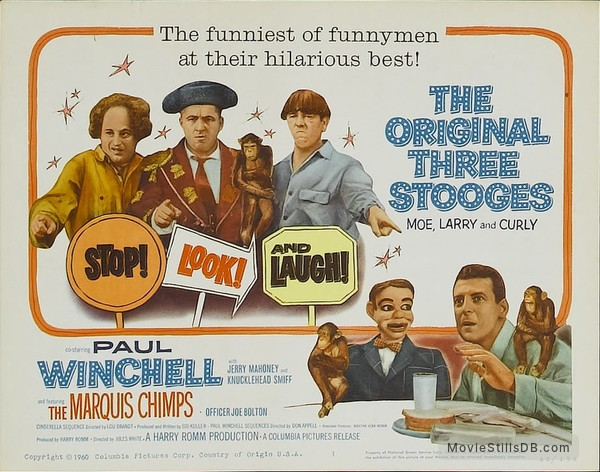
Stop! Look! and Laugh! (1960)


After the box office success of Have Rocket Will Travel (1959), that movie's producer Harry Romm quickly wanted to make another feature film starring The Three Stooges. However, since The Stooges were experiencing a major resurgence in popularity, they felt comfortable in asking for 75% of the profits. While Romm wanted to make a new Stooge feature film, he still wanted his usual 50% of the profits. Stop! Look! and Laugh! was his way of having his cake and eating it too. By going directly to Columbia, Romm took footage from old Stooge short films and connected them together with new footage that didn't feature the Stooges. 

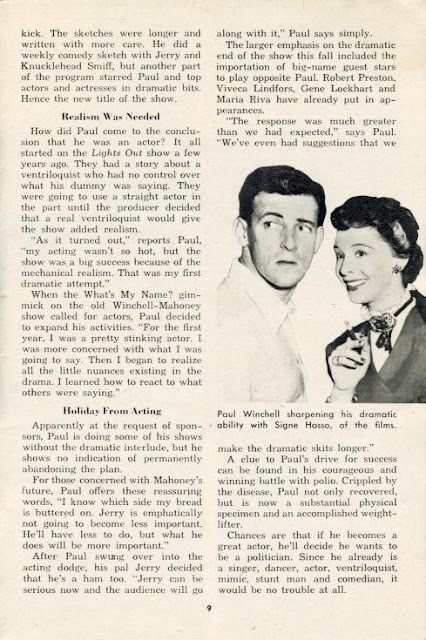
The new footage would star ventriloquist Paul Winchell and his dummies, Jerry Mahoney and Knucklehead Smiff. Paul Winchell had briefly had a radio show in 1943, but the show did not last long, and its popularity was clearly overshadowed by Edgar Bergan's show. However by the time this film was made, Winchell was best known for his children's TV show, The Paul Winchell and Jerry Mahoney Show (1950-1956). This show would feature a lot of corny comedy with him and Jerry Mahoney and Knucklehead Smiff, as well as a lot of advertising for the show's sponsor, Tootsie Roll. This show has an important place in TV history as it featured the TV debut of Carol Burnett. Today however Paul Winchell will mainly be remembered by animation buffs for his voice work on Hanna-Barbera's TV cartoons. He voiced the villainous Dick Dastardly (Wacky Races (1968-1970) and Dastardly and Muttley in their Flying Machines (1969-1970)) and the evil Gargamel (The Smurfs (1981-1989)). Disney fans will best know him as the original voice of Tigger for the Disney Winnie the Pooh films. Stop! Look! and Laugh! was not Winchell's only Three Stooges connection. He had voiced Moe in The Three Stooges episodes of The New Scooby-Doo! Movies (1972-1973) and the TV cartoon, The Robotic Stooges (1978). 


TV Guide, 1954

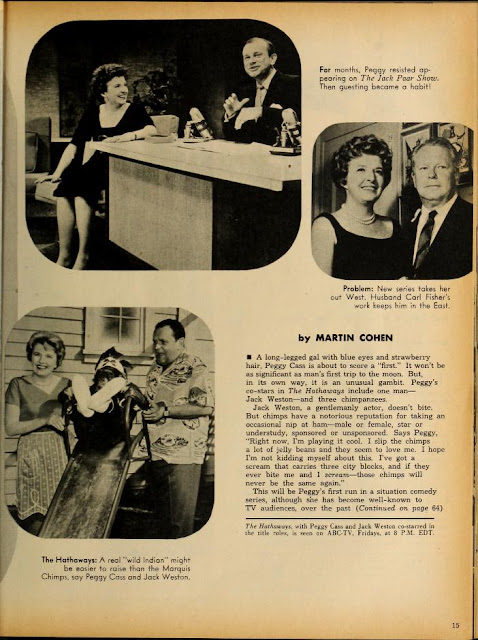
This movie also features The Marquis Chimps, these were a trio of comedic chimps owned and trained by Gene Detroy. Detroy was born into a family of circus performers. In the late 1940's he began raising and training chimps, which he would do for 30 years. In the early years of him raising chimps, one of his chimps was named Marquis. Because of this someone suggested he call the act, The Marquis Chimps. Detroy liked this idea and the name stuck. Starting in the mid-1950's, the chimps started appearing on TV shows. Over their career the chimps made appearances on such shows as The Colgate Comedy Hour (1950-1955), The Ed Sullivan Show (1948-1971), The Jack Benny Program (1950-1965) and The Lucy Show (1962-1968). The Marquis Chimps also starred in their own TV show, The Hathaways (1961-1962). This was a typical sitcom about the typical American family, a husband, a wife and their three chimps. Stop! Look! and Laugh! is one of the only two feature films that The Marquis Chimps appeared in. The other is a delightful live action Disney movie, Toby Tyler or Ten Weeks with a Circus (1960). In Stop! Look! and Laugh!, the chimps perform their own version of the classic fairytale Cinderella. Since chimps don't talk, the voices were provided by real life people. One voice in this section of the film will sound quite familiar to many cartoon fans. This voice is the one and only June Foray. June Foray is a voice acting legend and is best remembered today for providing many female voices for Looney Tunes and Merrie Melodies (including Granny), as well as being the voice of TV's Rocky the flying squirrel.  


Radio TV Mirror, 1961.  

This movie doesn't have much in the way of an actual story. This is just an average day in the life of Paul Winchell and his dummies, mostly told through a series of brief comedy skits that are designed to transition to the next clip of The Stooges. 

I must say the clips of The Three Stooges used here are fantastic. This may at first seem like an obvious e statement, but it really isn't. Too many of these feature length compilations of a comedian's or group of comedians' work fail to show them at their best and instead just show random clips from their career instead. This movie though actual shows The Stooges at their best and therefore there will be plenty of real laughs for any Stooge fans who watch this film. The clips all come from the Curly era of the Stooges output. Though many Stooge fans have divisive feelings about some eras in The Stooges' history (especially the Joe and Curly Joe eras), pretty much every Stooge fan agrees that the Curly era is where some of the boy's best work came from. Not only does this movie show clips of the Stooges in their prime, but it shows some of the funniest moments from this era. The shorts used here include How High is Up (1940, directed by Del Lord), Violent is the Word for Curly (1938, directed by Charley Chase), Sock a Bye Baby (1942, directed by Jules White), Higher Than a Kite (1943, directed by Del Lord), What's the Matador? (1942, directed by Jules White), Calling All Curs (1939, directed by Jules White), Goofs and Saddles (1937, directed by Del Lord), Micro-Phonies (1945, directed by Edward Bernds), A Pluming We Will Go (1940, directed by Del Lord) and Half Wits Holiday (1947, directed by Jules White and featuring Curly's last starring appearance with The Stooges). As a Stooge fan, I certainly can't argue with a line up like that. It even includes Curly's personal favorite Stooge short, A Plumbing We Will Go. While I would recommend anyone new to the Stooges starts with the classic Stooge shorts in their entirety, I can see someone new to the Stooges becoming a fan after seeing this movie with how good the clips are. 

The Paul Winchell skits may not be masterpieces, but they work well enough. While the original Stooge shorts were aimed at all ages, these Paul Winchell shorts are clearly aimed at kids. Because of this adult movie fans will probably not laugh at these skits as much as the clips from the Stooges shorts. Still there is nothing truly bad about these skits and taken as children's entertainment they are pretty good actually. I will admit I even got a few chuckles from a couple of these skits. So, while I understand why some Stooge fans will find the inclusion of these skits, I personally find them charming for what they are. 

Now the Marquis Chimps version of Cinderella on the other hand is quite bad. I can't even see myself as a little kid enjoying this. And you know a skit is bad when even June Foray can't save it. The main problem is that this scene doesn't have any real jokes. The filmmakers just simply think the idea that we are seeing Cinderella performed by monkeys is funny enough on its own. In reality it isn't even slightly amusing. I really wish that instead of this sequence the movie including more Three Stooges clips, but this skit is the price you will have to face for watching an otherwise fun movie. 

James B. Meyers Jr. of the Bluebird Theatre in Petersburg, Virgina went all out when this movie played at his theater. 

"Playing the double bill of Columbia's 'My Dog Buddy' and 'Stop! Look! and Laugh!' recently in our 473-seat house we tried our hand at some selling that was well within our small budget.

"An idea occurred to me that might help the sales of concessions while at the same time tying in with one of the features. Accordingly I made up three octagon shapes for each left hand door entering the orchestra. The top sign was lettered STOP. This was on red cardboard. The second sign was lettered LOOK and this was on white cardboard, while the third sign was lettered AND LAUGH and was on blue cardboard. On the right hand doors, another sign was lettered 'DO NOT ENTER.' This was opposite the red sign. Another read 'UNTIL YOU HAVE LOOKED OVER OUR FINE ASSORTMANT OF CANDIES AND TASTED OUR DELICIOUS HOT BUTTERED POPCORN.' Opposite the blue sign another was lettered 'NOW ENTER! AND LAUGH TO YOUR HEARTS CONTENT WITH THE THREE STOOGES IN STOP, LOOK AND LAUGH.'

"Being mindful of the fact that nearly every person will observe a stop sign, it was no surprise to me that everyone DID stop and read this display from top to bottom before entering the orchestra. I might add that our concession stand is located exactly in the center of the two sets of lobby doors.

"The art work was done by myself with the cost of the signs $1.97 for the cardboard and 35 cents for a magic marker. 

"To promote interest in the other feature, 'My Dog Buddy' and also to get some outside advertising away from the theatre I enlisted the services of a young lad who owned a German shepherd dog, with his parents' permission to walk around town in the main business section. A small sign was placed on either side of the small dog, lettered 'Don't miss 'My Dog Buddy,' Now Showing Bluebird.' The local boy and his dog resembled the boy and the dog starring in the picture. This little stunt attracted a lot of street attention. This cost me a trifle over $5."

The Stooges themselves were not very amused with the idea of this movie and sued Harry Romm and Columbia over the picture feeling that it was illegal to use their comedies without their permission. This ended up being settled out of court. The Stooges received a cash settlement and a contract to make another feature film for $50,000. Though they would receive 50 percent of the profits, Moe's son in law and the team's manager (as well as writer of The Three Stooges comic books) Norman Maurer would become the film's producer. 


Tuesday, February 22, 2022

Have Rocket Will Travel (1959)


Have Rocket Will Travel is a movie I have had a fondness for since I first saw it as a teenager. Unlike with Laurel and Hardy (who I was introduced to through their Fox films), I was introduced to The Three Stooge through what is considered to be their best work and that is the Curly and Shemp short films. I had read some books on the Stooges before seeing the later Curly Joe features, so I knew they were not held in the best regard among Three Stooges fans. Yet when I saw Have Rocket Will Travel I was amazed at how completely delightful it was. Maybe this isn't up there with their best shorts but there is a lot to enjoy about this movie. 

Even with being so late in their careers this movie represents a turning point in stooge history. In 1957 their long running series of comedy shorts came to an end. At this point it looked like their movie career had come to an end. But then something unexcepted happened. Just as many classic cartoon shorts had found a new life thanks to children's shows on TV, the same thing was happening with The Three Stooges shorts. Soon this exposure to many kids through TV made the Stooges major TV stars and their films would make for some of the highest rated programs on TV. Naturally Columbia Pictures, who made their shorts wanted the Stooges back so they could make more films with them. This time instead of making short films, the studio would make a series of feature length movies. Have Rocket Will Travel was the first of these movies. 

This movie also marked the first Stooges film with Joe DeRita (or Curly Joe) in the role of the third stooge. When their career as short subject stars ended, Joe Besser was the third stooge. However, after the shorts had ended the boys decided to make some personal appearances throughout the country. Joe Besser's wife had suffered a heart attack and he did not want to leave her side. They departed on great terms, but the group still needed three members to be The Three Stooges. For a while the group had contemplated retiring. Larry said about this, "Moe and I thought of retiring after Columbia let us go. Moe was thinking of quitting show business altogether since he was pretty well off. I was thinking of managing apartments." However this idea was abandoned when the shorts reached a new popularity on TV. The search for a new stooge was on. Larry found the answer when he saw a show in Las Vegas called Minskey's Follies of 1958. Joe DeRita was in that show and after seeing him, Larry felt he would be a great choice. Many stories have surfaced over the years of Joe DeRita having been considered for this role as far back as when Curly suffered a stroke in 1946. Joe denied these stories stating, "It sounds good. It adds a lot of romance to the story. Around 1958, Moe and Larry wanted to do some personal appearances and they contacted me for the very first time about working with them. We meet at an agent's office and I agreed to work with them." 

This film features our heroes as janitors at a space center. When a scientist friend of theirs (Anna-Lisa) finds her job in trouble, the boys do everything they can to help. Moe being a bit of an amateur scientist devices a plan. Unfortunately, this doesn't turn out too well and the boys find themselves on Venus. Here they befriend a talking unicorn and try to save the planet from an evil alien computer. 

This movie features plenty of the classic Stooge comedy we have all grown to love. Many of the slapstick bits here are truly funny and remind Stooge fans of why they fell in love with the boys' comedy in the first place. Like many of the best Stooges films the storyline simply exists to give us an excuse for various comic set pieces. There is the boy's digging and exploring the rocket, the boys trying to make rocket fuel, the boys losing and trying to find some keys (reminiscent of a skit the boys did as supporting characters in the musical feature, Swing Parade of 1946 (1946)), the robot chase and the big party at the finish (similar to the one in the Stooges short, Hoi Polloi (1935)). Each of these set pieces is perfectly set up for gag possibilities and each takes full advantage of these possibilities. While not always as laugh out loud funny as the short films with Curly and Shemp, each of these set pieces kept a smile on my face all the way through. None of the jokes miss and most of them are quite delightful. There are even a few laugh out loud moments in this picture. The slapstick energy keeps the movie moving at a fast pace and even though this is a feature film, it doesn't feel any longer than one of the boys' shorts.

 The sci-fi elements are as corny as possible but there is something quite charming about this corniness. The movie never takes itself seriously and never demands that we take it seriously either. Because of this we enjoy these sci-fi elements in the same way we enjoy say the 1966 Batman show and movie or the Superfriends cartoon and that is that there is something simply charming about unabashed corniness that can't really be explained. 

The title song (written by veteran film composer and former member of Kay Kyser's band, George Duning along with Stanley Styne) is also ridiculously catchy and I can never count the number of times this song has been stuck in my head. Not surprisingly because of this sing the soundtrack was a surprise hit.  This would be the first of many record releases by the boys, who would not only make soundtrack albums, but also novelty and children's records. 

 Like many of the feature films starring classic comedy teams, there was felt the need to be a romantic subplot. Unfortunately, the one here is very weak. Both of the characters are very bland and there is little chemistry between them. Most of the dialogue in these scenes feels too mushy and forced. It is hard to imagine anyone actually caring about these two getting together. When it comes to romantic subplots this certainly is no A Night at the Opera (1935). Luckily this does not take up too much screen time and never feels too intrusive. 

This movie marked the feature film debut for Anna-Lisa. Still most of her career would be spent playing supporting roles in various TV show episodes. She appeared on such shows as Maverick, Gunsmoke, Perry Mason, The Man From U.N.C.L.E. and Death Valley Days. Her romantic interest is played by Robert Colbert, whose film career was just beginning at this time. Like Anna-Lisa, the majority of his career was spent on TV. One of his most interesting TV roles was as the forgotten Maverick brother Brent Maverick. After James Garner left the show, Brent Maverick was created as a replacement for Garner's character Bret Maverick. Not only was the name of the character only different by one letter but this new character had the same personality and dressed the same. Colbert understandably not wanting to be compared with Garner was unhappy with this role and the character only appeared in two episodes. Colbert worked with another Maverick brother in the feature film A Fever in the Blood (1961) which also featured Jack Kelly (Bart Maverick). 

This movie's director was David Lowell Rich and this marked the only time he directed the boys. He too would spend much of his career working on TV shows. These once again included an episode of Maverick. Other shows he worked on included, The Barbera Stanwyck Show, Wagon Train, Route 66 and The Twilight Zone. He ended his career with a long strecth of made for TV movies in the 1970's and 80's.


Resources Used

The Three Stooges Scrapbook by Jeff Lenburg, Joan Howard Maurer and Greg Lanburg

https://www.tcm.com/tcmdb/title/4819/have-rocket-will-travel#articles-reviews?articleId=241245