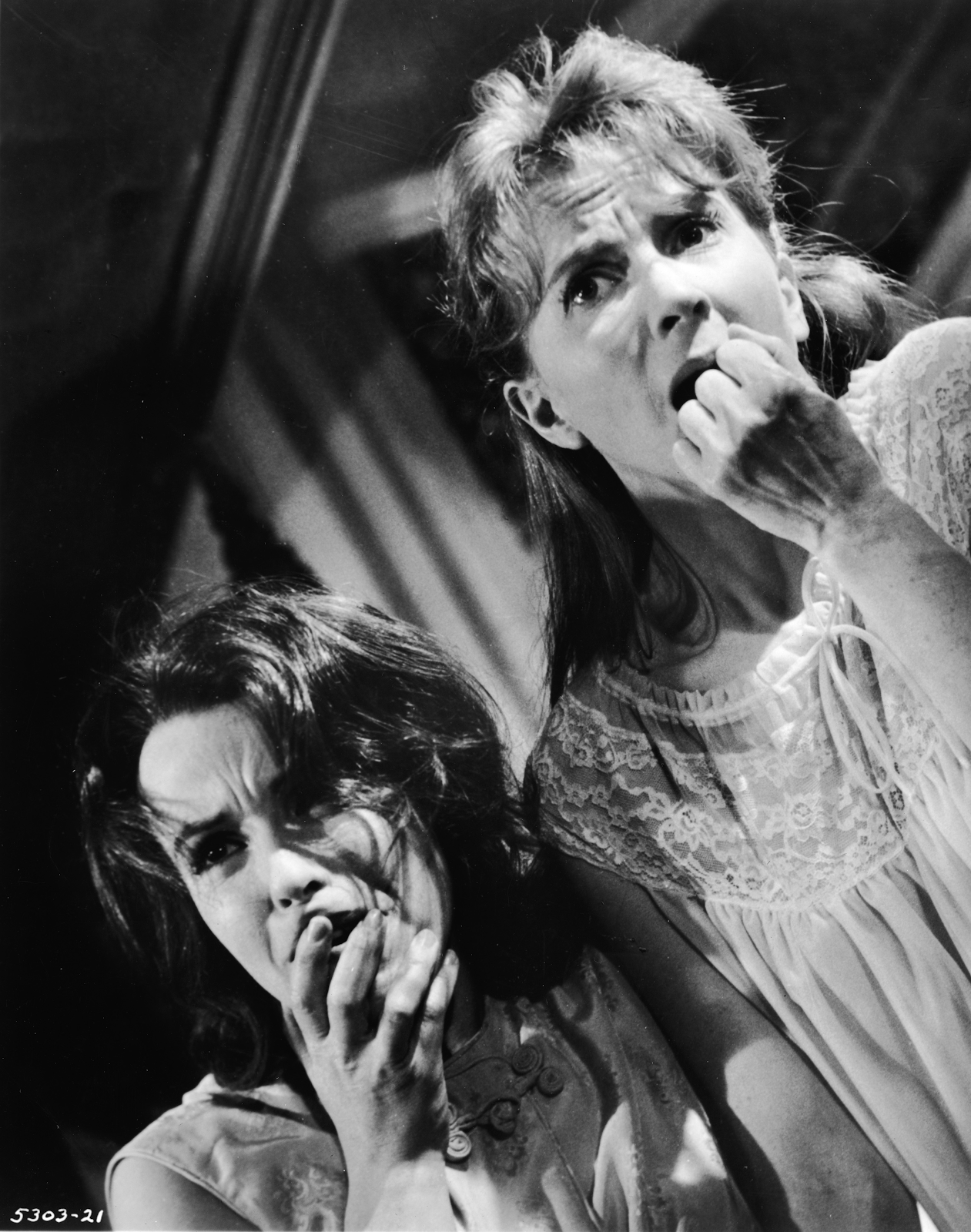
Charles Laughton is an actor who I am sure many people reading this blog are well acquainted with. He was a fine actor who was trained at London's Royal Academy of Dramatic Art. He began appearing on stage in 1926 and naturally it would not be too long until the movies came knocking. Though he is known for his larger than life and theatrical roles, he was also quite capable of more subtle performances including the terrifyingly cold and mostly emotionless mad scientist in the horror classic, Island of Lost Souls (1932). His filmography includes such classics as The Old Dark House (1932), The Sign of the Cross (1932), The Private Life of Henry VIII (1933), Ruggles of Red Gap (1935), Mutiny on the Bounty (1935), The Hunchback of Notre Dame (1939), The Paradine Case (1947), Witness for the Prosecution (1957) and Spartacus (1960).
He only directed one movie. However, that film is a masterpiece, The Night of the Hunter (1955). He would however direct multiple Broadway plays including The Fatal Alibi (Feb 08, 1932 - Mar 01, 1932), Don Juan in Hell (Nov 29, 1951 - Dec 31, 1951) (Apr 06, 1952 - May 24, 1952), John Brown's Body (Feb 14, 1953 - Apr 11, 1953), The Caine Mutiny Court-Martial (Jan 20, 1954 - Jan 22, 1955) and Major Barbara (Oct 30, 1956 - May 18, 1957).
Here is an article from The New Movie Magazine (dated December 1934). If you have any trouble reading it click on the pages below and use your touch screen to zoom in. If you don't have a touch screen, click here.
Though being best known as a dramatic actor Laughton had a gift for comedy. This can be seen in the film, Abbott and Costello Meet Captain Kid (1952).
Watch a full movie with Charles Laughton below. The film is Jamica Inn (1939) and was directed by none other than Alfred Hitchcock.
For those of us who love classic comedy, Hal Roach is a legendary name. He produced many classic films starring the likes of Laurel and Hardy, Harold Lloyd, the Our Gang kids (also known as The Little Rascals), Charley Chase and plenty more. All these years later these films stand as some of the greatest comedies of all time. So of course, for us any book about Hal Roach makes for essential reading. However, this book stands as one of the best books about the subject. This is because it not only gives us a historical overview of one of the best comedy studios of all time, but it also gives us the most vivid portrait of Hal Roach as a person available.
Author Craig Calman is a comedy filmmaker himself who discovered the work of Hal Roach at a very young age becoming enamored with the films of Laurel and Hardy. Little did he dream as that young kid that one day he would meet the producer of those classic Laurel and Hardy films. At the age of twenty he went out on a limb and tried to contact Hal Roach, when working on a term paper. This resulted in a decades long friendship. This book is the result of that friendship. Much of the book is filled with quotes from Hal Roach. Because of this we not only get a view of how films were made at the Hal Roach Studio but also insights into Hal Roach viewed comedy and filmmaking. His views on comedy are quite revealing from him speaking about taking children into consideration but never making films only for them to him talking about how he believed that comedies should not exceed forty-five minutes (though he would make feature length comedies out of necessity). He even speaks about others in the comedy field from Mack Sennett to Benny Hill. While I may not agree on some of those comments, they do say a lot about his approach to comedy and how it differed from others. Even the times when Roach's memory proved to be faulty, what he remembers about his own work says a lot about the way he viewed his career and the various films he worked on.
Though by design this book cannot go into as much detail about individual films as Randy Skretvedt's Laurel and Hardy books or Leonard Maltin and Richard W. Bann's book about Our Gang, it still gives a very nice historical overview of the work from this movie studio. Probably most valuable is that for each year of the studio's existence, Calman provides a list of how many films were made with each of the studio's comedy stars as well as how many dramatic features or special productions were made for each year. Calman as well as using his personal experience with Hal Roach also digs into studio documentation and old movie magazines to create an even greater dig into the history of these films.
Also unlike many histories of the Hal Roach Studio, this book does not neglect the studio's later involvement in TV. This includes both TV shows made by the studio and those that used the studio's resources for filming (did you know The Abbott and Costello Show was filmed there?).
This book is a must have for any fan of classic comedy.
Whenever I mention The Mummy to people around me, they automatically think of the Brendan Fraiser movies. While I enjoy those movies, I do wish that the old black and white Universal mummy movies got the same attention. The first of these films is a pure horror classic and one of the best Universal monster movies. While the mummy pictures that followed never quite reached the height of the original, they were often times fun for what they were.
That is why I am so glad to own this 2017 Blu-Ray featuring all the classic black and white Universal Mummy movies. Each of these films has been restored and each of the restorations looks absolutely wonderful. I have never seen any of these films look anywhere near as good as they do here. Based on what I have seen in similar sets, I expected the first film to look great while the others would have a lesser quality to them. This was happily not the case here. I was also happy to see that the makers of this Blu-Ray set included Abbott and Costello Meet the Mummy (1955) along with the more typical mummy films. That movie marked the end of an era in multiple ways as not only the last entry in the Mummy series but also the last film Abbott and Costello made for Universal, the studio where they made their best and most popular movies. Though it does not have the best reputation among either comedy or horror fans, I have always had a real fondness for that movie.
Most of the bonus features for this set are simply attached to the original movie (though the set includes the trailers for all the movies). While I wish there were bonus features relating to the other films on the set, the bonus features for the first film are truly excellent. They include two information filled and fun audio commentaries and various documentary shorts about the making of this movie and the Universal monster films in general. All of these bonus features are excellent and a real treat for any old movie or Universal monster fan.
Now for my thoughts on the induvial movies themselves.
The Mummy (1932): A horror masterpiece and one of the best Universal monster movies. Though this movie may not be actually scary by today's standards, it has a wonderful eerie atmosphere that is still incredibly effective today. Plus, Boris Karloff is incredible as the main character.
The Mummy's Hand (1940): The second movie in this series is a delightful mixture of comedy and horror with the main heroes almost feeling like a straight man and comic comedy team. While they may not be Laurel and Hardy or Abbott and Costello, they are still quite a bit of fun and got a few laughs out of me. The mummy here is also delightfully creepy.
The Mummy's Tomb (1942): A darker, more sinister follow-up to The Mummy's Hand has a delightfully creepy feel to it. The large time jump feels completely unnecessary though.
The Mummy's Ghost (1944): This is an enjoyable little horror movie but the previous entries in the series have done everything here before and done it better.
The Mummy's Curse (1944): This fifth entry simply rehashes plot points from the previous films. This is true to the point that watching the movie for the first time, you still feel like you have seen the film before. The climax is quite atmospheric and creepy though.
Abbott and Costello Meet the Mummy (1955): A delightful finale for both Abbott and Costello's great run at Universal and this series of Mummy movies. Though it may not contain as many laughs as earlier Abbott and Costello films, the comedy duo is delightful here. And even if there are less laughs than earlier A&C outings, there are still some pretty funny moments there. The movie also moves at a fast and fun pace. As with all this Abbott and Costello meet the monster movies, the storyline is quite good and could have even been a pretty good monster movie if played straight. A delight for both comedy and horror fans.
This book by historians Stephen Cox and John Lofflin is an essential read for any Abbott and Costello fan.
First and foremost, this book is a loving tribute to the boys. There is never a single second when you doubt, the love the authors have for Abbott and Costello. While they may criticize some of the boy's lesser work, even this is done with a love for what these two great performers are capable of. At the same time, the authors have no pretentions about why they enjoy the boys' work. They never try to present their films as some form of high art. Rather they acknowledge that the main reason, they love Abbott and Costello is that the duo makes them laugh. When so many critics and historians try to claim their favorite entertainers' work as great art and spend much of their writing simply explain why their work is so brilliant, it is quite refreshing to read a book where the authors simply praise a couple of comedians for being funny.
This book also delves into the boys' personal lives. It takes a very open and fair look at who these two were as people. It does not paint them as perfect individuals, but it avoids demonizing them in the way the other writers (and a controversial TV movie) have. In fact, it even dispels many of the fraudulent rumors that have spread about the two comedians over the years.
One of the most important aspects about this book is the sheer amount of research that went into it. This book features in-depth interviews with family, friends and co-stars. These interviews and various quotes from these individuals scattered throughout this book are endless fascinating and make us feel as if we are right these beside them as they make their classic movies (as well as their TV and radio shows). Even those who may think they have a great knowledge of Abbott and Costello will learn a whole lot from reading this book.
Also making this book essential is its filmography. The book not only lists every one of their feature length movies, but provides extensive credits, plot summaries and behind the scenes trivia for each one as well as some behind the scenes photos thrown in for good measure. This makes the filmography just as much a fun and important read as the body of the book. Yet the filmography does not stop there. It also provides every episode of their TV sitcom, with a cast list and plot summary for each one. But wait there is more. For us cartoon lovers and Hanna-Barbera fans, this also lists every episode of the Hanna-Barbera Abbott and Costello cartoon show (for which Bud Abbott provided his own voice) with a plot summary for each one. As some of these cartoons are not easy to see, this makes for very compelling and important reading to any cartoon fan (as well as any Abbott and Costello fan who is interested due to Bud providing his own voice).
For any Abbott and Costello fans this is essential reading. For any non-Abbott and Costello fans, this book just might make you one.
Hello my friends and happy Saturday morning. Once again it is time for some classic cartoons.
Today's cartoon selection begins with Tweety's first appearance in a cartoon, A Tale of Two Kitties (1942). Sharp eyed viewers may notice that Tweety is not yellow in this film, but pink. Since he was a newborn baby bird, it made sense for him not to have feathers. According to director Bob Clampett, he based the character off of a nude baby photo of himself. Tweety already has his famous line, "I Tawt I Taw a Puddy Tat." According to animation historian Jerry Beck's book, I Tawt I Taw a Puddy Tat: Fifty Years of Sylvester and Tweety, this line also originated with Bob Clampett when in the mid-1930's he wrote a letter to a friend on MGM stationary. Next to Leo the MGM lion, Clampett drew a small bird with a word balloon with "I think I taw a titty-tat." Instead of Sylvester Tweety is here pitted against two cats named Babbit and Catstello. As should be obvious by the names, these cats were a take-off on the infamous comedy team Abbott and Costello, who had just made their movie debut just a couple years earlier in One Night in the Tropics (1940). The voice of Catstello was provided by the man of a thousand voices, Mel Blanc (who also voiced Tweety) and Babbitt was voiced by writer Tedd Pierce. A reviewer in Showman's Trade Review was very impressed with these voices stating, "Either the famous comedy pair furnished the accompanying dialogue themselves, or the impersonators are the last word in perfection." Though they would not catch on the way Tweety did, these characters would reappear in other cartoons. Some of these cartoons would even feature the duo as mice instead of cats. They would even appear with Tweety much later in a 1998 episode of the TV show, Sylvester and Tweety Mysteries. This cartoon was reissued to theaters in 1948, the year Abbott and Costello made their most popular movie, Abbott and Costello Meet Frankenstein (1948).
Next comes the Fleischer Screen Songs cartoon, Come Take a Trip in my Airship (1930). This was the second time, The Fleischer studio had made a cartoon centering around this song. They had earlier made a film that used an early sound on film process (Come Take a Trip in my Airship (1924)). The earlier film featured the Fleischer cartoon of KoKo the clown, who starred in many silent cartoons for the studio and would later become a supporting character in their Betty Boop cartoons.
Now we join Honey Halfwitch in Brother Bat (1967).
Up next is Farner Al Falfa's Bedtime Story (1932). The following is a review from the Motion Picture Herald. "Clever Cartoon. The Farmer goes to bed; the cat's go out for the night - and the mice come out to play as only the animated cartoon artists can make them play. Their tricks and stunts are cleverly drawn, amusing. This rates as among one of the better of the cartoon shorts - Running time, 6 minutes."
Now it is time for a commercial break.
Next is an early Woody Woodpecker short, The Dizzy Acrobat (1943). In these earlier Woody films, the character is a bit cruder than fans of his later work are used to. But there is something about this sheer unabashed craziness that many cartoon fans (including myself) can't get enough of. This movie was nominated for an Academy Award; however, it lost to Disney's Der Fuehrer's Face (1943). The following is from an issue of Showman's Trade Review (dated June 5, 1943), "Walter Lantz Cartune Studios which releases through Universal, has just released 'The Dizzy Acrobat,' A Woody Woodpecker special. The cartune revolves around the circus, and Lantz had experts advising the animators so that the action and facts would be accurate.
It is now time for a silent Felix the Cat cartoon, Felix the Cat Ducks His Duty (1927).
Next comes one of Disney's funniest cartoon shorts, Der Fuehrer's Face (1943). This film grew out of a Donald Duck short about paying your taxes during war time called The New Spirit (1942). There was going to be a scene (in a story treatment by Joe Grant and Dick Huemer) in that short that featured a radio announcer talking about the horrors of living in a totalitarian state. This was not used in that short, but the idea stayed in the heads of those working at the Disney studio. These ideas grew into a cartoon that would feature Donald Duck living in Nazi Germany. Jack Kinney, Disney's most comedic and satiric cartoon director being placed in the director's chair guaranteed that this short would be a comedic masterpiece as well as an effective piece of political commentary. The cartoon was originally going to be titled Donald Duck in Nutziland. However, it would be retitled Der Fuehrer's Face after the satirical and catchy song Oliver Wallace wrote for the cartoon. Disney studio staffer Jim Macdonald remembered Wallace improvising the song one day at Walt's request. Macdonald stated, "He did that in about ten minutes. That's spontaneity!" Before the cartoon even reached theaters Spike Jones and his City Slickers released a recording in late 1942 and had a massive hit with it. This film also benefits from some top-notch animation. John Sibley animated the hilariously cartoony marching band animation at the start. The real highlight of the cartoon is the great montage sequence which was animated by Les Clark and Hugh Fraser. This cartoon we earn Donald Duck, his one and only Oscar. It later received the 22nd spot in Jerry Beck's must-own book, The 50 Greatest Cartoons.
Today's cartoon selection ends with the Simpsons in Dinner Time (1987). This is one of the shorts made for The Tracey Ullman Show before the animated family got their own TV series.
Thanks for joining me. Come back next week for more animated treasures. Until then may all your tunes be looney and your melodies merry.
Resources Used
The 50 Greatest Cartoons edited by Jerry Beck
I Tawt I Taw a Puddy Tat: Fifty Years of Sylvester and Tweety by Jerry Beck.
Donald Duck: The Ultimate History by J.B. Kaufman and David Gerstein
Well written and well researched Leonard Maltin's 1978 book remains essential reading for all fans of classic movie comedy.
The book starts with an introduction that discusses the work of silent film comedians that do not receive their own chapters later in this book. This introduction is just as much essential reading as what follows. Offering a brief history of some of these forgotten clowns and how they contributed to the broad history of screen comedy, while also explaining what keeps them from entering into the pantheon of "Great Movie Comedians" like those that receive their own chapters here makes for compelling reading. Quotes for those who worked with these comedians firsthand provide even greater insight to who these comedians were and what comedy filmmaking was like in the silent era. This is one of the rare books where I wish that the introduction had gone on longer.
The actual chapters cover 22 of the best comedians (or comedy teams) to ever grace the silver screen. These are Charlie Chaplin, Mabel Normand, Roscoe "Fatty" Arbuckle, Buster Keaton, Harold Lloyd, Harry Langdon, Charley Chase, Raymond Griffith, Marie Dressler, Laurel and Hardy, Will Rogers, Joe E. Brown, The Marx Brothers, W.C. Feilds, Mae West, The Three Stooges, Abbott and Costello, Bob Hope, Danny Kaye, Red Skelton, Jerry Lewis and Woody Allen. Each of this chapters provides a brief history of the comic's career, some critical insight and a filmography. The critical insight truly shows Maltin's talent as a critic and a writer. He has great admiration for the talent of each of these performers, while also allowing himself to critique the flaws in some of their work. While I may not agree with all his critical opinions (I have a much higher opinion of Harry Langdon's self-directed efforts), they are all well written and insightful. Naturally the history may not be as in depth as what you might read in an entire book dedicated to one of these comics, but for the brevity of these chapters, they are surprisingly insightful. The quotes from those who worked with these comics are invaluable even to film buffs, who may know the majority of the information in this book. Though today, we may take the filmographies for granted it is important to remember how in the pre-internet days, how valuable a simple list of each of these performer's films was to any film buff.
If I were to find fault with any of these chapters, it would be the one about Harry Langdon. This is the rare occurrence where Maltin gets his film history wrong. He gives too much credit to Frank Capra and too little to Langdon himself for the creation of Langdon's screen character. However, this is not completely Maltin's fault. One must remember that at the time this book was written there was still a lot of research to be done on Langdon, and his films were not easy to see. Because of this it is easy to have believed Frank Capra's claims to have been instrumental in the creation of Langdon's character. I can't say that I wouldn't have made the same mistake at the time. Today one can see that Langdon's character was already on his way to being formed by the time that Frank Capra began working on Langdon's films. Yet even with this, I am very grateful to Leonard for calling attention to Langdon at this time period.
Hello my friends and welcome back for another service of Cowboy Church.
Today's musical selection begins with Roy Rogers and Dale Evans with Whispering Hope. This beautiful hymn comes from the pen of Alice Hawthorne (the pen name for poet Septimus Winner), who is best known for her contributions to children's music with songs like, Where, Oh Where Has My Little Dog Gone? and Ten Little Indians.
This is followed by The Petersens with an original tune titled Goodness of the Lord. Katie Petersen co-wrote this song with her friend Liv Leggett, both of whom were inspired by Psalm 27.
Afterwards is Henry Burr's 1905 recording of Saviour, Lead Me, Lest I Stray.
Next is Mel Tillis with Just a Closer Walk with Thee. This old hymn's origin remains a mystery with no one knowing exactly how old it is. However, it is believed that this song must date back before the Civil War, because some personal histories have stated that there were “slaves singing as they worked in the fields a song about walking by the Lord’s side.” If this is true it shows the power of God and music as they could sing praise to the Lord even when being oppressed as part of one of the greatest injustices of American history. There is however a song published in 1885 called Closer Walk with Thee which had a very similar chorus. Just a Closer Walk's popularity grew in the 1930's with it being sung at several churches. The arrangement we know today was done by Kenneth Morris in 1940. The following is from Horace Clarence Boyer's book, How Sweet the Sound, “While traveling between Kansas City and Chicago in 1940, songwriter Kenneth Morris got off the train to stretch his legs. While standing on the platform, he overheard a porter singing some of the words to 'Just a Closer Walk with Thee'. Not thinking much about it, Morris boarded the train and went on his way. The words and melody of the song kept repeating in his head and he knew he had to learn the rest of it. At the next stop, Morris got off the train and took the next train back to the previous stop. There he managed to find the porter and Morris persuaded him to sing the song while he copied down the words. Morris soon added to the lyrics and published it in 1940.”
Next is Johnny Cash with Dark as a Dungeon. In the liner notes for the Unearthed box set John stated, "You say it sounds like a song I should have written? I always thought that too. Merle Travis wrote that song in the '40's and I recorded it over the years two or three different times, but I never really got it the way I wanted it. But I kept on trying. I really don't know how to explain what the ingredient is that makes it a winner or a reject. It depends on the song, the performance, on a lot of things. Merle's been dead 10 or 12 years now, but I told him that I would keep trying until I get it right and I did. Hence this version here.
Then comes Kris Kristofferson with the title track off his 1972 album, Jesus Was a Capricorn, one of the finest country albums of the 1970's. This title track is a true cowboy-hippie classic that I love.
Now for George Jones and Tammy Wynette with their 1972 cover of the Tom T. Hall classic, Me and Jesus. This recording comes from the duo's 1972 gospel album, We Love to Sing Songs About Jesus.
Today's musical selection ends with The Sons of the Pioneers with their 1937 recording of Leaning on the Everlasting Arms. This hymn began with a man named Anthony Showalter. As a fan of gospel music and an elder in a Presbyterian church, he held many "singing schools" at various churches in the south. One day he received two letters from former students who were struggling after their wives had passed. To respond to these letters, Showalter consulted scripture. He came across Deuteronomy 33:27, "The eternal God is thy refuge, and underneath are the everlasting arms." After reading this verse lyrics for a song chorus went through his head and he wrote down, "“Leaning, leaning, safe and secure from all alarms; Leaning, leaning, leaning on the everlasting arms.” After using this in the letters to his former students he sent this chorus to his friend hymnist, Elisha Hoffman. In the letter he also wrote, “Here is the chorus for a good hymn from Deuteronomy 33:27, but I can’t come up with the verses.” Hoffman then wrote the rest of the lyrics to which Showalter put to music. The hymn was published in 1887.
Now for a message from the reverend Billy Graham.
Now for a 1948 episode of the Abbott and Costello radio show guest starring that cowboy hero, Red Ryder.
Be strong and courageous. Do not fear or be in dread of them, for it is the Lord your God who goes with you. He will not leave you or forsake you. Deuteronomy 31:6
The Lord is my strength and my song, and he has become my salvation; this is my God, and I will praise him, my father's God, and I will exalt him. Exodus 15:2
The LORD is my rock, my fortress and my deliverer; my God is my rock, in whom I take refuge, my shield and the horn of my salvation, my stronghold. Psalms 18:2
Ah, Sovereign LORD, you have made the heavens and the earth by your great power and outstretched arm. Nothing is too hard for you. Jeremiah 32:17
If my people, who are called by my name, will humble themselves and pray and seek my face and turn from their wicked ways, then I will hear from heaven, and I will forgive their sin and will heal their land. 2 Chronicles 7:14
Come near to God and he will come near to you. Wash your hands, you sinners, and purify your hearts, you double-minded. James 4:8
Thanks for joining me. Come back next week for another service of Cowboy Church. Happy trails to you until we meet again.
Hello my friends and happy Saturday morning. Once again it is time for some classic cartoons.
Today's cartoon selection begins with Heckle and Jeckle in Fishing by the Sea (1947). Paul Terry felt that the Heckle and Jeckel films were the best cartoons his studio produced, and I tend to agree.
Next comes a true classic, Orphan's Benefit (1934). This film marks the second Donald Duck cartoon and the first time Donald appeared alongside Mickey and friends. As many of you know, Donald first appeared in The Silly Symphony short, The Wise Little Hen (1934). However, some of those who worked on the Disney cartoons at this time (including Walt), misremembered this as the first Donald Duck cartoon. This may be because the short was the first one the studio started work on. Historian J.B. Kaufman has stated that the Disney story department began work on this cartoon (with an outline entitled The Surprise Party) in November 1933, before they started work on The Wise Little Hen. However, this outline was quite different from the finished film. Donald was a small boy who was dragged to a party by his mother and made to recite Mary Had a Little Lamb. The recitation of Mary Had a Little Lamb has its origins in the origin of Donald's voice. Clarence Nash had created this voice as a child himself not to be the voice of a Duck but of a crying baby goat. He used to entertain his friends by reciting Mary Had a Little Lamb in this voice. He would later do this act professionally both live and on radio. Walt Disney, having heard Nash do this voice on radio, felt that it sounded more like a duck and pitched the idea of voicing a duck to Nash. In the early 1940's several older Disney cartoons were considered for some shot for shot remakes. However only one of these were made and that was Orphan's Benefit (1941). The remake was almost exactly like the earlier picture except being that in color and using the 1941 designs of the characters. In fact, the remake even uses the exact soundtrack of the original. However, I personally prefer this 1934 black and white original and I hope you love it too. A review in The Film Daily stated, "It's all very clever, screamingly funny and with a dandy of a musical score."
Next comes Flip the Frog in Room Runners (1932). Anyone who expects old cartoons to be sweet and innocent, may be very surprised by some of the gags in this film.
Now comes a true classic starring Porky and Slyvester, Claws for Alarm (1954). This was the second of two cartoons (both directed by Chuck Jones) featuring Sylvester as the cowardly cat that must protect his owner Porky for murderous mice (the first being Scaredy Cat (1948)). Unlike other appearances of Sylvester, here the cat is treated more like a real cat and has no ability to speak. Chuck Jones would use this basic formula again for Jumpin' Jupiter (1955). That film would again feature Sylvester as a cowardly cat that must protect Porky. However, in that cartoon he would protect his master from a space alien rather than mice. Claws For Alarm would later be used in the feature length compilation movie, Daffy Duck's Quackbusters (1988).
Now it is time for a commercial break.
Next is a wonderful example of Walt Disney's silent Alice Comedies, Alice Rattled by Rats (1925). This short film features Margie Gay as Alice. She was the second child actress to play the role after Virgina Davis and she appeared in more Alice Comedies than any of the three other actresses to play the role.
We continue with Popeye in I'm in the Army Now (1936). This short film is a bit of a cheater and features clips from previous Popeye cartoons. The cartoons that clips are used from include Blow Me Down (1934), Shoein' Hosses (1934), Choose Your 'Weppins' (1935) and King of the Mardi Gras (1935). This is one of my favorite cheater cartoons, because the new scenes are just as entertaining as the clips. I especially love Bluto talking about what a big star he was in the movies. This serves as a good reminder for those of us who grew up watching these films on TV that they were originally made for movie theaters.
Today's cartoon selection ends with the Hanna-Barbera Abbott and Costello cartoon, Gator Baiter (1968). In these made for TV cartoons, Bud Abbott voiced himself. Lou Costello had passed away and was voiced by Stan Irwin. Bud at this time was not in the best of health. Stan Irwin later remembered, "Whenever Bud started slurring- you know it was in his teeth - the director [Art Scott] would say, 'Bud we had a little problem with the sound in here. Mind if we take it over?' or a techintion would say, 'Our fault, Bud, our fault. We weren't ready. Mind doing it again?"
Thanks for joining me. Come back next week for another selection of animated treasures. Until then may all your tunes be looney and your melodies merry.
Resources Used
Walt Disney's Mickey Mouse: The Ultimate History by J.B. Kaufman and David Gerstein
Looney Tunes and Merrie Melodies: A Complete Illustrated Guide to the Warner Brothers Cartoons by Jerry Beck and Will Friedwald
The Abbott and Costello Story by Stephen Cox and John Lofflin
Spooky season is coming and that means it is time to watch classic horror movies. If you live around the Southern California area, there is no better place to do this than Old Town Music Hall in El Segundo (140 Richmond Street El Segundo, CA 90245). This is an incredible movie theater that in many ways tries to recreate the experience of going to the movies back in the 1920's and 30's. It is also the home of the Mighty Wurlitzer Pipe Organ, a wonderful instrument that was used to accompany silent films. Every October, Old Town Music Hall becomes Old Town Music Haunt. The whole theater is decorated with Halloween decorations and they show classic spooky themed films. The selection for this year is simply wonderful. It includes some scary horror movies as well as some spooky themed comedies. The majority of these feature length films will be proceeded by live music on the organ and a classic cartoon. The silent films will be accompanied on the Mighty Wurlitzer.
Here is the list of spooky movies that will be showing this year. Again if you are living in the Southern California area, you don't want to miss this. If you want to get tickets please go to Old Town Music Hall's website.
Saturday, September 30th
What Ever Happened to Baby Jane (1962)2:30pm
The Haunting (1963) 7pm
Sunday, October 1st
Faust (1926-silent film) 2:30pm
The Shining (1980) 7pm
Saturday, October 7th
Invasion of the Body Snatchers (1956) 2:30pm
Rosemary's Baby (1968) 7pm
Sunday October 8th
The Cabinet of Dr. Caligari (1920-silent film) 2:30pm & 7pm
Saturday October 14th
The Wolf Man (1941) 2:30pm
An American Werewolf in London (1981) 7pm
Sunday October 15th
The Mummy (1932) 2:30pm
Psycho (1960) 7pm
Saturday October 21st
Abbott and Costello Meet Frankenstein (1948) 2:30pm
Frankenstein (1931) 7pm
Sunday October 22nd
Young Frankenstein (1974) 2:30pm & 7pm
Saturday October 28th
Dracula (1931) 2:30pm & 7pm
Sunday October 29th
The Phantom of the Opera (1925-silent film) 2:30pm & 7pm
Hello my friends, October is only a few days away. Of course, to many movie lovers October is the time to revisit some of their favorite horror films. However, Halloween time watching does not need to be limited to horror. There are plenty of non-horror movies that are perfect for Halloween time. Here are some of those. Some of these movies are pure masterpieces while others are simply fun ways to spend an October evening.
The Spirit of the Beehive (El espíritu de la colmena) (1973) This art house film from Spain is essential watching to any true cinephile. Though the story line is simple (and it takes nearly 20 minutes to even establish the most basic facts about the characters), it has a hypnotic effect that simply draws you in as you watch it. From some of the most beautiful images in Spanish film history, an incredible performance by child actress Anna Torrent, a wonderful sense of atmosphere and a lot of hidden layers of depth this movie truly casts a spell on an astute viewer. With how much of this film centers around a little girl who becomes transfixed by James Whale's Frankenstein (1931), this is also a perfect movie for Halloween time.
Casper (1995) Last Halloween season a wonderful friend of mine (God bless her) gave me a DVD of this movie. Before that I admit that the last time, I saw it I was a little kid. Watching it again as an adult, I was amazed by just how well it held up. Though this has never been a critical favorite, it is a delightful family movie that will now be part of my Halloween watching every year. This movie does a wonderful job of transferring the famous cartoon ghost from short films to a feature film. The movie has a good sense of humor, likable characters, wonderfully imaginative sets and a good sense of atmosphere.
Ghost Breakers (1940) This is one of my favorite Bob Hope comedies. Putting Hope's lovable coward character into a spooky themed comedy is simply a wonderful idea. When this spooky themed comedy has a wonderful sense of atmosphere, the result is irresistible. Adding to the fun is that Hope is at his funniest here, with nearly every joke hitting the mark.
Daffy Duck's Quackbusters (1988) This is one of the Looney Tunes compilation movies. This series of movies were combinations of new animated scenes and the classic Looney Tunes short films put together to create a feature film. With this format in mind, it is amazing not only how cohesive the story is but how incredibly entertaining it is as well. The selection of great spooky themed classic shorts is simply wonderful. The new segments of this movie are also a lot of fun. It is obvious that directors Greg Ford (an animation historian himself) and Terry Lennon (who had worked as an animator on the previous Looney Tunes compilation movies) perfectly understand these classic characters and their appeal.
The Gorilla (1939) The Ritz Brothers may not be Laurel and Hardy or The Marx Brothers and their films are hardly what one would call art. Yet I always find myself having a good time watching their films. This is one of their best as they are put into a murder mystery in a spooky house. This movie combines the comedy team's usual sense of comedy (which may be an acquired taste, but it is one I acquired) with a surprisingly good mystery and sense of atmosphere. Even those who don't like The Ritz Brothers may find themselves enjoying this movie.
Valerie and Her Week of Wonders (Valerie a týden divů) (1970) A truly brilliant arthouse film from Czechoslovakia. This film tells the story of a young 13-year-old girl growing into womanhood. The way the story is told though is anything but conventional. This is almost in a way like Alice in Wonderland reimagined as a dark and sexual nightmare. While it is not a horror movie, the film certainly dips its feet into that genre with some truly uncomfortable scenes. The movie also takes on a true dreamlike feel, where nothing makes logical sense but flows naturally from a place of emotions, fears and desires.
Abbott and Costello Meet Frankenstein (1948), Abbott and Costello Meet the Invisible Man (1951), Abbott and Costello Meet Dr. Jekyll and Mr. Hyde (1953), Abbott and Costello Meet the Mummy (1955) Combining Universal's most popular comedy team with their famous monsters might seem like a strange idea. Yet as anyone who has watched these movies know it worked out perfectly. These are some of the finest films from this later portion of Abbott and Costello's career. These movies feature them at their comedic best with many wonderful gags throughout. Also the monsters are incorporated fantastical into these movies. The classic monsters are never made into a joke but instead treated with the upmost respect and their creepy charms strangely work as perfect counterparts to Abbott and Costello's comedy. Adding to the fun is horror icons Bela Lugosi, Lon Chaney Jr. and Boris Karloff. These are simply great fun.
Scooby-Doo Meets the Boo Brothers (1987), Scooby-Doo and the Ghoul School (1988), Scooby-Doo and the Reluctant Werewolf (1988) Nothing makes for better Halloween watching than Scooby-Doo! and this trilogy of made-for-TV movies are easily fan favorites. With delightfully corny jokes, fun side characters (including real monsters and ghosts), an atmospheric feel, an indescribable warmth and a willingness to deviate from the typical Scooby-Doo formula these made-for-TV movies are pure comfort food for Hanna-Barbera fans (like myself) and a wonderful way to spend an October evening.
Hello, my friends and happy Saturday morning. Once again it is time for some classic cartoons.
Today's cartoon selection begins with Mighty Mouse in A Swiss Miss (1951). In this short film, Mighty Mouse must once again save Pearl Pureheart from the evil Oil Can Harry.
Next, we join Porky Pig in Meet John Doughboy (1941). This short film was made and released before the United States entered World War 2, but it is obvious that it was on the horizon.
Now for a truly classic Disney short film, Pluto's Judgement Day (1935). This cartoon was released as part of the Mickey Mouse cartoon series, but the true star of the film is Pluto. Pluto would not receive his own cartoon series until 1940. The writers who brought us this cartoon were Joe Grant and Bill Cottrell. The same year this film came out this story team also brought us the Silly Symphonies shorts, Who Killed Cock Robin and Three Orphan Kittens. This cartoon made it TV debut on an episode of The Mickey Mouse Club that aired on February 4, 1958.
Next is the Ub Iwerks Comi-Color cartoon, Old Mother Hubbard (1935). Ub Iwerks had previously been Walt Disney's right-hand man playing a major role in the creation of Mickey Mouse, animating on Walt's Alice Comedies and Oswald the Lucky Rabbit cartoons and directing the earliest Silly Symphonies. When distributor Pat Powers offered Ub the chance to head his own studio he left Walt (though he would later return). Ub's own studio would never receive the success that the Disney studio did, but he turned out some films that still delight cartoon buffs to this day. His Comi-Color series was a thinly veiled imitation of Disney's Silly Symphonies cartoons, adapting many classic fairy tales and similar stories. However, these cartoons are a bit odder than the Silly Symphonies and there are some jokes in these movies you would not see in a Disney cartoon.
Now it is time for a commercial break.
Now for a classic silent film, Koko the Kop (1927).
Popeye proved to be such a popular cartoon star, that while Fleischer Studios was putting him in their black and white cartoons, they also put him in three special longer length color cartoons. While these cartoons were still short films and not features, they were over twice the length of the average Popeye short. Up next is the last (and probably least appreciated) of these films, Aladdin and His Wonderful Lamp (1939).
Now for something completely different here is a completely serious cartoon short of the 1950's, The Tell-Tale Heart (1953). This film is not surprisingly from the UPA studio. The UPA studio at this time sought to move away from the violent slapstick of Warner Brothers or MGM cartoons, or the more realistic "illusion of life" featured in many Disney cartoons. They often experimented with what could be done with the color and design in animated films. These films often experimented with flat backgrounds, purposely limited animation and abstract color schemes that reflect the emotion of a scene rather than what something would really look like. As is true of all cartoon studios that do a lot of experimenting, sometimes it worked and sometimes it didn't. Tell-Tale Heart is one of the most successful and one of the most extreme experiments. Most American audiences at this time had never seen an animated short quite like this and many would never see something like this again. When a 1954 article in Home Movies talking about the Cannes Film Festival got to Disney's Toot, Whistle, Plunk and Boom (1953) winning a prize, the writer had this to say, "It is unpardonable however that Disney should so openly and fully steal the style of the cartoon developed by the most excellent groups of artists, Steven Bosustow's UPA. It was no secret this was the case among those as the festival as UPA is well known and well respected in France. It is a shame that UPA recent and excellent 3D cartoon, The Tell-Tale Heart could not be shown at the festival, for it most certainly won the prize awarded to Disney." This cartoon is placed at 24 in Jerry Beck's book, The 50 Greatest Cartoons.
Even after Lou Costello passed away and Bud Abbott retired, Eddie Sherman (Abbott and Costello's manager) kept looking for new projects for Abbott and Costello. In 1965 he watched The New Three Stooges cartoons where the real Stooges provided voices for cartoon versions of themselves. He felt there were possibilities in an animated version of Abbott and Costello. Sherman sold this idea to Lee Orgel, president of Jamar Productions. Orgel than sold the idea to Hanna-Barbera, who recently made a similar show with Laurel and Hardy. Joe Barbera originally did not want Bud Abbott to voice himself, instead wanting a younger actor in the role. However, Orgel talked him into it by convincing him that having the real Bud would add some authenticity to the project. Orgel also had to convince Joe Barbera that Stan Irwin should voice Lou Costello (Joe wanted Vegas comic, Shecky Greene to voice Lou). Irwin had worked as a stand-up comic and had done a Lou Costello impression that Lou himself loved. Irwin's connection to Lou Costello ran even deeper than that. Irwin had performed the famous Who's on First routine with Lou Costello at some charity performances at the Biltmore Theater in Los Angles. 156 TV Abbott and Costello cartoons were made. Next is the 106th of these cartoons to air, Texas Jack (1968).
Thanks for joining me. Come back next week for another selection of animated treasures. Until then may all your tunes be looney and your melodies merry.
It is commonly accepted among movie fans that the Abbott and Costello films of the 1950's were largely inferior to their films of the 1940's. This may be true but I have always retained a strong fondness for Abbott and Costello Meet the Keystone Kops. Perhaps that is because I watched it many times as a kid, or that Bud Abbott gets to be funny here as well as the straight man or maybe it is because I love both Abbott and Costello and the Keystone Kops. Whatever the reason I love this movie.
In 1912, Willie Piper (Lou Costello) and Harry Pierce (Bud Abbott) are swindled by a conman (Fred Clark) into buying a non-operating movie studio. They try to find this conman to get their money back and go out to California to find him. When they reach California, they unknowingly find themselves on a movie set and after some slapstick antics, Willie is hired as a stunt man. Unfortunately for Willie the director of the film he is doing stunt work for is the conman in disguise, who wants to kill Willie and Harry before they can expose him.
Like many of the later day Abbott and Costello films, this movie does not focus on the verbal comedy routines that populated their earlier films (as well as their TV and radio shows), but instead relies on physical slapstick. While this may have been a fault in some of their other later films, it works very well here, because this movie is a tribute to silent comedy. There are some great slapstick routines here, such as the early scene outside the movie theater, Costello disguising himself as a cop. the wild west chase and the duo up in a plane (the cutting to a couple musicians on the ground while they are up in the air made me laugh out loud). All of these routines kept a smile firmly planted on my face and even made me laugh out loud more than a few times.
Universal was originally worried about the title of this picture. They felt that the Keystone Kops might not be much of a draw for the current movie-goer. It was even assumed that younger audiences might not even know who they were. Because of this Universal purposed the title Abbott and Costello Meet the Stuntmen. It is not exactly known why the studio changed their minds and let the Keystone Kops be in the title. However some of speculated it was because of the release and success of Mack Sennett's (who produced the silent Keystone comedies, in which the cops originated) autobiography King of Comedy. That book was released the same year (1954) that this film went into production. It is said that Sennett was paid $500 for the use of the name. In reality the Kops aren't in the majority of this picture. They in fact don't really appear until towards the climatic chase. This chase is however the highlight of the film. It is filled with one slapstick gag after another. Because of this it moves a relentlessly pace and the pure comic energy is simply wonderful to watch unfold. Much of the excellence of this chase comes from director, Charles Lamont. Lamont was in fact a silent comedy veteran, who had even worked for Sennett in the 1920's. Even in the talkie era, Lamont had worked with some of the physical comedy greats including, Buster Keaton, Charley Chase and The Three Stooges. He had directed quite a few of the later day Abbott and Costello films, but this one especially played to his strengths as a comedy director. It is no wonder that this final sequence is so wonderfully made.
This film was released towards the end of Abbott and Costello's movie career. This was their next to last movie for Universal (the studio where they made their best films), as after this the comedy duo would only make Abbott and Costello Meet the Mummy (1955) for the studio. They did make one more film after that, Dance With Me Henry (1956) for United Artists. After that the popular comedy team would never make another movie.
There is a nice little in-joke in the opening scene of this movie. Willie Piper (Lou Costello's character) tells a young lady, "You're cute." The young lady responds, "You're silly." Willie then tells her, "So's your old man." This young lady was played by Lou Costello's daughter, Carole. Another great cameo in this movie involves Mack Sennett. Lou Costello's character asked him, if he was really Mack Sennett. To prove this Mack throws a pie at him, which instead hits Bud Abbott's character. Lou's character is then assured that this is in fact Mack Sennett. As fans of Keystone comedies probably know that the throwing of pies was never as prominent in those silent comedies as legend has it. In fact in Keystone comedies, characters often through bricks at each other more than throwing pies. However this joke still works because it is a very clever wink at what the filmmaker had become known for. Also appearing in this film are Hennie Cocklin and Hank Mann, both of whom had worked with Sennett during the silent days.
This may not be Abbott and Costello's most cherished film, but it still a whole lot of fun to watch.
Resources Used
The Great Movie Comedians by Leonard Maltin
A-Z of Silent Film Comedy by Glenn Mitchell
Chase! A Tribute to the Keystone Cops edited by Lon and Debra Davis.
Being a fan of both Laurel and Hardy and Abbott and Costello, I first became familiar with Mary Boland through her roles in One Night in the Tropics (1940) and Nothing but Trouble (1944). I later learned how great of a career she had in both comedies and dramas and both supporting and starring roles. Some of her other films include The Prodigal Wife (1918), Evenings for Sale (1932), Three-Cornered Moon (1933), Six of a Kind (1934), Ruggles of Red Gap (1935), The Big Broadcast of 1936 (1935), A Son Comes Home (1936), The Women (1939) and Pride and Prejudice (1940).
The following is a 1934 article from Picture Play Magazine about this wonderful actress. If you have any trouble reading the article click on the following pages and use your touch screen to zoom in.
Here are the trailers for the two movies that first made me aware of Mary Boland.
Abbott and Costello Go to Mars has often been looked at as the nadir of the duo's career by many comedy fans. To be fair this film shows the major change in Abbott and Costello plots from the 1940's (when their most popular movies were made) to their later days and often less respected films. There are none of the verbal routines that played a major role in the duo's earlier movies but instead this movie relies more on physical slapstick and outlandish situations for its humor. While I fully understand why many Abbott and Costello fans may hate this movie, I admit to having a soft spot for it. Then again, I first saw it as a kid, when I would have loved anything with Abbott and Costello, so I have a bit of nostalgia for it.
Despite the title Abbott and Costello never actually go to Mars in this movie. When Hideaway Orphans Home's oldest orphan, Orville (Lou Costello), hides away in a truck that is headed for a top-secret lab, he finds himself helping Lester (Bud Abbott), a lab worker load supplies on rocket ship. Naturally through being the lead characters in a slapstick comedy find themselves alone in the ship and cause it take off with them in it. This leads to them flying across the country in this ship and eventually landing in New Orleans. When they land there, they believe they are on Mars and with people being in costumes for Mardi Gras, they believe those people to be aliens. There they also have trouble when two crooks find the rocket ship and two space suits. This causes our heroes to be mistaken for the two crooks. Later in the film the duo as well as the crooks blast off in the rocket ship. They land in Venus, which is completely populated by beautiful women (played by contestants in the Miss Universe pageant). The queen there has a crush on Orville and he is safe with her as long as he stays true to her.
Though this movie does not have a great reputation, I personally find it to be quite a bit of fun. The film moves at a fast pace and the time goes by really quick. Though this is a feature film, it feels like a short because of how quickly it goes by. Though there is no Who's on First level routine here there are some pretty good comedic set pieces here. I especially like the conversation between Orville and the professor, he is mistaken for and our heroes' mistaking people in costumes for aliens gets some pretty good laughs. This film is also one of the duo's silliest movies and I love that the storyline is so unabashedly corny and silly. There is a real charm to a movie that is proud of its own silliness and that is definitely the case here.
I admit though that there are parts of this movie that don't reach the comedic heights they should. This is especially true of the scenes on Venus and our two heroes being in the runaway rocket. There is nothing bad about these scenes but they simply feel like they should funnier. I also admit that the two crooks are not as funny or memorable as they should be.
This film was directed by Charles Lamont, who is too often overlooked by comedy fans. His career began in the silent era when he directed shorts for Mack Sennett and Educational Pictures. At Educational Pictures he directed many of the Juvenile Comedies, a comedy series starring Malcolm "Big Boy" Sebastian. This looks forward to probably his biggest claim to fame, he is often credited with being the one to discover Shirley Temple, and he directed here in some of the talkie Baby Burlesk comedies, a series of short films starring kids. At the same time he was making these he directed some of Buster Keaton's talkie shorts at Educational. After the closing of Educational Pictures, he briefly worked at Columbia studios where he directed Charley Chase in The Wrong Miss Wright (1937) and Calling All Doctors (1937) and The Three Stooges in Playing the Ponies (1937). For Universal Charles Lamount, would become one of the studios best comedy directors. There he directed some of the best Ma and Pa Kettle films and The Francis the Talking Mule movie, Francis in the Haunted House (1956, Lamount's last film). His work with Abbott and Costello marked some of their best later day efforts. Though he mostly directed Abbott and Costello's later films, he did direct one movie with them in their early years, Hit the Ice (1943). His 1950's work with Abbott and Costello including Abbott and Costello in the Foreign Legion (1950), Comin' Round the Mountain (1951), Abbott and Costello Meet the Invisible Man (1951), Abbott and Costello Meet Captain Kidd (1952, for Warner Brothers), Abbott and Costello Meet Dr. Jekyll and Mr. Hyde (1953), Abbott and Costello Meet the Keystone Kops (1955, which featured a cameo by Lamount's former employer, Mack Sennett) and Abbott and Costello Meet the Mummy (1955). Lamount also did some TV work for Disney directed some episodes of Annette (1958), Zorro (1957-1959) and the original The Mickey Mouse Club (1955-1958).
The following is from a 1952 issue of The Independent Film Journal.
"Denver. - A 'date party' contest at a local Air Force base and personal appearances of starlets from the film highlighted the promotional campaign accorded to the promotional campaign accorded the premiere engagement Universal-International's 'Abbott and Costello Go to Mars' at the Paramount Theatre.
"Contest developed by Jack Wodell, Paramount manager, and Velma Bulkely, of Wolfberg Denver Theatres, tied in with a local paper to invite airmen to send in letters of 25 words or less on why they would like a date with a U-I star on Mars.
"Winners were awarded dates with Mari Blanchard, featured in the film, and two of the 'Miss Universe' girls. Airmen met the girls at the airport. In addition, a specular rocket ship theme was provided the Paramount. A large model of a spaceship carrying the film's title was suspended above the marquee above a gala arrangement of flags."
The following is from a 1953 issue of the Motion Picture Herald,
"Universal will send four of the winners in their 'Miss Universe' contest as exploitation for 'Abbott and Costello Go to Mars' - and not a bad tieup with a very reasonable association of ideas. These 'heavenly bodies' are Mari Blanchard, who is featured in the picture, plus Anita Eckberg (Miss Sweden); Judy Hatula (Miss Michigan) and Renate Hoy (Miss Germany). From advance reports, they will take separate trails, so if you see all four 'heavenly bodies' you'll have to hit the road yourself. Gala premiere at the Melba Theatre, Birmingham and the Paramount Theatre, Denver, will start the migration."
I have stated before that one of my favorite things about old movie magazines is these articles where the magazine writers will give advice to movie theatre owners about how to promote various films and put on special shows that will attract crowds. The following is a wonderful article from Boxoffice Magazine giving advice on how to put on a Halloween show. For any trouble reading click on the following pages and use your touch screen to zoom in.