Showing posts with label Bette Davis. Show all posts

Thursday, August 14, 2025

Bette Davis: A Biography (1992)


A well-researched but distant and cold biography. 

In Barbara Leaming's biography of Bette Davis, the author seems to have a strong disdain for her subject. There is scarcely a kind word said about the movie star here and she comes off as a bit of a monster. Leaming's use of words often reveals a complete lack of sympathy for Bette. While Bette Davis was a very flawed individual, when you aren't allowed to sympathize or relate to the subject in a biography, it makes for rather cold and uninvolving reding. The entire book made me feel still a great distance from the subject. This book tells of many horrible things Bette did but doesn't give any insight into why she did it. In other words, the lack of sympathy and empathy for Bette keep us from ever getting close enough to her to know who she was as a person. This can end up feeling more like a gossip tabloid rather than an actual biography. 

Even Leaming's look at Davis's filmography is mostly dismissive. She praises a handful of her films and performances and dismisses all the others. 

With this said, the research here is very admirable. This book is packed with a lot of great and insightful information about Bette's film work and personal life. I found a recorded conversation between Bette and Mae West incredibly invaluable. Even the biggest Bette Davis fans will learn a lot from this book. 

With all the great research that went into this book, it is even sadder that this is such a cold and distant read. 

Tuesday, January 17, 2023

Alison Skipworth AKA Crosspatch

 Alison Skipworth is a too often overlooked character actress of the 1930's. Though her name may not be known by many of you, if you are a fan of old movies, you have most likely seen her. She was in Raffles (1930) with Roland Colman and Kay Francis, Dangerous (1935), The Girl From 5th Avenue (1935) and Satan Met a Lady (1936) with Bette Davis, Doubting Thomas (1935) with Will Rogers, Here is my Heart (1934) with Bing Crosby and the Josef Van Sternberg and Marlene Dietrich film, The Devil Is a Woman (1935). However she is best remembered for the movies in which she worked with W.C. Fields, If I Had a Million (1932), Tillie and Gus (1933), Alice in Wonderland (1933), and Six of a Kind (1934). She proved to be a great foil for the great comedian in the same way that Margaret Dumont was for The Marx Brothers.  Though she was an older woman at the time she made these films and the parts she played were hardly glamorous ones, in her younger days on the stage, she was considered a great beauty when she had worked on the stage in her younger days. 

The following is a 1933 article from The New Movie Magazine. If you have any trouble reading it click on the pages and use your touch screen to zoom in. 


Here is the trailer for a delightful comedy movie she was in. 


Tuesday, December 6, 2022

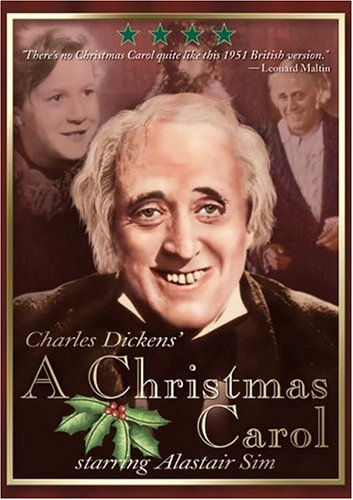
Michael's Christmas Movie Guide: A Christmas Carol (1951)


One of the greatest movies ever made. 

This movie is a quite faithful adaption of Charles Dickens' classic novel. You all know the story, Scrooge (Alastair Sim) is a greedy covetous old man. He has grown cold hearted and has no sympathy for anyone else's misfortune. One night he is visited by the ghost of his former partner Jacob Marley (Michael Hordern), who warns him to change his ways before it is too late. He also tells Scrooge he will be visited by three more ghosts. These ghosts show Scrooge, Christmases of his past, present and future, so that Scrooge can see the error of his ways.

There have been more film adaptions of A Christmas Carol than I care to count. Some perfectly fine adaptions have fallen through the cracks simply because while being good movies, they don't stand out among the many adaptions. So, what makes this film so special that it stands as easily the best of these adaptions? This is not an easy question to answer, but for the most part it comes down to excellent filmmaking and an incredible performance by Alastair Sim.

For many movie fans, Alastair Sim is Scrooge. His performance embodies everything this character should be. Though many great actors have played Scrooge, none have captured the vulnerable and abundantly human side of Scrooge as well as Sim. He can make you feel deeply for the character even when he is at his most despicable. His performance is possibly the only performance of the character that can move me to near tears. You feel sadness when he feels sadness and joy when he feels joy. Yet all this is done without sacrificing the darker and unlikable parts of this famous character. As strange as it might seem today, there was in outcry against Sim playing the character when it was announced. He was a popular actor in Britian at this time but was known mainly for comic roles. Few thought he had the dramatic chops to portray such a character. In fact, George Minter, managing director of Renown Pictures (which made the movie), wrote an article in the magazine, Picturegoer to explain the choice to those who didn't understand. Yet many movie fans cannot read Charles Dickens' classic story without picturing  Alastair Sim in their heads. 

What this movie also does better than any other film adaption is to capture the balance of darkness and joy that are present in Dickens' classic story. This is a movie that can be equal parts sad, scary and joyous. Yet in no way does this ever feel forced. It goes from each of these emotions in a way that feels perfectly natural and real. Director Brian Desmond Hurst and writer Noel Langley, create the most emotional and powerful film version of this classic story. 

The look of this film is perfect as well, and it is hard to imagine this film without the work of Art Director, Ralph W. Brinton and Cinematographer, C.M. Pennington-Richards. Much of the art direction was heavily based off of John Leech's original illustration for the book. According to the audio commentary on the DVD version, one of Charles Dickens's Grand Daughters visited the set, and said it looked just the book installations to life (Another visitor mentioned was one of my favorite actresses, Bette Davis, who was a big fan of Alistair Sim).

This film has two titles, in Britain, where it was made, it was called Scrooge, however in the U.S. it was called A Christmas Carol. Its U.S. Premiere was meant to take place at New York's Radio City Music Hall at Christmas time; however, the theater management was not happy with the film as they felt it was too dark and grim, and therefore not good entertainment for a family audience. The much more lighthearted 1938 MGM version did premiere there by the way. The film's actual U.S. Premiere was at the Guild Theater on Halloween Night. It did not do very well in the U.S. but was a huge hit in its home country of Britain. Despite this it would still as the years went by grow into being considered a classic in the U.S. as well.

The editor for this film was Clive Donner, who would later direct the 1984 film version of A Christmas Carol, that starred George C. Scott. Two of the actors in this film, Alistair Sim and Michael Hordern would reprise their roles as Scrooge and Marley for the 1971 animated version, directed by Richard Williams (best remembered as the animation director for Who Framed Roger Rabbit).

Resources Used
http://www.tcm.com/tcmdb/title/70899/A-Christmas-Carol/articles.html
DVD audio commentary by Marcus Hearn and George Cole
DVD introduction by Leonard Maltin
Christmas in the Movies by Jeremy Arnold 


Wednesday, August 3, 2022

Overlooked Classics: It's Love I'm After (1937)


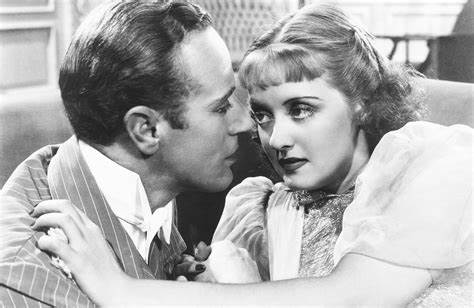
 In 1936 Archie Mayo directed a famous film starring Bette Davis and Leslie Howard called The Petrified Forest. This was a fantastic movie and has gone down in many film fans minds as a classic. However just a year later the director and stars would reteam for a much less appreciated movie called It’s Love I’m After. Despite the fact that this movie does not receive anywhere near the amount of attention The Petrified Forest does it is a completely delightful movie, that is a sheer joy to watch. 


 This movie came about because Leslie Howard wanted to show he could do more than just drama. Howard had been acting in many various serious roles at the time and wanted to take a break and do something comedic. Producer Hal Wallis was skeptical about making a comedy with this big dramatic star, but eventually accepted. 


After this came the problem of finding a leading lady to act with Howard. At first stage actresses Gertrude Lawrence or Ina Claire were considered. After watching Lawrence in the movie Men Are Not Gods (1936) though Wallis and Howard both decided that she was an actress better suited for the stage. After this Wallis came up with the idea of casting Bette Davis opposite Howard. This seemed naturally because the two had previously costarred in both Of Human Bondage and The Petrified Forest and proved to have great chemistry. The idea also came with Wallis deciding Davis needed a break from the more dramatic roles she was in lately. Bette was originally very reluctant to take the role. She had been working a lot lately and wanted a vacation. She also felt that Olivia de Havilland had a better role than she would have. To convince Bette Davis to be in the film Hal Wallis, told her the change of pace would be good for her career (she had been doing mostly dramatic pictures lately) and he replaced the originally planned cinematographer, James Van Trees, with Tony Gaudio, one of Bette's favorite cinematographers.


This movie centers on Shakespearean actor Basil Underwood (Leslie Howard). Basil and his co-star Joyce Arden (Bette Davis) are in love with each other but can't stop bickering. After much fighting the two finally diced to put it behind them and get married as soon as possible. However, Harry Grant Jr. (Patrick Knowles), the son of a man who helped Basil out when he was down on his luck, comes get revenge on Basil. Harry's finance, Marcia West (Oliva de Havilland) has seen Basil perform in plays and has fallen for him. Basil and Harry come to the conclusion that Basil could visit her family’s house and act like such a jerk that Marcia would begin to hate him. He views this as a way to renew himself before getting married. However, Joyce does not see it this way and is upset about their wedding plans being delayed. On top of that everything Basil does just seems to make Marcia fall more in love with him.


This is an absolutely hilarious film, full of laugh out loud moments. This is due both to a great script by Casey Robinson (based off a play by Maurice Hanline) and amazing on-screen chemistry between the cast. In fact just everything in this movie works great. Despite this film not being well known this is a truly classic screwball comedy.