Showing posts with label Jazz. Show all posts

Thursday, July 2, 2026

Old Town Music Hall Schedule for July 2026


My personal favorite place to see a movie is at Old Town Music Hall (140 Richmond St, El Segundo, CA 90245). Decorated as a mini-movie palace of the 1920's, this theater has been providing classic films nearly every weekend since 1968. The centerpiece of the theater is the Mighty Wurlitzer Pipe organ, a 1925 instrument that was created to accompany silent movies. Though in recent years, the theater has expanded what decades are defined as a classic (some movies even are as late as the early 21st century), they still play silent movies here with the organ accompanying it live. For those newfangled talking pictures, the organ still plays beforehand. As well as movies, this place also hosts concerts, mostly of the jazz variety. 

Here is the list of what this wonderful theater is playing this July. 


July 5th


The General (1926) 

Silent starring Buster Keaton. 

One of the most beloved silent comedies of all time, this film was a box office disappointment upon its original release. Yet over the years, movie lovers, the world over discovered what a masterpiece it is. Filled with great laughs, exciting action scenes (which hold up marvelously today) and a larger-than-life epic scale, this is comedian Buster Keaton at his absolute best. 

With live accompaniment by organist David Marsh and an introduction by film historian Randy Haberkamp. 

Sunday July 5, 2:30pm.

Get tickets here.


July 11th

Grease
(1978)  

Directed by Randal Kleiser. Starring John Travolta and Oliva Newton-John.

Probably the most popular movie musical of the 1970's. The unpretentious lighthearted feel makes endears this movie to new generations as well as old. The songs especially are a lot of fun. Who cares if the actors are obviously older than high school age. 

Saturday July 11th, 2:30pm

Buy tickets here.


Laura (1944)

Directed by Otto Preminger. Starring Gene Tierney and Dana Andrews.

 
One of the all-time great film noirs. This spellbinding movie pulls you in from the opening scene. Style overflows from this classic with many images that stay in the minds of movie lovers long after they watch. A great cast, a well-written mystery and a great score by David Raksin makes this a true masterpiece of the genre. 

Introduced by author and filmmaker Steven C. Smith.

Saturday July 11th, 7pm.

But tickets here.


July 12th

Forbidden Planet (1956)

Directed by Fred M. Wilcox. Starring Walter Pidgeon, Anne Francis and Leslie Nielson.

One of the most beloved sci-fi movies of all time. Made at a time when science fiction was treated as a children's genre, this film is anything but kiddie fare. Inspired by Shakespeare's The Tempest, this film is an intelligent and thought-provoking masterpiece that explores deep and dark themes dealing with the dark side of human nature. Still remains just as powerful today as it was back in the 1950's.

Introduced by special effects artist Craig Barron. 

Sunday July 12th, 2:30pm 

Buy tickets here.


Toons and Tunes

Part concert and part cartoon show, these special shows are pure delights. Hosted by singer Janet Klein, animation historian Jerry Beck and organist Randy Woltz, this show is filled with live music (featuring songs from the 1920's and 30's) and some classic 1930's cartoon shorts. A must see. 

Sunday July 12th, 7pm

Buy tickets here


July 18th

Robin Hood (1922)

Silent, directed by Allan Dawn and starring Douglas Fairbanks and Alan Hale

Before the immortal Errol Flynn version, the most popular action star of the 1920's, Douglas Fairbanks, played the famous character in this still exciting 1922 silent adaption. A pure treat for the whole family as well as the first movie to receive a Hollywood premiere (at the Egyptian Theatre in 1922). 

Accompanied by organist Robert York. Introduced by stand-up comedian (and great-granddaughter of Alan Hale), Samatha Hale.  

Saturday July 18th, 2:30pm

Buy tickets here.


The Good, The Bad and the Ugly (1966)

Directed by Sergio Leone. Starring Clint Eastwood and Eli Wallach. 

The most famous spaghetti western is also one of the definitive screen westerns. The final entry in The Dollars Trilogy (preceded by A Fistful of Dollars (1964), For a Few Dollars More (1965)), this features Clint Eastwood in his most famous role as The Man with No Name. With stylish direction by Sergio Leone and an iconic musical score by Ennio Morricone, this is a cinematic delight, even for those who think they may not actually like a western. 

Saturday July 18th 7pm 

Buy tickets here


July 19th

The Awful Truth (1937)

Directed by Leo McCarey. Starring Cary Grant and Irene Dunne.

One of the definitive 1930's screwball comedies. This film is directed by one of the greatest Hollywood comedy directors, Leo McCarey, who worked with Laurel and Hardy, The Marx Brothers and Charley Chase on some of their best films. He would win an Oscar for Best Director for The Awful Truth, and it is easy to see why. This is absolutely hilarious and can hold its own with more famous screwball comedies. Of course, this is helped by an incredible cast headed by Cary Grant (for whom this would help cement his screen image), Irene Dunne and Ralph Bellamy. The chemistry between Grant and Dunne makes them one of the greatest pairings in screwball comedy history. 

Introduced by author and filmmaker Steven C. Smith

Sunday July 19th, 2:30pm

 Buy tickets here.


July 25th

WALL-E (2008)

Animated Pixar classic directed by Andrew Stanton.

This is everything a Pixar movie should be. It is smart, funny, creative and very moving. Among the animated sci-fi fun is a surprisingly touching and lovely romance between the two main robots. Without saying anything but their names, these two characters feel so real to us and move straight into our hearts. 

Saturday July 25th 2:30pm.

Buy tickets here.


Hairspray (1988)

Directed by John Waters. Starring Sonny Bono and Ruth Brown.

John Waters' most mainstream film is also one of his most enduring. This musical comedy is so much fun that it would later become a very popular Broadway musical. 

Introduced by film historian Randy Haberkamp. 

Saturday July 25th, 7pm 

Buy tickets here


July 26th

Double Indemnity (1944)

Many consider this to be the greatest film noir of all time. It is easy to see why. Featuring all the hallmarks of the genre, legendary director Billy Wilder creates a movie that is possibly a definition of film noir. This dark and thrilling ride is held together by brilliant cinematography, great writing and a top-notch cast. Included in this top-notch cast is Fred MacMurray in one of his best dramatic roles, Edward G. Robinson at the top of his game and Barbara Stanwyck who gives a powerhouse of a performance. 

Introduced by film historian Antonia Carlotta. 

Sunday July 26th, 2:30pm

Buy tickets here


Monday, October 27, 2025

Movie Review: Blue Moon


Michael's Movie Grade: A+

One of the best movies of the year (so far). 

For those of you unaware Lorenz Hart and Richard Rodgers were one of the greatest songwriting teams of the 20th century. With Hart providing the lyrics and Rodgers providing the music, the team had written many gems of the Great American Songbook. These include My Funny Valentine, Where or WhenThe Lady Is a Tramp, Bewitched, Bothered and Bewildered and of course Blue Moon. The two worked only together until Rodgers teamed up with Oscar Hammerstein II for Oklahoma. This movie tells the story of Lorenz Hart at a bar after seeing the premiere of Oklahoma

On paper it would seem like a movie like this wouldn't work. It takes place almost entirely in one setting and is filled with wall-to-wall dialogue. While you can argue about how cinematic this type of storytelling is, you become so caught up in how great the dialogue is that you don't even really pay attention to this. Early on in the film, two characters quote Casablanca (1942) to each other. Perhaps it is inevitable that a movie filled with such great dialogue would pay tribute to the film with the most iconic dialogue in cinema history. The script by Robert Kaplow (author of the best seller Me and Orson Welles) is extremely witty, intelligent, engaging and insightful. This is the kind of script that stays with you long after the film is over. The ideas expressed in the dialogue are very profound and thought provoking, yet this is not the only charm of the dialogue. Being a film about a lyricist, words are chosen not only for their meaning but their sound. Appropriately there is a real lyrical quality to the dialogue that is quite entrancing. Even so the dialogue can also be really funny at times, which helps the film from getting too heavy as to not be entertaining. Of course, having some of the greatest American music play throughout the movie

One line from Casablanca that is quoted numerous times throughout is "nobody ever loved me that much." Within this quote lies the tragedy of the story. Though Hart had some written the lyrics to some the greatest love songs ever, he never experienced that kind of love himself. Meanwhile his alcoholism and personal problems have driven away the closest people he ever had to him. This movie looks at a deeply lonely and sad man, who finds more companionship with a bartender and piano player in a bar than to those who should be closest to him. Yet the movie does not spend most of its time pitying him but rather empathizing with him. We deeply feel every emotion he is feeling and any of us who have ever felt lonely or incapable of being loved, see too much of ourselves for our own comfort. This complexity is perfectly captured by Ethan Hawke's magnificent performance. This may be the best performance of his career as he perfectly captures every single emotion and complexity to this character.   

Yet Hawke is not the only standout of this cast. The whole cast is excellent, and special attention must go to Margaret Qualley as a younger woman he is infatuated with. She is positively radiant on screen, and we can perfect understand this infatuation.

This is a pure masterpiece.  

Saturday, March 29, 2025

Some Cartoons for Saturday Morning #224

 Hello, my friends and happy Saturday morning. Once again it is time for some classic cartoons. 

Animation fans know director Friz Freleng as a master of timing and very few comedy cartoons have come close to the perfect comedy timing of his films. This can especially be seen in his cartoon, Yankee Doodle Daffy (1943). This in my mind is one of his funniest films and just a pure delight. Despite the title, this film does not have a parotitic theme or revolve around U.S. history. With the James Cagney feature, Yankee Doodle Dandy (1942) having come out the year before, this pun was probably just too good for the filmmakers to pass up.  Look for a portrait of Friz Freleng hanging in Porky's office. A review in The Motion Picture Daily calls this film a "Pleasant little subject." The following are Exhibitor's reviews from The Motion Picture Herald. "YANKEE DOODLE DAFFY: Looney Tunes Cartoons—This studio's cartoons lately seem to be either exceptionally good or exceptionally bad. This is downright terrible. - W. Verricks Nevins, III, Alfred Co-op Theatre, Alfred N.Y." "YANKEE DOODLE DAFFY: Looney Tunes Cartoons—Good cartoon, but where does it get its name? - Ralph Raspa, State Theatre, Rivesdale, W. Va." "YANKEE DOODLE DAFFY: Looney Tunes Cartoons - Average color cartoon. - E.M. Freiburger, Paramount Theatre, Dewey, Okla." 


Now for the classic UPA cartoon, Georgie and the Dragon (1951). This movie was directed by Robert "Bobe" Cannon, one of my favorite UPA directors. He had previously been an animator for both Chuck Jones and Bob Clampett's units at Warner Brothers and even Tex Avery at MGM. He even worked on the Disney feature film, Melody Time (1948). As a director he made some of the best UPA shorts including one of the studio's most famous films, Gerald McBoing-Boing (1950). 


 Next comes a short film from the husband-and-wife team of John and Faith Hubley, The Tender Game (1958). This duo brought us some of the most artistic and lovely animated short films of all time. The music on this film is by Ella Fitzgerald (the queen of jazz) and Oscar Peterson (a wonderful jazz pianist). 


Here is an animated insert that John and Faith Hubley made for Sesame Street


Now for the Fleischer Superman cartoon, The Eletric Earthquake (1942). For a studio that was best known for silly comedy cartoons like the Popeye and Betty Boop shorts, Fleischer Studios adapted itself extremely well to the action/adventure genre with these films. Even with the flux of superhero cartoons that have followed many still view these shorts as the gold standard when it comes to superhero animation. The makers of such shows as Batman: The Animated Series, Superman: The Animated Series, Batman Beyond and Justice League Unlimited have cited these short films are their primary influence. 


Now it is time for a commercial break. 


To this day some of the most popular cartoon shorts among Disney fans are the ones that used Mickey Mouse, Donald Duck and Goofy as a comedy team in the same vein as Laurel and Hardy, The Marx Brothers or The Three Stooges. The first of these was Mickey's Service Station. This was also the only one that was in black and white instead of color. In fact there would be only one more Mickey Mouse cartoon in black and white, which would be Mickey's Kangaroo (released later the same year). A quick bit of writing from an issue of The Film Daily (dated March 14, 1935), lets us know where this cartoon premiered, as well as the feature it played with. "Walt Disney's newest Mickey Mouse cartoon, 'Mickey's Service Station' is to have its premiere at the Rivoli Theater tomorrow on the bill with Samuel Goldwyn's 'The Wedding Night' in which Gary Cooper and Anna Sten are co-starred "Here is what some theater owners had to say about this cartoon in The Motion Picture Herald. "Mickey's Service Station: Mickey Mouse- Good filler lots of laughs and excitement. Running time, 1 reel - Rudolph Duba. Royal Theater, Kimball S. D. Small town patronage" "Mickey's Service Station: Mickey Mouse- A dandy cartoon. Mickey Mouse means something at our box office.- J.W. Noah, New Liberty and Ideal Theaters, Ft. Worth, Texas. General patronage."


Now for the silent Out of the Inkwell short, The Cure (1924). 


Continuing today's selection of classic cartoons is Popeye The Sailor Meets Sinbad The Sailor (1936). This is the first of the three Popeye two-reel specials (plus the first color Popeye) and one of the most popular Popeye cartoons. Running at 17 minutes this is twice as long as the usual Popeye film, yet the filmmakers work this to their full advantage. It never feels too long, and the extra time lets the filmmakers put in a more atmospheric fantasy like feel to this cartoon. This would be the first Popeye nominated for an Academy Award and received the 17th spot in Jerry Beck's book, The 50 Greatest Cartoons. A review in The Film Daily called the cartoon "Top Notch." However not everybody was so impressed by this film as evidenced by the following Exhibitors reviews from The Motion Picture Herald. "Popeye the Sailor Meets Sinbad the Sailor: Popeye the Sailor series - Good color but did not bring extra business like Paramount said it would. -Fisher & Bichler, Mattray Theatre, Strasburg, N.D." "Popeye the Sailor Meets Sinbad the Sailor: Popeye the Sailor special - Worth twice as much as regular Popeye but no more. I paid more and that makes me a dissatisfied customer. - W. H. Brenner, Cozy Theatre, Winchester, Ind. General Patronage." "Popeye the Sailor Meets Sinbad the Sailor: Popeye the Sailor cartoons - This much Balley-hooed two-reeler, all color, third dimensional cartoon failed to come up to the entertainment value of the single reel black and white Popeye series. - M.R. Harrington, Avalon Theatre, Clatskanie, Ore. - Small Town and rural patronage."


Let us end today's cartoon selection with a classic Simpsons clip from the episode, 22 Short Films About Springfield (1996). 


Thanks for joining me. Come back next week for more animated treasures. Until then may all your tunes be looney and your melodies merry. 

Resources Used

The 50 Greatest Cartoons edited by Jerry Beck

Of Mice and Magic: A History of the American Animated Cartoon by Leonard Maltin

Looney Tunes and Merrie Melodies: A Complete Illustrated Guide to the Warner Brothers Cartoons by Jerry Beck and Will Friedwald 

Walt Disney's Mickey Mouse: The Ultimate History by David Gerstein and J.B. Kaufman

https://lantern.mediahist.org/


Thursday, November 28, 2024

Happy Thanksgiving from Movies with Michael

 Hello, my friends and happy Thanksgiving. Though I am vegetarian and don't eat turkey I have a real soft spot for Thanksgiving. Partly because I love the idea of taking some time to stop and take a look at what we should be thankful for. Also, because Thanksgiving marks the last day before the Christmas season (which many of you know I am obsessed with Christmas). 

Though Thanksgiving songs may not be as popular or abundant as Christmas songs, there are some truly fine Thanksgiving songs out there. One of my favorites is Irving Berlin's I've Got Plenty to be Thankful For. This song was written for the classic movie, Holiday Inn (1942), where Bing Crosby sang it.


/

There aren't a lot of Thanksgiving movies, however Planes, Trains and Automobiles (1987) stands as a true Thanksgiving classic. 


Now for a classic Thanksgiving cartoon from the wild mind of Tex Avery. 


Plus, one of my favorite scenes from the Harold Lloyd feature film, Hot Water (2024). This scene is especially appropriate for Thanksgiving. 


/

Now for an example of a great Thanksgiving dinner scene in movie history. 


I don't post enough about old radio shows here. So here are two great examples of Thanksgiving themed classic radio show episodes. 


Now for a little appropriate Thanksgiving music.


Universal Weekly, 1928

And to you dear reader, I am very thankful for you and hope you are having a wonderful Thanksgiving.


Tuesday, March 12, 2024

Movie Review: They Shot the Piano Player


Michael's Movie Grade: B+

An excellent animated jazz docu-drama.

This film follows a writer, who goes to Brazil to research for a book he is writing about Brazilian samba-jazz. While writing this book he becomes fascinated by a pianist he has never heard of before, who he learns simply disappeared with no one knowing what happened. While this film offers various options for how this happened, we all know that is pure speculation. Yet it gives us a powerful and often disturbing look into part of South American history that will make many of us uncomfortable. This history lesson is giving in an extremely effective way and never feels like we are being lectured. Of course, as well as Brazilian history this movie also gives us a great look into the history of jazz music. This is very informative and fascinating, yet also perfectly accessible to those who are either casual jazz fans or don't know anything about the music. Much of this is told through actual interviews, which we hear the real audio from. These interviews are simply a joy to listen to and really help the story feel all the more personal to us. These interviews alone would be worth the price of admission. Naturally being a documentary about jazz, the music is also very important. Luckily the music is simply wonderful. It is such a delight to listen to this music and it is easy for us to understand why the subjects of the documentary are so passionate about it. 

This film does have its flaws though. One is casting Jeff Goldblum as the voice of the main character. While he does a good acting job, the voice we hear is so obviously the voice of Jeff Goldblum, that it can take us out of the movie and make this docu-drama feel less real to us. Another problem is that sometimes this movie will bring up interesting points and never explore them. There are moments where the film seems to allude to a connection between this music and Cinema's French New Wave. Yet the movie never truly explains what this connection is. While for cinephiles it is cool to see animated versions of scenes from such films as Breathless (1960) and The 400 Blows (1959), it is ultimately pointless and feels like it simply just pads out the runtime.   

While it is not perfect, this movie is a pure delight for both seasoned jazz fans and for newcomers to the genre. 

Wednesday, December 28, 2022

Movie Review: Babylon


Michael's Movie Grade: B

A real sense of passion and love for the movies, overcomes some major story flaws. 

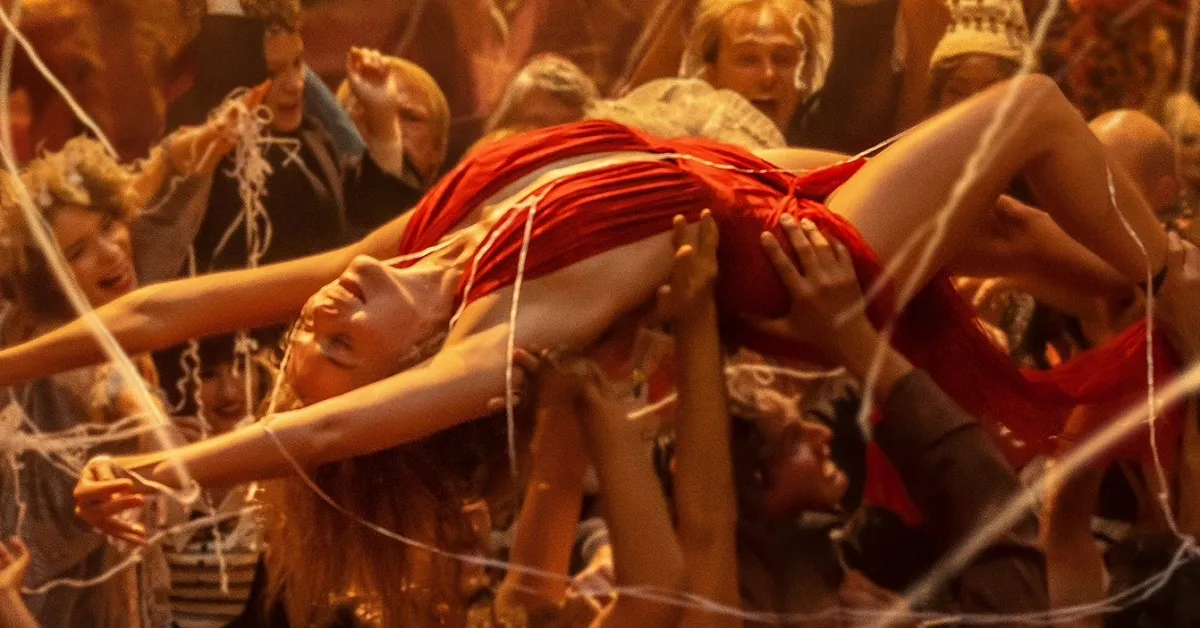
Those familiar with Damien Chazelle's films or have heard him discuss movies, know that his passion for movies is complete real and genuine. It is this passion that drives Babylon and gives the film its best moments. In fact the ending scene here is an incredibly beautiful tribute to the movies that will even delight those who didn't like the rest of the movie. The story takes place in Hollywood during the end of the silent era and the beginning of the talkie era. As such there are many allusions to real movie history for people who are familiar with films this era to appreciate. Some of these are obvious. For instance Brad Pitt essentially plays John Gilbert, Li Jun Li essentially plays Anna May Wong and the Singin' In the Rain musical number being filmed is from The Hollywood Revue of 1929 (1929). Yet there are also more subtle allusions that will probably require multiple rewatches to get. While these parts of the film may not appeal to those who are not film buffs, they will certainly delight movie geeks. Frankly I found it a lot of fun figuring out what movie personalities these various characters were supposed to be. Yet there is more to recommend this film than just little nods for movie geeks to geek out about. This film has a wonderful cast and every member of this cast (from those who play main characters to those who play smaller roles) are perfect for their roles and shine very brightly. Yet Margot Robbie and Brad Pitt steal the show. This might be the finest performance of Margot Robbie's career and she can be delightfully over the top and funny, while also being excellent in the more serious scenes. Brad Pitt has the job of being the emotional center of the film and he succussed wonderfully at this. This movie also benefits from a really good sense of humor. There are some really good comedic set pieces here and many of them are quite funny. I especially loved the scene with the characters first shooting a scene with sound. Also helping matters is that this is a pure visual treat. While the film may be a bit excessive at times, it is always simply a joy to look at.  

The (jazz) music here is very catchy and a lot of fun, but it can also feel too modern for a movie that takes place in the 1920's and 30's. 

This movie does have some major flaws though. One of them is that the film often falls victim to its own excess. This is especially true of the wild party scenes, which often go overboard with the crazy orgies and bizarre sexual fetishes. It doesn't take long for us to get the point that these scenes are making, and they can become tiresome and unpleasant after a while. Also, towards the last act the film gets too melodramatic, and this often doesn't work and can take you out of the story. There is also too many stories going on here and some don't get the time or development that others do. These are major faults and I can understand why some may not like this film, but for me the things that worked here overcame these faults. 

This may be a very flawed movie, but there is also still a lot to like (or even love) here. 

Monday, June 6, 2022

Movie Review: Jazz Fest: A New Orleans Story


Michael's Movie Grade: A-

A fantastic documentary on the New Orleans Jazz Fest.

This movie like all of the best music documentaries and concert films, works first and foremost as a celebration of music. Because of this, Jazz Fest is a film that you leave the theater happier than when you came in and isn't that just what you want from a trip to the movies. Both movies and music have the power to do this and so a film like this certainly does. Despite the name of this film, and of the festival it is about, being Jazz Fest, neither the festival nor the movie limit themselves to one genre. While there is some traditional jazz, there is also a wide variety of other genres including gospel, R&B, Cajun music, hip-hop and rock and roll. All of these genres are treated with equal respect and fans of any of these genres should be more than happy with what this film gives them. The highlight of the movie of course is the performances from the many great artists. These artists range from people that everyone reading this will know (Bruce Springsteen, Al Green, Earth Wind and Fire, B.B. King, Jimmy Buffett, Katy Perry, Pitbull and many more) to some great local talent from New Orleans that you will be introduced to here. All of these artists give fantastic performances and even if one of them is not your taste and music, you will still truly appreciate their showmanship and talent. Plus there is a wide enough variety that everybody will find some music that they will love. Watching these performances makes nearly anyone who ever likes music want to attend this festival. There is a joyous feel in these parts that I don't see how anyone can resist. This film also gives a great history of this festival and the artists there and I am sure even many music buffs will learn something new. The interviews with various artists and people who work on the festival add to the movie's joyous feeling. They so passionate about everything they are talking about that it is hard not to get caught up in the excitement yourself. There is something that is simply always wonderful about seeing the joy in someone's face as they talk about something they are truly passionate about and that feeling is all over this movie. 

The only real problem I have with this film is the length. To cover 50 years of a festival in an hour and half, is just not giving yourself enough time and this can cause a bit of a rushed feeling. But when everything about the film is this joyous, it seems to only be a compliment to say that you want much more. 

A must see. 

Saturday, February 6, 2021

Some Cartoons For Saturday Morning #109

 Hello my friends and welcome back for another selection of classic cartoons. 

Today's cartoon selection begins with one of the most famous cartoon shorts of all time, Steamboat Willie (1928). While contrary to popular belief this was not the first sound cartoon, there is no doubt that no cartoon before had used sound as well as this film did. This was the short that opened up the door for what sound cartoons could be and its effect could soon be felt on almost every sound cartoon being made. Though this was not the first Mickey cartoon made either (Plane Crazy and The Galloping Gaucho were made before it), this was the film that made Mickey a true movie star. In fact after the success of Steamboat Willie the two earlier Mickeys were given synchronized soundtracks because of Willie's success as a talkie. Willie brought about the idea that unlike early live action talkies (which often sparsely used music outside of musical numbers), sound cartoons would use music as just as important a part of the storytelling as the visuals. Even when studios like the Fleischer studio and Warner Brothers would make cartoons in their own style, this principal was largely employed. Walt would later recall "When the picture was half finished we had a showing with sound. A couple of my boys could read music and one of them [Wilfred Jackson] could play a mouth organ. We put them in a room where they could not see the screen and arranged to pipe their sound into the room where our wives and friends were going to see the picture. The boys worked from a music and sound effects score. After several false starts sound and action got off with the gun. The mouth organist played the tune and the rest of us in the sound department bammed tin pans and blew side whistles on the beat. The synchronization was pretty close. The effect on our little audience was nothing less than electric. They responded almost instinctively to this union of sound and motion. I though they were kidding me. So they put me in the audience and ran the action again. It was terrible but it was wonderful! And it was something new." The reaction from audiences when the film hit theatres was if anything even greater. It is hard to overstate just how incredible the reaction to this cartoon was when released. While this cartoon can not have the feeling of newness or startling innovation it once had, it still successeds today wholly on an entertainment level. The truth is that this cartoon is still a lot of fun and the gags remain charming and clever over 90 years later. The film received the #13 spot in Jerry Beck's book, The 50 Greatest Cartoons. November 18, 1928 marked Steamboat Willie's debut at New York's Colony Theater and that date is now widely considered to be Mickey's birthday. I personally have this cartoon on my mind after building a LEGO set of it (a hobby I have got into during lockdown). 


Next comes another masterpiece of a cartoon, Minnie the Moocher (1932) starring the one and only Betty Boop. This cartoon is a pure example of what the Fleischer studio did better than anyone else. The film is full of incredibly creative, surreal and just plain weird gags that are executed to complete perfection. This cartoon is the first of three Bettys to feature jazz singer Cab Calloway (the other two being Snow White and the Old Man of the Mountain). In all three of these cartoons, the singer was not only used to sing his song, but his iconic dancing was captured by the dancer via rotoscope. A review in the Film Daily stated "This swell Max Fleischer musical cartoon is the best turned out so far with the cute pen and ink star, Betty Boop, who seems to get more sexy and alluring each time and her boyfriend Bimbo. The musical selection is supplied by Cab Calloway and his orchestra and what these boys can't do to the Minnie the Moocher number is not worth mentioning."


Next comes Woody Woodpecker in To Catch a Woodpecker (1957). 


Now we will join our friend Toby the Pup, Down South (1931). While Charles Mintz was producing Krazy Kat cartoons for Columbia , he decided to create a separate series of cartoons for RKO, these starring a character named Toby the Pup. To head this series Mintz handed the duties to Dick Huemer, Art Davis and Sid Marcus. Dick Huemer had been a major contributor to the style of the Fleischer studio earlier and this is probably why these shorts have a Fleischer-type feel to them. Huemer, Davis and Marcus would later be the major creative factors for Columbia's Scrappy cartoons (also produced by Mintz).


Next we join Bugs Bunny and Elmer Fudd in Fresh Hare (1942). Many of you who grew up watching this cartoon on TV might have thought its ending was awfully abrupt and non sensical. The reason for this is simply the ending gag was cut from most TV broadcasts (for reasons that will be obvious once you see it). This is also one of those cartoons where Elmer is heavier than we are used to seeing him. This was due to a brief and unsuccessful attempt to make Elmer more resemble his voice actor Arthur Q. Bryan. Though this version of Elmer never caught on, certain cartoon fans (including myself) have a fondness for these cartoons. Later director Friz Freleng would express that he had a dislike for using Elmer as Bugs' adversary. The reason for this being that he felt Elmer was too sympathetic of a character and too easy of a character for Bugs to defeat. Despite this Friz's cartoons with both these characters are often quite good (including this one).  


Today's cartoon selection continues with another Friz Freleng classic, Daffy the Commando (1943). The following is an exhibitor's review from the Motion Picture Herald, "Daffy the Commando: Looney Tunes Cartoon - This is Daffy's best. By the way where has Vitaphone being keeping Daffy Duck? This is the first I played in a long while. -Ralph Raspa, State Theatre, Rivesville, W. Va." 


Today's cartoon selection ends with Blackie Sheep in Much Ado About Mutton (1947). 


Come back next week for more animated treasures. Until then may all your tunes be looney and your melodies merry. 

                                                                     Resources Used

Of Mice and Magic: A History of the American Animated Cartoon by Leonard Maltin.

The 50 Greatest Cartoons by Jerry Beck


Wednesday, September 2, 2020

Some of My Favorite Live Albums

I don't know about you guys but I miss concerts a lot. There is nothing like seeing one of your favorite singers live, but unfortunately that is something we can't really do right now. Missing concerts however has got live music on my mind, and this is why today, I am going to look at some of my favorite live albums. Keep in mind that favorite doesn't always mean best, it just means favorite, so if your favorite live album isn't on here don't take it personally. 


Waylon Live (1974) - Waylon Jennings. 


In my opinion Waylon Jennings is and always will be one of the greatest singers (and not just country) of all time, and this album features him at his best. His voice is at its strongest and most powerful and his band has never sounded better. The selection of songs is top notch from Waylon's own hits to those of his friends (Willie Nelson, Kris Kristofferson) to old school country classics to then current rock hits. This is pure music perfection. If I had to pick an album to show someone why I love country music this would be one of my top picks. 


Miles Davis: Live at the Plugged Nickel (1965) - Miles Davis

To say this was a daring performance is a true understatement. Drummer Ton Williams said that the band decided to play the music in an anti-jazz style without telling Miles. Miles however not only catches on but considers this a challenge and plays by their rules with the shear artistry that few other than him posses. What results is an incredible concert both for jazz buffs and casual fans.


At Folsom Prison / At San Quentin (1968/1969). - Johnny Cash

These may be obvious choices but that is because these two albums are just so incredible. Johnny has incredible energy and an even better connection with his audience. With how well Johnny connects with these inmates, it no surprise that many people assumed he had been in prison himself. These albums also show the dichotomy of Johnny Cash more than any of his other albums do. You have a strong Christian with his faith in God and inability not to sure what God can do for others and praise him, yet one who also will cuss (or even flip the bird) and sing that he hopes San Quentin will "rot and burn in Hell." These two sides don't feel like they belong in the same person, but Johnny was far from a simple easy to explain person.


Willie and Family Live (1978) - Willie Nelson

If you have never seen Willie in concert, you need to. He is such an incredible live performer who puts so much energy and excitement into each song. It is hard not to just simply get swept up in the music with one of Willie's live performances. None of his live albums capture the energy and fun of a Willie Nelson performance more than Willie and Family Live. This album also shows the rocking side of this country music legend more than any other. 


The Last Waltz (1978) - The Band 

The soundtrack album to one of my favorite concert films is not surprisingly one of my favorite live albums. The Band's farewell concert shows the group at its best and hits like Up on Cripple Creek and The Night They Drove Old Dixie Down, never sounded better than they do here. Featuring such incredible guests as Bob Dylan, Neil Young, Dr. John, Muddy Waters, Eric Clapton and Emmylou Harris any fan of 1960's or 70's music must hear this album.


Offerings: A Worship Album (2000) - Third Day

My favorite Christian rock band turns in one of their finest albums with their first live album and their first worship album. This album combines their own originals plus new covers of Michael W. Smith and Bob Dylan. The band simply sounds incredible and Mac Powell's voice is at its best. This is as good as Christian music gets.


Rock Spectacle (1996) - Barenaked Ladies

The Canadian pop-rock band with a uniquely offbeat sense of humor, are at their best live, and this live album may be their best album. This is them in all of their pre-One Week glory. If you want to see just how great of a band Barenaked Ladies are you can't do better than this album. This is when the band was at their creative peak and mixing that with their incredible energy live, this is a masterpiece of a live album.


At The Ryman
(1992) - Emmylou Harris 

Emmylou Harris is one of the best interrupters of classic country songs and many of her covers are often even better than originals. She also has an incredible energy and presence live. So a live album of her performing classic country songs has to be as good as it gets. This is pure traditional country music at its absolute finest and it is only appropriate that it comes from the historic Ryman (which was the home of The Grand Ole Opry from 1943 to 1974). For country music fans it hardly gets better than this. 


Live in Iraq (2007) - Charlie Daniels Band

Charlie Daniels favorite part of his job was performing live and The Charlie Daniels Band was often at its best when they were live. That is why it is disappointing that they have so few live albums. However the live albums they do have are pure gems. Charlie always said that there was an art of putting together a concert and this was certainly an art he had mastered. This songs on this album are masterful put together and there is never a lull in the whole album. Of course performing for our troops overseas means there is a lot of Charlie's patriotism throughout this album. A lot of Charlie Daniels Band critics may complain about this, but to me this is a treat as his love for America is such a huge part of what makes Charlie Charlie. It is always so real and honest that I don't ever feel I'm being preached to but rather that the artist is just revealing who he is through his music.  


-Michael J. Ruhland 


Tuesday, July 21, 2020

Summer Concert Series: Thelonious Monk Straight No Chaser (1988)

This movie is a very touching and human account of the great jazz pianist. Those who know much about Thelonious Monk will no that he had some mental problems that affected his life greatly. This is always a touchy subject for movies (documentaries included) because they have a tendency to let the disabilities become the person. This film does an incredible job about talking rather in depth about his disabilities while still showing that while they affected him they did not define him. Much of the heart of this film comes from interviews with the musician's friends and family. They speak about him with so much love that it is hard for us not to love him as well. Fellow musicians who spoke in this movie were so in awe of the man's musical talent that this film can give even jazz fans a new perspective on this great artist.

This film is also a sheer joy for jazz fans with so many rare clips of the great artist both on and off stage. These clips are an important part of jazz history that might have been lost to time if it wasn't for this movie. We also get to hear a lot of his music and all of it is excellent. This will make fans of newcomers and will delight long time fans.

-Michael J. Ruhland

Monday, July 20, 2020

Summer Concert Series: Jazz on a Summer's Day (1959)

Jazz on A Summer's Day is one of the earliest concert films and one of the best. This movie provides all one could wish for from a film like this, provided a great look at the 1958 Newport Jazz festival. Of course most important to this type of movie is the music and that is fantastic here. The line up of artists is fantastic. Included are Louis Armstrong, Chuck Berry, Thelonious Monk, Gerry Mulligan, Big Maybelle, Chico Hamilton and Mahalia Jackson. All of them are at the top of their game here. Watching Louis Armstrong continue showing that he was one of the world's great entertainers (as he did in many movies) is a pure delight. He and trombonist Jack Teagarden have incredible chemistry and it is a joy to watch them together. Though Monk is in the film only briefly his music leaves quite an impression. Chico Hamilton and Gerry Mulligan show that this type of jazz is just as great today as it was then. Chuck Berry gives his all and shows all the energy and fun that defined early rock and roll. There was no better way to end this movie than gospel singer Mahalia Jackson. If her singing doesn't move you nothing will. Her performance of The Lord's Prayer not only stops the show but glues your ears and eyes to the movie in a way free performers can. Time stands still and all there is are the words, music and her voice creating an incredible experience found in few concert films. 

The way this movie is filmed is fascinating. Unlike many concert movies where the camera is always on the performers this film spends just as much if not more time looking at the audience. It is often times just as much fun watching the audience as it is the performers. When you think of jazz in movies, you often think of a dark film noir type setting as well as dark and shady characters. Instead what we get here is a bright summer's day in a nice upscale looking place and a crowd of people who look like they are at a church service. They are mostly a restrained crowd but one that is heavily enjoying the music. Watching the crowd when Chuck Berry is performing is watching musical and cultural history happening. The younger audience members, who are restrained through much of the film are dancing and having tons of fun with the still new rock and roll. Meanwhile the older attendees (who probably came to hear jazz music) are cold and unemotional to this new fangled genre. As well as the scenes with the audience watching the performances, there also scenes simply showing the attendees having wholesome fun, when there are no artists on stage. This makes the movie more appealing today as it becomes a nostalgic time capsule of a time that is very different from how we live today. 

If you are a film fan, if you are a music fan or if you are both, this movie is a must watch.

-Michael J. Ruhland 

Thursday, July 16, 2020

Summer Concert Series: Chasing Trane (2016)

Excellent documentary on Jazz legend John Coltrane.

This movie being only a little over an hour and a half, obviously does not give a full view of the many facets of John's incredible career, yet it does remarkably well with the time it spends on its subject. We get a brief basic overview of his career as well as incredible critical insight of his music by critics, musicians, biographers and more. They all explain what John's music means to them. After listening to them talk we can hear clips of Coltrane's music and we listen to it in a way we never could before. No one is ever going to completely change our musical tastes, but as music (especially jazz) can be heard and interrupted completely different by different people, others can help us see what they hear or feel when they listen to a piece of music and that can completely change the way we hear it. That is what this movie does best and why it is such a great music documentary despite giving us a very simplified historical overview of its subject.

This film will help fans get something new out of Coltrane's music, while striking newcomers interest at the same time.

-Michael J. Ruhland

Monday, July 6, 2020

Summer Concert Series: Miles Davis: Birth of the Cool (2019)

I admit that I am a relative newcomer to Miles Davis' music (I love it by the way). So when I first saw this movie there was a lot that was new to me that may not have been new to many of you.

 This is a simple straightforward documentary but an excellently done one. The interviews with his friends, family and bandmates are fantastic. What makes them work, beyond just how much insight they give you, is the emotion behind them. Miles didn't have the reputation of being one of the nicest people in the world and this film certainly shows why. There are times when it is hard not to get a little angry hearing what he has done. Yet the people being interviewed hardly seem to hold a grudge. They knew he could be a jerk to them, but despite that there was something all of them seemed to still love about the man. They don't defend him or what he did, but rather just love him in spite of these faults and there is something extremely beautiful about that. Of course this is a music documentary and the movie gives a great insight into is music and many of the artistic choices he made and why his music still touches so many. I can't see anyone watching this film and not wanting to listen to the man's incredible music. Those being interviewed talk about the music with such a passion that it is had not to feel that same passion. At the same time while we don't see any complete performances the clips we get are incredible and make one automatically want more. This doc also explains why his later electric work was not a simply ploy to stay relevant, but that his music was always been true to who he was in that moment, whether it was more traditional jazz or the funk inspired experimental music from 1969 on. He was never satisfied with what he did in the past, always looking instead at one to redefine himself and bring his music into the modern era (whatever that era may be). The man was a true artist in every sense of the word.

The main problem with this movie is it tries to tell the story of a decades long career in less than two hours. It is not enough time, and the film can often feel rushed and you wish they would spend more time on one subject. Yet for what this film does it is truly excellent.

-Michael J. Ruhland

Movie Music Monday: I'm An Old Cowhand

The movies have served as a musical education to me. They have constantly broadened and expanded my musical taste and knowledge and continue to do so. From the cowboy music of The Sons of the Pioneers, Gene Autry and Roy Rogers to the classical music of Fantasia to the musical standards of the Fred Astaire and Ginger Rogers musicals to the rock and roll of Elvis Presley and concert films like The Last Waltz (1978) to jazz legends like Miles Davis, Paul Whiteman and Louis Armstrong to crooners like Bing Crosby and Frank Sinatra, films have helped introduce me to so much great music. These Movie Music Monday posts I hope will give you some of the same experience the movies have given me.

Today's song is a cowboy classic, I'm an Old Cowhand. This is a fun and often funny little novelty number that has become a staple of cowboy music. The song was introduced in the feature film, Rhythm on the Range (1936). Preforming the song in the movie was an all star line-up including Bing Crosby, Louis Prima, The Sons of the Pioneers, Matha Ray, Leonid Kinskey and Bob Burns. This song was specifically written for this movie by Johnny Mercer. Fans of movie music should be familiar with Johnny since he wrote s or co-wrote such classic movie songs as I'm Old FashionedYou Were Never LovelierOn the Atchison, Topeka and the Santa FeCharadeOne for My Baby (and One More for the Road) and Hooray For Hollywood. This song was inspired by a trip across the U.S.A. write his wife and how he was amused by the sight of cowboys in full cowboy garb driving cars instead of riding horses. The satirical lyrics of this song also helped him vent his frustration with his not having made it in Hollywood up to this time. Of course that would change 


The song would return to the movies when Gene Autry and Mary Lee sang it in the feature film, Back in the Saddle (1941).


Roy Rogers (who had previously been a member of the Sons of the Pioneers and appeared as such in Rhythm on the Range (including the scene that introduced this song) sang it in the movie, King of the Cowboys (1943).


The same year that Rythym on the Range was released both Bing Crosby and The Sons of the Pioneers, did solo versions of the song.


Also in 1936 the overlooked country music pioneer Carlson Robison did a version of this song.


Frank Sinatra recorded the song in 1945.


Jazz saxophonist, Sonny Rollins did an instrumental version of this song on his 1957 album, Way Out West.


The Mills Brothers did an excellent version in 1961.


When The Charlie Daniels Band did an album of cowboy songs, By the Light of the Moon (1997).


-Michael J. Ruhland


Wednesday, June 24, 2020

"Jumping Jive" From Stormy Weather (1943)

Though Stormy Weather certainly has its faults as a movie, the big finale musical number is one of my favorite musical numbers in the history of movie musicals. There is so much energy and talent on screen that I can not look away from the screen. From Cab Calloway and his orchestra giving their all to the music to the Nicholas Brothers doing things that should not be humanly possible, I love every second of it.


-Michael J. Ruhland 


Monday, March 9, 2020

Movie Music Monday: South of the Border

The movies have served as a musical education to me. They have constantly broadened and expanded my musical taste and knowledge and continue to do so. From the cowboy music of The Sons of the Pioneers, Gene Autry and Roy Rogers to the classical music of Fantasia to the musical standards of the Fred Astaire and Ginger Rogers musicals to the rock and roll of Elvis Presley and concert films like The Last Waltz (1978) to jazz legends like Miles Davis, Paul Whiteman and Louis Armstrong to crooners like Bing Crosby and Frank Sinatra, movies have helped introduce me to so much great music. These Movie Music Monday posts I hope will give you some of the same experience the movies have given me.

Today's song is South of the Border. In Gene Autry's autobiography, he remembered how he first became acquainted with this song. He wrote, "Neither a prison in Nashville nor an airfield in Dallas was the oddest place I ever found a song. That happened during my prewar tour of the British Isles in 1939. Two young Englishmen, Michael Carr and Jimmy Kennedy, visited my dressing room in Dublin between shows. They had written a song with me in mind and hoped I would record it. The song was 'South of the Border.' They had never been to Mexico and had seen it only in my films (which meant they were probably looking at Arizona). How two Englishmen came to write a song about a country they had never seen, for a movie cowboy they had never met is a question I wish I could answer. But 'South of the Border' sold over a million copies." (Autry, 27). Later in the book Gene wrote, "As luck would have it one of the things I brought back was the song written for me by the two British lads Michael Carr and Jimmy Kennedy - 'South of the Border.' There was even time for a script to be written and for the film of the same name to become our last release for 1939." (Autry, 74). The following is an exhibitor's review of that movie from The Motion Picture Herald, "South of the Border: Gene Autry, Smiley Burnette - Here is one exhibitor who is thanking the Almighty that Republic discovered Gene Autry and 'South of the Border is the answer to our prayer. We played it three days to sell out business. Never saw the like of it. Don't know where they came from. Wish we had played it a week. Any exhibitor who hasn't played this one has missed the boat. Did more business than 'Snow White' by $175 in three days against four days. More than 'Boys Town,' 'Jesse James' and 'Kentucky' and that's something. We're going to try it book it for a return showing in a couple months. I didn't think it was possible to do business on this picture like we did. Were the creditors tickled! We gave it a big campaign in advance and it paid; yes sir! If any of our good friends out west haven't played this, do so. - Harold Rankin, Plaza Theatre, Tilbury, Ontario, Canada. General Patronage."


Gene wasn't the only one to record this song in 1939. Guy Lombardo and His Royal Canadians, also did their version.


Shep Fields and His Rippling Rhythm Orchestra also recorded the song in 1939, having one of their biggest hits.


Bob Wills and His Texas Playboys recorded one of my favorite versions of the song in 1948.


Frank Sinatra had a hit off the song in 1953.


Mel Tormé performed the song on his 1959 album, ¡Olé Tormé!: Mel Tormé Goes South of the Border with Billy May.


Pasty Cline did a version for her 1961 album Showcase.


Jazz musician Herb Alpert used the song as the title track for a 1964 album.


Chuck Berry did a cover of the song on his self titled 1975 album. Chuck changed the lyrics more than little.


Willie Nelson recorded this song twice for his 1988 album What a Wonderful World.


-Michael J. Ruhland