Showing posts with label Looney Tunes Feature Films. Show all posts

Thursday, June 26, 2025

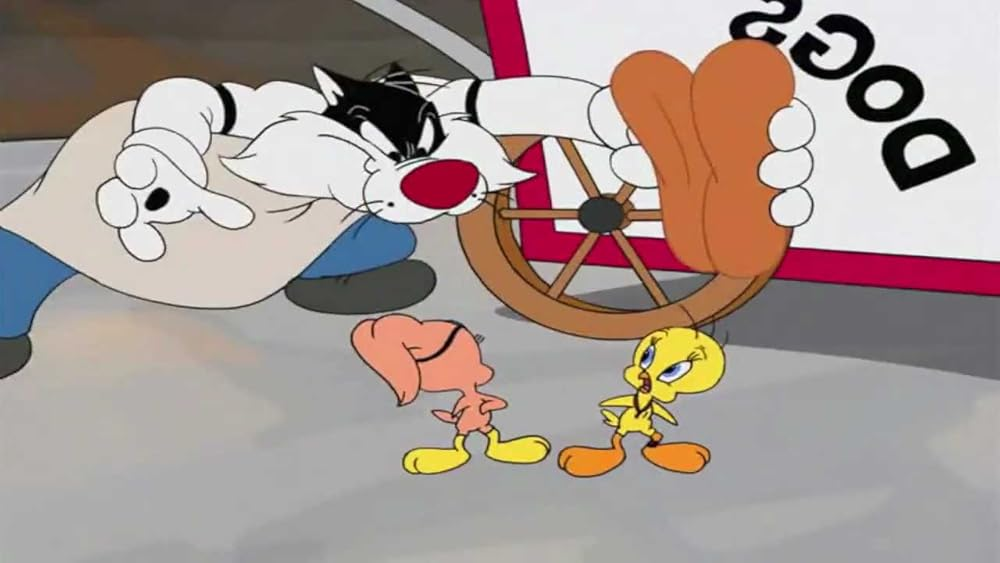
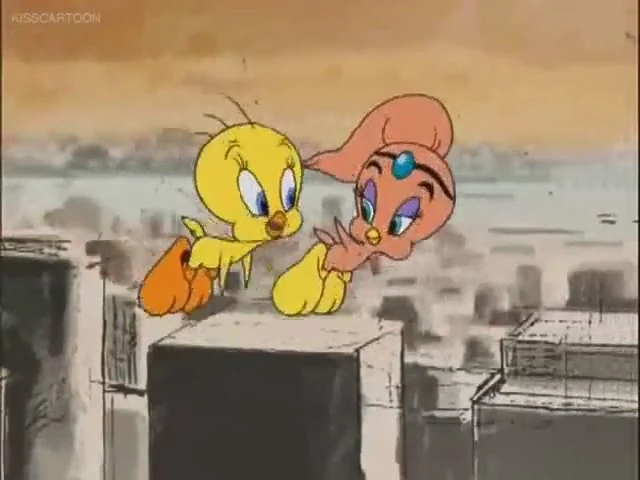
Tiny Toon Adventures: How I Spent my Summer Vacation (1992)


In the late 1980's and early 90's there was trend in cartoons to have TV series that featured child versions of classic cartoon characters. Tiny Toons Adventures was both part of this trend, while providing a different twist on it. The series starred kid characters that were based off of the classic Looney Tunes characters but were still their own characters. They went to a school where they were taught by the classic Looney Tunes cartoons the art of cartoon comedy. The series wasn't always the most consistent and some episodes don't hold up the best. However, when the series was at its best, it was as great as any cartoon TV comedy had a right to be and because of this I feel it deserves the same praise that often goes to Animaniacs (which was made by the same people who made Tiny Toons. As wonderful as the best episodes of the show could be, the greatest highlight of the series was the direct to video movie that was based on the show. 

This film doesn't just tell one story but multiple that are based on the premise of having the kids on summer vacation. Plucky goes on a road trip with Hamton's family to the theme park Happy World Land. Buster and Babs Bunny (no relation) have a water pistol fight that goes too far and the find themselves drifting out to sea. Fifi LaFume tries to get the attention of a dreamy movie star skunk, Johnny Pew. Fowlmouth invites Shirley the Loon to the movies but ends up talking through the whole show. Elmya tries to find a new kitty after Furball runs off. 

What makes this movie so wonderful is that it is truly hilarious. This may actually be one of the laugh out loud funniest of the feature length Looney Tune movies. The humor consistently hits the spot (with the exception of some (though not all) of the then current pop culture references) with some truly great comedic set pieces. Some of the best of these set pieces include a Hamton's family picking up a very creepy hitchhiker that only Plucky is scared of, a wonderful movie theater scene (every single gag in this scene is hilarious) and a very clever parody of Deliverance (1972). Though I had seen this film as a kid, when I first saw it as an adult I was pleasantly surprised by just how much I laughed watching it (much of the satire makes it even funnier to an adult than to a kid). Another great reason this movie works so well, is that it does a great job balancing the different storylines. Never once do these storylines get in the way of each other and various points they do intercept in very clever ways. The use of multiple storylines also works perfectly for this type of cartoon comedy. They allow the movie to have the same silly comedic feel of the TV series and not try and turn this movie into something the TV show never was. At the same time it allows the movie to have the feel of a feature length cartoon, while not feeling like a TV episode unnecessarily stretched to feature length. This movie is also helped some solid animation by Tokyo Movie Shinsha. This animation may show its TV roots and is definitely not as extravagant as that seen in many theatrically released movies. However, with this in mind, like the TV episodes Tokyo Movie Shinsha has worked on, it is definitely on the higher end of television quality animation.  

The movies do have some flaws though. Chief among them is that the writers don't seem to know how to end the film and the ending is a bit too much of a dues ex machina (though in true Tiny Tunes fashion, the writers make fun of their own dues ex machina).  

The movie was released on March 11, 1992 and marks what might be the first animated direct to video feature length movie. The series ended later the same year this movie was released. making this almost the perfect ending to a beloved TV series that I still think deserves more love today. When the show was rerun on Fox Kids, this movie would air as a four-part episode of the TV series. 


Saturday, June 7, 2025

Bugs Bunny Superstar (1975)


Bugs Bunny Superstar marked the first Looney Tunes feature length movie. The movie itself was part documentary and part a compilation film. The movie consisted of interviews with such notable Looney Tunes directors as Friz Freleng, Tex Avery and especially Bob Clampett, vintage footage of the studio when they were making the classic cartoon shorts, narration by no less than Orson Welles and nine full cartoon shorts. The movie itself came about because of a filmmaker named Larry Jackson. Jackson felt that those these cartoons were popular on TV in the 1970's, they should be put back in movie theaters (where they played originally). Jackson originally played on simply making a retrospective of these cartoons but as the film developed it turned into the part documentary we now have. 

The cartoon shorts used in this movie are What's Cookin' Doc? (1944), The Wild Hare (1940), A Corny Concerto (1943), I Taw a Putty Tat (1948), Rhapsody Rabbit (1946), Walky Talky Hawky (1946), My Favorite Duck (1942), Hair-Raising Hare (1946) and The Old Grey Hare (1944), These are a wonderful selection of cartoon shorts. While there are a few obvious choices here and quite few less obvious choices, each cartoon is a winner and some of them even hold their own against the best Looney Tunes and Merrie Melodies shorts. My Favorite Duck is one of my favorite Porky and Daffy pairings and one of the highlights of the movie. If this film only consisted of these cartoons, it would still be a joy to watch. 

The home movie footage of the animators at work and play are simply wonderful. They take up too brief of a time, but they are nicely employed, a lot of fun to watch and a treasure for classic cartoon fans. 

While every Looney Tunes fan will agree that the cartoons and the home movie footage are wonderful, the interviews are much more controversial. Friz Freleng and Tex Avery barely appear and don't get to say much, while Bob Clampett takes up nearly all the screen time where cartoons are not being shown. This is not accidental. On his blog historian Thad Komorowski states, "In order to secure Clampett’s participation and access to the Clampett estate’s unprecedented collection of Warner history, Jackson had to sign a contract that stipulated Clampett would host the documentary and also have approval over the final cut." Clampet himself was reluctant to speak about the other Looney Tunes directors. While he doesn't directly take credit for too much here (as he did in a 1969 interview with historian Michael Barrier), he does imply that he was the main force behind these cartoons. Tex Avery was not happy about what he felt was Bob Clampett taking credit for creating Bugs Bunny. Chuck Jones, who famously had a fued with Bob Clampett, feeling that the Clampett took too much credit was unhappy with the movie as a whole. It is perhaps no coincidence that when Jones directed The Bugs Bunny-Road Runner Movie (1979), Bugs would list a group of his "fathers" and Bob Clampett would not be included. Friz Freleng told Jackson not to worry about the feud saying that the two were always “squabbling like kids with sibling rivalry more or less since they were kids, and if the shoe had been on the other foot when you were making your film, Chuck would have probably done the same thing to Bob and give him the short end of the stick if he had the chance.” Frankly this film can feel at times too much like Bob Clampett: The Movie and one wishes that more time could have been spent discussing the other creators of these cartoons. The main problem with Bob Clampett's hosting though is that he doesn't really give much information about these cartoons. He gives a few of the better-known facts and never goes into much detail. This especially stands out today, when so many great books about classic cartoons have been written and much information is also readily available on the internet. This can make his hosting scenes seem very fluffy today (not helped by the obviously very low budget filmmaking). However, they are very pleasant fluff and have a real charm to them. 

Jackson wanted Robert McKimson, Mel Blanc and Chuck Jones to appear in the film. Robert McKimson turned this down as he didn't feel comfortable in front of a camera. Mel Blanc said that Clampett never reached out to him but that he would have declined as he was still frail from an auto accident fourteen years earlier. Clampett claimed to have talked to Jones secretary who said he was out of town that month. One wonders if any of them would have gotten much screentime or would have barely appeared in the final film the way Friz Freleng and Tex Avery did. 

The movie reached theaters on December 19, 1975, and received a mostly positive reception from critics and audiences. It would find itself on VHS in 1988. It would strangely enough air once on the Disney Channel in 1989. Even stranger is that the Disney Channel did not edit the blackface gag in I Taw a Putty Tat

Resources Used

Looney Tunes and Merrie Melodies: A Complete Illustrated Guide to Warner Brothers Cartoons by Jerry Beck and Will Friedwald

https://www.whataboutthad.com/2012/11/28/bob-clampett-superstar/

https://www.combustiblecelluloid.com/classic/bugs_bunny_superstar.shtml

https://looneytunes.fandom.com/wiki/Bugs_Bunny:_Superstar


Wednesday, May 21, 2025

Baby Looney Tunes' Eggs-traordinary Adventure (2003)


After the success of the TV series Muppet Babies in 1984, those in the cartoon industry wanted to compete with this success by producing shows featuring classic cartoon characters as small children. This brought such shows such as The Flintstone Kids, Yo, Yogi!A Pup Named Scooby-Doo and Tom and Jerry Kids (my personal favorite of these shows). Tiny Toon Adventures both bucked and followed this trend by having a cast of younger versions of the Looney Tunes characters that were being educated in the art of cartoons by the original Looney Tunes characters. Premiering in 2002, Baby Looney Tunes was a more traditional version of this trend actually featuring baby versions of the classic Looney Tunes characters. Unlike previous Looney Tunes shows and films (which were aimed at the widest possible audience), Baby Looney Tunes was aimed squarely at young children. Because of its ultra sweet and cutesy tone, many cartoon purists hated and still hate this series with a passion. Yet the show was extremely popular with its intended audience. Many who were kids at the time remember that this is what they used to watch when they stayed home sick from school. The series remains quite popular to this day and still airs on TV almost daily. With this popularity it was only natural that a feature length movie would be made. The result was the direct to video Easter movie, Baby Looney Tunes' Eggs-traordinary Adventure.       


In this movie, Granny tells the babies the story of the Easter Bunny. The babies, especially Taz, get very excited about the Easter Bunny's visit the following day. This is except for Daffy, who doesn't believe in the Easter Bunny and tries to tell the other babies that there is no Easter Bunny. 

With my quest to review every feature length Looney Tunes movie, this film proves to be the hardest to review. As an adult cartoon fan, I am not the intended audience. Yet I admit that this movie has its charms. It is very cute and sweet. The ending is especially cute and charming. Its message about the importance of childlike faith and imagination as well as accepting the beliefs of others is very important for kids and one that adults can appreciate as well. The characters are also very likable and relatable. We can all relate to Bugs' reluctance to believe in something that he has never seen but being afraid to ruin the day for others with his lack of faith. All of us have also gone through a period of wondering whether or not there was an Easter Bunny (or Santa Claus), wanting to believe but simply not being sure. We can also relate to how Lola, Sylvester and Tweety want to prove to that there is an Easter Bunny. We have all also known a kid like Daffy who doesn't believe in the Easter Bunny (or Santa Claus) and delights in making fun of the kids who do believe. 

This movie has a few flaws though. Even at only an hour long, this film feels like a half hour TV episode padded out to feature length. There are some moments that don't really contribute anything to the story and just seem to be there to make it longer. The couple song numbers here are also bland and forgettable. 

I didn't laugh at any of the humor here but then again, I am not the intended audience. There is nothing embarrassing about the gags here and I can't say whether or not a small child would laugh at them. 

The director of this movie is Gloria Yuh Jenkins, who was the supervising director for many episodes of the children's cartoon show, Dragon Tales. She is most prolific as a storyboard artist she has worked on such TV series as The Real Adventures of Jonny Quest, The Batman, Word Girl and Care Bears Welcome to Care A Lot. She also worked as the producer on the first three seasons of Baby Looney Tunes.

The credited writers are Tim Cahill and Julie McNally Cahill. The husband-and-wife team of Tim Cahill and Julie McNally Cahill have worked on such shows as Animaniacs, The Sylvester and Tweety MysteriesHisteria, Baby Looney Tunes and The Tom and Jerry Show. They are credited as developing the TV series Littlest Pet Shop as well and they also worked on the direct to video movies Tweety's High-Flying Adventure (2000) and Tom and Jerry: The Magic Ring (2001). 

The DVD for this direct to video movie also includes a couple episodes from the TV series (Flower Power (2002) and The Magic of Spring (2002)) and two song numbers from the show (D-A-F-F-Y and Mary Had a Baby Duck) as well as an interactive challenge called Granny's Activity Day


This is a charming movie for little kids and is a decent time passer for adult Looney Tunes fans. 


Friday, May 2, 2025

King Tweety (2022)


King Tweety marked the first direct to video Looney Tunes movie since Looney Tunes: Rabbit's Run (2015) and the second feature film to feature Tweety as the main character (the first being Tweety's High-Flying Adventure (2000)). 

In this direct to video movie, a bird queen on an island paradise disappears. After this happens, Tweety is next in line for the throne. Tweety heads over to rule his new kingdom with Granny and Slyvester heading over with him. However, Slyvester soon discovers a secret plot to get rid of Tweety. 

The storyline is simple but there is certain charm to this simplicity that fits this franchise perfectly. The storyline also zips by at a fast pace and never feels stretched to feature length. 

This movie in many ways resembles the likes of Jellystone more than a typical Looney Tunes film. It has a similar look and the same type of hyperactive sense of humor. I personally don't think this look always works with these characters, especially Slyvester. However, the art style does lead to some pretty funny facial expressions. The designs for the new characters are very appealing and the background art fits very well with the character designs. With the humor being so maniac and hyperactive, naturally not every joke works. However, there are some very funny moments here. There were multiple times I laughed out loud watching this. The comedy is often at its best when either focusing on silly cartoon slapstick or Slyvester trying to control his bird eating instincts. At the same time many gags fully missed the mark and felt like the filmmakers trying too hard to be funny and come off as too loud and obnoxious as well. This makes for a very intermittently funny film. However, in my opinion though the good gags for the most part overcame the weaker comedic moments.       

What is really bad here is the song numbers, which are bland, unmemorable and try too hard to be hip. 

 
This film's director (and co-writer) is Careen Ingle. She has worked as a writer, director and storyboard artist on such TV shows as UnikittyJellystone and Teen Titians. This is her first and so far, only credit on a feature length movie, though IMDB states that she is slated to work on Shrek 5. Her co-writer is Erik Adolphson. This is a rare animated project for him. He has mostly worked on live action TV shows such as Next Stop for Charlie and The History of Comedy.  

This may not be the one of the best Looney Tunes features, but it is still a fun (if very uneven) watch. 

-Michael J. Ruhland

Wednesday, April 16, 2025

Looney Tunes: Rabbit's Run (2015)


Looney Tunes: Rabbit's Run is a bit of an oddity in the Looney Tunes franchise. This direct to video movie is in some ways a feature length version of the TV series, The Looney Tunes Show (one of the best TV versions of the Looney Tunes characters). It uses the same characterizations and designs for these characters, as well as the same style of humor. However, while that was one of the few Looney Tunes series with a strong sense of continuity, this film does not take place within the same continuity with the characters meeting for the first time. Also, while The Looney Tunes Show put the characters in more grounded sitcom-esque enjoinments and stories, this movie has a very large-scale story with major stakes. 

In this movie, Speedy Gonzales finds a flower and gives it to his friend Lola Bunny, a perfume sales lady who has long been dreaming of creating the world's greatest perfume. She uses this flower to create a new perfume. However unbeknownst to her, this flower has the ability to turn anyone invisible. A secret government agency (run by Foghorn Leghorn) is also after this flower and Lola is soon on the lam. Cab drivers Bugs Bunny and Daffy Duck soon find themselves roped into the same danger as Lola. 

There is a lot to enjoy about this movie. At only 74 minutes this whole film flies by very quickly, never once becoming dull. The storyline is over the top and silly in the best way possible. It also avoids feeling like a TV episode expanded to feature length. The characters here are just as likable and delightful as they were in The Looney Tunes Show. While the characters are likable and fun on their own, they are even better together. The way Bugs, Lola and Daffy play off each other is delightful with all three bringing out the best in each other. The romance between Bugs and Lola is also surprisingly charming and sweet. There may be times when the humor falls flat but when it hits, it is very funny. There are quite a few moments here that made me laugh out loud. Every scene involving Daffy is especially laugh out loud hilarious (it is a shame he gets such little screen time). The moments that made me laugh easily made up for the weaker comedic moments (for instance the big chase in outer space fails to capture the same charm as the classic Looney Tunes chases). The movie is also full of tons of fun Easter Eggs that pay tribute to the classic Looney Tunes shorts. 

What really doesn't work in this movie is the song numbers. These songs are not only unnecessary, but they are also completely bland and forgettable. 

This film was directed by Jeff Siergey, who not surprisingly directed multiple episodes of The Looney Tunes Show. His other directing credits include the direct to video movie, Tom and Jerry Meet Sherlock Holmes (2010) and multiple episodes of Mike Tyson Mysteries. As storyboard artist he worked on such films as Osmosis Jones (2001), Jimmy Neutron: Boy Genius (2001), Looney Tunes Back in Action (2003), Horton Hears a Who (2008), Minions  (2015) and Tom and Jerry (2021). The writers of this movie are Hugh Davidson, Larry Dorf and Rachel Ramras, all of whom worked on The Looney Tunes Show as well as the TV series Mike Tyson Mysteries. The trio of writers also were the creators of the live action TV series, Nobodies. Rachel Ramras also takes over voicing Lola Bunny here, who was voiced by Kristen Wig in The Looney Tunes Show

All in all, this may be far from a perfect film, but it is a lot of fun. 


Thursday, April 10, 2025

Looney Tunes Back in Action (2003)


Looney Tunes: Back in Action was a long time coming. Warner Brothers wanted to follow Space Jam with a sequel. Space Jam 2 would have featured the Tune Squad going up against a new alien villain named   Berserk-O! (who was possibly going to be voiced by Mel Brooks). Joe Pytka would have returned to direct, and Spike Brandt and Tony Cervone would have been brought on as animation supervisors with Bob Camp designing Berserk-O! and his henchmen. Camp would remember that when given the assignment, he was not even told what the villain's motivation would be or why he was to be antagonist towards the Looney Tunes stating, “They didn’t really talk to me about it. They just said draw him.” However, when Michael Jordon turned down the film, Warner Brother lost interest (as most of you know an actual sequel to Space Jam would be released in 2021). Camp remembered, “[an unknown producer] was saying, ‘Yeah, yeah, Jordan is on.’ But he was lying. The guy didn’t have Jordan hooked up with the project.' So, the studio said, ‘Well, okay, we’re not doing it.'” “I felt the whole point of it was – like a lot of sequels – just to cash in on the success of the original,” Camp also stated. “It wasn’t like it was a great idea that people wanted to make a movie out of. It was just, ‘Hey, Michael Jordan is a cash cow! Let’s milk him for all we can!'”

 Two other ideas for Looney Tunes features would follow. One was called Spy Jam and would feature Jackie Chan and the other would be called Race Jam and feature NASCAR driver Jeff Gordon (who has a cameo in this movie). It was only after these two projects were cancelled that Warner Brothers approached Joe Dante (best known for directing Gremlins (1984)) to direct the animation-live action hybrid that would become known as Looney Tunes: Back in Action. Dante was a lifelong cartoon lover and had actually approached HBO in the 1990's with the idea of creating a comedy based off of Chuck Jones early years working at Warner Brothers that would be called Termite Terrace but sadly that project never happened. about this project Joe would later state, "Yeah, they made Space Jam instead. Termite Terrace was a comedy, but it was about Chuck Jones’ early years at Warner Bros in the 30’s. Back when the unit was actually part of the lot with movie stars and stuff. It was a hilarious story and it was very good except that Warner Bros said 'Look, it’s an old story. It’s got period stuff in it. We don’t want that. We want to rebrand our characters, and we want to do Space Jam.' So, they went and did Space Jam and Termite Terrace is just sitting in a vault somewhere and it will never get made." Dante hated Space Jam and stated that he set out to make "the anti-Space Jam" with this movie. 

In this film a new Warner Brothers executive fires Daffy Duck. Daffy decides to hang out with a security guard at the studio. He learns that the guard's father is the famous movie star, Damian Drake. However, Damian Drake turns out to actually be a real spy, not just an actor who plays spies in the movies. Daffy and his new security guard "friend" find themselves on a super-secret mission, when Damian Drake is captured by villains. The new executive comes to the realization that she made a mistake firing Daffy and her and Bugs Bunny are following Daffy and the security guard in order to get Daffy back to the studio. 

The storyline is a bit messy and runs out of steam in the last act. However, this is not why anyone watches this movie. The real reason to watch any Looney Tunes movie is the characters and the humor. Both of which are wonderful here. This movie truly understands the characters and the comedic stylings that make this franchise so beloved. One of my favorite things about this film is its treatment of Daffy, who is at his absolute best here. This take on the cartoon duck combines both the early crazy "woo-woo" version and the later jealous and greedy version. These two versions of the character work perfectly when combined with one another, giving us a take that feels well-rounded and completely real. Also wonderful is the chemistry between Bugs and Daffy. Their scenes together are delightful often recalling such great shorts as Chuck Jones' hunting trilogy or Friz Freleng's Show Biz Bugs (1957). The other Looney Tunes characters get less screentime but all of them completely feel like the characters we know and love. The humor here is often laugh out funny. This film is a real gagfest with almost non-stop gags from start to finish. With this in mind, it is amazing just how many gags hit perfectly and how few fall flat. Whenever I watch this movie, I find me laughing myself silly. The humor ranges from silly cartoon slapstick to very clever satire to dumb humor to corny word play. However, this film does a great job with each of these types of humor, truly having at least something that everyone would find funny. Even the live action characters get some good laughs here. Steve Martin is absolutely hilarious as the main villain. 

Despite the messy plot, I will never stop loving this movie. Part of the reason is that this movie had a huge impact on me at the time. I was 11 and starting to watch less cartoons, feeling that possibly I was outgrowing them. After seeing this in theaters, I found myself falling in love with cartoons all over again and for the rest of my life, I would be an obsessive Looney Tunes fans. Perhaps I will never be able to full separate this film from my nostalgia and the impact it had on me. However, whenever I watch this movie, I still have a heck of a fun. 


One of the best things to happen during the making of this film was to have Eric Goldberg hired as the animation director. Goldberg is a self-proclaimed Chuck Jones-aphile and a master at cartoon-y animation. He is best known for his work with Disney, especially the supervising animator for the Genie in Aladdin (1992). His work truly brings as real charm, likability and comedic energy to the animation of these classic characters that helps make this movie such a delight to watch. 

The main writer for this film was Larry Doyle. Doyle had been a successful cartoon writer up to this point writing on such animated TV shows as Rugrats, The Simpsons, Beavis and Butthead and Daria

Bob Camp was also brought on as a storyboard artist. He later remembered his time with Joe Dante very well.  “He’s one of my heroes and about the nicest guy you’d ever meet.” He also remembered “He has one of the largest collections of animated shorts on film, with lots of great Warner Bros. stuff. So, we hung out and watched Warner Bros. cartoons with him.” 

Joe Dante didn't have as fond of memories working on this picture. An interviewer (Daniel Robert Epstein) asked Joe "Like you, I am a huge Warner Bros cartoons fan. But do you think they should just stop doing new stuff with the Bugs Bunny cast of characters?" Joe responded, Frankly, that would be okay with me. That era was over in 1960. The theatrical cartoons that they produced after 1960, which I remember having to suffer through at the movies, were just abominable. They weren't funny, they were badly animated, they were sub-television level and almost everything they've done since is just a pale shadow of what the great cartoons were. I can tell you from experience that the people currently running Warner Bros have no interest or understanding of that period or those characters. I was making a movie for them with those characters, and they did not want to know about those characters. They didn't want to know why Bugs Bunny shouldn't do hip-hop. It was a pretty grim experience all around."

The movie was unfortunately a box office bomb making. It grossed $68.5 million worldwide but had a budget of $80 million. This led to the Looney Tunes not being seeing on a theater screen again until 2021. A series of cartoon shorts (produced by Larry Doyle) starring the Looney Tunes characters would not be theatrically released as originally planned. These shorts however do turn up as part of the Looney Tunes TV package and can still be seen sometimes when the classic Looney Tunes shorts play on TV. The critical reception was rather mixed, though Ebert and Roeper gave it two thumbs up. 

This movie would receive a video game adaption with the same name around the same time the film was released. The storyline of this game followed the story of the film rather closely and allowed players to play as either Bugs or Daffy. The game would be released on PlayStation 2, GameCube, and Game Boy Advance. This platformer received poor reviews upon its release and has been pretty much forgotten today. 


Saturday, March 29, 2025

Tweety's High-Flying Aventure (2000)


Tweety's High-Flying Adventure marked the first Looney Tunes feature film to be released direct to video. It also marks the first time that Tweety headlined a feature length movie. 

In this update of Jules Verne's Around the World in 80 Days, Cornel Rimfire is frustrated after again failing to capture Cool Cat. He claims that a cat must be the smartest creature in the world and that no one can outsmart them. Granny claims that her canary Tweety can outsmart any cat. This leads to a bet between Granny and the Cornel that Tweety can fly around the world in eighty days getting the paw print of a putty tat in each of those days. However, as Tweety goes on this adventure, he is followed by Sylvester who plans to eat him. 

Like most direct to video movies based off classic cartoons, this film is more charming than actually funny. Despite this though the movie always puts a smile on my face. The storyline is charmingly simple and silly in the best way possible. This feels like a feature length cartoon but at the same time at 70 minutes moves by quickly and never overstays its welcome. While none of the gags are really laugh out loud funny, none of them are bad either. Quite a few of them even made me smile. Our favorite Looney Tunes characters (even the ones who receive just little cameos) are just as likable and fun here as in their classic shorts. Even the new character, a female canary named Aoogah (who would later appear in another Looney Tunes direct to video movie, King Tweety (2022)) is quite likable and charming. 

This film's background art has a crayon-based look reminiscent of a child's artwork. While there is nothing wrong with this type of artwork and it often looks very nice, it doesn't always mesh well with the more traditional look of the characters. This movie also has a few song numbers in it. Unfortunately, the songs are rather bland and instantly forgettable. 

This movie had three credited directors and three credited writers. The credited directors are Karl Toerge, Charles Visser and James T. Walker. Karl Toerge would later direct the Tom and Jerry TV short, The Mansion Cat (2001) as well as all the episodes of the children's TV show, Dinosaur Train. He is much more prolific as storyboard artist working on such TV shows as BraveStar, The Smurfs, Sonic the Hedgehog and Baby Looney Tunes. Charles Visser was a director on such TV shows as Animaniacs, Pinky and the Brain, Scooby and Shaggy Get a Clue and The 7D. He also directed another Looney Tunes direct to video movie, Bah Humduck: A Looney Tunes Christmas (2006). James T. Walker has had a long career as an animation timing director having worked on many TV shows for Hanna-Barbera, Disney and Warner Brothers Animation (including The Looney Tunes Show and New Looney Tunes) as well as many direct to video movies starring the likes of Tom and Jerry, Scooby-Doo and many of the DC superheroes. All three of these directors had worked with Sylvester and Tweety previously in the excellent TV series, The Sylvester and Tweety Mysteries.  

The credited writers are Tom Minton, Tim Cahill and Julie McNally Cahill. Tom Minton has worked as a writer and storyboard artist on such TV shows as Mighty Mouse: The New Adventures, Tiny Tunes Adventures, Animaniacs, Baby Looney Tunes, Duck Dodgers, Tom and Jerry Tales, Littlest Pet Shop and New Looney Tunes. The husband-and-wife team of Tim Cahill and Julie McNally Cahill have worked on such shows as Animaniacs, Histeria, Baby Looney Tunes and The Tom and Jerry Show. They are credited as developing the TV series Littlest Pet Shop as well and they also worked on the direct to video movies Tom and Jerry: The Magic Ring (2001) and Baby Looney Tunes: Eggs-traordinary Adventure (2003). Again all of these writers worked on the TV series The Sylvester and Tweety Mysteries, making this movie a spiritual successor to that wonderful TV show.

Like most Looney Tunes movies, this film benefits from a very strong voice cast. The majority of the major Looney Tunes characters were voiced by Joe Alaskey. He provided the voices for Tweety, Sylvester, Bugs, Daffy, Marvin, Colonel Rimfire, Henry Hawk and Pepe Lew Pew among others. Alaskey is best known for his work with the Looney Tunes characters, however his voice acting career is more varied than that. He voiced Plucky Duck in Tiny Toons Adventures, Grandpa Lou in Rugrats, Droopy in the direct to video Tom and Jerry movies, Stinkie in Casper (1995) and even Richard Nixion in Forest Gump (1994). He did not voice Yosemite Sam, despite having voiced that character previously in Who Framed Roger Rabbit (1988) and Tiny Tune Adventures. Sam was instead voiced by Jim Cummings, who also voiced Taz, Rocky, Hubie and Cool Cat. Cummings is probably best known for his work at Disney, where he has voiced Winnie the Pooh, Tigger and Pete in a wide variety of films and TV shows. Cartoons fans might also know him for voicing Cat in CatDog and the Powerpuff Girls villain Fuzzy Lumpkins. Jeff Bennett voiced Foghorn Leghorn and Bertie. Bennett is probably best known as the voice of Johnny Bravo. He also voiced The Joker in Batman: Brave and the Bold. The voice of the abominable snowman and Mugsy as well as various animal sounds were provided by Frank Welker. Welker has been the voice of Fred in the Scooby-Doo franchise since 1969 and in 2002 became the voice of Scooby as well. He is also known as the voice of Megatron in many entries in the Transformers franchise. He is also an expert at making animal sounds and his animal sounds can be heard in such shows as The Simpsons, Dexter's Laboratory, Rugrats, Futurama and Superman: The Animated Series. June Foray voices Granny and Stan Freberg voice Pete Puma. They had both voiced these characters in classic theatrical cartoon shorts (or short in the case of Pete Puma). Kath Soucie returns as the voice of Lola after voicing her in Space Jam (1996). T'Keyah Crystal Keymáh (better known for her live action roles in the TV shows, That's So Raven, Cosby and In Living Color) voices the new character Aoogah. Other voice artists in this film are provided by Rob Paulsen, Tress MacNeille, Pat Musick, Julie Bernstein, Steven Bernstein and Elizabeth Lamers.

This movie was released on VHS on September 12, 2000, and later to DVD on September 11, 2007. Even though I like this film, it has not exactly been a fan favorite. It has a 55% audience score on Rotten Tomatoes (there are no critic reviews) and a 5.7/10 score on IMDB. 


The same year this movie was released there was a video game adaption for the Game Boy Color. This video game was a simple platformer, where players can play as Tweety and travel ten different locations looking for putty tat pawprints. The game received lukewarm reviews with many reviewers considering it visually appealing but formulaic. It is too bad I didn't have this game as a kid (which I was a kid at the time of its release) because I could picture kid me playing this game a lot, when I see videos of it online. 


Thursday, March 27, 2025

Space Jam (1996)


Space Jam actually had its origins in TV commercials. Bugs Bunny and basketball player, Michael Jordon had appeared in a pair of Nike commercials together. Despite Warner Brothers' initial resistance to place Bugs Bunny in commercials with Michael Jordon, these commercials proved to be incredibly popular. During a conversation between a Nike executive and producer Ivan Reitman (director of Stripes (1981) and Ghostbusters (1984)) lead to the idea of expanding these commercials to a feature length movie. The director placed in charge of this feature film would be Joe Pytka, who had directed the TV commercials. In the fall of 1994, the film would begin production. This would be Pytka's second non-documentary feature film. As such Reitman claimed that he helped out a lot with the directing stating, "Pytka was definitely the director of the movie, but in fact, I was the director of the movie because I ended up doing all the animation. When it came to the big game, between the all-stars and the real basketball players, I ended up doing most of that stuff." 


Michael Jordon had never appeared in a movie before this. He had been offered film roles before, but his manager David Falk made him turn the roles down feeling the Jordon should only appear as himself. To have Jordon in the movie took up $16 million of the film's budget. 

It was originally planned for this movie to be animated at Warner Classic Animation, but Ivan Reitman decided instead to do the animation at his own company, Northern Lights and hire his own animation crew. This crew would be led by Jerry Rees and Steve Leiva. However, production began to fall behind schedule and Ron Tippe from Warners Feature Animation became one of the film's producers. Added to the film's animators were artists from Warners' Glendale unit, who were busy working on the movie, Quest for Camelot (1998), which was having a troubled production as well. Because of this additional help was done by studios such as Premiere, Uli Meyer, Stardust, Warner Feature Animation London, Character Builders, Heart of Texas, Calibash, Canuck Productions and High Horse. Even artists from Dreamworks worked on this picture. About 500 animators worked on this film and were given less than a year to complete it before the release date of November 11, 1996. This escalated the budget to $110 million.  

This film's storyline is appropriately looney. After retiring from basketball and becoming a baseball player, Michael Jordon's sports career is really struggling. His kids are tired of being a laughingstock thanks to Michael's poor performance on the ballfield. Meanwhile a group of tiny aliens are told by their boss to forcibly bring the Looney to perform at his struggling theme park. When the aliens arrive in Looney Tune Land to force the Looney Tunes to come with them, the tunes take notice of the aliens' small stature. Because of this they decide to challenge the aliens to a basketball game. However, the aliens end up stealing the talent and stature from some of the world's greatest basketball players. Fearing that they might lose the game, the Looney Tunes go to Michael Jordon for help.

While not a perfect movie, Space Jam is a lot of fun. The storyline may be very silly, but this is a Looney Tunes movie, so that works just fine. This story unfolds at a brisk pace and the hour, and a half is over before you know it. There is not one dull moment in this whole movie. The humor itself can be a bit hit or miss but when it is funny, it is really funny. Like the classic Looney Tunes, the humor here mixes silly cartoon slapstick with some clever satire. The scenes involving the basketball players after their talent was stolen are especially clever and an example of comedy that will appeal to the adults more than the kids. Some of the slapstick involving the Looney Tunes can be quite funny, especially during the big game. Sniffles' cameo is laugh out loud funny. These truly funny moments are funny enough to make up for the comedic parts that fall flat like most everything involving Wayne Knight's character and some forced fart and butt jokes. The animation of the Looney Tunes characters is surprisingly consistently strong considering the number of animators working on the film (some of the cartoony effects involving the live action characters don't hold up so well though).

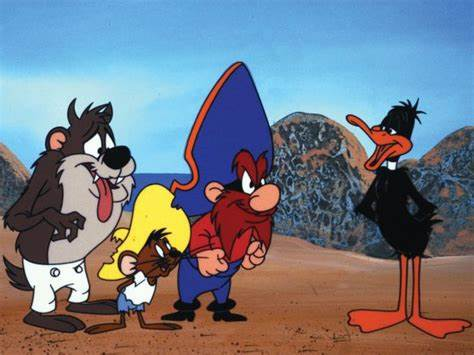
The voice work by Billy West (Bugs, Elmer Fudd), Dee Bradley Baker (Daffy, Taz), Bob Bergen (Porky, Tweety, Marvin, Barnyard Dawg, Hubie and Bertie), Bill Farmer (Sylvester, Yosemite Sam, Foghorn Leghorn), Maurice LaMarche (Pepé Le Pew), June Foray (Granny), Kath Soucie (Lola) and Danny De Vito (the film's villain) is excellent, especially for a film made only a few years after Mel Blanc's death. These voice actors truly help make these characters feel the same as they do in the classic cartoons. This voice cast will be familiar to any cartoon fan. Billy West is probably best known for voicing Fry, Professor Farnsworth, Dr. Zoidberg, Zapp Brannigan and Nixon on Futurama as well as the title characters of The Ren & Stimpy Show. Dee Bradley Baker has voiced many incidental and supporting characters in TV cartoons as well as Klaus in American Dad and Perry the Platypus in Phineus and Ferb. Bill Farmer has been the voice of Goofy since 1987. Maurice LaMarche voiced the Brain in Animaniacs and Pinky and the Brain as well as Kiff on Futurama. Kath Soucie was the voice of Phil and Lil in Rugrats, Fifi La Fume and Li'l Sneezer in Tiny Toon Adventures and most famously Dexter in Dexter's Laboratory. June Foray is of course a voice acting legend and had voiced Granny in many of the classic shorts. Jack Plance was originally going to voice the villain, but Danny DeVito took over the role. As a reason for this W.R. Miller wrote in Jerry Beck's The Animated Movie Guide, "Danny DeVito replaced him for the same reason Bill Murray was in the picture: he's friends with the producer."  

One rule of thumb imposed on the artists of this movie is that none of the Looney Tunes could be taller than Michael Jordon. Bugs Bunny was used as the yardstick when it came to these characters and measured at 3 feet and 3 inches. A total of 83 Looney Tunes characters appear in this film, most of them as cameos. 

Unfortunately, Reitman refused what would have been the movie's greatest Easter Eggs. These included caricatures (or real photos) of the classic Looney Tunes directors in Town Hall and a statue of Looney Tunes producer Leon Schlesinger. Animation buffs can bemoan that these weren't included in the final film. 

Probably the biggest effect this movie had on the Looney Tunes franchise was the introduction of Lola Bunny. This character would go on to appear in Baby Looney Tunes, The Looney Tunes Show, New Looney Tunes, the Looney Tunes web cartoons, Tweety's High Flying Adventure (2000), Looney Tunes: Rabbit's Run (2015) and of course the sequel Space Jam: A New Legacy (2021). She would become a fan favorite and is the most popular Looney Tunes character to not appear in the classic shorts. 


The movie did fairly well at box office, grossing $90.5 million in the US and $250.2 million worldwide. It earned $27.5 on its opening weekend. Despite this success, it did not gross as much as the studio had hoped and this (and the box-office bombing of Tim Burton's Mars Attacks (1996)) lead to Ted Turner order staff cutbacks throughout the corporation including some in Warner TV Animation. 

Critical response was rather mixed. Siskel and Ebert gave the film two thumbs up. Siskel enjoyed the movie with reservations, while Ebert loved it. Ebert would write a review stating, "Space Jam is a happy marriage of good ideas—three films for the price of one, giving us a comic treatment of the career adventures of Michael Jordan, crossed with a Looney Tunes cartoon and some showbiz warfare. ... the result is delightful, a family movie in the best sense (which means the adults will enjoy it, too)." Leonard Maltin in his movie guide gave the film three out of four stars stating, "Jordan is very engaging, the vintage characters perform admirably ... and the computer-generated special effects are a collective knockout." TV Guide was much more critical giving it only two stars and stating, "cynical attempt to cash in on the popularity of Warner Bros. cartoon characters and basketball player Michael Jordan, inspired by a Nike commercial." Someone who was not a fan of this movie was Chuck Jones (who had directed many classic Looney Tunes shorts). Chuck would clearly state, "I thought it was terrible." He felt the Looney Tunes were out of character here and that Bugs would not need help to defeat the aliens. He also hated one line in particular stating, . "I can tell you, with the utmost confidence, Porky Pig would never say, 'I think I wet myself.'"


Heavily due to Quad City DJ's title song, Seal's cover of Steve Miller's Fly Like an Eagle and R. Kelly's, I Believe I Can Fly, the soundtrack album reached No. 2 on the Billboard Top 200.

This movie also received a 1996 video game adaption for PlayStation and Sega Saturn. That game of course mostly revolves around playing basketball, though the game begins with you as Daffy having to find Michael Jordon's uniform while avoiding the family dog and later has you play as Bugs in a minigame where you find water for "Michael's Secret Stuff". The game would get horrible reviews and would justifiably be forgotten. 


Resources Used

The Animated Movie Guide Edited by Jerry Beck

Leonard Maltin's Movie Guide by Leonard Maltin

https://www.looper.com/211131/the-untold-truth-of-space-jam/

https://cartoonvibe.com/lola-bunny/


Thursday, March 13, 2025

Movie Review: The Day the Earth Blew Up: A Looney Tunes Movie


Michael's Movie Grade: A+

A near-perfect feature length cartoon. 

As a massive Looney Tunes fan, this is everything I could have possibly wanted from a feature length Looney Tunes movie. This is exactly what I have wanted from each Looney Tunes movie that has come out in recent years. This somehow feels like a feature length version of a classic Looney Tunes short without feeling needlessly padded to make it feature length. Rather at an hour and a half, the film speeds by without ever once losing momentum. One reason for this is that the filmmakers dig deeper into who these characters are while still keeping them feeling like the old characters. Daffy here is not the Chuck Jones greedy, fame-obsessed and cowardly version of the character but instead the earlier Bob Clampett completely looney version, who jumps up and down going "woo-hoo woo-hoo." Yet there is some depth behind all this zaniness. He is also well intentioned and simply wants to help and feel needed. Yet his zaniness often simply causes more trouble, even when he intends to help. Porky is his straight man and constant friend, just as he was in Bob Clampett directed cartoons teaming the two (Porky and Daffy (1938), Tick Tock Tuckered (1944), Baby Bottleneck (1946)). Yet as Daffy seems to constantly screw things up, even Porky's patience has its limits. This causes a real rift in their friendship. This is a dynamic that hasn't really been explored with these characters before. It is handled very well here and causes us to have an emotional investment in this often-wacky storyline. This emotional investment is only helped by the surprisingly sweet and adorable romance between Porky and Petunia. These three characters and their relationships with each other make it so we don't even miss the other Looney Tunes characters, as they are the only three major Looney Tunes characters that appear (making this the first feature length Looney Tunes movie not to feature Bugs Bunny).

This is not to say this movie is liking in the sight gags that we all love. In fact, the opposite can be said here. The whole film is abounding in nearly constant gags. While obviously there are some gags that don't work, it is shocking how many are truly funny. I find myself laughing, giggling and chuckling at most of these gags. Yet this constant brigade of gags never becomes tiresome or overwhelming. Instead, they seem to flow naturally from the story and characters, even with how extremely over the top and cartoon-y they often are. I also love how this movie is not afraid to truly be a feature-length cartoon, that is not afraid to be filled with the impossible cartoon-y gags that we find in a classic Looney Tunes short.     

   This is also a very visually handsome film. It utilizes 2-D animation, in a time when that is becoming rare in American animated movies. Yet watching this film will remind many cartoon fans of why the fell in love with this art style to begin with. The character animation and the pure cartoon-iness of much of the visuals help make this a must see for fans of the classic animation style. Also, in the vein of the classic shorts, the backgrounds are full of little Easter eggs for Looney Tunes fans. 

This film's director is Peter Browngardt, one of the greatest modern-day practitioners of pure cartoon mayhem. He is the series developer and creative director for the Looney Tunes Cartoons series on Max and the creator of the TV show, Uncle Grandpa. Before that he had worked on such cartoon series as Futurama, The Venture Bros. and Chowder. This marks his first feature length film. He is currently working on an untitled Pokémon project for Ardman Animation. 

Every Looney Tunes fan needs to see this movie to support Looney Tunes in movie theaters (where they belong), 2-D animation and animated film featuring actual voice actors (Eric Bauza, Candi Milo (Bob Clampett's daughter Ruth Clampett voices a minor character)) instead of big named celebrities. However, every Looney Tunes fans also needs to see this movie because it is incredibly good. 

It is a shame that this movie was not better promoted than it was but if you are reading this, go out and see it. 

Wednesday, July 27, 2022

Happy 82nd Birthday Bugs Bunny

 Today marks the 82nd Birthday of everybody's favorite wascally wabbit, Bugs Bunny. Bugs' first officially appearance was Tex Avery's A Wild Hare (1940), which first played in movie theaters on July 27th, 1940. To be fair the point as to whether this was the first Bugs cartoon has been argued. A wacky rabbit character first appeared in a Looney Tunes film with the Porky cartoon, Porky's Hare Hunt (1938). Some cartoon fans believe that to be the first Bugs cartoon, while others veiw it as a diffrent character. Never the less, Bugs first appeared fully formed as the character we know today in A Wild Hare

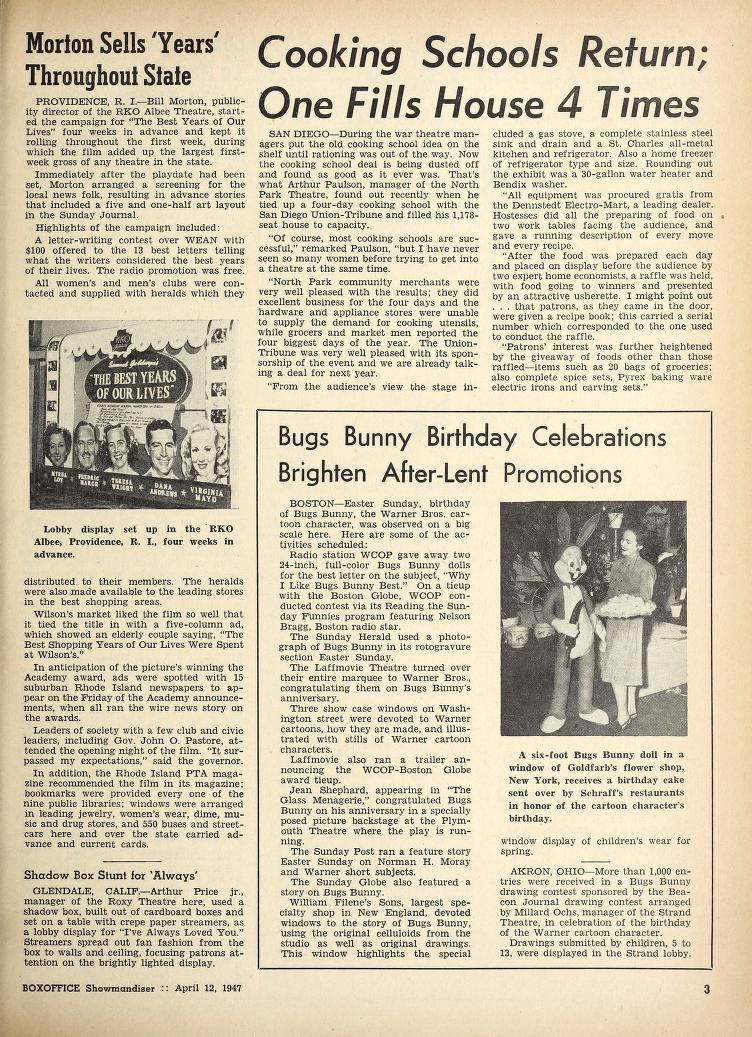
Like many cartoon stars of the day old movie magazines never got Bugs' birthday right. Neither July 27th or the day Porky's Hare Hunt was released, April 30th, where given as Bugs' birthday. Often times being a rabbit, his birthday was given as Easter Sunday, whatever day that happened to be on. These following articles should give you an idea what I mean. If you have trouble reading either of them click on the pages and use your touch screen to zoom in.


Box Office, 1947


Boxoffice, 1948

My favorite of these articles is the following one from 1961 which lists Bugs as being 25 years old. I'll let you do the math to figure out what is wrong with that. 


Boxoffice, 1961

I love that on Easter Sunday, a movie theater would have a special Bugs Bunny day as evidenced by the below page.


Showman's Trade Review, 1946


Film Daily, 1948


Like many movie fans, I have been a fan of Bugs since as far back as I can remember and my fondness for him has not died down in any way. His best films are timeless and will never lose any of their charm. If you have ever seen a Bugs cartoon in a movie theater, than you know just the effect Bugs still has on audiences. Bugs has never stopped staring in cartoons, whether for movie theaters, TV or streaming services, Bugs will always be up to something new because audiences will never stop wanting more Bugs Bunny. Just recently there Bugs Bunny show, Bugs Bunny Builders


A movie I am going to watch today to celebrate Bugs' birthday is the wonderful feature-length compilation movie, The Bugs Bunny/ Roadrunner Movie (1979). This was the first (and best) of three feature length compilation films starring Bugs Bunny and I watch the movie every year on Bugs' Birthday. 


Let us end this birthday celebration with a classic Bugs short film. 


Wednesday, June 15, 2022

The Looney Looney Looney Bugs Bunny Movie (1981)


In 1979 Chuck Jones made a compilation movie, The Bugs Bunny/Road Runner Movie (1979) that combined new animation with Chuck's classic Looney Tunes and Merrie Melodies short cartoons. In 1981 it was now time for another great Looney Tunes director to do the same thing, this was the great Friz Freleng. Friz Freleng had worked with Looney Tunes from the beginning and received an animation credit on the very first Looney Tunes cartoon, Sinkin' in the Bathtub (1930). Though he may not always receive the same accolades from film buffs as Chuck Jones or Tex Avery, I would argue that Friz was easily their equal. His sense of comic timing is still to this day unequaled when it comes to comedy cartoons. He also played a large role in the creation of Porky Pig, Sylvester and Yosemite Sam, as well as being the one to team up Sylvester and Tweety. In 1981, Friz's DePatie-Freleng studio (which was run by him and David DePatie) had been bought by Marvel Comics and became Marvel Studios. DePatie-Freleng had been responsible from the Pink Panther, Inspector and Ant and the Aardvark cartoons. This left Friz Freleng available, and he soon rejoined Warner Brothers. After rejoining Warner Brothers, Friz set out to make a series of feature length Looney Tunes compilation movies. These films would have around 20 minutes of new animation and the rest of the runtime would be taken up by classic cartoon shorts. The first of these movies was The Looney Looney Looney Bugs Bunny Movie. Like Chuck Jones earlier compilation movie, this film would feature only shorts by one of the Looney Tunes directors, Friz himself. 

This movie is made up of three separate, almost unrelated acts, that were only tied together by Bugs' narration. The first of these acts was titled Satan's Waitin' and features Yosemite Sam ending up not in heaven but the other place after an unsuccessful battle with Bugs. Here he pleads the devil and the devil agrees that Sam doesn't have to stay there if he can bring someone else down to take his place. Sam naturally thinks Bugs is the perfect candidate for the job. This is problem the least original of the three acts. It had been done before as an episode of The Bugs Bunny Show called Satan's Waitin' (1961) and as a short Merrie Melodies cartoon, Devil's Feud Cake (1963). Surprisingly only a couple of very tiny clips from Devil's Feud Cake were used in this segment. However just because something is not original does not make it bad. In fact this act is extremely entertaining and I'd argue that it is actually better than Devil's Feud Cake. This segment shows just what you would want from a movie like this and many of the cartoons used are downright hilarious. Also because of the similar theme and a tried but true wrap around story, these all fit together very well. The classic shorts used in this segment include Hare Trimmed (1953),  Roman Legion-Hare (1955), Sahara Hare (1955) and  Wild and Woolly Hare (1959). The title Satan's Waitin' was also used for a 1954 Sylvester and Tweety short and a tiny clip featuring some bulldogs was reused from that short. 

The second act is entitled The Unmentionables which shares its name with a 1963 Bugs Bunny cartoon. In this segment Bugs under the codename Elegant Mess (a play on Elliot Ness) is a detective after gangsters Rocky and Mugsy. This segment is probably the least of three. This is because all the cartoons aren't put together perfectly and when another cartoon starts it can feel like a break in the story. For instance focusing on Bugs Bunny to focusing on Daffy Duck feels like an abrupt change that comes out of nowhere. Yet this is not to say this segment is bad as it still very entertaining. The classic cartoons here are fantastic. One reason I have such a fondness for these movies is because they introduced me to Looney Tunes cartoons that I didn't see on TV much. This movie is where I first saw and fell in love with the Slyvester and Tweety cartoon, Catty Corned (1953). Some of the new animation is quite good too. Daffy in fact gets a line to Bugs Bunny in a newly animated moment that cracks me up every time. The new courtroom scene is also a lot of fun. Cartoons in this act include, The Unmentionables (1963), Golden Yeggs (1950) and Catty Cornered (1953). 

The third and best act is entitled The Oswald Awards. This act has an award show for cartoon characters and all of the Looney Tunes are there. This segment is a representation of Looney Tunes at their best. I simply love everything about this act. The newly made scenes are quite excellent and really made me laugh. They almost feel as if they could have come from a 1950's Looney Tunes short (though the animation differences and Mel Blanc's aging voice give away that it isn't). Not only this but the classic cartoons are truly some of Friz Freleng's best. The cartoons in this act include Three Little Bops (1957), Birds Anonymous (1957), High Diving Hare (1949) and Show Biz Bugs (1957).

This movie may have its faults, but I couldn't love it more if I tried. It is a complete delight and I think any Looney Tunes fan will find themselves having a great time watching this. 


Resources Used

The Animated Movie Guide edited by Jerry Beck

Looney Tunes and Merrie Melodies: A Complete Illustrated Guide to the Warner Brothers Cartoons by Jerry Beck and Will Friedwald 

Sunday, April 17, 2022

Daffy Duck's Movie: Fantastic Island (1983)


After three feature length compilation movies starring Bugs Bunny, it was Daffy Duck's turn to receive such a movie. The result was Daffy Duck's Movie: Fantastic Island the first of two feature length compilation films starring the looney duck. 

Like the two Bugs Bunny movies that directly preceded this film, this movie was directed by Friz Freleng. Freleng is an animation legend whose work with the Looney Tunes characters dated back to the very beginning. In fact he was an animator on the very first Looney Tunes short, Sinkin' in the Bathtub (1930). By 1934 he was already getting director credit on various Looney Tunes shorts. Over his time of working on Looney Tunes and Merrie Melodies, he played a major role in the creation of Porky Pig, Sylvester and Yosemite Sam. He also directed You Ought to be in Pictures (1940), which is questionably the first film where the greedy side of Daffy become apparent. This movie sadly was the last time Friz would direct the Looney Tunes characters. 

The movie's storyline is a light parody of the TV series Fantasy Island (1977–1984). Daffy Duck and Speedy Gonzales are stranded on a deserted island with nothing to eat but coconuts (which Daffy hates). However pirate Yosemite Sam (with his first mate Taz) is having a battle nearby with Bugs Bunny. This battle ends poorly for Sam and Taz and the two lose their treasure map. Daffy and Speedy find it and it leads them to wishing well that will grant all of their wishes. Daffy decides to take advantage of this and have people (or cartoon animals) from all over come to the island to have their wishes granted, for which Daffy will make a large profit. 

The cartoon shorts included in this movie are Buccaneer Bunny (1948, directed by Friz Freleng), Stupor Duck (1956, directed by Robert McKimson), Greedy For Tweety (1957, directed by Friz Freleng), Banty Raids (1963, directed by Robert McKimson), Louvre Come Back to Me! (1962, directed by Chuck Jones), Tree for Two (1952, directed by Friz Freleng), Curtain Razor (1949, directed by Friz Freleng), A Mouse Divided (1953, directed by Friz Freleng), Of Rice and Hen (1953, directed by Robert McKimson), Lovelorn Leghorn (1951, directed by Robert McKimson) and From Hare to Heir (1960). These are an excellent selection of cartoons and there are many true gems to be found among them. It is hard to think of a Looney Tunes fan being unhappy with this great selection. Yet at the same time these are not the most obvious choices and I really appreciate that. I fell in love with these movies as a kid, largely because they introduced me to shorts that I had not seen a million times on TV. Once more while there is some editing going on (mostly to make the shorts fit better into this movie's story), the majority of them remain very much intact with everything that us Looney Tunes fans have loved about the classic shorts fully on display. Because of this for Looney Tunes fans there are plenty of laughs to be had.  

The new footage may not be as funny as the old footage, it is still quite entertaining. The characters are the same characters we have always loved and just as likable and fun as ever. It is hard not to enjoy spending time with these characters. I especially really enjoyed watching the interactions between Yosemite Sam and Taz. These two may not have ever worked together in the classic shorts, but they work fantastically together and get to really shine here. The storyline also moves at a fast and fun pace and never drags. With the idea of the wishing well, many of the classic cartoons are better integrated here than they were in other Looney Tunes compilation movies. This gives the movie a great flow that makes the feature length go by quickly. However there is no doubt that these new scenes are more charming than they are funny and you won't find yourself laughing as much as the classic cartoon segments. Still these doesn't mean that they aren't quite fun to watch. It also doesn't hurt that the animators for these new scenes included Norm McCabe, Warren Batchelder, Richard Thompson and Bob Bransford, who worked on the classic Looney Tunes and Merrie Melodies as well. Also working on these new scenes are layout artist, Robert Givens and background artist Richard H. Thomas, both of whom worked on the classic shorts. 

While this may not be my favorite of these Looney Tunes compilation movies, there is still a lot to enjoy here. 

The end credits state that the movie is dedicated to writer John Dunn. John Dunn was one of Friz Freleng's favorite writers and came up with the basic story for the movie. He passed away only months before the film was released. 


Tuesday, July 27, 2021

The Bugs Bunny/Road Runner Movie (1979)


The Bugs Bunny/Road Runner Movie is considered by many to be the best of the Looney Tunes compilation movies . It was also a movie that I watched over and over again as a kid and have firmly embedded in my mind. Watching it again today, I still love it just as much as when I was a kid. 

In the late 1970's animation legend Chuck Jones was called back to once again work with the Looney Tunes characters. This began with a couple of TV specials, Carnival of the Animals (1976) and A Connecticut Rabbit in King Arthur's Court (1978). This TV specials had enough success that it was decided to have Chuck Jones head a feature film starring Bugs Bunny. The feature would consist of Chuck Jones most popular Looney Tunes and Merrie Melodies shorts with new animated scenes directed by Jones (and written by his long time collaborator, Michael Maltese) connecting the shorts. Unlike late compilation movies, The Bugs Bunny/ Road Runner Movie does not try to tie these shorts into a storyline. Rather the movie centers around Bugs giving us a tour through his home and remembering his past adventures (the classic cartoon shorts). Much to the delight of cartoon fans everywhere, these cartoons are mostly unedited (except for the opening titles). The exception to this is a great 15 minute compilations of spot gags from the roadrunner cartoons. This structure works extremely well creating a light, breezy and unpretentious feel to this movie that I find hard to resist. 

This movie includes such classic cartoon shorts as Hare-Way to the Stars (1958), Duck Dodgers in the 24 1/2 Century (1953), Robin Hood Daffy (1958), Duck Amuck (1953), Rabbit Fire (1951), Bully For Bugs (1953), Ali Baba Bunny (1957), For Scent-imental Reasons (1949), Long Haired Hare (1949), What's Opera Doc (1957) and Operation Rabbit (1952). There is a reason these cartoons are considered classics. They are comedy masterpieces on the level of anything Charlie Chaplin or Buster Keaton ever made (and with how much I love their movies that is saying a lot). The timing, the humor and the characterizations are all top notch and couldn't be better. 

The new scenes while not on the level of the classic shorts (what could be?) are delightful. Michael Maltese's writing is still very sharp and witty and these new scenes include some easy and fun to quote lines that delight me each time I watch. Having these scenes have the same director as the classic shorts certainly help them transition very naturally into the cartoons (something later compilation movies would have trouble with). Also helping this out is that some of the classic Looney Tunes animators worked on the new scenes including Phil Monroe, Ben Washam, Virgil Ross, Lloyd Vaughan and Manny Perez.

This film unfortunately only received a limited theatrical release and was not a great success there. However it would have quite a bit of success later on TV and home video. The movie would also spawn 4 more compilation features (The Looney, Looney Looney Bugs Bunny Movie (1981), Bugs Bunny's 3rd Movie, 1001 Rabbit Tales (1982),  Daffy Duck's Movie: Fantastic Island (1983), Daffy Duck's Quackbusters (1988)). 


Resources Used

Of Mice and Magic: A History of American Animated Cartoons by Leonard Maltin

The Animated Movie Guide Edited by Jerry Beck


Friday, July 16, 2021

Movie Review: Space Jam: A New Legacy


Michael's Movie Grade: B-

I know that I may be going against the crowd here, but I had a surprisingly good time watching this movie. Both the trailers and the early reviews had me nervous (Though I tried to keep in mind that the first Space Jam got just as bad of reviews and I enjoy that). As the movie started my fears seemed to be coming true. It takes too long for the Looney Tunes to appear and there were two many scenes that simply seemed to exist to show how amazing Lebron James is (Note: I know nothing about sports and the first preview was the first time I heard of him). Yet as the film went on I began to enjoy it quite a bit. 

The storyline is basic and simple, which was something I was delighted by. The previews made me worry that the film would try too hard to be bigger than the original in every way. What made the first one work is that it is a small scale unpretentious movie. Luckily this sequel is very similar to the original in that way. True it is also very similar in that some plot points are repeated here. Yet there is enough of a difference to make it feel like it is not just a rehash. The Looney Tunes unfortunately take too long to appear and can feel like supporting characters in their own movie. Yet when they are on the screen they really shine. The characters are perfectly in character. These are the tunes that we have grown to love and it is a joy to watch them. Much of the humor involving them is excellent. The scenes in which we see the Looney Tunes in the worlds of various other movie worlds are excellent (with the Casablanca one getting a really good laugh out of me). This is the Looney Tunes doing what they do best. Too often modern versions of these cartoons parody the subjects they are making fun of, when in the classic cartoons the humor came from entering these characters into worlds were they don't belong (for instance Daffy Duck being a superhero). The tunes also get some quite funny moments during the game. Fans of the franchise will probably be both disappointed by these characters being supporting players and delighted that the characters are handled very well. This movie is also helped by a good villain (Don Cheadle) who feels like a real threat and is quite fun to watch at the same time. LeBron's son ( Cedric Joe) is also a surprisingly good character and I truly liked and cared about this kid. He brought a real emotional connection to the film and carries many of the scenes without the Tunes very well.  

While this movie has its faults, it is a simple and fun story and the Looney Tunes are great (I just wished they were the main characters).

-Michael J. Ruhland 

Tuesday, March 9, 2021

The Looney Tunes Compilation Movies


Are the Looney Tunes compilation movies flawed? Yes. Do I absolutely love them? Heck yes.

For those of you unaware well after the golden age of Looney Tunes, Warner Brothers made 5 feature length movies combining the classic cartoon shorts and new animation. These movies are The Bugs Bunny/ Road Runner Movie (1979), The Looney Looney Looney Bugs Bunny Movie (1981), Bugs Bunny's 3rd Movie: 1001 Rabbit Tales (1982), Daffy Duck's Movie: Fantastic Island (1983) and Daffy Duck's Quackbusters (1988) (I am not including Bugs Bunny Superstar (1975), because the film is a documentary with no new animation). The first of these was directed by Looney Tunes legend Chuck Jones. The next three were directed by another classic Looney Tunes director, Friz Freleng. The last was the only directed by people who did not work on the classic Looney Tunes shorts, Greg Ford and Terry Lennon. 

As a kid these movies were just as much of a part of my Looney Tunes diet as any of the classic shorts were. Kids have the ability to watch the same movies over and over and never grow tired of them and that is just what I did with these movies. As such these features have become and remain just as much of a part of my Looney Tunes vocabulary as any of the classic shorts. Since I got into these movies as a kid, they actually served as my introduction to some shorts that weren't on TV as often (Mexican Borders (1962), The Pied Piper of Guadalupe (1961), The Unmentionables (1963), Curtain Razor (1949), Catty Cornered (1953))  still whenever I watch those shorts I think of these features. Childhood is probably the best time to be introduced to these movies (though they are aimed just as much at all audiences as the old shorts). When you are a kid you are not a film critic but rather someone simply looking to be entertained. The faults of these movies may be obvious but none of them stop the films from being incredibly entertaining. The classic cartoons are just as funny as ever when watched as part of a feature length movie and while the new scenes do not reach the heights of the classic cartoons they are still entertaining in their own way. The largest faults come from the connection of the old and the new. The animation is obviously better in the old and Mel Blanc's voice has aged. This can make it all too obvious what is old and what is new and therefore disrupt the flow of the movie. There are also times when the inclusion of certain cartoon shorts can feel forced into a movie's story. However while these faults may be very noticeable to the film critic in me, they make little difference to the movie fan in me. Every time I watch these movies I find me enjoying myself too much to care about these faults. That is why they remain common choices for watching movies at home for me (I hope that one day I can see these on the big screen).

These movies may not be for purists and I fully understand anyone who doesn't like them. However I admit that I not only like them but love them.