Sunday, July 12, 2020

Cowboy Church #66

Hello my friends and welcome back to another service of Cowboy Church.

Today's musical selection begins with The Louvin Brothers singing Don't Let 'Em Take the Bible Out of the Schoolroom. Listening to this song makes one realize how much the world has changed. The idea of the Bible being taught in a classroom is one that is foreign to multiple generations today (unless they went to a Christian school). This is followed by Roy Rogers and Dale Evans singing It is No Secret What God Can Do. This recording comes from their 1962 gospel album, The Bible Tells Me So. Next comes Sons of the Pioneers with their 1948 recording of Read the Bible Everyday. The title of this songs seems like obvious advice, yet some many Christians fall out of this important habit. It is so easy to simply say "I'm not going to read my Bible today but I'll read it tomorrow" then not read it tomorrow or the day after. I admit to having done this multiple times and believe me I am not proud of that in the slightest. As Christian reading the Bible should be a priority. After all it is in the one and only true word of God and reading it strengthens us spiritually and to deal with what we see in this world of troubles. Without reading it our minds stop thinking about God completely and with our minds not on the things of God we fall out of fellowship with him and feel less secure in him. If you don't do this then I challenge you to. It will do you a world of good. If you already do this make sure you do not fall out of the habit. Since Charlie Daniels has passed away so recently the rest of today's musical selection is dedicated to him. First is The Charlie Daniels Band original, Whose Side Are You On from the 1996 Christian album, Steel Witness. Second is I've Found a Hiding Place  from the 2005 bluegrass gospel album, I've Found a Hiding Place. Afterwards is Jerusalem's Shame from the 1994 Christian album The Door. Following is Softly and Tenderly from the 2003 gospel album, How Sweet the Sound: 25 Hymns and Gospel Greats. Today's musical selection ends with It's Happening Now from Steel Witness.


The following is a video in which Charlie discusses his faith.


He sets on high those who are lowly, and those who mourn are lifted to safety. Job 5:11

No, in all these things we are more than conquerors through him who loved us. For I am sure that neither death nor life, nor angels nor rulers, nor things present nor things to come, nor powers, nor height nor depth, nor anything else in all creation, will be able to separate us from the love of God in Christ Jesus our Lord. Romans 8:37-39

For which cause we faint not; but though our outward man perish, yet the inward man is renewed day by day. 2 Corinthians 4:16

The LORD thy God in the midst of thee is mighty; he will save, he will rejoice over thee with joy; he will rest in his love, he will joy over thee with singing. Zephaniah 3:17

Casting all your care upon him; for he careth for you. 1 Peter 5:7

Come unto me, all ye that labour and are heavy laden, and I will give you rest. Matthew 11:28

The Lord turn his face toward you and give you peace. Number 6:26

In all the work you are doing, work the best you can. Work like you are working for the Lord, not for people. Colossians 3:23

Love is patient and is kind; love doesn’t envy. Love doesn’t brag, is not proud. 1 Corinthians 13:4


Hatred stirs up dissension, but love covers over all wrongs. Proverbs 10:12

Thank you for joining me come back next week for another service of Cowboy Church. Happy trails to you until we meet again.


-Michael J. Ruhland

Summer Concert Series: The T.A.M.I. Show (1964)

First off the question all of you are asking, T.A.M.I. stands for "Teen Age Music International" or "Teenage Awards Music International." Now on to the movie.

This is one of the finest concert films ever made. The musicians featured here are some of the finest rock and roll, pop and R&B artists of the era. The line up includes Jan and Dean, Chuck Berry, Gerry and the Peacemakers, Smokey Robinson and the Miracles, Marvin Gaye, Lesley Gore, The Beach Boys, Billy J. Kramer and the Dakotas, The Supremes, The Barbarians, James Brown and the Famous Flames and The Rolling Stones. The famous Wrecking Crew (Hal Blaine, Jimmy Bond, Tommy Tedesco, Glen Campbell, Lyle Ritz, Leon Russell, Plas Johnson) is the house band. All of these performers are at the top of their game. Probably the most talked about part of this film is James Brown's performance. This is appropriate as his pure energy and stage presence is incredible. He gives one everything they could want from a concert experience and it is impossible not to get caught up in the energy of it all. Keith Richards would later state that following James Brown was the worst mistake they ever made. It is worth saying that despite this famous statement, The Rolling Stones are fantastic here, giving us pure blues influenced rock nd roll at its best. Speaking of pure rock and roll energy and showmanship, Chuck Berry is just as much fun as anyone could hope from one of the founders of rock and roll. The Beach Boys have never sounded as great as they do here and it is proof that they were much more than the simple gimmick band they could have been. Their melodies and harmonies are simply beautiful and the songs were never as simple as they sounded at first listen. They are beautifully and perfectly put together in a way only true masters could do. Leslie Gore is someone who I have honestly not given much thought to before watching this movie, but after seeing her performance here, I fully understand and appreciate her appeal. She is a great vocalist and a fine stage presence. 

The music doesn't date at all but other parts of this movie do. The presence of Go-Go dancers in almost every performance kind of just looks silly today. The stage antics of Jan and Dean are to be honest kind of annoying. However compared to just how great the music these are minor complaints.

The director is Steve Binder, who rock and roll fans may know for directing Elvis' 1968 Comeback Special and this movie is every bit as great. He also directed The Star Wars Holiday Special (1978), but let us not hold that against him as this movie is fantastic.

-Michael J. Ruhland     

Saturday, July 11, 2020

Some Cartoons For Saturday Morning #79

Hello my friends and happy Saturday morning, once again it is time for some classic cartoons.

Today's cartoon selection begins with a classic Mickey Mouse film, Mickey's Rival (1936). The titular character is a mouse named Mortimer. Those of you who know your Disney history will know, that Mortimer was a name that was considered for Mickey. This was Mortimer's first appearance though he bared more than a little resemblance to Mr. Slicker a character that appeared in the Micky Mouse comic strip. Though Mickey's Rival was his only appearance in a theatrically released short film, it was not his only appearance in animation. He became a reoccurring character in the television shows, Mickey Mouse Works (1999-2000) and House of Mouse  (2001-2003). He also has a role in the direct to video movie, Mickey's Once Upon a Christmas (1999) and has appeared briefly in Mickey Mouse Clubhouse (2006-2016) and Mickey and the Roadster Races (2017-present). Outside of animation he has been used very often in the Disney comic strips and began to appear in them around the same time he made his debut in movie theaters. Mortimer's design is said to be based off of Walt Disney and those who have seen pictures of a young Walt, will find this easy to believe. The ending to Mickey's Rival has Mickey and Minnie simply shaking hands. However it was originally planned for Mickey to have a buzzer on his hand to play a Mortimer type prank on Minnie. Though this would have been out of character for Mickey at this time it would have fit perfectly in with the Mickey Mouse of the late 1920's. A review in The Motion Picture Herald stated "The subject is less complex than many of the recent Disney fabrications but wholly entertaining." The following is an exhibitor's review from The Motion Picture Herald, "Mickey's Rival: Mickey Mouse - We find that the bad characters often frighten our small children and they go out into the foyer until it is passed over. - Harland Rankin, Plaza Theatre, Tilbury, Ontario, Canada, General Patronage." The following is another exhibitor's review from the Motion Picture Herald, "Mickey's Rival: Mickey Mouse—Played this the second time as it is one of the best of the Mickeys.— C. L. Niles, Niles Theatre, Anamosa, Iowa. General patronage." A review in The Motion Picture Daily stated, "Clever animation and fast-moving, but there have been better Mickey's. For instance 'Alpine Climbers.'" The following is from a 1936 issue of The Film Daily, "United Artists' latest Walt Disney release, 'Mickey's Rival', introducing Mortimer Mouse, will open at the Radio City Music Hall with 'Swing Time' on Thursday, and at the Rivoii Theater with 'The Last oi the Mohicans.'"


The following is from a 1930 issue of Close Up.


Up next is another classic Disney cartoon from 1936, this one being a Silly Symphony, Three Little Wolves (1936). When talking about Disney sequels many quote Walt as saying "You can't top pigs with pigs." This quote refers to the sequels that the Disney studio made to Three Little Pigs (1933). Yet for sheer entertainment value, I personally love these sequels and my favorite of the bunch is Three Little Wolves. Humor-wise this is probably the best of the cartoons staring the three pigs and their wolf nemesis. The working titles of this movie were Wolf in Sheep's Clothing and The Boy Who Cried Wolf. The latter of those working titles should give you an idea of the basic story here. Like how The Big Bad Wolf (1934) put the characters into the story of Little Red Riding Hood (Little Red Riding Hood was a working title for that film), Three Little Wolves places them in the story of The Boy Who Cried Wolf. This cartoon was very popular upon its release. It was the first Disney film to be held over for multiple showings at the Radio City Music Hall in New York. It first played with The King Steps Out (1936) from May 28 - June 10th, 1936. Then it played with Private Number (1936) from June 11-17, 1936. Its world premiere was at the Majestic in Dallas Texas with Charlie Chaplin's Modern Times (1936) (how much I would have loved to see these two great films together in a theatre) from April 18-24, 1936. It was also held over there and played again with Captain January (1936) from  April 25- May 1. A review in the Motion Picture Herald stated, "The subject is a sheer triumph for Disney, who must have known the hazard involved in returning the Three Little Pigs in a manner to circumvent the almost inevitable anti-climax expectable in view of their original success. 'The Three Little Wolves'  is the eminently qualified result. It is immensely satisfying, manifestly advertisable, altogether excellent." A review in The Film Daily stated "In anticipation of the natural and provocative question: 'Is it as good as The Three Little Pigs?' - the answer is emphatically 'Yes!' Although 'Pigs' has the edge because it is the original, for all commercial purposes the sequel should be better. Benefitting from the well publicized reception given its predecessor, 'Wolves' is the only cartoon subject that can command as much fan interest as the return appearance of a feature production star." Some of Frank Churchill's music for this cartoon was reused in the wartime training film, Stop That Tank (1942).


Motion Picture Herald, 1936
The Film Daily, 1936
Next is a classic silent Out of the Inkwell film, Koko Backtracks (1927). Like most of these shorts this movie cleverly combines animation and live action, as Koko the clown once again battles with his live action creator and often times rival, Max Fleischer (played by himself). Of course one of the joys of these movies for animation buffs is that they can actually see Max interacting with his characters. The joke of Koko making the outside live action world move backwards looks forward to a later Betty Boop film, More Pep (1936). In that short Betty also interacts with a live action Max and the world around him and accidently makes the live action world outside speed up to ridiculous speeds. The idea idea of Koko wreaking havoc on the outside world was a common theme in the Out of the Inkwell films.

Today's selection continues with a later Popeye from Famous Studios, Insect to Injury (1956). Though Famous Studios at this time most stuck to the formula of Popeye fighting Bluto over Olive, this was an exception. It is also one of the best Popeye's of this late era.


Today's cartoon selection ends with a delightfully strange Columbia Krazy Kat cartoon, Cinder Alley (1934).


Thank you for joining me, come back next week for more animated treasures. Until then peace, love and cartoons.

-Michael J. Ruhland


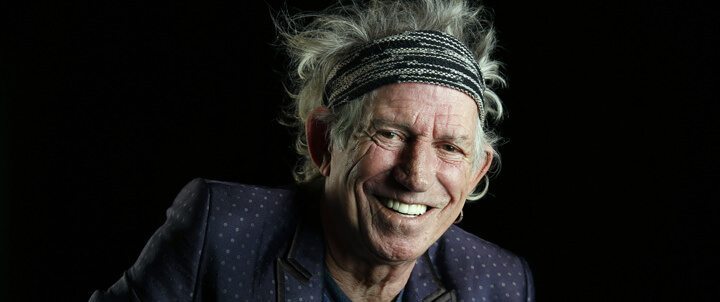
Summer Concert Series: Keith Richards: Under the Influence (2015)

If you are looking for a documentary that will give you deep insight into Keith Richard's personal life, than this is far from the film for you. This movie is in many ways the equivalent of hanging out with Keith and talking about music. Keith spends little time talking about the Rolling Stones or his solo work, instead focusing on his love and devotion to the blues, country music, reggae and early rock and roll. If you are a fan of the music he is talking about, there is little no insight here, but he discuses this music with such a passion that it is fun listening to him talk about it.  When someone is passionate about an artform, whether that is music, film, books, etc. because they enjoy talking about it so much that you enjoy listening to it. It doesn't matter if you know everything they are saying it is still fun to just hear their passion. Director Morgan Neville understands this and simply lets Keith talk and adds little else to the table. The result is a movie that is honestly not that cinematic or informative but is still a lot of fun.

This being a movie completely and utterly about music, naturally the songs are a huge reason to watch. Keeping with the theme of this film, most of what he plays are covers, but really good and heartfelt covers. Two that stood out to me as his brief version Merle Haggard's Sing Me Back Home and the lovely closing version of Leadbelly's Goodnight Irene. There are no extended guitar solos here or real rocking out. Keith keeps his musical offerings here on the acoustic side, but partly because of this it has the close intimacy that he and so many us love about the blues and country music. There is a laid back but still soulful feeling to his renditions of these classic songs. For a movie about one of The Rolling Stones, there is little sex, drugs or rock and roll here. But there is plenty of music and isn't the music why people became fans of Keith Richards in the first place?

-Michael J. Ruhland

Friday, July 10, 2020

Summer Concert Series: ZZ Top: That Little Ol' Band From Texas (2019)

ZZ Top is often a band whose look and eccentric style have often over shadowed their actual musician ship. However after watching this documentary, it is hard not to feel that this is unjustified. These men are extremely talented musicians and they have put out some really good music. The music is always the focus of this documentary, which is perfect for ZZ Top. As the film discusses, the band always kept their private lives private, preferring to let their music speak for itself. As the movie brings up this is why the band's eccentric look works for them, it makes them feel as if they were somehow something bigger than life, while helping obscure who these people are. While of course listening to the members of the band talk about their music, will give us a look into their personalities, little else is given away about who these people are offstage. We find out a little about Dusty's childhood as well as Frank's marriage and drug addiction, but nothing else. From this film alone, you don't even know if Dusty or Billy ever married or had children and this is fine with me. Mystery only helps to make musicians so appealing (this may be part of why I'm a Bob Dylan fan) and do we really need to know anything about ZZ Top besides that they are really cool guys with beards (well except for the one whose last name is beard) who play a mixture of the blues and rock and roll? Once you get down to this, it is clear speaking about the music is the best way to make a ZZ Top documentary. This movie does give us a lot of insight into the music as well as where the eccentric style of the band came from. It also gives us some dang fine music and listening to them perform songs like La Grange, Brown Sugar and Blue Jean Blues show the band has lost none of their talent for performing these songs, and hold up just as well as clips of older performances of ZZ Top songs like I'm Bad, I'm Nationwide.

This documentary only follows the band up to their 1983 album, Eliminator. While this may disappoint some fans, I feel it is a wise thing to do. Too many documentaries try to fit too long of careers into too short of a time. To be fair there are still times the movie feels rushed but it is never distractingly so.

I definitely recommend it to both fans of the band and newcomers.

-Michael J. Ruhland

Thursday, July 9, 2020

Summer Concert Series: CDB Live (2005)

Note: Hello my friends, for three days this blog will cover concert films featuring country music and rock and roll icon, Charlie Daniels. Charlie recently passed away suddenly from a stroke. Though Charlie recorded many studio albums (most as part of The Charlie Daniels Band), what he enjoyed the most about his career was being on stage entertaining audiences. That is why these films are so important now that he is no longer around to do concerts. Films last forever and so through these movies we will forever be able to enjoy the man doing what he did best.

After the early full southern rock in Volunteer Jam (1976) and the bluegrass gospel of Charlie without the rest of CDB in Preachin' Prayin' Singin' (2005), CDB Live represents what most people think of today when they think of The Charlie Daniels Band (yes The Devil Went Down to Georgia is performed). This film features them as a country-rock band that stands for redneck culture, God and patriotism. They do a run through of their big hits such as The Legend of Wooly Swamp, Simple Man, Long Haired Country Boy, In America, The South's Gonna Do It (Again) and the aforementioned The Devil Went Down to Georgia. As Charlie Daniels had become a devout Christian by this time some of these songs feature a change of lyrics that replace cuss words and drug references. This may divide some fans of the band's earlier work, but I feel that that the Volunteer Jam movie still exists for anyone who wants to see the earlier rougher edged (and less political minded for those who don't agree with the right-wing politics of a couple songs in this film) of The Charlie Daniels Band. Also a feel that a film like this is created to be a document of a concert and a piece and time for the artist recorded and this is how Charlie was at tis time until the end of his life. There is also some lesser know music picked here such as The Intimidator (Charlie's tribute to Nascar driver Dale Earnhardt), Floreeda Road (a fun instrumental song that shows that the band has lost none of its musicianship since Volunteer Jam), Preachin' Prayin' Singin' and Heart of My Heart (a duo of great gospel numbers). The band is in great form performing the entire set list seemingly effortlessly and engaging the crowd. Most of all they create such a sense of fun and excitement that transferred perfectly to the audience and transfers to whoever watches this film. Like Volunteer Jam, the filmmaking is straightforward and never calls attention to itself keeping the focus on the music, which is fantastic. This is simply a typically great concert from CDB captured in a delightful film.

-Michael J. Ruhland

Wednesday, July 8, 2020

Summer Concert Series: Preachin' Prayin' Singin' (2005)

Note: Hello my friends, for three days this blog will cover concert films featuring country music and rock and roll icon, Charlie Daniels. Charlie recently passed away suddenly from a stroke. Though Charlie recorded many studio albums (most as part of The Charlie Daniels Band), what he enjoyed the most about his career was being on stage entertaining audiences. That is why these films are so important now that he is no longer around to do concerts. Films last forever and so through these movies we will forever be able to enjoy the man doing what he did best.

This film shows a completely different side of Charlie Daniels than what we saw in Volunteer Jam (1976). While that movie showed Charlie rocking out with some of the greats of southern rock, this film shows him surrounded by bluegrass and country music greats (Mac Wiseman, Earl Scruggs, Randy Scruggs, Gary Scruggs, The Whites, Del McCoury, Ronnie McCoury and Rob McCoury)  preaching the gospel and performing bluegrass gospel music. This is a much more up close and personal performance from Charlie. He is laughing, joking and hanging out with his friends just as much as he is playing music. We see them discussing the history of bluegrass music (of which Charlie is very knowledgeable). This makes the movie feel like time spent with friends as well as a concert. This is not to say there is anything lacking in the music. This film is pure bluegrass gospel at its finest and Charlie sounds just as perfect with these songs as he does rocking out with the CDB. Of course the highlight for all bluegrass fans is when one of the greatest legends of the genre comes out to join, Earl Scruggs. He and Charlie's rendition of the bluegrass standard Salty Dog Blues would make this a must see film for bluegrass fans even if it was the whole movie.

This film was shot in black and white and that works perfectly as it adds to the intimate and unpretentious feeling of this performance. Other than being in black and white the filmmaking never calls attention to itself, yet does a marvelous job and this is actually quite a well made film as well as being a great concert. 

-Michael J. Ruhland