After buying and watching the new DVD set of Harry Langdon’s talkie shorts for the Hal Roach Studios, I was impressed with just how much I enjoyed them. After all these films have a horrible reputation and many film historians have had little nice to say about them. Leonard Maltin even called them “undeniably the worst two-reelers ever made.” As much as I respect and appreciate Leonard (I am a huge fan of Leonard and he was a huge influence on me creating this blog) I couldn’t disagree with him more on this. Not only do I think these are not “the worst two-reelers ever made” but I think the best of them are pretty darn good. There are many moments that are completely delightful. For instance his energetic performance of Frankie and Johnny in The Fighting Parson (1930) or his brave capturing of dummies in The Big Kick (1930). A film like The Shrimp (1930) (where a science experiment gives him the courage of a bulldog) is incredibly clever in both premise and execution. The very funny The Big Kick has Harry remain silent for the first half of the movie, letting his beautiful pantomime skills shine. Even when the character first speaks, we can’t hear it as it is drowned out by a noisy car engine for the purpose of a great gag. In the films where Harry gets to speak a great deal of his dialogue will be very funny to some while alienating others (I personally find it very funny). The reason is that it is very rambling and repetitive showing how his character’s not too bright mind tries to make sense of the world around him (something he could never do). I can hardly think of another comedian who would dare to do this to the extent Harry does. This is as risky and experimental as you can get in a two-reel comedy. Not only does it make me laugh but I completely respect Harry for having the audacity to even attempt it. None of this is to any way suggest that these films are completely carried by Harry. The supporting casts are often excellent. Included in some of these movies are two actors who are rightfully treasured by many comedy fans, Thelma Todd and Edgar Kennedy. They are of course delightful here as always. Nancy Dover is however just as delightful. She proves to be the perfect co-star for Harry and the two are just a joy to watch together. Now keep in mind that these are still not perfect films and are not as great as his best work at Mack Sennett or First National, but they are certainly a lot better than they are often given credit for and are often pretty darn good on their own merits.
The DVD set includes two shorts in which the soundtrack was unfortunately lost to make up for this, the movies have subtitles. While this is certainly not the perfect way to watch them (Too Hot To Handle (1929) is definitely too dialogue heavy to have a full effect without the sound of voices)), it makes you appreciate that you are able to see them at all. Also included are some commentaries by Richard M. Roberts and a Spanish language version of The Big Kick. I highly recommend this set to all movie fans and remember to make up your own minds about these films instead of instantly buying into their bad reputation. You can purchase it here.
-Michael J. Ruhland
Showing posts with label Early Talkies. Show all posts
Tuesday, April 28, 2020
Sunday, April 26, 2020
Lon Chaney Changes his Mind About Talkies
Hello my friends like many of you love Lon Chaney. There are few actors who define what the silent screen was more than him. His acting style is perfectly suited to silent movies. His movies show us that silent film acting was a true artform and he was a master. It is not like Kathy Selden said in Singin' in the Rain (1952), " I mean they don't talk, they don't act, they just make a lot of dumb show." Lon obviously expressed himself visually in a way that transcends words.
-Michael J. Ruhland
All this does bring up a question though, what were Lon's thoughts on talkies. Luckily there is the following 1930 article from Talking Screen Magazine. This article mentions that Lon Chaney's first talkie would be The Unholy Three (1930). It would also be his last, as he would die seven weeks after its release. If you have trouble reading the following pages, click on them and use your touch screen to zoom in.


-Michael J. Ruhland
Wednesday, April 22, 2020
Harold Lloyd and the Talkie Screen
Hello my friends. Do movie comedians come finer than Harold Lloyd? Maybe there are some that are either equals or come close to him, but there is no one better. I have watched nearly all of Harold's silent features enough times to have them memorized and I am sure many of you have done the same. To be honest I have watched his talkies much less often, but whenever I watch one I wonder why that is. They are very fun movies that show the actor's talent to its fullest. True they may not always reach the perfection that his best silent films did, but why should we hold that against movies that are good in their own right.
The following 1930 article from Talking Screen Magazine, talks about Harold Lloyd adapting to the new art of talking films. If you have any trouble reading these pages click on the page and use your touch screen to zoom in.


Thursday, January 16, 2020
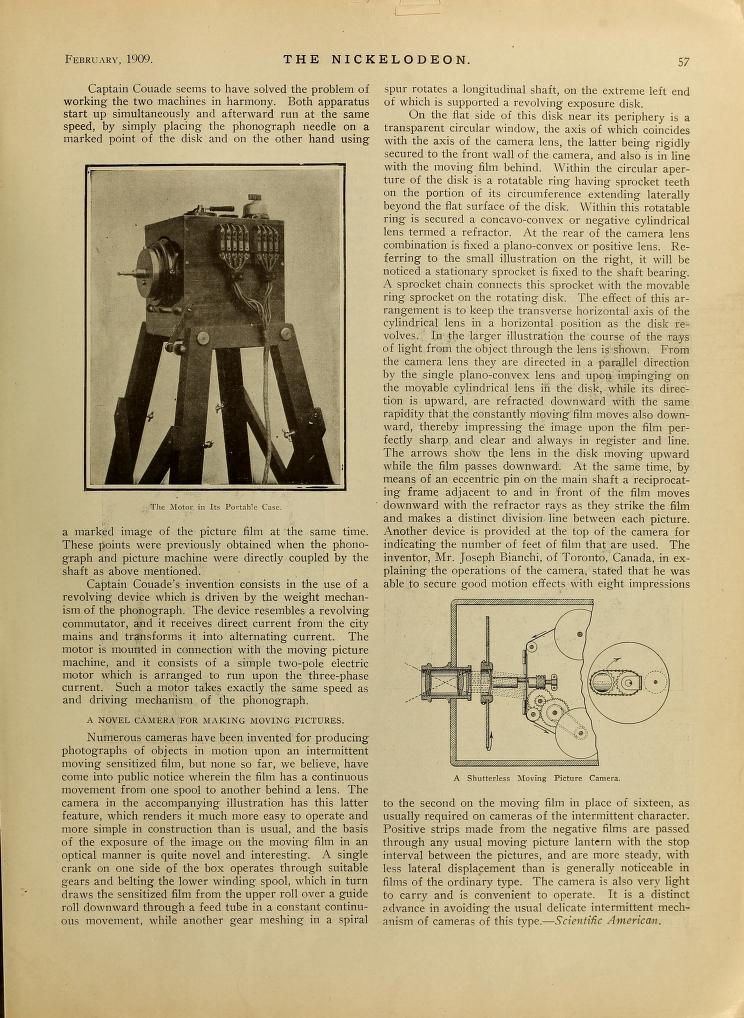
Talking Pictures in 1909
Popular film history has talkies beginning with The Jazz Singer (1927). Even many film buffs may have briefly heard are read that talkies existed before this, but know little more than that. That is what makes this article from Nickelodeon (no not the TV channel) Magazine, so fascinating. It not only discusses talking pictures but it dates all the way back to 1909. If you have trouble reading any of the following pages, just click on them and use your touch screen to zoom in.


I have to admit, my knowledge of movies is not perfect. If any of you know what films are being mentioned in this article and who worked on them let me know.
-Michael J. Ruhland


I have to admit, my knowledge of movies is not perfect. If any of you know what films are being mentioned in this article and who worked on them let me know.
-Michael J. Ruhland
Thursday, January 2, 2020
Why People Like Talking Pictures
It is hard to imagine how much movies changed when talkies took over the silver screen. It was almost the death of a great artform and the birth of another great artform at the same time. Personally I wish silent movies could have stayed around longer as I believe the art of silent film had reached a golden age when talkies started to take over. However many couldn't get enough of these new fangled talking pictures. A 1929 article in The New Movie Magazine tried to explain why talkies became as popular as they did. I disagree with some of this article's opinions on silent film lacking something, but this was a fascinating read nonetheless.
If you have any trouble reading these pages click on them and use your touch screen to zoom in.


-Michael J. Ruhland
If you have any trouble reading these pages click on them and use your touch screen to zoom in.


-Michael J. Ruhland
Sunday, June 23, 2019
1909 Talking Picture Camera
In 1909 as many of us know, talkies were a long way from taking over the cinema. However even this early, filmmakers were trying to figure out how to perfect talking pictures. Naturally the phonograph would play a major role in the efforts to accomplish an early talking picture camera. An early effort at a talking picture camera can be seen in this 1909 article from The Nickelodeon. If these pictures are too fuzzy for you can click here to see a clearer picture.


-Michael J. Ruhland
Subscribe to:
Posts (Atom)