Though Disney's Snow White and the Seven Dwarves is often times called the first animated feature, that statement is actually false. I am not saying this to deny the historical importance of Snow White as that film is still extremely important and an incredible movie, but rather to give attention to what has come before. TheTale of the Fox was the sixth animated feature film released and was released just eight months before Snow White. The animated features before Tale of the Fox include El Apostle (1937), Without a Trace (1918), The Adventures of Prince Achmed (1926), Peludo City (1931), The New Gulliver (1935), and The Tale of the Priest and of His Workman Balda (1936). Tale of the Fox was the first animated feature to come from France.
This film was directed by Ladislas Starevich and Irene Starevich. Ladislas Starevich was one of the greatest pioneers in animation history. He was one of the earliest directors to define animation as an art instead of just a novelty. He worked mostly in stop motion animation, creating such brilliant shorts as The Cameraman's Revenge (1912), The Mascot (1933), The Frogs Who Wanted a King (1922) and The Insects' Christmas (1913). The Tale of the Fox is his only animated feature though he did direct a live action feature called The Night Before Christmas (1912). Irene Starevich was his wife. It is hard to say how much or what she contributed to this film because she worked on very few films and in all those films she worked with her husband.Other than this movie the other films she co-directed with her husband were The Mascot's Wedding (1935)and Fétiche en voyage de noces (1936).
Thiswas completed in 1930, but due to audio problems it would not be released until 1937.
The story of this film centers around a fox named Reynard that tricks other animals and then eats them. This causes the king (a lion obviously) to pass a law saying that animals cannot eat other animals (making an exception for himself of course). Reynard does not listen to these orders and the king decides to have the fox arrested (something easier said than done).
This film is quite easily a masterpiece it has a brilliant and very funny sense of dark humor. The animation is downright incredible. It is amazing to think that this is the first feature film to be completely done in stop motion (The New Gulliver featured a mixture of live action and stop motion), because it is so incredibly well done here. The story is great. The pacing is fantastic. Most of all though these characters really come to life on the screen. This film is a great work of art and a fantastic beginning to French animated features.
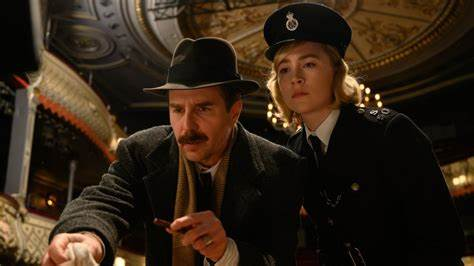
Though this film kids the various clichés of whodunit mysteries, See How They Run is quite a good whodunit itself. This movie keeps you guessing who the culprit is with many well handled red herrings to throw you off track. Still when the killer is reveled it makes a lot of sense and every comes together very well. True it is a little over the top but that is the nature of the game and a huge part of the fun. Our main characters also add to the charm of this movie. While it would have been easy to have just made one the straight man to the other's more comic persona, that is not what is done here. Instead you have two very well thought out and human characters who are stuck working together, despite one not wanting to work with the other. The relationship between the two is a bit rocky (to say the least), but there is more to it than simply one guy being annoyed by another's antics. This relationship also evolved over the course of the movie in a completely delightful and believable one. Adding to this is that Sam Rockwell and Saoirse Ronan have wonderful chemistry together.
The humor in this film can be hit and miss. However when it is funny, it is very funny. The best humor comes from the character of Constable Stalker, the rookie female officer who is being made to work with the more experienced Inspector. This character is not dumb, but is too eager to make good and nervous that she finds herself jumping to conclusions too quickly. This leads to a lot of really funny moments that not only make us laugh but endear the character to us as well. Also her movie references and corny little jokes are delightful. Much of this is due to Saoirse Ronan having a great comedic gift that she is really able to show off here. The humor that doesn't work so well is the more self-referential and meta humor about these types of whodunits. These jokes almost always fall flat and are simply not as clever as they are supposed to be. Sometimes such as the opening of the film and the ending, this type of humor can be a bit too much and distract from the story itself.
All in all despite its flaws, this is a really fun movie.
I have said a few times that one of my favorite things about watching old movies is finding these great gems that are heavily overlooked today but happen to be just as great as any of those that have gone down in history as classics. Frank Capra's Platinum Blonde very easily fits in this category. This film is just as funny, smart and simply fun to watch as many of the later Capra classics. One should remember at this time; Frank Capra wasn't the household name he would become. Capra's big breakthrough film would be released three years later with the surprise smash hit, It Happened One Night (1934). Frank Capra had made his feature length directorial debut directing Harry Langdon in the great silent comedy The Strong Man (1926) and continued to direct many features before It Happened One Night.
This film however was not originally intended for Capra though. It was originally intended for Edward Buzzell, who is probably best remembered for directing the Marx Brothers in At the Circus (1939)and Go West (1940), as well as The Song of the Thin Man (1947). By the time Frank Capra joined the production Dorothy Howell, Jo Swerling and Robert Riskin's script was nearly finished. Capra would later write off this film, but it has also been speculated that this was because he had so little to do with it. This was however still the first time Robert Rimskin and Frank Capra would work on the same film. This turned into a good relationship as he also was a writer for It Happened One Night, Mr. Deeds Goes to Town (1936) and Meet John Doe (1941).
Despite such well-known names as Jean Harlow and Loretta Young appearing in this film's cast the real star of the movie is Robert Williams. Despite much talent his career would never take off because of his sudden death shortly after this film's release (he had appendicitis). He only appeared in 6 other known films in his career, The Vengeance of Winoma (1914), Thoughtless Women (1920), Two Masters (1928), The Common Law (1931), Rebound (1931), and Devotion (1931). As you can tell from these years even with a appearances in silent films, his film career was really just beginning tobecome a regular job in 1931. This will seem unfortunate to many movie fans as he does a great performance here. Jean Harlow was not that big of star as she would later become. She did have some great performances in big name films such as Hell's Angels (1930) and The Public Enemy (1931), but she was mostly cast due to her looks and had a while to go before becoming a big star. However, she certainty was on her way. This film contains an amazingly good performance from her. Despite how good she was in this film though Frank Capra did have problems with her. The main one being she couldn't pronounce "library" right, and she was playing a high society woman. It took fifteen takes for her to say this word right. This film is also rounded out with many other great actors of the time. One who does an especially good job is Walter Catlett (my fellow Disney lovers may know him as the voice of Honest John in Pinocchio (1940)). Also, great here is Halliwell Hobbes as the butler, and Lousie Closser Hale as the snobbish mother. In fact, the whole cast is just great.
The story centers around a young reporter, with a quick wit and just as quick of a mouth, named Stew (played by Robert Williams). This young reporter works with a young woman named Gallagher (played by Loretta Young), who has more than a bit of a crush on Stew. However, during a story, he falls for a rich young socialite named Ann (played by Jean Harlow). He marries Ann. However, this marriage isn't quite happy for him. Ann tries to make Stew fit into high society and a reporter for a rival newspaper (played by Walter Catlett) makes fun of him for not wearing the pants and for being a bird in a gilded cage. A bird in a gilded cage is exactly what Stew feels like, and he needs to find some way out.
This movie is extremely funny, as well as having a delightful story. Much of the humor comes from the clever dialogue that populated many Hollywood comedies of the early 1930's ("Anne Schuyler's in the blue book; you're not even in the phone book. Think that one over... sucker!", "Yeah, I know those bluenoses. Their ancestors refused to come over on the Mayflower because they didn't want to rub elbows with the tourists... so they swam over!"), and is just as funny, smart and unlike anything you hear in today's movies as you could ever want it to be. As stated, before all the cast gave great performances. As well as all this the film just supplies the great sense of pure fun, and charming simplicity that we all know and love Frank Capra for doing.
After an early preview screening the film shortly switched its name to The Gilded Cage. However, it was changed back to Platinum Blonde on September 24, 1931, when it had its last preview showing because of Jean Harlow becoming a bit of a bigger star due to Public Enemy.
The film received decent reviews, but they were far from great.
Hello my friends and welcome back for another service of Cowboy Church.
Today's musical selection begins with The Sons of the Pioneers with their 1935 recording of One More River to Cross. In a 1976 interview Betty Cox Larimer asked Bob Nolan (one of the founding members of the Sons of the Pioneers), "Bob, talking about the uniqueness of the Sons of the Pioneers, I would have said it was the style. What do you think about the direction of the younger generation of country entertainers? A lot of them really don’t have a style anymore. In fact, a lot of country music itself does not have a style. What do you think about that?" Bob's response was "Well, I think the only thing that they’ve left out is our determination for perfection. You mentioned our breathing. This was marked on the music. See, they don’t pay attention to those little details like we did. That’s the only thing that they’ve forgotten about and if they would take care of a few of the little details they would come up with a style. Towards the last, we were working on slurring our voices all at the same time and trying to get a way of dragging the timing to it, see?"
This is followed by Hank Snow singing I'm in Love with Jesus.
Now we join The Petersens with Pass Me Not O Gentle Savior. This hymn was written by Fanny Crosby (Blessed Assurance, Near the Cross, Take the World, But Give Me Jesus). The song first appeared in Christian Associations' Songs of Devotion in 1870. Hymnologist, William J. Reynolds told the story how this song was written during Fanny's visit to a prison in 1868 with fellow gospel songwriters, William Bradbury, William Doane, Robert Lowry and Ira Sankey, “After she had spoken and some of her hymns had been sung, she heard one of the prisoners cry out in a pleading voice, ‘Good Lord, do not pass me by’; Following [William] Doane’s suggestion, she wrote a hymn that evening incorporating the line, “Pass me not, O gentle Savior.” Pass Me Not is said to be her first hymn to reach this level of fame.
Next is Roy Rogers singing What a Friend We Have in Jesus. Despite being Joseph Medlicott Scriven's most famous composition, when he made a collection of his writings entitled Hymns and Other Verses it did not appear. It has been assumed that the reason for this is that he probably wrote it for his mother when she was sick and not for the public. It is believed that it is through his mother that the hymn reached the public. It first appeared in 1865's Social Hymns, Original and Selected credited as anonymous.
Afterwards is Bill Monroe with Walk in Jerusalem Just Like John. Though it is unknown who wrote this song, it is believed to be of African American descent. Lizzie Williams, who was a slave during that very dark time in American history, recalled this song being sung at a river baptism. This belief is also supported by the fact that the hymn has been including in quite a few collections of African American spirituals including 1867's Slave Songs of the United States and 1940's American Negro Songs and Spirituals. This song has also been believed to be what was known as a railroad song. This is a song that was sung by railroad workers or other similar workers. The reason for this being that it is structured in a similar matter. The railroad song, Get on Board Little Children was another song Lizzie Williams recalled hearing at the baptism.
This is followed by Randy Travis with Baptism.
Next is The Carter Family with a 1941 recording of Leaning on the Everlasting Arms. This hymn began with a man named Anthony Showalter. As a fan of gospel music and an elder in a Presbyterian church, he held many "singing schools" at various churches in the south. One day he received two letters from former students who were struggling after their wives had passed. To respond to these letters, Showalter consulted scripture. He came across Deuteronomy 33:27, "The eternal God is thy refuge, and underneath are the everlasting arms." After reading this verse lyrics for a song chorus went through his head and he wrote down, "“Leaning, leaning, safe and secure from all alarms; Leaning, leaning, leaning on the everlasting arms.” After using this in the letters to his former students he sent this chorus to his friend hymnist, Elisha Hoffman. In the letter he also wrote, “Here is the chorus for a good hymn from Deuteronomy 33:27, but I can’t come up with the verses.” Hoffman then wrote the rest of the lyrics to which Showalter put to music. The hymn was published in 1887.
Today's musical selection ends with Johnny Cash singing Land of Israel. Recently I went to Israel, and it is a truly magical and life changing experience for a Christian to see the places where Jesus walked and where so many of the Bible stories actually took place. If any of my fellow Christians get a chance to go there, it is an opportunity that definitely should be taken.
Today's movie trailer is for Disney's Davy Crockett and the River Pirates (1956). Not even Walt Disney had any expectation that Davy Crockett segments on the Disneyland TV show, would be such a major success for the studio. Walt would later recall, "We had no idea what was going to happen to 'Crockett.' Why by the time the first show got on the air, we were already shooting the third one and calmly killing Davy off at the Almo. It became one of the biggest overnight hits in TV history and there we were with just three films and a dead hero." This naturally could not be the end of Disney's version of Davy Crockett (played wonderfully by Fess Parker). These episodes were edited into a feature length film that was released to movie theaters. As well as this Disney made more Davy Crockett adventures for their TV show under the name, The Legends of Davy Crockett. These adventures told of legends involving Davy that may or may not have happened during the times not covered by the original three episodes. Two of these TV adventures were edited into the feature film, Davy Crockett and the River Pirates released in movie theaters.
To read the following article click on the pages below and use your touch screen to zoom in.
Radio-TV Mirror, 1955
Next is S.M. Lockridge with his sermon, The Lordship of Christ.
Fear not, for I am with you; be not dismayed, for I am your God; I will strengthen you, I will help you, I will uphold you with my righteous right hand. Isaiah 41:10
The Lord bless you and keep you; the Lord make his face to shine upon you and be gracious to you; the Lord lift up his countenance upon you and give you peace. Numbers 6:24-26
May the God of hope fill you with all joy and peace in believing, so that by the power of the Holy Spirit you may abound in hope. Romans 15:13
The Lord your God is in your midst, a mighty one who will save; he will rejoice over you with gladness; he will quiet you by his love; he will exult over you with loud singing. Zephaniah 3:17
But as for me, I will look to the Lord; I will wait for the God of my salvation; my God will hear me. Micah 7:7
And we know that in all things God works for the good of those who love him, who have been called according to his purpose. Romans 8:28
I have been crucified with Christ. It is no longer I who live, but Christ who lives in me. And the life I now live in the flesh I live by faith in the Son of God, who loved me and gave himself for me. Galatians 2:20
Why do you call me ‘Lord, Lord,’ and not do what I tell you? Luke 6:46
And being found in human form, he humbled himself by becoming obedient to the point of death, even death on a cross. Philippians 2:8
Thanks for joining me. Come back next week for another service of Cowboy Church. Happy trails to you until we meet again.
Hello my friends and happy Saturday morning. Once again it is time for some classic cartoons.
Today's cartoon selection begins with Donald Duck in Bee at the Beach (1950). This short film pits Donald Duck against Spike the bee. Though Spike is a rather forgotten Disney character, this film is not the only time him and Donald went up against each other. Staring with Inferior Decorator (1948) and ending with Let's Stick Together (1952), the two made a series of 7 shorts centered around the two fighting. Bee at the Beach would make its TV debut on the Walt Disney Presents episode, This is Your Life, Donald Duck (1960).
Next comes Sylvester and Tweety in Catty Cornered (1953). In this cartoon Tweety is kidnapped by gangster Rocky. Rocky was a character who was only used by director Friz Freleng. He had earlier been the villain in the Daffy Duck cartoon, Golden Yeggs (1950). Most cartoon fans associate Rocky with his dumb partner in crime Mugsy. However this cartoon was made before the character was created. Mugsy first appeared in the Bugs Bunny short, Bugs and Thugs (1954). This short would later be edited into the feature-length compilation film, The Looney Looney Looney Bugs Bunny Movie (1981).
Next comes the 6th Hoot Kloot film, Stirrups and Hiccups (1973). This short film is a play on the story of Dr. Jeckel and Mr. Hyde.
Next is Willie Whopper in Insultin' the Sultan (1934). Willie Whopper was the second starring character to come out of Ub Iwerks' own cartoon studio. The first character is Flip the Frog, who did not prove to be that popular and had to be replaced. Unfortunately, Willie did not catch on with audiences either and his movie career only lasted 13 short films. Before leaving to make cartoons for his own studio, Ub had worked at Disney playing an incredibly important role in the Disney shorts of the 1920's and early 30's. He even played a large role in the creation of Mickey Mouse. After his own studio work did not pan out, he returned to Disney where he would do special effects work on many of the Disney's best feature films. The following is an exhibitor's review from the Motion Picture Herald, "Insultin' the Sultan: Willie Whopper - This is a good cartoon comedy that pleased all who saw it. Willie is not so popular here, but with better story material he will improve and the patrons will be pleased. Running Time, 9 minutes. - J.J. Medford, Orpheum Theatre, Oxford, N.C. General Patronage."
It is time for a commercial break.
Next is Cubby Bear in The Nut Factory (1933). This is one of my favorite Cubby Bear films.
Now for the second Casper the Friendly Ghost cartoon, There's Good Boos To-night (1948). Though many of the Casper cartoons aimed for sentiment, few of them were as effective as this short film. The film's ending is surprisingly quite touching.
/
After the success of The Pink Panther (1964) and A Shot in the Dark (1964), Mirisch Films was interested in a third Inspector Clouseau movie. Unfortunately, director Blake Edwards and star Peter Sellers both declined. The studio still wished to make another film and cast Alan Arkin as Inspector Clouseau and put Bud Yorkin in the director's chair. The result was Inspector Clouseau (1968) and was definitely one of the weakest Pink Panther feature films. One of the few highlights was the opening credits sequence, which was as with the previous movies is essentially a cartoon short. This sequence featured The Inspector. This character starred in a wonderful series of theatrical cartoon shorts from 1965 to 1969 for the DePatie-Freleng studio and was based off of the character of Clouseau. The DePatie-Freleng studio (which had also done the opening credits sequences for the previous two Inspector Clouseau films) is credited with creating and designing this sequence, while TVC London is credited with animating it. Fortunately for fans of these movies, Blake Edwards and Peter Sellers would later return to the Pink Panther franchise with The Return of the Pink Panther (1975).
Today's cartoon selection ends with one of the best post golden age Looney Tunes cartoons, Little Go Beep (2000).
Resources Used
Of Mice and Magic: A History of American Animated Cartoons by Leonard Maltin.
I Tawt I Taw a Puddy Tat: Fifty Years of Sylvester and Tweety by Jerry Beck.
A wonderful and very unique documentary on David Bowie.
This film does not feel like your average music documentary at all. Instead of having friends and fans talk about David or having a narrator tell his story, this film uses decades old interviews with him. So the only people we hear talk about David Bowie are him and the people who interviewed him. Because of this the movie is Bowie's take on Bowie. This works incredibly well because David was a very intelligent man and had thought provoking takes on every part of his career. You see a man who at first is looking for meaning in this world but is not sure what the meaning is. He feels a strong spiritual connection to something but cannot tell what it is. This movie explores his journey to find out what it is. This is a fascinating and quite different look at this musical great that we seldom see and it even brings new meaning to many of his songs and the stages of his career. Other than these interviews the main focus of the film is his music. We get many of his classic songs here. They are as wonderful as ever and I can picture someone who has never heard of David Bowie quickly becoming a fan after watching this movie. As for me these song sequences only gave me an even greater respect for David Bowie as an artist. If you see this movie in a theater, I highly recommend you see it in IMAX. The great sound system used on these great songs makes for a wonderful experience. Yet despite anything I said, this is not simply an auditory movie where you could close your eyes and watch. This is a wonderful cinematic experience. Director Brett Morgan turns this documentary into a visual treat. He combines live performances from David Bowie, with clips from various classic films (as well as films David Bowie was in), music videos, personal clips of Bowie and much more to create the feeling of one large scale music video mixed with great avant-garde filmmaking. Yet somehow this never becomes overwhelming or gets tiring. Any who wishes to study how to use montage to good effect should definitely watch this movie. What truly makes this film special though is that all these elements work together and never distract from one another.
A wonderful movie and a must watch whether you are a David Bowie fan or not.