Wednesday, June 8, 2022

Tuesday, June 7, 2022
Movie Review: Eiffel
Michael’s Movie Grade:B+
A delightfully old-fashioned romance from France.
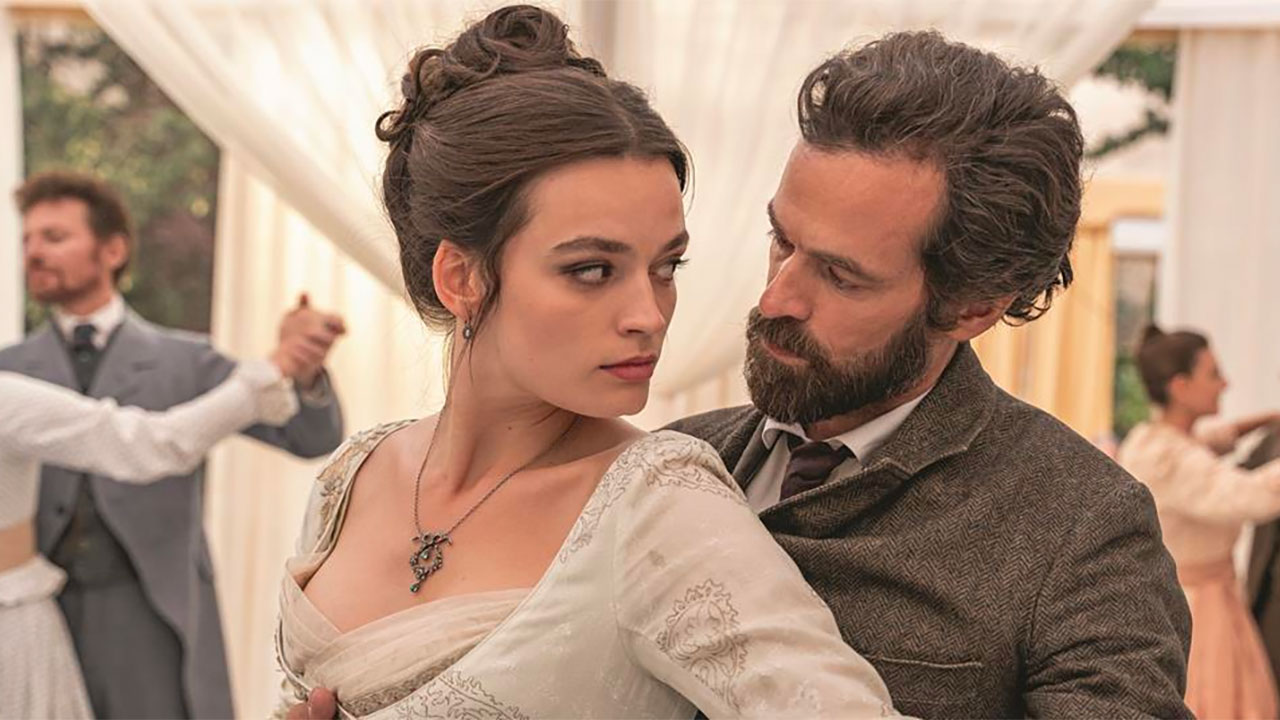
This film tells two stories that are really one in the same. These two stories are the making of the Eiffel Tower and the romantic life of the man who was responsible for it. At first these stories only seem to be related by the main character but over the course of the film but as the movie goes on we see how this doomed love affair inspired him on the building of this landmark (it is safe to say liberties were taken with this part of the story, but unless it is a documentary fictionalization is excepted from a movie). Both stories are delightfully old fashioned in their storytelling and that is where the charm is. True some plot points can be clichéd, but the movie tells them so well that they really work. You care about these characters and the story works because of this. The scenes involving the building of the Eiffel are the type of inspiring and feel-good entertainment that you came to the theater for. The scenes when you actually see the building are especially well done and will firmly put a smile on your face. The love affair is heartbreaking and even though you have seen this all before it is extremely effective. One flashback is especially heartbreaking and powerful. This is all helped by the fantastic performances from our two leads, Romain Duris and Emma Mackey, who truly bring out the emotion in every scene. As should be excepted from a movie about the Eiffel Tower this is a very handsome looking film. Though computer effects were used, they look very good and the movie is still beautiful to look at.
On the downside is the ending of this movie. It feels very rushed and it is easy to feel like you missed a good portion of the film that came before the ending.
Monday, June 6, 2022
Movie Review: Jazz Fest: A New Orleans Story

Michael's Movie Grade: A-
A fantastic documentary on the New Orleans Jazz Fest.
This movie like all of the best music documentaries and concert films, works first and foremost as a celebration of music. Because of this, Jazz Fest is a film that you leave the theater happier than when you came in and isn't that just what you want from a trip to the movies. Both movies and music have the power to do this and so a film like this certainly does. Despite the name of this film, and of the festival it is about, being Jazz Fest, neither the festival nor the movie limit themselves to one genre. While there is some traditional jazz, there is also a wide variety of other genres including gospel, R&B, Cajun music, hip-hop and rock and roll. All of these genres are treated with equal respect and fans of any of these genres should be more than happy with what this film gives them. The highlight of the movie of course is the performances from the many great artists. These artists range from people that everyone reading this will know (Bruce Springsteen, Al Green, Earth Wind and Fire, B.B. King, Jimmy Buffett, Katy Perry, Pitbull and many more) to some great local talent from New Orleans that you will be introduced to here. All of these artists give fantastic performances and even if one of them is not your taste and music, you will still truly appreciate their showmanship and talent. Plus there is a wide enough variety that everybody will find some music that they will love. Watching these performances makes nearly anyone who ever likes music want to attend this festival. There is a joyous feel in these parts that I don't see how anyone can resist. This film also gives a great history of this festival and the artists there and I am sure even many music buffs will learn something new. The interviews with various artists and people who work on the festival add to the movie's joyous feeling. They so passionate about everything they are talking about that it is hard not to get caught up in the excitement yourself. There is something that is simply always wonderful about seeing the joy in someone's face as they talk about something they are truly passionate about and that feeling is all over this movie.
The only real problem I have with this film is the length. To cover 50 years of a festival in an hour and half, is just not giving yourself enough time and this can cause a bit of a rushed feeling. But when everything about the film is this joyous, it seems to only be a compliment to say that you want much more.
A must see.
Sunday, June 5, 2022
Cowboy Church #175
Hello my friends and welcome back for another service of Cowboy Church.
Today's musical selection begins with Roy Rogers and Dale Evans with The Bible Tells Me So. Roy and Dale were strong Christians in their later years and their entertainment careers became simultaneous with their faith as they took every chance they could to spread the word of God. They also greatly supported others who shared the faith. One of those they supported was the Reverend Billy Graham and when the King of the Cowboys and the Queen of the West toured Great Britian they would tell their audiences to see Billy in London. They were warned not to try that when they went to Dublin, but Dale responed that Billy was the reason they came across the seas in the first place. Dale also let any naysayers know that when they had perfromed How Great Thou Art in Ireland, they got a standing ovation. This lead them to meeting the chaplain for the Abbey Players, a troupe of actors in Ireland. He asked them what kind of man Billy was and Dale responded, "he is the most utterly dedicated, committed Christian I have ever met in my life." The chaplain responded, "You tell Mr. Graham that I said God bless him." Dale would later write, "I will never forget the sincerity in that man's voice when he said those words." This is followed by Stonewall Jackson with Blessed Jesus Hold My Hand. This version of the hymn comes from Jackson's 1969 gospel album, The Old Country Church. Next we join The Chuck Wagon Gang with Standing on the Promises of God. This hymn was written by Russell Carter in 1886. Working as a sheep herder he developed a heart condition. This led him to pray much more often, and he began to get closer to God every day. When he was healed, he vowed to "stand on the promises of God" and wrote this song. Red Sovine is one of the great performers of truck driving country songs. This next spoken word song is very much in that vein, Truck Driver's Song. Though many of us are not truck drivers, regardless of our profession, it is healthy and always a good idea to pray about our work day everyday before we start our job. Next comes The Carter Family's classic 1927 recording of Can The Circle Be Unbroken. This song was based off of the 1907 Christian hymn (written by Charles H. Gabriel and Ada R. Habershon), Will the Circle Be Unbroken. Uncle A.P. Carter reworked this song changing the lyrics to be about the death of a mother. Though this version would be covered by an incredible amount of artists, many of them would change the title back to Will the Circle Be Unbroken as well as changing that one word in the chorus. However these cover versions would use A.P.'s lyrics for the rest of the song. This is one of my all time favorite songs, because it is a sad song, but one which also finds hope within its darkness. This is a song about trusting in God in times when it is very difficult to, which is something many gospel songs don't cover but which many Christians struggle with. While working for Sun Rerecords, Johnny Cash did not record as many gospel songs as he later would, because producer Sam Phillips did not feel that gospel music would sell. However John did get a few gospel songs recorded for the studio, including My Treasure. This is followed by Hank Snow with his 1954 recording of It's Reveille Time In Heaven. Then comes Randy Travis with The Heart of Worship. Today's musical selection ends with The Sons of the Pioneers with their 1937 recording of Power in the Blood. Roy Rogers (his name was still Leonard Slye at this time) sings lead on this song.
Today's movie trailer is for another incredible western film, High Noon (1952).

Motion Picture Daily, 1952
Now a message from Pastor Greg Laurie.
I consider that our present sufferings are not worth comparing with the glory that will be revealed in us. Romans 8:18
So we fix our eyes not on what is seen, but on what is unseen, since what is seen is temporary, but what is unseen is eternal. 2 Corinthains 4:18
For I know the plans I have for you,” declares the Lord, “plans to prosper you and not to harm you, plans to give you hope and a future. Jeremiah 29:11
Not that I have already obtained all this, or have already arrived at my goal, but I press on to take hold of that for which Christ Jesus took hold of me. Philippians 3:12
Heal me, Lord, and I will be healed; save me and I will be saved, for you are the one I praise. Jeremiah 17:14
Heal me, O Lord, and I will be healed; save me and I will be saved, for you are the one I praise. Jeremiah 17:14
LORD, be gracious to us; we long for you. Be our strength every morning, our salvation in time of distress. Isaiah 33:2
Have I not commanded you? Be strong and courageous. Do not be afraid; do not be discouraged, for the LORD your God will be with you wherever you go. Joshua 1:9
Thanks for joining me. Come back next week for another service of Cowboy Church. Happy trails to you until we meet again.
Resources Used
Happy Trails: Our Life Story by Roy Rogers and Dale Evans.
https://mediahistoryproject.org/
Saturday, June 4, 2022
Some Cartoons For Saturday Morning #178
Hello my friends and happy Saturday morning. Once again it is time for some classic cartoons.
Today's cartoon selection begins with Sylvester and Speedy Gonzales in The Road to Andalay (1964). This movie marks the second Warner Brothers cartoon short produced by the DePatie-Freleng studio after the old Warner Brothers cartoon studio shut down. The first of these films, Pancho's Hideaway (1964) had also starred Speedy Gonzales, who would become one of the most prolific Looney Tunes characters of this era. Here he faces against his old adversary Sylvester, but with his very next cartoon he would meet a new antagonist, Daffy Duck. After this movie Speedy and Sylvester would not work together in many more theatrical cartoons. The next year's The Wild Chase (1965) would be the last theatrical short film in which these two would work against each other. After that Speedy would spend the rest of his time in short films working against Daffy.
Now to turn to a much earlier Warner Brothers cartoon, Bosko's Fox Hunt (1931). Before Bugs Bunny, Daffy Duck or even Porky Pig, Bosko had been the first major star of the Looney Tunes. The director of this movie was Hugh Harman, who had earlier been an animator on Walt Disney's Oswald the Lucky Rabbit cartoons. One of these Oswald cartoons was The Fox Chase (1928) and this film reuses a few gags from that movie. Both cartoons also have Rollin "Ham" Hamilton as one of the animators. This movie features a storyline that would become a staple of Looney Tunes and that is a hunter being outwitted by his prey.
Up next is Dudley Do Right in Snidely's Vic Whiplash Gym.
Now for a commercial break.
Though many people associate Popeye cartoons with simply following the same formula again and again, there are quite a good number of these shorts that don't follow the formula in the slightest. A good example is Shuteye Popeye (1952).
Now we join our good friend Scrappy in Scrappy's Art Gallery (1933). The following is an exhibitors review from The Motion Picture Herald, "SCRAPPY'S ART GALLERY: Scrappy Cartoons— Don't miss playing this Scrappy. - Harland Rankin, Plaza Theatre, Tilbury, Ontario, Canada. General patronage." Despite being forgotten by many today, Scrappy was a heavy merchandised character back in the 1930's. The following is from a 1936 issue of The Film Daily, "Zell Products Corp., New York, has launched a 'thrift plan' drive to promote the sales of its Scrappy Banks, which are decorated with the likeness of Scrappy, the popular animated cartoon character. Every purchaser of this fast-selling savings toy becomes entitled to a membership in the new 'Scrappy Thrift Club' upon signing a pledge to save regularly. All purchasers receive this card in addition a four-color identification number. The thrift plan is finding favor by its appeal to parents, with its saving incentive, and its corresponding reaction on children. This promotion has already shown strong effects on the toy banks' sales. Scrappy banks are manufactured under a license granted by Columbia Pictures Corp., producers of Scrappy animated cartoon films. An extensive advertising campaign, including window and counter displays, will back the 'Scrappy Thrift Club' plan."
We close with with a true Mickey Mouse classic, Thru the Mirror (1936). Well before the Disney Studios feature length adaption of Alice in Wonderland (1951), this short film adapts Lewis Carrol's Alice Through the Looking Glass. It is a very loose adaption, but it captures the spirit better than most feature length versions of Carrol's Alice books do. I have always loved Disney cartoons that or not afraid to be silly. This is one of the perfect examples of that. One of the highlights is a sequence with Mickey do a Fred Astaire type dance which was animated by Dick Lundy, who specialized in dancing animation. Dick Lundy would later direct some great cartoons for Walter Lantz and MGM. Elements of this movie would play a major role in the video game Epic Mickey.
Thanks for joining me. Come back next week for more animated treasures. Until then may all your tunes be looney and your melodies merry.
Resources Used
Looney Tunes and Merrie Melodies: A Complete Illustrated Guide to the Warner Brothers Cartoons by Jerry Beck and Will Friedwald
Walt Disney's Mickey Mouse: The Ultimate History by J.B. Kaufman and David Gerstein
https://mediahistoryproject.org/
Wednesday, June 1, 2022
Silent Film of the Month: Jack and the Beanstalk (1902)
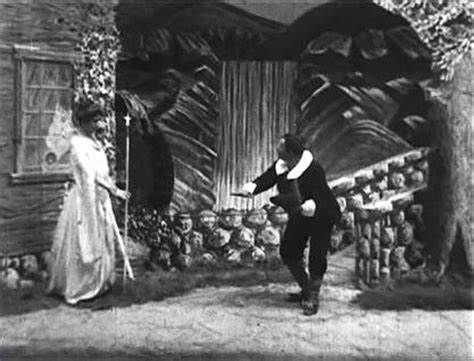
Runtime: 10 mins. Studio: Edison. Director: Edwin S. Porter. Cinematographer: Edwin S. Porter. Main Cast: James H. White, Thomas White.
There are few early cinema directors who have played a more important role in shaping the movies as an artform than Edwin S. Porter. Yet when it comes to Porter's films one of them tends to completely overshadow the others in the minds of movie fans. That film The Great Train Robbery (1903). While I truly love The Great Train Robbery, I can't help but agree that is overshadows the rest of a great career. One of Porter's films that I am especially fond of is his version of the classic fairy tale, Jack and the Beanstalk.
Though this film may not be familiar to some of you, all of you know the basic tale of Jack and the Beanstalk. The tale has a long oral history that makes it impossible to trace back just how old it is. However it first appeared in print in 1734, as part of a collection of stories entitled Round About our Coal Fire or Christmas Entertainments. Here the story was titled The Story of Jack Spriggins and the Enchanted Bean. Strangely after this the story did not appear much in print until 1807. That year Benjamin Tabart wrote a very moralizing version of the story. The version that would be the most influential on how the story would be told in the future was Joseph Jacobs’ 1890 version. Jacobs based hos version of the story on the oral versions he had heard as a child and many scholars believe it to be the most accurate written version of the tale from the 19th century. It is worth noting that when this film was made that version of the story would have been published on 12 years earlier. Therefore it would have been well known by many moviegoers' (many of whom were more well read than we are today) minds as the watched this film. Yet it was not only written versions of the story that would have inspired this film. In January 1902, a stage play version of Jack and the Beanstalk had been a major hit and considering this film was shot in Spring of the same year (Porter would state that it took 6 weeks to shoot), it is hard to believe that the stage play did not have an influence on this picture. This also meant that it was the perfect time for a film version of Jack and the Beanstalk.

Motion Picture News 1913
If you are one of the few people who doesn't know the story of Jack and the Beanstalk, this story summary includes spoilers. As this film opens a fairy appears and gives magic beans to a random person. Soon afterwards Jack appears with his cow to sell. The man gives him the beans in exchange for the cow. When Jack comes home with the beans, his mother is understandably angry and throws the beans in the ground. While Jack and his mother sleep the fairy appears and makes the beans grow into a giant beanstalk. When Jack awakes he begins to climb this beanstalk. Once he reaches the top, the fairy appears to him and shows he a vision of the giant's castle. He then enters into the giant's castle and though at first he tries to hide, he finds himself chased by the giant down the beanstalk. When Jack reaches the bottom, he chops down the beanstalk, causing the giant to fall to his death. The fairy then reappers and shows Jack that he is in fact a prince and that the riches of the giant's castle belong to him.
This is a fast moving and fun adaption of the classic story. Like many films of this time period that adapted classic literature, this film mainly shows the highlights of the story and excepts moviegoers to have a certain familiarity with the original story. Due to the fact that Jack and the Beanstalk is a very simple story and that it is still one most people today know this film holds up better than many similar films of the era. With the simplest of stories, even those who somehow never heard this story before can get the basic gist of what it is about and for modern movie fans, who except a complete story from any film, this film holds up perfectly well even if some scenes aren't as clear as they would be if this film was made a decade or so later. Though there is no time for much in the way of characterization or depth, this film captures the charm and sense of fun that makes the classic tale so beloved.
This is a very special effects heavy film and some of the effects hold up quite well. The use of dissolves is quite sophisticated and some of the scenes are still quite beautiful to look at. While it is never wise to say what the first film to use any filmmaking technique is (because no matter how well you know movie history you are bound to be wrong), this is an early example of the dissolve and with that in mind it is impressive how well it works here. It is obvious a lot of work went into this film and it paid off beautifully. With this in mind it is sad that today we can't see the film the way it is originally made to be seen. As well as a black and white print the Edison company also released a color print (where the characters and beanstalk hand colored) which would cost $85 more (the black and white print would cost $93.75). Unfortunately only the black and white print is know to exist today. It should be noted that while most special effects films today strive to make everything look as realistic as possible, that the obviously fake cow was not supposed to look real. The 1902 play featured a pantomime cow played by a man in a cow suit. This was played for comedy in the play and many reviews praised this element. Because of this it was only natural to incorporate this into the movie version.

Film Fun, 1919
Resources Used
https://moviessilently.com/2021/10/31/jack-and-the-beanstalk-1902-a-silent-film-review/
https://centuryfilmproject.org/2014/04/24/jack-and-the-beanstalk-1902/
https://mediahistoryproject.org/
https://thefairytalecentral.com/jack-and-the-beanstalk-origins/