Hello my friends and happy Saturday morning. Once again, it is time for some classic cartoons.
Today's cartoon selection begins with Porky's Pooch (1941). Though all the classic Charlie Dog cartoons would be directed by Chuck Jones, this Bob Clampett short clearly sets up the template that all of those later cartoons would follow. In fact the first Charlie Dog cartoon, Little Orphan Airedale (1947), would be a remake of this film. The backgrounds in this film are live action photographs. A year later Bob would use a live action opening for Eatin' on the Cuff or The Moth Who Came to Dinner (1942). The following is an exhibitor's review from Motion Picture Herald, "PORKY'S POOCH: Looney Tunes Cartoons—Right up my alley for my patronage. Running time, 7 minutes. —Vic Stephano, Grove Theatre, Groveton, Tex. Small Town Patronage." A review in The Motion Picture Daily called the film, "Good for a few laughs." The Showman's Trade Review gave advice to movie theater owners on how to advertise this cartoon, "Play it up to all Porky fans and make some new fans to win over some of the dog lovers in your community by staging a pet show, prize contest for best snapshot of a pet or prize contest for a brief essay on 'why my dog is the best in town.'"
Next comes the silent Out of the Inkwell short, Koko's Tattoo (1928). This has all the surreal charm and creativity that I love about these shorts.
Next comes the Terry Toons short, Sour Grapes (1950). This cartoon was directed by Mannie Davis and marks the last of five theatrical shorts to star Dingbat. Dingbat is a yellow bird who was often adversarial to Slyvester the Fox.
Next comes Donald Duck in Contrary Condor (1944). This short film was directed by Jack King, who directed most of the Donald Duck cartoons at this time. For a while in the community of cartoon and Disney lovers, the Jack King Donald Duck cartoons were rarely given the accolades they deserve because more attention was paid to the later Donald shorts that Jack Hannah directed. However luckily today many Disney fans are reevaluating this and realizes what wonderful films, the Jack King Donald cartoons are. Contrary Condor is just one of the many examples of how great of a cartoon director Jack King was. However, this film also works because of a wonderful team of animators. John McManus animates the opening moments as well as Donald tossing the dummy and the mom diving after it. Judge Whitaker animates Donald yodeling while climbing the mountain, Donald's first meeting with the mother, Duck applauding the small bird's flight, the small bird gliding and landing, Donald's landing and Donald contemplating a new plan. Nick Nichols animates Donald discovering the nest and hiding in the egg, the hatching sequence, the small bird being jealous, the little bird snaping Donald off the limb, Donald's "flight," the mother applauding, the mother missing the dummy as it falls into the water and the closing sequence. Paul Allen animates the mother pushing the small bird off the limb, the mother encouraging Donald to fly and Donald trying to escape with the egg until the small bird intercepts it. George Nicholas animates the small bird falling and trying to fly. Don Townsley animates the small bird lowering its legs like landing gear and the mother's card trick. Hal King animates the mother attempting to push Donald off the limb and Donald faking a bad wing, Marvin Woodward animates the mother trying to trick Donald with the berry. The working titles for this film were Contrary Condors, Egg Collector and The Colombian Condor. The following is a review from The Film Daily, "Donald Duck provides plenty of laughs in his attempt to swipe an egg from a condor's nest. When Donald emerges from his hiding place in an empty egg shell which a mother condor mistakes for an unhatched egg she accepts our fine feathered hero as one of her own. Her attempts to get Donald to fly are extremely humorous. The Technicolor cartoon is aces."
Now for a commercial break.
Now for the Mickey Mouse Works cartoon, Purple Pluto (1999). This cartoon would later be used in the House of Mouse episode, Ladies Night (2002).
Next is the New Three Stooges cartoon, The Littlest Martian (1965). This series of TV cartoons features the voices of the real Stooges who also appear in the opening and closing live action segments. The live action segments would often be repeated even when the cartoon was new. Curly Joe DeRita felt that this hurt the show. He thought that people would see a live action segment they had seen before and assume the show was a rerun and change the channel not knowing the cartoon was new.
Then comes Mighty Mouse in Winning the West (1946).
Let us close with a song.
Thanks for joining me. Come back next week for more animated treasures. Until then may all your tunes be looney and your melodies merry.
Resources Used
South of the Border with Disney by J.B. Kaufman.
Looney Tunes and Merrie Melodies: A Complete Illustrated Guide to Warner Brothers Cartoons by Jerry Beck and Will Friedwald
Hello my friends and happy Saturday morning. Once again, it is time for more cartoons.
Today's cartoon selection starts with the first of Walt Disney's Alice comedies, Alice's Wonderland (1923). Before this film was even close to done with production, Walt was already writing distributors stating, "We have just discovered something new and clever in animated cartoons!" He was speaking of the idea of having a live action character enter into an animated cartoon world. This was actually a reversal of what the Fleischer Brother were doing with their Out of the Inkwell films, were animated characters entered our live action world. For the live action little girl Walt hired four year old Virginia Davis. Walt had seen Virginia on an advertisement for Warneker's Bread. Virginia later spoke of this stating, "It was just a picture of me smiling and looking like 'Oh, yum, yum!' and eating this piece of Warneker's Bread with a lot of jam on it." At the time of making this film, Walt and his studio were struggling financially. While many producers would take this as a reason to make a cheap film, Walt plugged into the project with everything he had. This short was downright lavish compared to much of Walt's previous work and still looks great today. Unfortunately the film was not enough to save his company, but it did catch the attention of Margaret J. Winkler, who was also distributing the Felix the Cat and Out of the Inkwell cartoons. His studio went under and Walt moved to Hollywood without his crew. Yet he had this film and was able to secure a deal for 12 more Alice films with Winkler.
Now for the Terry Toons cartoon, Stringbean Jack (1938). This marked the first Terry Toons short in color. The two-headed giant and the W.C. Feilds caricature are a lot of fun here. A similar two-headed giant would later be used for a Terry Toons cartoon appropriately titled The Two-Headed Giant (1939).
Next comes Betty Boop in Ha-Ha-Ha (1934). This short film also features Koko the Clown, the star of the Fleischer Studio's silent Out of the Inkwell films. This is not the only similarity between this film and the Out of the Inkwell shorts. This cartoon also mixes animation and live action in a very similar way to those shorts.
Next is the Terry Toons short, Foiling the Fox (1950).
Now it is time for a commercial break.
Up next is The Fleischer Screen song cartoon, I Wished on the Moon (1935). The title song was written by Ralph Rainger (music) and Dorothy Parker (lyrics). The same year this cartoon was released Bing Crosby and the Dorsey Brothers orchestra recorded this song and it placed at number two in the charts staying on the charts for seven weeks. The song would enjoy even more popularity when Bing would sing it in the feature film, The Big Broadcast of 1936 (1935). Here the song is performed by Abe Lyman and his Californians. Cartoon fans may know that Abe Lyman also worked on the musical scores of some early Merrie Melodies cartoons, such as One More Time (1931) and Smile Darn Ya Smile (1931). Most importantly though this cartoon marks the first appearance of Wiffle Piffle.
Today's cartoon selection continues with another Friz Freleng classic, Daffy the Commando (1943). The following is an exhibitor's review from the Motion Picture Herald, "Daffy the Commando: Looney Tunes Cartoon - This is Daffy's best. By the way where has Vitaphone being keeping Daffy Duck? This is the first I played in a long while. -Ralph Raspa, State Theatre, Rivesville, W. Va."
Donald and Pluto (1936) is naturally a cartoon that stars Donald Duck and Pluto. Mickey Mouse is nowhere to be found. However, it was released a Mickey Mouse cartoon as a Mickey Mouse cartoon. This is because at this time, Donald Duck and Pluto didn't have their own series. It wouldn't be long before that was rectified though.
Now to close with a song.
Thanks for joining me. Come back next week for more animated treasures. Until then may all your tunes be looney and your melodies merry.
Resources Used
Walt in Wonderland: The Silent Films of Walt Disney by J. B. Kaufman and Russell Merritt.
Of Mice and Magic: A History of the American Animated Cartoon by Leonard Maltin
Hello my friends and happy Saturday morning. Once again it is time for some classic cartoons.
Today's cartoon selection begins with Sylvester and Tweety in Tweet and Lovely (1959). This is one of my favorite Sylvester and Tweety films. Voice actor Mel Blanc would later write, "Sylvester has always been a favorite of mine. He's always been the easiest character for me to play. When I was showing the first model sheet for Sylvester with his floppy jaws and generally disheveled appearance, I said to Friz Freleng, 'A big sloppy cat should have a big shthloppy voice. He should spray even more than Daffy.' While recording Sylvester cartoons my scripts would get so covered in sylvia I'd repeatedly have to wipe them clean. I used to suggest to actress June Foray, who voiced Tweety's vigilant owner Granny that she wear a raincoat to the sessions."
Next up comes the Terry Toons short, The Hopeful Donkey (1943). Like When Mules Leave Home (1934) last week, this is also a Terry Toons adaption of the Brothers Grimm story Town Musicians of Bremen. However, this short borrows nothing more from the previous cartoon than the same source material. Both cartoons are charming takes on the classic children's story.
Now for the Fleischer Screen Songs cartoon, I'm Forever Blowing Bubbles (1930). The title song was written in 1918 by composer John Kellette and lyricists James Kendis, James Brockman and Nat Vincent (under the pseudonym Jaan Kenbrovin) The song premiered in the Broadway musical The Passing Show of 1918 (Jul 25, 1918–Nov 9, 1918) where it was sung by Helen Carrington. In 1919 the song would become a number one hit for Ben Selvin's Novelty Orchestra.
Now for the Terry Toons cartoon, Beanstalk Jack (1946).
Now for a commercial break.
Next is the new Three Stooges cartoon, Kangaroo Catchers (1965). The Three Stooges not only appear in live action before and after the cartoon, but they also voice themselves in the animated cartoon.
Some of Disney's best and funniest cartoon shorts are those that teamed Mickey, Donald and Goofy as a comedy trio. Next up I have the second of these cartoons and the first one in color, Mickey's Fire Brigade (1935). This movie opens with the title card burning away in flames, a creative touch by effects animator Cy Young. In this short Mickey is the fire chief, a role he had played earlier in The Fire Fighters (1930). Two of the animators on this film are Bill Tytla (possibly my favorite Disney animator) and Grim Natwick, both of whom had joined the studio in 1934. They animate the majority of the scenes with Clarabella Cow. The scene where Goofy tries to take a coffee break is animated by Wolfgang “Woolie” Reitherman, who would later become a specialist at animating the character. Jack Kinney, who would go on to direct some of the funniest cartoons to ever come out of the Disney studio, animated Donald's struggles with flypaper and pails of water. It is common for cartoon fans to think of the old Disney shorts as being slow moving and sentimental, however that is not the case here at all. This is a fast moving and very funny film that puts a smile on my face every time. The following is from an issue of The Film Daily (dated Sept. 5, 1935), " 'Mickey's Fire Brigade,' is to have its premiere in the New York theatrical sector this evening when it opens at the Rivoli Theater with the new Samuel Goldwyn production, 'The Dark Angel.'" A review in National Board of Review Magazine stated, "Noisier and less clever than most of this series but still better than most of its kind." A review in The Film Daily states, "This is one of the liveliest and funniest of the Walt Disney cartoon creations." The following is an exhibitor's review from The Motion Picture Herald, "MICKEY'S FIRE BRIGADE: Mickey Mouse—One of the best of the Mickey Mouse series. Running time, eight minutes.—M. H. Harrington, Avalon Theatre, Clatskanie, Ore. Small Town and Rural Patronage." This theatrical cartoon made its TV debut on an episode of The Mickey Mouse Club that aired on October 31, 1956.
Up next is the Mickey Mouseworks cartoon, Pluto Vs. The Watchdog (1999). This cartoon would later play in the House of Mouse episode, Donald and the Aracuan Bird (2002).
Now let us close with a song.
Thanks for joining me. Come back next week for more animated treasures. Until then may all your tunes be looney and your melodies merry.
Resources Used
I Tawt I Taw a Puddy Tat: Fifty Years of Sylvester and Tweety by Jerry Beck.
Walt Disney’s Mickey Mouse: The Ultimate History by David Gerstein and J.B. Kaufman
Of Mice and Magic: A History of American Animated Cartoons by Leonard Maltin
Hello, my friends and happy Saturday morning. Once again it is time for some classic cartoons.
Today's cartoon selection begins with one of my favorite cartoons from director Norm McCabe, Daffy's Southern Exposure (1942). I absolutely love the way this film treats Daffy. He is very much in his early wild and crazy mode. But at the same time there is a bit more to him than just being crazy. He is also the type of duck who is always simply looking for a good time and will ignore the warnings of others if they try to get in the way of him having fun. Still even when getting his comeuppance, he never learns any sort of lesson and remains the same duck he was the beginning of the cartoon. This is a fun characterization for Daffy, especially as he is still fun of the pure energy that makes the early Daffy so popular. This is just as much of a fully formed character as the one we would see in the later Chuck Jones classics of the 1950's. The following is an exhibitor's review from the Motion Picture Herald, "DAFFY'S SOUTHERN EXPOSURE: Cartoon- Good black and white cartoon. Enjoyed by people that saw it.—Conrad H. Tapia, Chief Theatre, Casa Grande, Ariz."
Next comes the Fleischer Screen song cartoon, Bedelia (1930). The title song was first recorded in 1903 by the singer Arthur Collins and was written by William Jerome and Jean Schwartz. Born on February 7, 1864, Collins was a very popular singer in his day and would often be referred to as "king of the Ragtime Singers." Other songs he recorded include (Won't You Come Home) Bill Bailey (1902), Under the Bamboo Tree (1902), Any Rags (1903), The Preacher and the Bear (1904) and Steamboat Bill (1911). Arthur Collins is little known today because of racial stereotypes that make much of his work problematic for a modern audience. This can be evidenced on the sheet music for Bedelia which refers to the song as "The Irish Coon Song Serenade." The essential website for old music, Hearing the Americas states, "It’s not clear what makes this record, sung by Arthur Collins, a 'coon' song. It has some elements of the ragtime syncopation that 'coon songs' helped introduce, and Collins was nicknamed 'the King of Ragtime.' Possibly the singer was imagined as an African American in love with an Irish immigrant, but the singer makes no effort at dialect. As the image indicates, women sang the song as well as men. It may simply be an attempt to cash in on the popularity of the genre while also appealing to Irish Americans. The song demonstrates the way American popular music mixed genres and used ethnic, gender and racial identity in slippery ways." However, there are no racial stereotypes in this cartoon based on the song. (Obvious Disclaimer: The use of the word "coon" was wrong then and it is wrong today. It appears here for historical and educational purposes. I do not endorse the use of this word.)
Next comes the New Three Stooges cartoon, Woodsman Bear That Tree (1965).
Now for a truly classic Disney short film, Pluto's Judgement Day (1935). This cartoon was released as part of the Mickey Mouse cartoon series, but the true star of the film is Pluto. Pluto would not receive his own cartoon series until 1940. The writers who brought us this cartoon were Joe Grant and Bill Cottrell. The same year this film came out this story team also brought us the Silly Symphonies shorts, Who Killed Cock Robin and Three Orphan Kittens. This cartoon made it TV debut on an episode of The Mickey Mouse Club that aired on February 4, 1958. A 1938 article (in an issue of World Film News) about films that frightened young children stated, "Not exactly frightened; but the court scene in Pluto's Judgement Day was disliked intensely. I have known some of the younger ones to be rather scared by some of the more terrifying Disney characters. Only momentarily o close-ups of the villains' faces. Never really frightened. The usual gasps are heard when anything grotesque, such as an enormous spider, is shown, but this type of scene is invariably received as part of the picture. The youngest ones by the portrayal of ogres, spiders, etc. Only when the Robber Cat appears in the cartoons, and little ones afraid by Pluto's Judgement Day. Very occasionally, by closeups of weird spiders. Horrific animals. Several Disney cartoons - Donald and Pluto and Modern Inventions have Machiavellian incidents which to many children are frightening. The fear subsequently gives way to sympathy for the victim, so that Donald Duck is liked on a basis of tragedy rather than comedy."
It is now time for a commercial break.
Now comes the Pink Panther in Dietetic Pink (1978).
Now for one of Walt Disney's great silent Alice Comedies, Alice's Wild West Show (1924). This is probably my favorite film in the series. The series combined animation with live action. The early entries in the series (which this is one of) feature extensive use of fully live action scenes with a few cartoon scenes. The cartoon scenes would feature our live action Alice interacting with animated characters (including Walt's first cartoon star, Julis the Cat) in a cartoon environment. Later films would do away with the fully live action scenes and often put Alice in supporting roles. Alice was played by four young actresses over the course of the series: Virginia Davis, Dawn O'Day, Margie Gay and Lois Hardwick. In this short Alice was still played by her first actress Virginia Davis (Leon Holmes and Tommy Hicks also appear in this film). Walt directed this short as well as serving as an animator (Rollin "Ham" Hamilton also animated on this film). Working in the Ink and Paint department was Walt's future wife, Lillian Bounds. A review in Moving Picture World states, "This makes an interesting reel, with considerable pep, human interest and comedy, which should prove a pleasing novelty with the average patron and appeal especially to children."
Up next is Mighty Mouse in Love's Labor Won (1948).
Now let us close with a song.
Thanks for joining me. Come back next week for more animated treasures. Until then may all your tunes be looney and your melodies merry.
Resources Used
Walt Disney's Mickey Mouse: The Ultimate History by J.B. Kaufman and David Gerstein
Of Mice and Magic: A History of American Animated Cartoons by Leonard Maltin
Walt in Wonderland: The Silent Films of Walt Disney by J. B. Kaufman and Russell Merritt.
Hello my friends and happy Saturday morning. Once again it is time for some classic cartoons.
Today's cartoon selection begins with a Christmas classic, Pluto's Christmas Tree (1952). Like many of the post-1930's Mickey Mouse short films, Mickey is not really the star of this cartoon. Instead, the movie centers around Pluto and Chip and Dale. Though Chip and Dale are mostly recognized for fighting with Donald Duck, they did make their film debut as antagonists for Pluto in Private Pluto (1943). This movie features a great cast of animators including, George Kreisl, Fred Moore, Bill Justice, Volus Jones, Blaine Gibson and Dan MacManus. Dan MacManus animates the opening scene of the cartoon. Fred Moore is recognized as one of the greatest Mickey animators of all time and he gets to show that off here as he animates Mickey chopping down the tree, Mickey decorating the tree, Mickey with the Christmas gifts, Mickey's reactions to Pluto's antics, Mickey holding the chipmunks and him and Pluto looking out the window. Bill Justice and Volus Jones animate much of the Chipmunks. Justice also animates the cameo of Minnie, Donald and Goofy at the end. George Kreisl animates much of Pluto's antics. Blaine Gibson animates very little in this movie with the tree lights going off and on. This cartoon was directed by Jack Hannah, who directed the majority of the Chip and Dale shorts.
Now for our good friend Mighty Mouse in When Mousehood was in Flower (1953). In this short film, Mighty Mouse helps a pretty young mouse when an evil cat tries to get her to marry him. As one can tell from the title, this familiar story takes place back in the days of knights and castles. Like many Mighty Mouse cartoons of this era, this short is presented in an operetta style. To me this style suited these period pictures, even better than the modern-day ones. This cartoon was directed by Connie Rasinski.
Next comes the Aesop's Sound Fables cartoon, House Cleaning Time (1929).
Santa's Surprise (1947) is an especially delightful Christmas cartoon from Famous Studios. This cartoon is best remembered as the first cartoon to feature the character of Little Audrey. Little Audrey was an original character for the studio and also a replacement for Little Lulu, who the studio had made a series of cartoons within the past. Little Lulu was not created by the studio but was the star of a comic strip by Marjorie Henderson Buell. When Paramount decided not to renew the license for Famous Studios to use that character, Little Audrey was created. The character was designed by veteran Disney animator Bill Tytla (possibly my favorite Disney animator), who was now a director at Famous. This short's lead animator was Myron Waldman, who specialized in cute animation (often shining his best in the studio's Casper series). Myron would later remember this cartoon as one he was especially happy with.
Now it is time for a commercial break.
Now we join Heckle and Jeckle in The Lion Hunt (1949). This short film was directed by Eddie Donnelly. Producer Paul Terry said about Eddie Donnely, "Eddie Donnelly was a very hard worker. I remember we used to wash the cels and use them over again in [the 1930's], and Ed even used to that at night so he could make a little extra money. [He Started] at Fables, and he got to be a very good director. He was on par with Connie Rasinski, and Connie was the best."
Next is Mickey Mouse in Mickey’s Christmas Crisis (2000). This cartoon would later be used on the House of Mouse episode, Clarabelle's Christmas List (2002).
It is now silent movie time with Felix Lends a Hand (1922).
Now let us close with a song.
Thanks for joining me. Come back next week for more animated treasures. Until then may all your tunes be looney and your melodies merry.
Resources Used
Of Mice and Magic: A History of the American Animated Cartoon by Leonard Maltin
Hello my friends and happy Saturday morning. Once again, it is time for some classic cartoons.
Today's cartoon selection begins with a classic Disney short starring Pluto, Cat Nap Pluto (1948). This short film also features Figaro, who made his big screen debut in the Disney feature film, Pinocchio (1940) as Geppetto's cat. The cat would prove such a popular character with those at the Disney studio he would also be used in the studio's cartoon shorts.
Ub Iwerks is a legend of animation if there ever was one. His work with Walt Disney (the two co-created Mickey Mouse) in the 1920's remain some of the highlights of Disney history and it is hard to imagine where Disney would be without Ub. However, thoughts on the cartoons he himself heading after leaving Walt prove not to be as popular with cartoon fans. While I do agree that none of this work reaches the height of the best of his Disney work, I personally feel there is a lot to enjoy about these cartoons and that includes his Flip the Frog cartoons. Up next is one of those, The Cuckoo Murder Case (1930). The following is a review from Motion Picture News, "Fifteen or more series of animated cartoons on the market at one time make the going tough for this type of short. That is unless they are turned out with the cleverness of 'Cuckoo Murder Case,' one of the Flip the Frog subjects produced by Ub Iwerks. Here the cartoonist takes the usual mystery slant but sends it over with loads to spare. The answer is in the treatment. Iwerks has Flip go through the most amazing contortions. This shows real thought."
Next up comes a clip from The Fleischer Screen Song cartoon, When Yuba Plays the Rumba on the Tuba (1936). The music in this film is provided by The Mills Brothers. This includes not only the title song but the music throughout the cartoon, much of which is done with scat singing. Music-wise The Mills Brothers through their own version of scat singing were able to sound like a full band using only their voices and one guitar. This type of music works remarkably well as the score for a cartoon.
The Hound For Hire – Sam Basset, Private Eye series of theatrical shorts is hardly held in high regard. In fact, Jerry Beck has often included these films in his annual Comic-Con panel, Worst Cartoons Ever. Despite this, there is a certain corny charm to films, even if one would never call them good. So "enjoy" Case of the Nervous Sheriff (1961).
Now it is time for a commercial break.
Up next comes the Pixar short, Luxo Jr. (1986).
The most famous film animator/comic strip artist Winsor McCay made is easily Gertie the Dinosaur (1914). This film was actually a vaudeville act before it was in theaters. The act consisted of Winsor McCay talking to his animated dinosaur Gertie. He would tell her what to do and Gertie would do it (most of the time). This was translated to theaters by having an off-screen narrator, who speaks through intertitles (since this was a silent film). This film has often times wrongly been called the first cartoon ever made. While this is not true (It isn't even McCay's first cartoon, it is his third), its place in animation history is still extremely important. The reason for this is Gertie, herself. She is one of the first animated characters that the audience was allowed to see think. Unlike most of the earlier silent cartoon characters, Gertie does not seem like she is just moving drawings projected on a screen, but instead like a real character that we know and relate to over the course of the film. This was the beginning of character animation, and one of the first successful attempts at it. Like McCay's earlier short Little Nemo (1911) this film begins in live action. Winsor McCay bets his fellow cartoonists that he can make a dinosaur come to life and boy does he. This cartoon still holds up incredibly well today and received the number 6 spot in Jerry Beck's book, The 50 Greatest Cartoons.
For those of you who are still in suspense here is Maggie and Peril (Chapter 2) (1989). Be sure to stay tuned next week to see what happens.
Today's cartoon selection ends with the Looney Tunes TV special, Bugs Bunny in King Arthur's Court (1978), which was produced, directed and plagiarized by Chuck Jones.
Thanks for joining me. Come back next week for more animated treasures. Until then may all your tunes be looney and your melodies merry.
Resources Used
The 50 Greatest Cartoons edited by Jerry Beck.
Of Mice and Magic: A History of American Animated Cartoons by Leonard Maltin
Hello my friends and happy Saturday morning. Once again it is time for some classic cartoons.
Though many of us today associate Looney Tunes with characters like Bugs Bunny or Daffy Duck, the first staring Looney Tune character was Bosko, a little boy who shared much in common with Mickey Mouse. This character was created by Hugh Harman and Rudolf Ising, who were former Disney animators and later major directors for MGM's cartoon output. When they left in 1933, they would take the rights of this character with them, which led Warner Brothers to have to create new characters. Today's cartoon selection begins with very first Looney Tunes cartoon ever, Sinkin' in the Bathtub (1930). The credited animator of this film is Friz Freleng (credited as Isadore Freleng), who would later become one of series' main directors as well as the creator of Porky Pig, Yosemite Sam, Sylvester and (not for Looney Tunes) Pink Panther.
Up next is the Fleischer Screen Song cartoon, You Came to My Rescue (1937). The title song was written by Leo Robin and Ralph Rainger for the feature length movie, The Big Broadcast of 1937 (1936), which had an all-star cast including Jack Benny, Burns and Allen, Ray Milland, Benny Goodman, Gene Krupa and Leopold Stokowski. Leo Robin and Ralph Rainger also wrote Bob Hope's signature song, Thanks for the Memory, which was introduced in the feature film, The Big Broadcast of 1938 (1938).
Now for the classic Terry Toons short, The Elephant Mouse (1951). In this cartoon a cat mistakes a baby elephant for a big mouse, similar to the way Slyvester would mistake a baby kangaroo for a big mouse.
When Gene Dietch took over the Terry Toons studio in 1956, the studio's output changed drastically. One cartoon that really shows this is The Bone Ranger (1957). The idea of a dog chasing after a bone was one that could have easily been done by the old studio; however, they would have done it completely differently. They would have made a simple slapstick gag fest. However, this cartoon seems more concerned with the character and the animation of the lead character, than really making one laugh. The slapstick impact of even tried and true gags appears muted here and never calls attention to itself. There is even a surprising bit of sentimentality in this film. The background art is also completely different from anything the old Terry Toons would have done. Those cartoons would have used a standard cartoon background that would hardly call attention to itself. However, this film has a very stylized and very eye-catching background that plays a large role in the effectiveness of this cartoon.
Now it is time for a commercial break.
Now it is silent movie time with Koko Hops Off (1927).
Next, we join Pluto in Wonder Dog (1950). This short film would not make its TV debut until episode of 60 of the 1981 show, Walt Disney's Mickey and Donald. The other cartoons in this episode were Lonesome Ghosts (1937) and Donald's Lucky Day (1939). The cartoon also aired on the Disney TV special From Disney, with Love (1984), which aired on Valentines Day and featured multiple romantic themed cartoons as well as clips from Disney features.
Casper the Friendly Ghost was created by Seymour Reit and Joe Oriolo. The character was created with the intention of staring him in a 1939 children's book. However there was little interest in this idea. During World War 2, Oriolo sold the rights to the book to Famous Studios, the animation studio which was making the Popeye cartoons at this time. The studio originally viewed this as a one shot cartoon, but Sam Buchwald liked the idea and by 1950, Casper cartoons would officially become a series. Animator Myron Waldman worked on the majority of the Casper films would later state, "The boys at the studio used to kid me when we were doing the Caspers; they'd call them the 'ooh-ahh' pictures, but I always felt those pictures would last much longer than a picture that was just based on gags, because nobody can remember the gags. When they go to see it again, or talk about it, I think they like a story - kids especially." Up next is the first Casper cartoon and one that was also an adaption of the book. So, enjoy The Friendly Ghost (1945).
Next is The Simpsons in Maggie in Peril (Chapter One) (1989). This short was made for The Tracey Ullman Show before the animated family got their own TV series. Be sure to toon in next week to see what happens next. I know you will be in suspense.
THanks for joining me come back next week for more animated treasures. Until then may all your tunes be looney and your melodies merry.
Resources Used
Of Mice and Magic: A History of American Animated Cartoons by Leonard Maltin
Hello my friends and happy Saturday morning. Once again it is time for some classic cartoons.
Today's cartoon selection begins with our old friend Gandy Goose in The Chipper Chipmunk (1948). This short is a rare film in which Gandy never speaks. The cat with him resembles his regular partner Sourpuss but he is heavier, and his head is a different shape.
Last week on this blog I shared the UPA cartoon, Christopher Crumpet (1953). That cartoon spawned a sequel film, and I have that cartoon for you this week. So up next is Christopher Crumpet's Playmate (1955).
Now for a short that the Fleischer Studio made in cooperation with Olds Motor Works, In My Merry Oldsmobile (1931). This film is part of the Screen Songs series. These short films combine regular cartoon action with a follow the bouncing ball (a device that was originated at the studio) sing-along. So, get ready to sing-along and enjoy the cartoon.
Next comes one of my favorite cartoons from director Norm McCabe, Daffy's Southern Exposure (1942). I absolutely love the way this film treats Daffy. He is very much in his early wild and crazy mode. But at the same time there is a bit more to him than just being crazy. He is also the type of duck who is always simply looking for a good time and will ignore the warnings of others if they try to get in the way of him having fun. Still even when getting his comeuppance, he never learns any sort of lesson and remains the same duck he was the beginning of the cartoon. This is a fun characterization for Daffy, especially as he is still fun of the pure energy that makes the early Daffy so popular. This is just as much of a fully formed character as the one we would see in the later Chuck Jones classics of the 1950's. The following is an exhibitor's review from the Motion Picture Herald, "DAFFY'S SOUTHERN EXPOSURE: Cartoon- Good black and white cartoon. Enjoyed by people that saw it. —Conrad H. Tapia, Chief Theatre, Casa Grande, Ariz."
Now it is time for a commercial break.
Now for a silent Aesop's Film Fables short, The Man Who Laughed (1922).
Before Pluto received his own cartoon series, he made a couple short films without Mickey that were released as Silly Symphonies. These were Just Dogs (1932) and Mother Pluto (1936). Up next is the first of these, Just Dogs. In this movie, the animation of Pluto is mostly split between two animators, Norm Ferguson and Tom Palmer. However, Les Clark animates a brief scene were Pluto and the little pup hide in a barrel and Dick Lundy animates them digging up the bone. The pup Pluto costars with did not appear in any other animated cartoons, but Floyd Gottfredson would use him in the Mickey Mouse newspaper comic strip. A song used early on in this movie is Guy Massey's The Prisoners' Song. This song was prominently used in the Mickey Mouse cartoon, The Chain Gang (1930), which many people believe is the first appearance of Pluto. A review in Motion Picture Reviews stated, "Amusing for Children but not up to the usual Disney standard." A review in The Film Daily disagreed stating, "Right up to the standard of the Walt Disney shops [sic]" The following are two exhibitor's reviews from The Motion Picture Herald, "JUST DOGS: Silly Symphony—This is a fairly good cartoon comedy but still no better than some of the others. United Artists should produce better cartoons or cut the price of these cartoons. Here's hoping to get better cartoons in the future from United Artists. Running time 9 minutes. -J.J. Medford, Orpheum Theatre, N.C. General Patronage." " JUST DOGS: Silly Symphony—Didn't think that this was any too good. - Mayme P. Musselman, Princess Theatre, Lincoln, Kansas, Small Town Patronage." Working titles for this movie were The Dog Pound and The Dog Symphony.
Next comes the Van Buren cartoon, Toonerville Picnic (1936). This is the third and final Van Bueren cartoon based off of Fontaine Fox's classic comic strip Toonerville Folks. Before these cartoons the strip had been the basis for a series of silent live-action comedy shorts featuring Mickey Rooney.
Now let us close with a song.
Thanks for joining me. Come back next week for more animated treasures. Until then may all your tunes be looney and your melodies merry.
Resources Used
Walt Disney's Silly Symphonies: A Companion to the Classic Cartoon Series by Russell Merritt and J.B. Kaufman
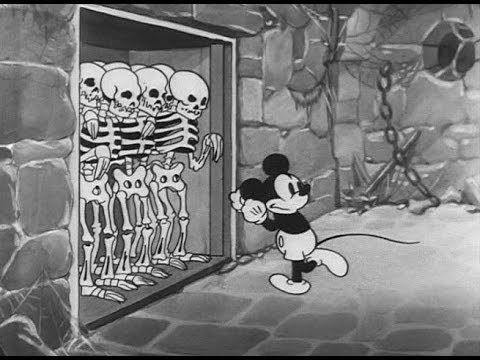
The Mad Doctor is a fan favorite for many classic Disney fans and with good reason. This short film is a horror spoof that perfectly captures the atmosphere of horror movies of the time. The creepy atmosphere here is even more effective than some of the serious horror movies of the time. In fact, some at the time felt that this cartoon was too scary for children. Some theaters refused to show the short for this reason and the film was even banned in Great Britian. Much of this sense of atmosphere comes from the wonderful background art by Mique Nelson. Nelson was a brilliant background artist, who worked on many of the best Silly Symphonies as well as such Disney features asSnow White and the Seven Dwarfs (1937) and Pinocchio (1940).
The director of this cartoon was Dave Hand. Dave Hand directed such classic Disney cartoons as Building a Building (1933), The Flying Mouse (1934), Who Killed Cock Robin (1935), Pluto's Judgement Day (1935), Mickey's Polo Team (1936), Thru the Mirror (1936), The Country Cousin (1936) and Magician Mickey (1937). He also served as the supervising director on two of the Disney studios most popular animated features, Snow White and the Seven Dwarfs (1937) and Bambi (1942).
A working title for this film was The Mysterious Castle. This cartoon reached movie theaters on January 20, 1933. At the same time this film was in theaters, Mickey Mouse was having another adventure in a spooky castle. The Mickey Mouse daily newspaper comic strip was currently running a storyline entitled Blaggard Castle. Blaggard Castle is often considered by Disney fans to be one of the best storylines of the comic strip.
This cartoon's spooky themed storyline revolves around a recent popularity of horror films. A couple years earlier Universal released Dracula (1931) and Frankenstein (1931). This caused a while slew of horror movies to hit theaters including Paramount's Dr. Jekyll and Mr. Hyde (1931), Warner Brothers' Doctor X (1932), MGM's Freaks (1932) and many more as well as all the Universal monster films to follow. As such this Mickey Mouse cartoon was simply inspired by a trend of the time.
The following is a review from Motion Picture Review (which was published by The Women's University Club of Los Angles), "Mickey is not to be outdone by the present rage for horror films - and goes to the rescue of his dog in the clutches of a 'mad doctor' in heroic and sensational fashion. It is perhaps too nightmarish for children; the fad for thrills goes to great lengths even in cartoons."
This film would have a surprising legacy. Decades after this short, the title character would become the villain in the video game, Epic Mickey (2010) and its sequel Epic Mickey 2: The Power of Two (2012). Because of the musical nature of this cartoon, he often spoke or even sang in rhyme in those video games. He would also have a cameo in the Roger Rabbit short, Tummy Trouble (1989), appeared occasionally in the Italian Disney comic books and was a boss in the video game, Mickey Mania: The Timeless Adventures of Mickey Mouse (1994) in a level based off of this black and white cartoon short.
This cartoon is available on the DVD set, Walt Disney Treasures: Mickey Mouse in Black and White. Due to its public domain status, it also appears on various public domain VHSs and DVDs.
Animation
Note: Ben Sharpsteen often had a group of junior animators working under him. I am not aware of who these animators were for this film.
Ben Sharpsteen (L.S. Mickey's house - doghouse in f.g. - Pluto snoring - storm atmosphere - truck up and X-diss; interior bedroom - Mickey asleep - sound effects - Pluto howls - manic laugh - Mickey out window; dark figure slinks away - Mickey finds dog stolen - starts after him; figure dragging dog thru woods; Mickey on trail; L.S. Castle - silhouette of figure dragging Pluto - sound effects - X. Diss. to; C.U. Door - figure and dog into sc. - other castle; Mickey reaches bridge - planks fall - door planks gone - Mickey enters; Mickey inside - spooky atmosphere and spooky situations; C.U. door and panel - door locks; S.C.U. Mickey surprised - truck back to L.S. Creepy chamber - Mickey continues; lab shot - Pluto dragged thru sc. by dark figure - struggles; Mickey sneaking down hall - falls down stairs; Still sc. - Mickey at bottom of stairs - rolls into brightly lighted scene - sees something terrifying; S.C.U. Well - dragon shadows menace him; Mickey scared - sees fire - relieved - gets sparks in pants - exits; Mickey backing on short pan into dark corner - hears clock - lights match on pants; skull pendulum - skeleton hands - skeleton bird cuckoos; Skelton appears from behind picture and blows match out - Mickey scared - backs away; Mickey into stone pillar - skeleton tries to hit him - Mickey hears howl - exits; Mickey starts upstairs - slides down again - exits; S.L.S. Lab - doctor puts Pluto in X-Ray - menaces hen and Pluto; Turns on X-Ray; C.U. Pluto X-Rayed - heart beating - Pluto worried; C.U. Pluto - heart jumps into throat - beats rapidly; C.U. Pluto - heart and ribs drop - dog yowls; Mickey hears yowls - starts up ladder - falls - runs on pan inside skeleton; Mickey crashes into wall; Pluto hanging by tail - Dr. cuts shadow; Mickey hears dog - runs on short pan - multiple doors - Mickey into lab)
Tom Palmer (Dr. starts song - sings first two lines; C.U. chart - pan along - sings next two lines off-stage; Dr. continues song - sings next two lines; C.U. Chart - doctor sings last two lines off stage; Dr. takes out knife starts for Pluto; S.C.U. Machinery - Dr. pushes button; Doc. throws big electric switch - looks up)
Johnnie Cannon (Bumps into closet - skeletons throw heads; Mickey ducking heads - one grabs him - rolls on others)
Les Clark (S.L.S. Skeleton spider attacks Mickey - Mickey jumps forward floor; Floor and stairs - Mickey lands - spider on him - tickles spider - released - throw balister - boomerang - spider runs)
Jack King (Lab shot - Mickey lands on table - straps buckle down; Mickey kicking - whisk broom dusts off turkey; Buzz saw starts down - buzz sound - pan down - Mickey sees saw coming - draws in tummy - yells; X-Diss to Mickey in bed - mosquito gag - Mickey calls dog; Pluto hears Mickey calling; Mickey in thru window with dog house - licks Mickey - Iris out)
Story: This film opens on a dark and stormy night. A cloaked figure kidnaps Pluto. Mickey runs after to save his pal. The cloaked figured turns out being a mad scientist who wishes to perform an experiment that will fuse Pluto with a chicken. As Mickey tries to save Pluto he must do battle with various skeletons to save his pal. While Mickey escapes these skeletons, he finds himself being caught by the Mad Doctor, who ties Mickey up as he is being propelled towards a buzz saw that will cut him in half. Just when it looks like Mickey is a goner, he wakes up from his nightmare. He whistles for Pluto who comes jumping to the window and licks Mickey's face.
Here is the cartoon below.
Here is a colorized version of the film.
Now for a little videogame fun. Below is the Mad Doctor level from the Mickey Mania video game, the Mad Doctor boss fight from the first Epic Mickey game and some cut scenes involving the character from Epic Mickey 2.
-Michael J. Ruhland
Resources Used
Walt Disney’s Mickey Mouse: The Ultimate History by David Gerstein and J.B. Kaufman
Hello my friends and happy Saturday morning. Once again it is time for some classic cartoons.
Today's cartoon selection begins with the first cartoon featuring the Tasmanian Devil, Devil May Hare (1954). About Taz director Robert McKimson recalled, "I devolped him because we were looking for a new character. I made two of them, I think, and my boss [Eddie Selzer] told me not to make them anymore because he was too obnoxious. Actually he was just a stupid foil. He could tear things apart but a guy like Bugs Bunny could frustrate him. Shortly after that, Jack Warner asked Eddie Selzer, 'what happened to the Tasmanian Devil?' And Eddie said he'd stopped making them, 'get back and make more of them' [Jack Warner replied] 'He's a funny character.'"
Santa's Surprise (1947) is an especially delightful Christmas cartoon from Famous Studios. This cartoon is best remembered as the first cartoon to feature the character of Little Audrey. Little Audrey was an original character for the studio and also a replacement for Little Lulu, who the studio had made a series of cartoons with, in the past. Little Lulu was not created by the studio but was the star of a comic strip by Marjorie Henderson Buell. When Paramount decided not to renew the license for Famous Studios to use that character, Little Audrey was created. The character was designed by veteran Disney animator Bill Tytla (possibly my favorite Disney animator), who was now a director at Famous. This short's lead animator was Myron Waldman, who specialized in cute animation (often shining his best in the studio's Casper series). Myron would later remember this cartoon as one he was especially happy with.
Next comes the Tom and Jerry cartoon, Cue Ball Cat (1950). This was the last Tom and Jerry film of 1950. The first year of the 1950's showed Tom and Jerry films still at the consistent high quality that they had maintained in the 1940's. The cartoon was reissued to movie theaters in 1956.
Now for a classic black and white Walter Lantz cartoon, Queen's Kittens (1938).
Now it is time for a commercial break.
Let's continue with a Christmas classic, Pluto's Christmas Tree (1952). Like many of the post-1930's Mickey Mouse short films, Mickey is not really the star of this cartoon. Instead, the short centers around Pluto and Chip and Dale. Though Chip and Dale are mostly recognized for fighting with Donald Duck, they did make their film debut as antagonists for Pluto in Private Pluto (1943). This cartoon features a great cast of animators including, George Kreisl, Fred Moore, Bill Justice, Volus Jones, Blaine Gibson and Dan MacManus. Dan MacManus animates the opening scene of the cartoon. Fred Moore is recognized as one of the greatest Mickey animators of all time and he gets to show that off here as he animates Mickey chopping down the tree, Mickey decorating the tree, Mickey with the Christmas gifts, Mickey's reactions to Pluto's antics, Mickey holding the chipmunks and him and Pluto looking out the window. Bill Justice and Volus Jones animate much of the Chipmunks. Justice also animates the cameo of Minnie, Donald and Goofy at the end. George Kreisl animates much of Pluto's antics. Blaine Gibson animates very little in this short with the tree lights going off and on. This cartoon was directed by Jack Hannah, who directed the majority of the Chip and Dale shorts.
Now for a silent Krazy Kat cartoon, The Best Mouse Loses (1920).
Now for the Terry Toons cartoon, Codfish Balls (1930). At this time nearly every Terry Toon short had a title that was a type of food.
Today's cartoon selection closes with a half hour TV special, I wish would play on TV. This is A Pink Christmas (1978) starring the coolest cat in all filmdom. The Pink Panther. While The Pink Panther has often been compared to Charlie Chaplin's Little Tramp, this is probably the clearest example. Like Charlie Chaplin's best films, this special effortlessly combines sentimentality and slapstick humor. The character is at his most likable and charming here creating what is to me a Christmas must watch.
Thanks for joining me. Come back next week for more animated treasures. Until then may all your tunes be looney and your melodies merry.
Resources Used Of Mice and Magic: A History of American Animated Cartoons by Leonard Maltin
Walt Disney's Mickey Mouse: The Ultimate History by J.B. Kaufman and David Gerstein