Happy 4th of July
Tuesday, July 4, 2023

Monday, July 3, 2023
Honoring Eric Blore
Eric Blore is one of the greatest character actors in the history of the movies. He is certainly one of my favorites. Whether appearing with Fred Astaire and Ginger Rogers in such great musicals as Flying Down to Rio (1933), The Gay Divorcee (1934), Top Hat (1935), Swing Time (1936) and Shall We Dance (1937) or alongside Laurel and Hardy in Swiss Miss (1938), with Bing Crosby and Bob Hope in Road to Zanzibar (1941), The Marx Brothers in Love Happy (1949), voicing Mr. Toad in the Disney animated feature The Adventures of Ichabod and Mr. Toad (1949) or in the Preston Sturges classics The Lady Eve (1941) and Sullivan's Travels (1941), he is always a delight to see (or hear) in any movie.
The following is a page from a 1936 issue of Screenland magazine paying tribute to the wonderful character actor. If you have any trouble reading the following page simply click on it and use your touch screen to zoom in.

Challenge of the Super Friends: Swamp of the Living Dead (1978)

A very atmospheric episode.
In this episode the Legion of Doom find a spooky old lady in their swamp. They confront her thinking she is a spy for the Super Friends. However she turns out to be a witch who summons an evil magical head. The head promises the Legion of Doom evil magical power in exchange for them capturing the Super Friends for him.
Where this episode really works is its sense of atmosphere. The swamp is a wonderful setting for such a spooky themed episode. The use of lighting and shadows is wonderful and gives this episode a delightfully spooky feel to it. The evil floating head has a great design that has a creepy feel to it but is never too creepy to take away from the light hearted fun that we all love about this series. There are also some zombies that have similarly creepily fun designs. The witch is also a very fun character. The background art is simply wonderful to look at and adds to the spooky fun. This episode also has a unique feel to it because much of the story follows the Legion of Doom instead of our heroes. This works quite well, especially considering the Halloween-y feel for much of the episode.
All in all this is a really fun episode that has a unique feel to it.
Sunday, July 2, 2023
Cowboy Church #131
Hello my friends and welcome back for another service of Cowboy Church.
Today's musical selection begins with Roy Rogers and Dale Evans with Softly and Tenderly. The song was written by an Ohio businessman named Will Thompson in 1880. As well as writing gospel songs Thompson also wrote quite a few secular songs and parotic songs. When the songs he wrote were rejected by publishers he created his own company, Will L. Thompson & Company. This company would not only publish music by sell musical instruments. Softly and Tenderly first appeared in 1880's Sparkling Gems, Nos. 1 and 2, a collection of songs from the company. When evangelist Dwight L. Moody was on his death bed he told the songwriter, "Will, I would rather have written ‘Softly and Tenderly Jesus Is Calling’ than anything I have been able to do in my whole life." This was appropriate as Will decided to make songwriting his career while at a meeting held by Moody.
This is followed by Loretta Lynn with Everybody Wants to Go to Heaven. This recording comes from Loretta's 2016 album, Full Circle.
Up next comes Johnny Cash with Jesus Was a Carpenter. What I love about this song is that it takes about what happened back when Jesus was on Earth, but it puts it in a modern context even looking at many of today's political and social issues. This shows that the Bible is just as true today and that even after all these centuries we can still apply it to what is going on in our world today. The very idea of praising Jesus in socially conscious folk song, paints a great picture of what Johnny Cash and his music were all about.
Then comes Wanda Jackson with Jesus Is the Best Thing That Ever Happened to Me. This song comes from her 1984 gospel album, My Kind of Gospel. Even this long after the Bible was written, Jesus is still working in and through people just as much as he did back then. All you have to do to notice this is to look at how many lives he changes each and every day.
Afterwards is Glen Campbell with Standing on the Promises of God. This hymn was written by Russell Carter in 1886. Working as a sheep herder he developed a heart condition. This lead him to pray much more often and he began to get closer to God everyday. When he was healed he vowed to "stand on the promises of God" and wrote this song.
This is followed by Red Stegall with Cowboy Church. Could you think of a song that is more fitting for these Cowboy Church posts? It is almost like he wrote it for them.
Then comes Bob Dylan with When You Gonna Wake Up. Though many Dylan fans look down on the Christian era of Bob's music (especially those who disagree with its message), I feel that some incredible music came out of this era. His lyrics were still amazing and cause one to stop and think after hearing them. As a Christian, these lyrics have had just as major of an effect on me as the old classic hymns, and touch me as deeply as Christian music can. Yet in true Bob Dylan style, these songs do not feel like anything we could ever hear from any other songwriter doing Christian music.
Today's musical selection ends with The Sons of the Pioneers with their 1937 recording of Leaning on the Everlasting Arms. This hymn began with a man named Anthony Showalter. As a fan of gospel music and an elder in a Presbyterian church, he held many "singing schools" at various churches in the south. One day he received two letters from former students who were struggling after their wives had passed. To respond to these letters, Showalter consulted scripture. He came across Deuteronomy 33:27, "The eternal God is thy refuge, and underneath are the everlasting arms." After reading this verse lyrics for a song chorus went through his head and he wrote down, "“Leaning, leaning, safe and secure from all alarms; Leaning, leaning, leaning on the everlasting arms.” After using this in the letters to his former students he sent this chorus to his friend hymnist, Elisha Hoffman. In the letter he also wrote, “Here is the chorus for a good hymn from Deuteronomy 33:27, but I can’t come up with the verses.” Hoffman then wrote the rest of the lyrics to which Showalter put to music. The hymn was published in 1887. 1937, the year this recording was made was the last year that Roy Rogers would be an official member of the group. Though he would embark on his solo career, his career and the career of the Sons of the Pioneers would remain very intertwined. They would not only make many recordings together but they would also appear together in many movies. They would also remain great friends.
Next comes an episode of Gene Autry's Melody Ranch radio show that aired on September, 19, 1948.
Now for a message from Greg Laurie.

Motion Picture Herald, 1941
Jesus answered, “I am the way and the truth and the life. No one comes to the Father except through me." John 14:6
Not everyone who says to me, ‘Lord, Lord,’ will enter the kingdom of heaven, but only the one who does the will of my Father who is in heaven. Matthew 7:21
When the disciples heard this, they were greatly astonished and asked, “Who then can be saved?”
Jesus looked at them and said, “With man this is impossible, but with God all things are possible.” Matthew 19:25-26
For God so loved the world that he gave his one and only Son, that whoever believes in him shall not perish but have eternal life. For God did not send his Son into the world to condemn the world, but to save the world through him. Whoever believes in him is not condemned, but whoever does not believe stands condemned already because they have not believed in the name of God’s one and only Son. John 3:16-18
If you declare with your mouth, “Jesus is Lord,” and believe in your heart that God raised him from the dead, you will be saved. For it is with your heart that you believe and are justified, and it is with your mouth that you profess your faith and are saved. Romans 10:9-10
If my people, who are called by my name, will humble themselves and pray and seek my face and turn from their wicked ways, then I will hear from heaven, and I will forgive their sin and will heal their land. 2 Chronicles 7:14
Repent, then, and turn to God, so that your sins may be wiped out, that times of refreshing may come from the Lord. Acts 3:19
Blessed are those who hunger and thirst for righteousness, for they shall be satisfied. Matthew 5:6
If a brother or sister is poorly clothed and lacking in daily food, and one of you says to them, “Go in peace, be warmed and filled,” without giving them the things needed for the body, what good is that? So also faith by itself, if it does not have works, is dead. James 2:15-17
If you pour yourself out for the hungry and satisfy the desire of the afflicted, then shall your light rise in the darkness and your gloom be as the noonday. Isiaih 58:10
Whoever oppresses a poor man insults his Maker, but he who is generous to the needy honors him. Proverbs 14:31
Thanks for joining me come back next week for another servie of Cowboy Church. Happy trails to you until we meet again.
If my people, who are called by my name, will humble themselves and pray and seek my face and turn from their wicked ways, then I will hear from heaven, and I will forgive their sin and will heal their land. 2 Chronicles 7:14
Repent, then, and turn to God, so that your sins may be wiped out, that times of refreshing may come from the Lord. Acts 3:19
Blessed are those who hunger and thirst for righteousness, for they shall be satisfied. Matthew 5:6
If a brother or sister is poorly clothed and lacking in daily food, and one of you says to them, “Go in peace, be warmed and filled,” without giving them the things needed for the body, what good is that? So also faith by itself, if it does not have works, is dead. James 2:15-17
If you pour yourself out for the hungry and satisfy the desire of the afflicted, then shall your light rise in the darkness and your gloom be as the noonday. Isiaih 58:10
Whoever oppresses a poor man insults his Maker, but he who is generous to the needy honors him. Proverbs 14:31
Thanks for joining me come back next week for another servie of Cowboy Church. Happy trails to you until we meet again.
Saturday, July 1, 2023
Movie Review: Prisoner's Daughter

Michael's Movie Grade: B-
A very familiar, but well-made family drama.
This movie's story is nothing we haven't seen before. It revolves around a mother raising her kid by herself when her ex-husband is too much of a drug addict for her to feel comfortable with him around her son. Meanwhile her father, who is been in and out of prison most of her life, wants to start a new leaf and reconnect with his daughter. Such a storyline may be familiar but that doesn't mean it isn't effective. What makes this film work is the three main characters. Each one is very likable and easy to relate to. Also to make them feel more real to us, all three are good people but have flaws that are all too obvious. These flaws never take away from their likability, but only make them seem like real people. This is also helped out very much by wonderful performances from the three leads, Kate Beckinsale, Brian Cox and Christopher Convery. All three are great in these roles and bring a real sense of humanity to it. Catherine Hardwicke is a very capable and talent director (though most people will know her for directing Twilight (2008), I know her best for directing The Nativity Story (2006) (which I feel needs more love around Christmas time)) and she makes each of the major emotional moments work very well here. She understands just how much to lean into the darker parts of the subject matter to make the movie effective but not to dark that it is no longer hopeful.
This movie does have its flaws though. Its familiarity makes it very obvious what is going to happen next. Also as well as this film handles the subject matter, there are still plenty of movies that do pretty much exactly what this film does even better. It is hard not to think of even better movies even in many scenes that work very well. I am also not a fan of how the ex-husband is handled here. He comes off as too over the top at many points and instead of feeling like a real person, he feels more like a plot device. A film like this needs a villain and someone who cause conflict between our main characters and that seems to be the only reason he is here.
This may not be a film you need to rush out and see, but it is still definitely a good movie.
Some Cartoons for Saturday Morning #132
Hello my friends and happy Saturday morning. Once again it is time for some classic cartoons.
Today's cartoon selection begins with a wonderful Friz Freleng directed Looney Tune, Yankee Doodle Daffy (1943). Friz Freleng was an expert at comedic timing and he has few (if any) peers when it comes to this. This short film is a perfect example of why. The movie moves at a very fast pace, yet never feels rushed. Each gag lands perfectly here. It is also common for Friz's name or even caricatures of Friz to appear in the background in these cartoons. Here if you look in the background there is a picture of Friz hanging on Porky's wall. A review in The Motion Picture Daily calls this film a "Pleasant little subject." The following are Exhibitor's reviews from The Motion Picture Herald. "YANKEE DOODLE DAFFY: Looney Tunes Cartoons—This studio's cartoons lately seem to be either exceptionally good or exceptionally bad. This is downright terrible. - W. Verricks Nevins, III, Alfred Co-op Theatre, Alfred N.Y." "YANKEE DOODLE DAFFY: Looney Tunes Cartoons—Good cartoon, but where does it get its name? - Ralph Raspa, State Theatre, Rivesdale, W. Va." "YANKEE DOODLE DAFFY: Looney Tunes Cartoons - Average color cartoon. - E.M. Freiburger, Paramount Theatre, Dewey, Okla."
Next comes a Disney short film that is actually a sequel to a previous Disney cartoon. The cartoon is Casey Bats Again (1954) and is a sequel to the Casey at Bat sequence from the Disney feature film, Make Mine Music (1946).
Up next we join our old friend Scrappy in Park your Baby (1939). I absolutely adore the ending of this movie.
Now comes the Betty Boop cartoon Be Human (1936). This short film has a very important lesson for us all about treating animals well and not abusing them. The Fleischer Studio (which made this movie) also made a Popeye cartoon with a similar theme, Be Kind to 'Aminals' (1935). However this Betty Boop short is the superior film, with the elaborately over the top way of getting revenge on the abuser. There is something therapeutic about seeing a bully get even worse than he dishes out in return, especially in such a cartoonish and over the top fashion. The sheer over the top nature makes this movie feel completely entertaining instead of like a lecture.
Now it is time for a commercial break.
Up next is a delightful Disney Silly Symphony short, The China Shop (1933). Like all the Disney films of this time period this movie benefits from a fantastic cast of animators. Art Babbitt, whose animation helped define the character of Goofy and worked on the Evil Queen in Snow White and the Seven Dwarfs (1937) and Geppetto in Pinocchio (1940), animated the scenes with the shopkeeper. Dick Lundy, who would go on to direct Woody Woodpecker and Barney Bear cartoons, animates the waltz. Frenchy de Tremaudan animates the satyr stalking and taking the girl. Dick Huemer, who played a major role in developing Koko the Clown for the Fleischers and creating Scrappy for Columbia, animates almost all of big fight between the boy and the satyr, with the exception of only three brief insert shots animated by Archie Robin. Ben Sharpsteen, who would later be the supervising director for the Disney feature films, Pinnochio (1940), Fantasia (1940), and Dumbo (1941), would lead a group of animators that included Cy Young, Roy Williams (later to become the big mooseketeer on TV's The Mickey Mouse Club), Jack Kinney (who would later become one of the finest directors of Disney cartoon shorts), Leonard Sebring and Louie Schimdt. This crew would do the animation for the clock the ostrich, the peacock, the broken vase and the mugs. This short film made its TV debut on an episode of The Mickey Mouse Club that aired on November 2, 1955.
Next we join Mr. Magoo in Sloppy Jalopy (1952).

Broadcasting, 1960
Now for a silent movie starring Mutt and Jeff, A Kick for Cinderella (1925).
Today's cartoon selection ends with a New Three Stooges TV cartoon, Aloha Ha Ha (1965). Like in all these cartoons, The Three Stooges are voiced by themselves. Curly Joe felt that the show was hurt by the fact that the live action intro and outro segments would be repeated, even when the cartoon was new. He felt this would lead people to see an opening they recognized and change the channel thinking it was a repeat.
Thanks for joining me. Come back next week for another selection of animated treasures. Until then may all your tunes be looney and melodies merry.
Resources Used
Of Mice and Magic: A History of the American Animated Cartoon by Leonard Maltin
The Three Stooges Scrapbook by Jeff Lenburg, Joan Howard Maurer and Greg Lenburg.
Silly Symphonies: A Companion to the Classic Cartoon Series by Russell Merritt and J.B. Kaufman
https://lantern.mediahist.org/
Next we join Mr. Magoo in Sloppy Jalopy (1952).
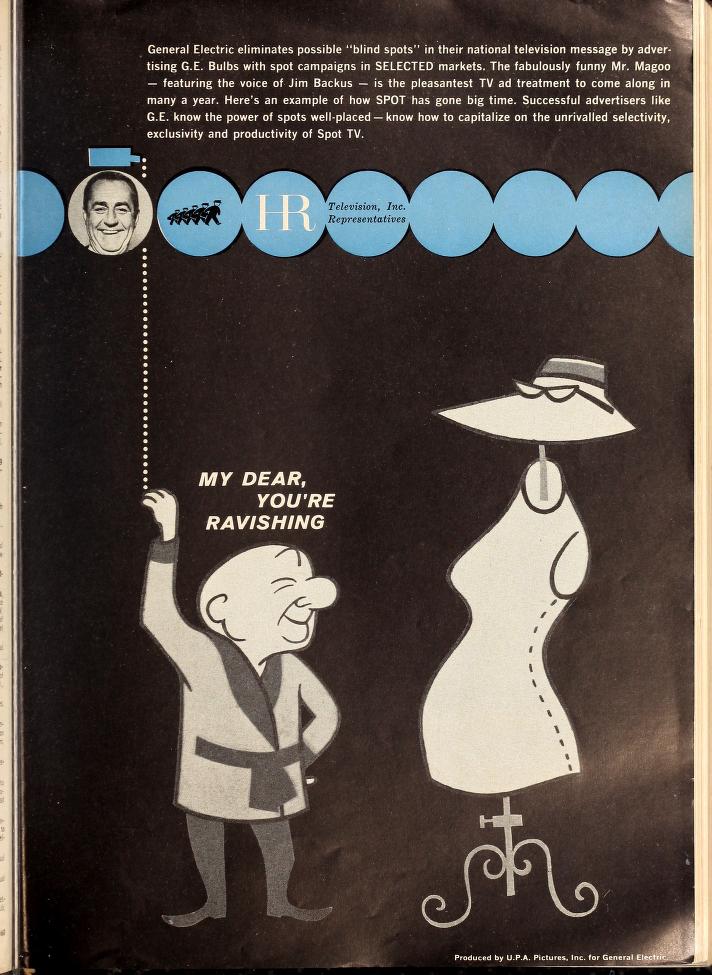
Broadcasting, 1960
Now for a silent movie starring Mutt and Jeff, A Kick for Cinderella (1925).
Today's cartoon selection ends with a New Three Stooges TV cartoon, Aloha Ha Ha (1965). Like in all these cartoons, The Three Stooges are voiced by themselves. Curly Joe felt that the show was hurt by the fact that the live action intro and outro segments would be repeated, even when the cartoon was new. He felt this would lead people to see an opening they recognized and change the channel thinking it was a repeat.
Thanks for joining me. Come back next week for another selection of animated treasures. Until then may all your tunes be looney and melodies merry.
Resources Used
Of Mice and Magic: A History of the American Animated Cartoon by Leonard Maltin
The Three Stooges Scrapbook by Jeff Lenburg, Joan Howard Maurer and Greg Lenburg.
https://lantern.mediahist.org/
Silent Film of the Month: Something New (1920)
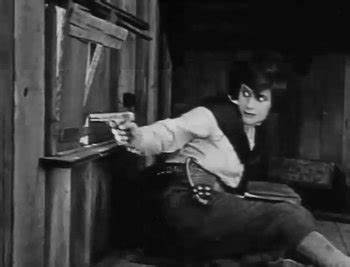
Something New is essentially a feature length commercial and this would make it seem like a film that could easily be dismissed. Yet with a tongue planted firmly in its cheek and some really good action sequences, this proves to be a real delight and is simply too fun to be dismissed so easily.
To acknowledge the silliness of the plot this film has a very clever framing device. The movie begins with our main character (Nell Shipman) sitting a typewriter trying to come up with a new story and only getting frustrated as she can't think of anything. She quotes Soloman by saying "There is nothing new under the sun," and then takes the paper out of the typewriter and tears it up. Looking around her she sees a cowboy on his horse talking to a man driving a Maxwell car. Suddenly she gets an idea and begins writing a western where the heroes save the day in a Maxwell car, inserting herself as the main character of said story. This is the perfect framing device. It lets us know that the story we are about to watch is to be taken in the spirit of good fun without making it into an all-out parody. Because of this before the story properly starts, the mood of the film is already perfectly set up.
This movie perfectly lives up to the promises that are given by this opening. This film takes what was already a very standard movie plot by this time and gives a fun little twist to it. In fact, how familiar the story is works as part of what makes this movie such a delight to watch. This movie in fact wants you to be familiar with this type of story and intends to be a fun look as how this sort of story would look with just a little twist. Though the film rarely makes fun of its story, it has a lot of fun with it. The movie moves by at a fast pace and has all the action and sense of adventure you could hope for from a story like this. There was not one second watching this film that I ever found myself anything less than completely and utterly entertained.
It is believed that Shipman was asked to make a film about the new Maxwell car with the company excepting her to make a short little advertisement film about it. Instead she made a feature length western.
Joe Walker, this movie's cinematographer would go on to become a very well-respected cinematographer in the movie industry. He is probably best known for his work with director Frank Capra. His work with Capra includes such beloved films as American Madness (1932), It Happened One Night (1934), Mr. Deeds Goes to Town (1936), Lost Horizon (1937), You Can't Take It with You (1938) and It’s a Wonderful Life (1946). Other beloved movies he worked on include The Awful Truth (1937), Only Angels Have Wings (1939), His Girl Friday (1940), Penny Serenade (1941), Here Comes Mr. Jordan (1941) and A Night to Remember (1943). Even if Something New doesn't have the prestige of those other films, Walker's cinematography does certainly add a lot to this movie. This even includes some wonderful looking location shooting in the Mojave Desert.
This was the first film made for Nell Shipman's own production company. Before this movie she had success starring, writing and directing some very popular three-reel short films including God's Country and the Woman (1916) and Back to God's Country (1919). These were what was known as wilderness films. They featured exotic locations, wild animals (tamed by Shipman herself) and even some sex (including nude scenes with Shipman). Her production company would only last into the mid 1920's. However she would continue writing for movies even into the sound era. Thid even included the Cary Grant and Myrna Loy film, Wings in the Dark (1935). She would retire in the 1930's and live on a ranch where she looked after the animals she had tamed for her movies.
For anyone interested this movie can be found on YouTube.
Resources Used
http://www.jbkaufman.com/movie-of-the-month/something-new-1920
https://prod-www.tcm.com/tcmdb/title/335334/something-new#articles-reviews?articleId=92491
https://www.imdb.com/?ref_=nv_home
Subscribe to:
Posts (Atom)