Tuesday, June 13, 2017

Movie Review: Wonder Woman


 Michael's Movie Grade: B-


A good movie, even if it isn't a great one. However despite any faults after Batman VS. Superman and Suicide Squad this movie being good is a very pleasant surprise.


The best things about this film are the characters of Diana and Steve as well as the world of Themyscira. After the unpleasant look to many of DC's most recent live action films, the world of  Themyscira is a revelation. It is in fact beautiful to look at. When this place was first shown I couldn't believe my eyes, here was something in a live action DC movie that was pleasant to look at. However the goodness doesn't end there. This world is very well set up and ends up feeling very real to us. The two main characters are also delightful. They feel very well fleshed out and really grow on the audience. Over the course of the movie you really get to care about these two and just enjoy seeing them.


However despite the good points this film has its share of faults. While the two main characters are interesting they are the only ones. Every other character is undeveloped and even boring. This especially goes for the villains. Most of these villains are just plain boring and with very little interesting about them. Two of them especially feel like the time dedicated to them is just wasted. These two feel like they are simply there to pad the length of the movie*. A surprise villain (not giving away who it is) would be interesting if he hadn't been done so many times before in other recent superhero movies. While there are more faults in the movie, none of them are as big as this fault is. Despite any other, faults boring characters (again not including the main two who are very likable) is easily the worst of them. There is also the problem that the movie is longer than it needs to be and can sometimes feel padded out. The humor is very hit and miss, however even when it hits it gets more of a chuckle than a real laugh.


While this movie has its faults (including one huge one), it is still a good movie. And hopefully this means that the DC live action films will continue to get better, and we will never see more DC films of the poor quality of Batman VS. Superman and Suicide Squad again. Justice League is coming let us keep our fingers crossed. Wonder Woman is a good sign things could be getting better. Just don't bring back the Batman VS. Superman version of Lex Luther ever, please Warner Brothers.  

Thursday, June 1, 2017

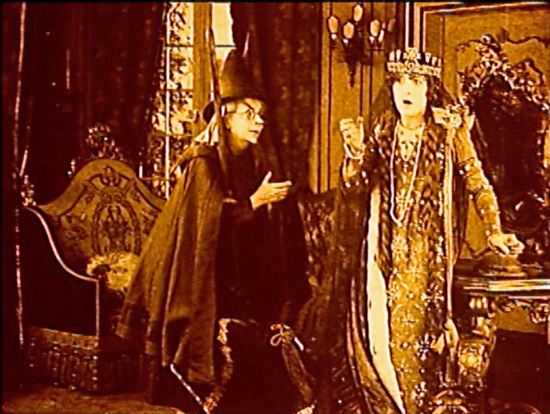
Silent Film of the Month: Snow White (1916)


Run Time: 63 minutes. Studio: Famous Players/Paramount. Director: J. Searle Dawley. Writer: Winthrop Ames. Based on a play by Winthrop Ames. and a book by The Brothers Grimm. Producer: H. Lyman Broening. Main Cast: Marguerite Clark, Dorothy G. Cumming, Creighton Hale, Lionel Braham, Alice Washburn. Cinematographer: H. Lyman Broening.


Anyone who reads my blogs knows that I am a huge Disney fan. Because of this often times when a classic fairy tale is brought up it is the Disney version that first comes to my mind. However these stories existed long before Walt touched them and they even had film adaptions before then. Some of these film adaptions even were huge influences on the Disney movies. One of the most clear example of this is the 1916 silent version of Snow White. Now some of my fellow Disney buffs may have heard of this movie. Walt Disney had in fact seen it as a teenager and legend goes that it inspired him to make his own film version of the classic fairy tale. Still this movie has more than that great story behind it. It is also a delightful film in its own right.


Though this film was obviously inspired by the Brothers Grimm's classic story, it had an even more direct and recent piece of source material. This was a 1912 play based off of the story. That play was written by Winthrop Ames, and starred Marguerite Clark, who also were the writer and star of this film adaption. So in many ways the point of this movie was simply to bring that stage play to the screen. Considering the differences between the stage and the silent cinema there naturally needed to be some changes made. The most obvious of these was to eliminate song numbers and very dialogue heavy scenes. However interestingly more scenes were added starring the Huntsman. These scenes revolved around him being locked in the tower as a prisoner. Also in adapting it for film, director J. Searle Dawley employed some more cinematic techniques. For instance in this version of the story the Witch (a separate character from the Queen) wants Snow White's heart to help with a potion to get herself her. When she is given a pig's heart instead her head grows pig's tails instead of hair. On stage the actress simply ducked off stage real quick and put on a head cap. Here the pig's tails appear to slowly fade in on her head, accomplished by a dissolve shot (Searle Dawley later remembered doing this on a set with crowded extras in 1916 made this a very difficult technical challenge).


The film interestingly begins with a brief prologue involving Santa Claus leaving a bunch of dolls at a little girl's house. These dolls become real people and then our story really begins. A Queen wants a beautiful child and gets one in Snow White (played by Marguerite Clark). However when this Queen passes away, the king remarries. The new Queen (played by Dorothy Cummings) is an evil and jealous woman who hates Snow White. When the King dies there is no one to protect Snow White from this evil woman. Snow White now has to work in rags as a maid, but this isn't all that is planned for her. The jealous Queen conspires with a witch (played by Alice Washburn) to get rid of Snow White. In return for helping the Queen, the Witch wants Snow White's heart. The Queen hires the huntsman (played by Lionel Braham) to take care of Snow White. However the huntsman can't do it and gives the queen the heart of a pig instead. Snow White hides out at a house of dwarfs, who promise to help her, however they can. The Queen learning that the huntsman has failed her, decides to kill Snow White herself.


What really makes this film work is Marguerite Clark's performance as Snow White. In this era of such stars as Mary Pickford and Lillian Gish, it was common for grown women to play the part of little girls. Though Clark turned 33, the year this film was released, she plays the part so well you completely believe she is about 10 or 12. There is just a great sense of innocence to this performance. This is best shown in the scene with the huntsman. She clings to the huntsman and is simply so excited to be with him. She acts like the two are going to play games with each other. When the huntsman says what they are really out there for she easily assumes that he is joking. In a lesser actress' hands this could have felt very forced but here it comes out naturally. Later when she goes into the dwarfs cottage she not wanting to impose knows that if she only takes small bites from each plate, they can't possibly be mad at her. Clark does that so delicately that it gives that small moment extra charm to it.


However if there is something this film is lacking in, it is a real sense of danger. While the Disney film wasn't intended just for kids (in fact in Britain, it got an adults only rating because of how scary the witch is), the play this movie was based on and even to a certain extant this movie itself was aimed primarily at children. Because of this the villains don't feel as threating as the Queen in the Disney version (being aimed mostly at adults) could. While this silent film is quite good, this does result in the Disney movie being even better.      


While Walt Disney's film is easily the superior version, this little movie has such a sweet and simple charm to it will still delight today's modern audiences.


Resources Used
http://www.jbkaufman.com/movie-of-the-month/snow-white-1916
The Animated Man: A Life of Walt Disney by Michael Barrier

Monday, May 22, 2017

Movie Review: Guardians of the Galaxy Vol.2


Review written by Michael J. Ruhland


Michael's Movie Grade: B+


Review: A very fun movie that is highly recommended.

This movie successeds on many levels. The characters are very likable and relatable. By the end of the film we feel that we completely know the main characters. Unlike a lot of these type of movies it does not confuse backstory with personality and understands that a good backstory can never be a replacement for likability. Though there is a lot of backstory here, the main focus is these characters and simply what made people like them so much in the first film (or comics for that matter). The backstory however is quite interesting and really complements the character. As well as this even though they are often comic relief, Rocket and Baby Groot are just as likable and real as any of the other characters, and who can't like Baby Groot. The humor in this film is fantastic. There are very few jokes that miss, and some jokes are flat out fantastic (Baby Groot and that toe especially). The music once again complements the action perfect and makes the scenes more exciting, funny, emotional and of course the songs fit Star Lord's character perfectly.

On the downside, the story while good has been done before and it is not hard to guess the movie's twist. This film is very similar to many other superhero movies, story wise. Gomorra's side story with her sister, honestly could have just been dropped. It isn't bad at all, but it is very rushed and doesn't add much to the film. Maybe it could have been better if it was either the focus of the movie or just given more time, but as it is it is kind of the weakest part of the movie. Despite all this the movie is more than fun enough to make up for these faults and still comes out as an excellent movie.

-Michael J. Ruhland    

I am Groot.

Wednesday, May 3, 2017

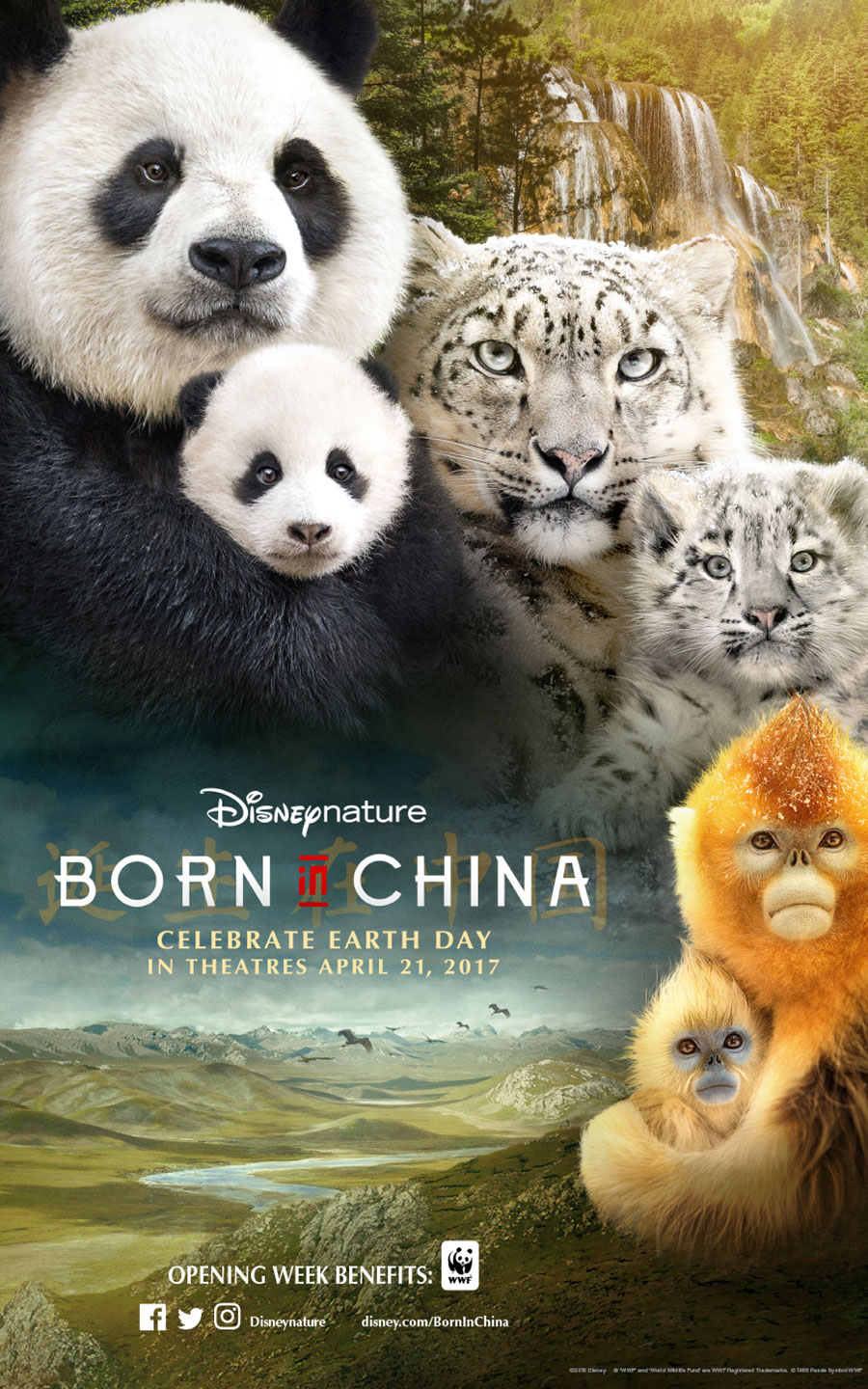
Movie Review: Born in China


Review by Michael J. Ruhland

Michael's Movie Grade: B+


Review: Excellent film, is a pure delight especially on the big screen.


The nature photography in this film is absolutely incredible. Like Disney does so often in these films, I haven't the slightest idea how they got the shot, but I am too busy being amazed that I don't think about that until after the film. This is a movie that will definitely be better if you see it in a theater (though most movies are better in the theater (except obviously those made for TV)). From the first shot you feel as if you have been transported to China.


However this film does have a fairly big downside and that is John Krasinski's narration. While it isn't all bad it certain does get in the way. The attempts at humor through this narration (especially when he voices an animal character) fall really flat. There is also a really inappropriate use of the song, Burn This City, but that is so brief it will not affect your enjoyment of the film. Still these faults are completely overcome by the sheer beauty of the nature photography, which is so breathtaking, you can overlook these faults no problem.


By the way do not go away when the end credits start. There is plenty of great footage of the crew interacting with the animals. This is delightful, fun and would be worth the price of admission easily, even if the rest of the film didn't exist.


This film may have its faults, but if you are a nature lover like me, it is a must see, simply to see the beautiful nature photography.


-Michael J. Ruhland

Monday, May 1, 2017

Silent Film of the Month: Moran of the Lady Letty (1922)


Run Time: 71 minutes. Studio: Famous Players-Laskey Corporation. Director: George Melford. Writer: Monte M. Katterjohn. Based on a book by Frank Norris Producer: George Melford. Main Cast: Rudolph Valentino, Dorothy Dalton, Charles Brinley, Walter Long. Cinematographer: William Marshall.

A year earlier in 1921 (also the year of his breakthrough appearance in Rex Ingram's The Four Horsemen of the Apocalypse), Rudolph Valentino had one of the biggest success of his career with The Sheik. This movie proved very popular especially with women. This was hugely due to his Latin lover persona. However the Famous Players-Lasky Corporation (later Paramount Pictures) noticed this image did not have the same effect on most male movie goers. Instead men seemed to find this image a bit off putting. Because of this the studio decided to put him in a role that would appeal more to men in the audience. So Valentino was put into my silent film of the month, Moran of the Lady Letty, which was a much more adventure based film in order to get him a male audience as well. George Melford who had directed Valentino in The Sheik would also direct him here. George Melford might be a name that clasic horror movie buffs will recognize as he directed the famous Spanish language version of 1931's Dracula.

Melford had stated in interviews hinted that this movie would show Valentino in a very athletic and almost Douglas Fairbanksian light as he stated "find out what a husky, red-blooded chap he is." Melford also stated that "climbed to the very tip of the mast -- just for exercise. The hard-boiled crew of the ship gasped!" However it is impossible to say if that was actually true. One change was made however to make the role fit more into Valentino's Latin lover image. This was that writer Monte Katterjohn (who also worked on The Sheik) changed the main characters name from Russ Wilbur (the name in the book) to Ramon Laredo. An intertitle early in the film states "rich man's son spends the dash and fire inherited from his Spanish ancestors in leading cotillions."

As the story begins Moran (played by Dorothy Dalton) is happy living with her sea going father and she is love with the sea. Ramon (played by Rudolph Valentino) is however unhappy. He is rich, but his life is sheltered and he craves adventure. However all this changes when Ramon is shanghaied. The ship he is now aboard is ruled by a mean and hate filled captain (played by Walter Long (my fellow Laurel and Hardy fans will easily recognize him)). They run across a burning ship in trouble. The crew mostly just steals goods for them selves. However Ramon saves one of the sailors aboard that ship, more specifically Moran. Raman falls in love with Moran, but the lustful captain has his eyes on her, and Ramon must protect his new "mate".

This is an excellent film. The adventure filled climax is exciting to watch, and easily just as (and in many cases more) compelling than today's special effects filled action scenes. The chemistry between the two leads is fantastic and you really believe that these two grow to care for each other, even with their different backgrounds. The technical film making is also very well done. This film uses color tinting a lot, and extremely well. Color tinting is when the whole screen is tinted a certain color and it was used often in the silent era. While on the boat (except in the cabins) the screen is tinted blue, but the high society functions are tinted brown. This creates a great contrast and makes many of the more adventure filled scenes seem bigger and more exciting. Also the cutting between (slight spoilers ahead) Moran on the boat and Ramon at a fancy party towards the end is extremely effective as it lets us know that they are on each other's minds. The tinting also comes in handy here as it makes us see why the party is less appealing to Ramon. Also with dropping the Latin lover image I think this film is more accessible and enjoyable to many modern day audiences and all those who just don't like his Latin lover image, than most of Valentino's work is.

Despite his excellence in the lead role Valentino did not care for his role in this movie. He preferred playing more exotic types and felt a film like this hurt his Latin lover image. Because of this his later this same year he would play those type of characters again in Blood and Sand and The Young Rajah.

-Michael J. Ruhland

Resources Used
http://www.tcm.com/tcmdb/title/497111/Moran-of-the-Lady-Letty/articles.html

Monday, April 10, 2017

Movie Review: Boss Baby

 Review Written By Michael J. Ruhland


Michael's Movie Grade:C+


Review: DreamWorks has proven with the Kung Fu Panda trilogy (yes I know there are more coming and I am excited), that they can make an idea that seems bad on paper actually work. While this movie is not on the same level as Kung Fu Panda the filmmakers takes a seemingly terrible idea and makes a movie that is quite enjoyable.


While so many animated features today go out of their way to make their fantasy worlds seem as real as possible and for us to accept them as such, Boss Baby simply embraces the fact that it is a cartoon by simply having fun with how absurd it all is, and having a field day with their imaginations. This is the film's biggest asset. This is especially shown through Tim's various fantasies and daydreams. Taking a page out of Maurice Noble's design work for the Ralph Philips cartoons of the 1950's all of those working in DreamWorks art department create a vivid, but very stylized look to these daydreams, that is honestly a joy to look at. Also great to see is the fantastic design of Baby Corp., which is so imaginative that it creates a great sense of fun here. The idea of babies and puppies being created by companies rather than well you know is a great one that just helps add to the fun.


The characters are quite likable. While they might not be the best fleshed out characters in animation, they are not just the one joke characters that you might think they are from the previews.


On the downside for a comedy this film has very few laugh out loud moments. This isn't to say that the humor is bad, but I giggled and smiled more than I actually laughed out loud. There are some laugh out loud moments ("Your parents are Lennon and McCartney"), but there are just much fewer than there should be for a movie like this. Also while the film is full of imagination, it is not lacking in Clichés. There are many moments where you know just what is going to happen and I think many people will see the ending coming.


So this isn't Kung Fu Panda by any means it is a fun movie, and definitely worth a watch.


-Michael J. Ruhland     

Saturday, April 1, 2017

Silent Film of the Month: The Big Show (1923)


Run Time: 17 minutes. Studio: Hal Roach Studios Director: Robert McGowan. Writers: Hal Roach, H.M. Walker . Producer: Hal Roach. Main Cast: Mickey Daneils, Joe Cobb, Jackie Condon, Jack Davis, Allen "Farina" Haskins, Mary Koreman, Ernest Morrison, Richard Billings, Andy Samuel . Cinematographer: Len Powers.


Since I post a Silent Film of the Month article every 1st of the month, I feel it is only appropriate to post about a slapstick comedy short every April, in honor of April Fools Day. Last year I wrote about a classic Laurel and Hardy short, and this year I am writing about a classic Our Gang short. Who knows what I will post next year (Maybe Charlie Chaplin, maybe Harry Langdon, maybe Charley Chase, Maybe Buster Keaton, Maybe whoever else I feel like, I haven't decided about next year yet).


When one brings up Our Gang (or the Little Rascals), most people will think of Spanky, Alfalfa, and Buckwheat. However the team existed well before these characters. In fact the team was formed in 1922, back in the silent era. Since the series centered around kids actors and characters had to change (especially since the series ran until 1944). The group of kids from when The Big Show came out included Mickey Daniels, Joe Cobb, Jackie Cindon, Jack Davis, Allen "Farina" Haskins, Mary Koreman, Ernest "Sunshine Sammy" Morrison, Richard "Mugsy" Billings, and Andy Samuel. This is in fact the first Our Gang short for Andy Samuel. Andy had previously worked as an extra in Charlie Chaplin's classic 1921 feature film The Kid. While working on that film he learned how to imitate Charlie Chaplin. The basis for this short came as an excuse to let him show off his impression of Chaplin.


The film begins with the gang wanting to look at the county fair for free. They are naturally chased out of the fair. Because of this the gang decides to put on their own carnival with rides, animals and movies.


For all my fellow movie buffs, the highlight of this film is their moving picture show. Joe has a nonworking moving picture camera and pretends to project the film, while other kids on stage do impressions of various movie stars. These impressions include Charlie Chaplin, Douglas Fairbanks, William S. Hart and Harold Lloyd. The most elaborate of these is the Harold Lloyd impression. This sequence is a very elaborate redoing of various scenes from the 1922 feature Grandma's Boy only with kids as the actors. One gag is decidedly different though. In Grandma's Boy Harold is annoyed by cats and uses a statue of a dog to scare them off. However in this film the character is being annoyed by pigs, and holds a card that says "butcher" to scare them off. That feature film was done at the same studio as this one was and that may more than explain this. The Charlie Chaplin and Douglas Fairbanks sequences are also based on certain films those actors starred in but are much less elaborate. The Charlie Chaplin sequence recalls Chaplin's classic 1918 film Shoulder Arms, while the Douglas Fairbanks sequence recalls his performance as D'Artagnan in the 1921 film version of The Three Musketeers. As stated before the Chaplin imitation was done by Andy Samuel. The Douglas Fairbanks impression was provided by Mickey Daniels. While it is not certain who played the imitation of Harold Lloyd, Leonard Maltin and Richard W. Bann (according to their book Our Gang: The Life and Times of the Little Rascals) believe it was played by a child actor named Billy Lord. However this is still not certain.  


It has been stated that what makes Our Gang so great and beloved is that they have had the child hood we all wish we had. This is never more clear than it is in this film. After all who didn't as a kid want to create something like these kids created  here. What kid doesn't want to make their own movies, or work with wild animals, or simply have adventures like these kids do. Beyond all the great humor, this film is so charming because it is wish fulfillment for the child in all of us.


-Michael J. Ruhland


Resources Used


Our Gang: The Life and Times of Our Gang by Leonard Maltin and Richard W. Bann