Showing posts with label Walter Lantz. Show all posts

Saturday, February 4, 2023

Some Cartoons For Saturday Morning #211

 Hello my friends and happy Saturday morning. Once again it is time for some classic cartoons.

Today's cartoon selection begins with Chariots of Fur (1994). This movie marked the final Coyote and Roadrunner cartoon to be directed by Chuck Jones, who directed the duo in their best films. Though many of the later day Chuck Jones cartoons, don't live up to the film's he directed from Warner Brother during the golden age of American animation, this cartoon is about as close as he came to recapturing the magic of those cartoons. This is truly a delightful movie, that almost feels like it could have been released during that era. This cartoon was released before the feature film, Richie Rich (1994). 


Now for a silent movie starring Dinky Doodle, The Hunt (1925). The live action man in this movie is Walter Lantz, who would later produce the Woody Woodpecker, Andy Panda and Chilly Willy cartoons. Lantz also directed this film. 


Next we join those beloved chipmunks, Chip and Dale in Two Chips and a Miss (1952). This cartoon was part of duo's brief lived solo series of theatrical shorts. This series only lasted three cartoons with the other films being, Chicken in the Rough (1951) and The Lone Chipmunks (1954). This cartoon made its TV debut in the Walt Disney Presents episode, The Adventures of Chip 'n' Dale (1959).


Next comes a rare two-reel cartoon from Fleischer Studios, The Raven (1942). This cartoon came towards the end of Fleischer Studios, in fact 1942 was the last year cartoons would be released from that studio. One of the writers credited for this movie is Pinto Colvig, who Disney fans may know as the original voice of Goofy. 


Now it is time for a commercial break.


Up next is a great Disney Silly Symphony cartoon, The Cookie Carnival (1935). This movie marks the first Symphony to be directed by Ben Sharpsteen. Sharpsteen would go on to become the supervising director of Disney features like Pinocchio (1940), Fantasia (1940) and Dumbo (1941). This is also the first Symphony for animators Bill Tytla (my favorite Disney animator) and Grim Natwick. Tytla is best known by Disney fans for his work on feature films like Snow White (1937), Pinocchio and Dumbo. He played a major role in animating the Dwarfs for Snow White, Stromboli in Pinocchio and the elephants in Dumbo (including the titular character). In this movie Tytla animates the boy cookie singing to the girl cookie as well as the angel and devil food cakes. Grim Natwick had before joining the Disney Studio had played a role in the development of Betty Boop. Here he animates a long scene (with some assistance by Eddie Strickland and Frank Thomas) in which the boy cookie gives a makeover to the girl cookie. This was some of the best animation of a female character done at Disney by this time. Because of this he would often be cast with animating female characters. Among those female characters would be the star of the studio's first feature film, Snow White. The following is an exhibitors review from the Motion Picture Herald, "Cookie Carnival, The: Silly Symphony - I do not like this one. It might be OK for nursey but not for grownups. Just a bunch of candy men, etc. the usual hokum. Running time, eight minutes, —Paul J. Pope, Avon Theatre, Geneva, Ala., Small Town and Rural Patronage." 


Now it is time for Woody Woodpecker in Solid Ivory (1947). 


Next comes another real classic, Falling Hare (1943). This cartoon features one of the few characters to get the upper hand of Bugs, the gremlin. Despite only appearing in this one short, the character has proven quite popular and has appeared in quite a few Looney Tunes spin offs. The original title for this movie was going to be Bugs Bunny and the Gremlin. However, since Disney was working on an animated feature film about Gremlins (a movie that would never be finished), the studio took the word Gremlin out of the title of this cartoon to appease the Disney studio. The following is a review from The Film Daily, "Literally and figuratively, Bugs Bunny, already a prime favorite among current cartoon characters, gets off to a flying start in the distribution season just started. The buck-toothed, long-eared clown meets up with a gremlin and both find themselves aloft in an airplane, with Bugs or what's left of him being darn glad to get back to earth. There are plenty of laughs throughout. The tough Bunny, if this initial '43-'44 offering of his producer Leon Schlesinger, is any criterion, is in for a further rise in popularity among fans who like humor. Of course, the reel is in Technicolor. It was supervised by Robert Clampett and animated by Roderick Scribner. Warner Foster wrote the story and Carl W. Stalling handled the musical direction." This movie amounts to one of my favorite Bugs Bunny cartoons and it is appropriately in Jerry Beck's book, The 100 Greatest Looney Tunes. 


If you have trouble reading the following pages click on them and use your touch screen to zoom in. 


Showman's Trade Review, 1946

Next is a cartoon that has become a bit of a cult classic, The Sunshine Makers (1935). This movie was directed by Ted Eshbaugh whose uniquely bizarre cartoons have made him a favorite among many animation buffs. 


Today's cartoon selection ends with The Simpsons in their short for The Tracey Ullman Show, House of Cards (1987). 


Thank you for joining me. Come back week for another selection of classic cartoons. Until then may all your tunes be looney and your melodies merry. 

Resources Used

Of Mice and Magic: A History of American Animated Cartoons by Leonard Maltin

Walt Disney's Silly Symphonies: A Companion to the Classic Cartoon Series by Russell Merritt and J.B. Kaufman 

https://mediahistoryproject.org/


Saturday, November 26, 2022

Some Cartoons for Saturday Morning #201

 Hello my friends and happy Saturday morning. Once again it is time for some classic cartoons. 

Today's cartoon selection begins with Sylvester the Cat in Tree For Two (1952). This short film introduced the two dogs, Spike and Chester. They would only appear in two classic theatrical shorts (the other being Dr. Jekyll's Hyde (1954)), but the popularity of these movies has made the characters make cameos in many post-golden age Looney Tunes projects. This short would later be edited into the feature film, Daffy Duck's Movie: Fantastic Island (1983) and be remade as The Dogfather (1974), the first short in The Dogfather series of short films. 


Santa's Surprise (1947) is an especially delightful Christmas cartoon from Famous Studios. This cartoon is best remembered as the first cartoon to feature the character of Little Audrey. Little Audrey was an original character for the studio and also a replacement for Little Lulu, who the studio had made a series of cartoons with, in the past. Little Lulu was not created by the studio but was the star of a comic strip by Marjorie Henderson Buell. When Paramount decided not to renew the license for Famous Studios to use that character, Little Audrey was created. The character was designed by veteran Disney animator Bill Tytla (possibly my favorite Disney animator), who was now a director at Famous. This short's lead animator was Myron Waldman, who specialized in cute animation (often shining his best in the studio's Casper series). Myron would later remember this cartoon as one he was especially happy with.


Now we join Mighty Mouse in Goons from the Moon (1951). I love that since this movie was made for Terrytoons, the town in it is called, Terrytown. 


Disney cartoons have long been associated with sentimentality and cuteness. Yet this wasn't always the case. The early black and white Mickey Mouse films were mostly pretty much the opposite. They focused purely on the gags and jokes and with keeping the comic momentum going. A perfect example of this is Mickey's Orphans (1931). This movie has all the makings for a sentimental cartoon. It takes place at Christmas time and the involves Mickey adopting a bunch of orphans. Yet all of this is play strictly for laughs and some of the kids can be a little sadistic. A review in the Motion Picture Herald stated "The youngsters will get a real kick out of this short, and the oldsters will extract a bit of enjoyment." A review in The Film Daily gave the same sentiment stating "It will delight all children and get many a laugh from their elders." An issue of The Film Daily (Dated February 7, 1932) stated "In addition to El Brendel in person this week's show at the Roxy is a special treat for the kids. The presentation includes four scenes based on 'Mickey's Orphans,' the Mickey Mouse cartoon that was held over for three weeks at this house. The characters of Mickey and Minnie are portrayed by the Arnaut Brothers, popular pantomimists. Patricia Bowman, Fred Waring's orchestra in a novelty entitled 'Dancing Melodies,' and the Roxyettes also are part of the proceedings. In the Mickey scenes, the Roxyettes and ballet group are made up to represent kittens, musical notes and animated furnishings in Minnie's boudoir." This movie was reissued to theatres in 1934. 


Now it is time for a commercial break.


Now we join our good friend Pooch the Pup in Nature's Workshop (1933). The last few moments of this movie are completely insane and I love them.


If you have trouble reading the page below click on it and use your touch screen to zoom in. The page has an extra little bonus for fans of Universal Monster movies. 


Universal Weekly, 1933

Up next Donald Duck once again battles Chip and Dale in Chips Ahoy (1956). Unlike other Chip and Dale, shorts, this cartoon was directed by Jack Kinney instead of Jack Hannah. While it is not as crazy as some of Kinney's other films, this cartoon still features all the delightful slapstick you could want. This movie predates the cookies with the same name. 


Now for Bugs Bunny in Prince Violent (1961). This film would later be renamed, Prince Varmint for TV airings, because I guess seeing the word violent written out would make kids want to be violent. 


Today's cartoon selection ends with The Simpsons in Simpson Xmas (1988). This was one of the Simpsons shorts on The Tracy Ullman Show before the family got their own TV series. 


Thanks for joining me. Come back next week for another selection of animated treasures. Until then may all your tunes be looney and your melodies merry. 


Thursday, November 24, 2022

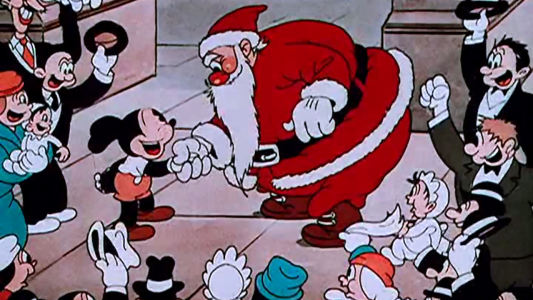
Michael's Christmas Movie Guide: Toyland Premiere (1934)


Note: The reason this review is going up on Thanksgiving Day, is because it features Santa Claus taking part in a parade to tell everyone that Christmas is on its way. It is obvious to me that this is a Thanksgiving parade. 

 With Disney gaining the rights to the character luckily many people today now know about Oswald the Lucky Rabbit, a character that was not that well know not that long ago. Many also know the basic history of his early years. He was created by Walt Disney and Ub Iwerks and starred in various silent cartoon shorts. These shorts were very popular on their release. At this time producer Charles Mintz was hiring away Walt's crew behind his back. Mintz then told Walt that he would either make these shorts on a much smaller budget or he would not be able to work with the character anymore. This was because despite creating him, Walt never owned the rights to Oswald. Walt refused and he would co-create a brand-new character again with Ub Iwerks called Mickey Mouse. This is where however the history most Disney fans hear seems to end, but Oswald's cartoon career continued for a while afterwards. At first Charles Mintz made a few cartoons with Oswald using the crew that Walt had been using. However soon Mintz would lose the rights to make Oswald when Universal (the studio distributing these shorts) would start its on cartoon studio and put Walter Lantz in charge of the character.

By 1934 when this Christmas cartoon was released, Lantz was making two different series of animated shorts. These were the Oswald shorts and the "Car-Tune" shorts. The difference between these two series was pretty much the same as the difference between Disney's Mickey Mouse and Silly Symphonies series. The Oswald shorts would star Oswald and the Car-Tune shorts would feature miscellaneous characters. Toyland Premiere was a tiny bit of an exception. This Car-Tune short would feature Oswald in it; however, Oswald does play a smaller role here and the real star of the film is Santa Claus.

Santa is the star attraction of the Toyland parade. After the parade is over Oswald invites Santa to a party at his department store. Also attending the party are various Hollywood stars including Al Jolson, Shirley Temple, Bing Crosby, Boris Karloff, Johnny Weissmuller and Laurel and Hardy. Oddly enough Laurel and Hardy are made the cartoon's villains, as they try to steal a chocolate cake made for the party. This ends up causing a food fight that Santa enjoys very much.

This is a very charming cartoon and a delight to watch. The animation while not up to Disney standards is quite good. This is animation above the usual standard of Lantz cartoons at this time. The early scenes at the North Pole may remind Disney fans of the 1932 Disney Silly Symphony, Santa's Workshop. I have no proof as to if they were inspired by that film, this is just an observation. The whole cartoon also moves a brisk pace and has a nice Christmas-y feeling to it.

Cartoon buffs may be interested to know Santa Claus in this film is voiced by Tex Avery. Before he became a director and revolutionized the Warner Brothers cartoons, Tex was an animator at Lantz studio, and with his boisterous laugh it was only naturally for him to voice Santa. This by the way was not the last time he would voice Santa. He would return to voicing the character for a brief gag in a 1943 cartoon he himself directed called Who Killed Who.


Saturday, March 27, 2021

Some Cartoons For Saturday Morning #116

 Hello my friends and happy Saturday morning. Once again it is time for some classic cartoons. 

Today's cartoon selection begins with a classic Merrie Melody, I Wanna Be a Sailor (1937). This cartoon was directed by the one and only Tex Avery. The film is typical of Tex's Merrie Moldies of this time period. This is more story driven than his later MGM work and has a bit of a moral to it. Yet there are some great moments that perfectly show Tex's wild and zany humor that would soon become more prominent. This may seem like a strange combination but in this case it works very well and gives us a delightful cartoon. The following is an exhibitor's review from the Motion Picture Herald, "I Wanna Be a Sailor: Merrie Melody - These are very good. They certainly help round out a program. -Charles Rossi, Strand Theatre, Schroon Lake, N.Y." The following is from an issue of The Film Daily dated Aug. 17, 1937, "With the music recorded on "I Wanna Be A Sailor," Leon Schlesinger has completed his first "Merrie Melodie" Technicolor cartoon for his 1937-38 program one month ahead of schedule. Producer's schedule for new season calls for 36 subjects to be released by Warner Brothers." 


Next comes a black and white Mickey Mouse, The Mad Dog (1932). Though today Mickey is mostly associated with slower paced and more sentimental cartoons, these earlier Mickey films are fast paced affairs with non-stop gags from start to finish. This was noted by a review in The Film Daily which stated about The Mad Dog, "A Mickey Mouse cartoon, which is one of the fastest-action animateds [sic] ever produced." This review goes on to say, "Just as exciting as a wooly western meller - and funnier of course." J.B. Kaufman and David Gerstein's book, Mickey Mouse: The Ultimate History notes that the score uses the promotional song, The Wedding Party of Mickey Mouse for your benefit that song will be included underneath. 


Motion Picture Herald, 1932

With April Fool's day not far away, I feel it is a perfect time for the following Popeye cartoon, Cookin' With Gags (1955). 


The Betty Boop cartoon More Pep (1936), harkens back to the Fleischer Studio's silent era Out of the Inkwell films. Like those earlier shorts, this film features animated characters interacting with the live action world around them and unleashing havoc upon it. This cartoon even features the same introduction as many entries in the earlier series. We start with a live action hand drawing a setting for our characters. Though Pudgy just appears on screen, Betty is first seen in a inkwell ala Koko the Clown. This film also seems to harken back to the sheer fast paced energy of the earlier Betty Boops. Many of these cartoons were slowing down by this point, but More Pep has well more pep. Even the cute pudgy can't slow down the action. 


Up next is Tweety's first appearance in a cartoon, A Tale of Two Kitties (1942). Sharp eyed viewers may notice that Tweety is not yellow in this film, but pink. Since he was a newborn baby bird, it made sense for him not to have feathers. According to director Bob Clampett, he based the character off of a nude baby photo of himself. Tweety already has his famous line, "I Tawt I Taw a Puddy Tat." According to animation historian Jerry Beck's book, I Tawt I Taw a Puddy Tat: Fifty Years of Sylvester and Tweety, This line also originated with Bob Clampett when in the mid-1930's he wrote a letter to a friend on MGM stationary. Next to Leo the MGM lion, Clampett drew a small bird with a word balloon with "I think I taw a titty-tat." Instead of Sylvester Tweety is here pitted against two cats named Babbit and Catstello. As should be obvious by the names, these cats were a take off on the infamous comedy team Abbott and Costello, who had just made their movie debut just a couple years earlier in One Night in the Tropics (1940). The voice of Catstello was provided by the man of a thousand voices, Mel Blanc (who also voiced Tweety) and Babbitt was voiced by writer Tedd Pierce. A reviewer in Showman's Trade Review was very impressed with these voices stating, "Either the famous comedy pair furnished the accompanying dialogue themselves or the impersonators are the last word in perfection." Though they would not catch on the way Tweety did, these characters would reappear in other cartoons. Some of these cartoons would even feature the duo as mice instead of cats. They would appear with Tweety much later in a 1998 episode of the TV show, Sylvester and Tweety Mysteries. This cartoon was reissued to theaters in 1948, the year Abbott and Costello made their most popular movie, Abbott and Costello Meet Frankenstein (1948).  


Variety, 1933

In the mid-1930's in order to compete with the more popular cartoon studios like Disney or Fleischer, the Van Beuren Studio hired one of Disney's top cartoon directors, Burt Gillett (of Three Little Pigs fame). The studio gave Burt Gillett control over the studio's output and this lead to brand new series and the dropping of established ones. One of these new series was the Rainbow Parade cartoons, which were a not too subtle attempt to recapture the popularity of Disney's Silly Symphonies. Unfortunately this was not to be too successful as the studio would close after RKO stopped distributing their cartoons after getting the rights to distribute Disney cartoons in 1936. Here is the first Rainbow Parade cartoon, Pastry Town Wedding (1934). 


Before Woody Woodpecker the Walter Lantz studio created quite a few cartoon characters who are forgotten today. Here is one of those characters, Baby Faced Mouse in his first film, Cheese Nappers (1938).


Thanks for joining me come back next week for more animated classics. Until then may all your tunes be Looney and your melodies Merrie. 


Thursday, April 16, 2020

Oswald's Greatest Season

As I have mentioned many times on this blog, I love the  Walter Lantz Oswald cartoons. It may not be a popular opinion but I can't help if I simply love these little movies. It is always an exciting find for me when I find anything on this subject like the following 1934 article from Universal Weekly. If you have any trouble reading just click on the pages and use your touch screen to zoom in.


-Michael J. Ruhland 

Thursday, February 20, 2020

Pooch the Pup Keeps Oswald the Rabbit Company


Hello my friends. I assume many of you who read my blog are like me, fans of early 1930's cartoons. They have a style all their own that is completely separate from anything that came before or anything since. Even in their crudest incarnations there was imagination and sheer embracing of being a cartoon, that I simply love about these films. Some of my first introductions to this period of cartoon history were the Walter Lantz cartoons and I still have a fondness for those films today. This following page from a 1933 issue of Universal Weekly celebrates the Walter Lantz Studio's two main cartoon stars Oswald the Lucky Rabbit and Pooch the Pup. If you have trouble reading the page click on it and use your touch screen to zoom in.


-Michael J. Ruhland

Saturday, January 11, 2020

Some Cartoons For Saturday Morning #53 - Silent Edition

Hello my friends and happy Saturday morning. Once again that means it is time for some classic cartoons. This week's selection is dedicated to cartoons from the silent era. 

To those unfamiliar with silent cartoons, it may come as a surprise how many of them combined animation and live action and how well this was done. In fact there were whole series completely built around this. The most famous examples being The Fleischer Brothers Out of the Inkwell films and Walt Disney's Alice comedies. However another one of these series was by Walter Lantz (later of Woody Woodpecker fame), these were the Dinky Doodles cartoons. In these films Walter Lantz played himself in live action. A live action Walter Lantz interacting with his cartoon characters looks forward to TV's The Woody Woodpecker Show. Here is a typically enjoy Dinky Doodles cartoon, Dinky Doodle's Bedtime Story (1926). Unfortunately this video is from a later TV showing with not very funny narration added, but I am grateful to see this film at all. 


In my mind one of the best cartoon series of the silent era was Earl Hurd's excellent Bobby Bumps cartoons. Here is an example of why. So enjoy Bobby and His Hypnotic Eye (1920).


Next up is an excellent cartoon starring Walt Disney's Oswald the Lucky Rabbit, Oh, Teacher (1927). This cartoon is full of the very creative and funny gags that made this series so memorable. 

Many cartoons of the silent era centered around characters made famous in newspaper comics. Since I grew up reading newspaper comic strips that stopped existing well before I was born, I have a special fondness for these cartoons and the characters seen in them. One of the most famous and best cartoon series based on these strips were the Mutt and Jeff cartoons. So enjoy the always delightful Mutt and Jeff in Domestic Difficulties (1916). Notice how this film has fantastic looking art work and use of shading rare for animated cartoons of this era. Similarly notice the expert filmmaking in the scene after the two get drunk. There is no doubt the visual filmmaking there is miles ahead of some other cartoons made in the 1910's. Notice how the storytelling in this cartoon in many ways resembles a newspaper comic strip. With a clear set up leading to a simple but very funny punchline at the end. This was quite common for animated cartoons of this era and a style of storytelling I enjoy very much.


Ending today's selection of silent era cartoons is a Bray Studios film featuring the one and only Colonel Heeza Lair. The cartoon is the delightful Colonel Heeza Lair Foils the Enemy (1915).


Thanks for joining me come back next week for more animated treasures.

-Michael J. Ruhland

Wednesday, January 1, 2020

Silent Film of the Month: Flying Elephants (1927)

Run Time: 17 minutes. Studio: Hal Roach Studios. Director: Frank Butler. Writer: Hal Roach. Titles: H.M. Walker. Producer: Hal Roach. Main Cast: Stan Laurel, Oliver Hardy, James Finlayson, Viola Richard. Special Effects: Roy Seawright. Editor: Richard Currier.


Before Stan Laurel and Oliver Hardy became one of the most popular duos in film history, they made some movies together in which they did not work as a team. These films often bared little to no resemblance to what later Laurel and Hardy movies would be. This has lead many Laurel and Hardy fans to write these off as lesser films. However some of these movies are delightful on their own terms and one example of this is the silent short film, Flying Elephants.

Not only do Stan and Ollie not work as a team in this film, but they are actually antagonistic towards each other with a plot somewhat reminiscent of the Charlie Chaplin short, His Prehistoric Past (1914). Back in the Stone Age, King Ferdinand rules that all men must be married or face the penalty of banishment, death or both. Unfortunately for the boys they are not married and must find wives quickly. This leads to a large battle between them over a single woman played by Viola Richard (in one of her larger roles (she mostly played small parts in various silent Laurel and Hardy and Charley Chase comedies)). Aside from just being antagonistic to each other, their characters are far from fully formed here. Stan is not Stanley but rather a simpleton with nothing more to his personality. He spends the movie skipping and prancing around in a way the later Stanley would never do. This characterization was in tune with Stan Laurel's early solo silent shorts, but within a year would completely disappear. As the characters are not fully formed yet, most of the humor rather than coming from the characters, as would be the case in later Laurel and Hardy films, comes from the most over the top cartoony gags possible including one that is literally a cartoon involving elephants flying. Though some credit the animation to Walter Lantz (of Woody Woodpecker fame), it was actually done by Roy Seawright who would become the studio's special effects man.

Also appearing in this film are Laurel and Hardy's favorite nemesis, James Finlayson and the always delightful to see Tiny Sanford.  Tiny Sandford was not tiny at all in fact he was pretty dang large. He often played bullying characters in both Charlie Chaplin and Laurel and Hardy films, mostly in small uncredited roles. James Finlayson is part of one of the movie's biggest laughs as Ollie strategically removes his aching tooth.

Fans of Hal Roach comedies will know that most of these films were shot in or around Culver City. This was an exception. It was instead shot in Moapa, Nevada. Moapa was not much at this time, in fact it was pretty darn close to empty. This is why this location was chosen for shooting, it pretty much was the middle of nowhere making it perfect for a film taking place in the stone age. The cast and Hal Roach had to travel out there by a train from L.A. as the function of this area was to be a brief water stop for the railroad.  

I admit when I first saw this short by myself, I found it somewhat entertaining but also kind of underwhelming. What changed my mind was viewing this film at the Old Town Music Hall with an audience and live musical accompaniment. Seeing it this way really brought the movie to life. I enjoyed it in a way I did not the first time. There are probably two reasons for this. One of them was that I entered this film with a more open mind and the second was that I was seeing a silent movie the way it was meant to be seen. I can't recreate that experience for you on a blog, but as you watch the video below I ask you to watch it with an open mind and enjoy it for what it is.


One exhibitors review was highly negative stating, "Not a laugh in it." Another refered to it as simply a "fair comedy."

-Michael J. Ruhland

Resources Used

https://laurel-and-hardy-blog.com/2018/10/05/flying-elephants-1927/

Friday, August 30, 2019

Rereleasing "King of Jazz"

I have a real fondness for the movie, King of Jazz (1930). It is a one of a kind movie with lots of great music and an excellent cartoon segment from the Walter Lantz Studio. This movie was just as loved by audiences back in its day and was rereleased in 1933. That version added newly filmed comedy sequences but also cut nearly 35 minutes.

The following page from Universal Weekly shows various ways this movie was advertised upon its rerelease.


The following is a 1933 article about the film from Universal Weekly. 


Next is an advertisement for King of Jazz from the Universal Weekly.


As you can see by this follow page of Universal Weekly this was not the only 1930 Universal movie rereleased in 1933. Also rereleased that year was All Quiet on the Western Front (1930) and Captain of the Guard.


One last article from Universal Weekly. The line "No producer in these times could afford to a picture near as costly as was 'King of Jazz,'" seems odd considering the movie was only three years old at this point. 


Now let's enjoy some great music from the movie. First is George Gershwin's Rhaposdy in Blue.


Now for So the Bluebirds and the Blackbirds Got Together. This song is performed by The Rhythm Boys (Bing Crosby, Harry Barris, Al Rinker)


We end our post with the cartoon segment for the movie. This was created by the Walter Lantz studio, and at the time their starring character was Oswald the Lucky Rabbit who can be seen briefly here.


-Michael J. Ruhland

Saturday, August 17, 2019

Some Cartoons For Saturday Morning #32

Hello my friends and happy Saturday Morning. Once again it is time for some classic cartoons. 

We start our cartoons off with a Hokey Wolf cartoon from The Huckleberry Hound Show (1958-1961). This one is called Lamb-Basted Wolf .


Next comes one of the all time classic Merrie Melodies cartoons, A Corny Concerto (1943). This cartoon is very much a parody of Disney's recent animated feature, Fantasia (1940) with the unrefined Elmer Fudd taking over the Deems Taylor role. Earlier the same year this cartoon was released another Merrie Melody parodied Fantasia with an unrefined wolf doing the Deem Taylor role. That cartoon was called Pigs in a Polka (1943). A Corny Concerto was directed by Bob Clampett and written by Frank Tashlin. It is odd to have Tashlin write a Warners cartoon he didn't direct. Tashlin had in fact just returned to Warners after a stint at Disney, making him a perfect candidate to write this Disney parody. This film features another rarity for a Warners cartoon. That is the fact the Bugs Bunny and Porky Pig share the screen. It has been debated weather or not the Duck that appears in the second part of this cartoon is or isn't Daffy. I like to think of him as Daffy, myself. Also notice that Bugs makes Porky and his dog into a couple of boobs.


Up next comes another Warners cartoon from 1943. This one stars Daffy Duck and Elmer Fudd and is entitled To Duck or Not To Duck. This cartoon is directed by Chuck Jones. Up until this time Chuck's cartoons had been slower paced and less comedy oriented, than the other Looney Tunes directors' films. While this cartoon is no where near as fast paced as Chuck's later films, it definitely moves faster and has more comedy compared to what he did in the past. Elmer's dog Larimore gets some of the best laughs in the film. It is also worth noting that Daffy had not become a born loser at this time yet. We will not see Elmer shooting Daffy's bill off in this cartoon. Instead Daffy can and does outsmart Elmer.


I am personally a big fan of the underrated Little King cartoons the Van Beuren studio did. I love their gentle pantomime and slapstick, as well as the great imagination in these films. So enjoy A Royal Good Time (1934).


For the most part in the 1930's Disney's Mickey Mouse cartoons starred reoccurring characters, while the Silly Symphonies starred one-shot characters. It was rare for a character from the Mickey series to star in a Symphony. However Pluto did this twice. These cartoons were Just Dogs (1932) and Mother Pluto (1936). Our last cartoon is the first one, Just Dogs. In this film Pluto is teamed with a little pup. While this pup would not appear in any more animated Disney cartoons, he would become a reoccurring character in Floyd Gottfredson's Mickey Mouse newspaper comic strip. One of Pluto's animators in this film was Norm Ferguson, who would help define the character's personality with his animation for Playful Pluto (1934). Burt Gillett the director of this film would soon direct the most famous Silly Symphony, The Three Little Pigs (1933). One of the working titles for Just Dogs was the rather on the nose The Dog Symphony.


For an extra treat to read a 1963 article from Boxoffice magazine about Walter Lantz cartoons plus an advertisement for Terrytoons from the same year click here.

Thanks for joining me. Come back next week for more animated treasures. Until then Peace, Love and Cartoons.

-Michael J. Ruhland