Showing posts with label Ingmar Bergman. Show all posts

Wednesday, July 2, 2025

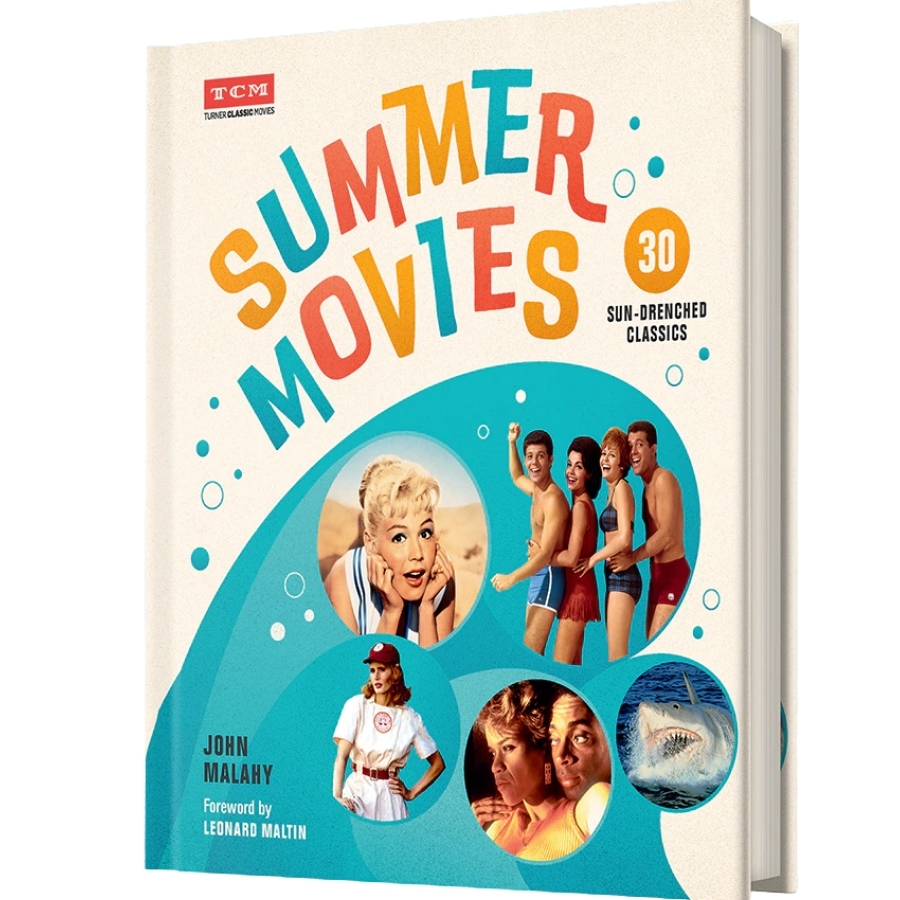
Summer Movies (2021)


This book from TCM explores the tradition of the summer movie. Author John Malahy takes a very broad approach to this subject. Such lighthearted summer fun as Gidget (1959), The Parent Trap (1961) and Beach Blanket Bingo (1965) co-exist with the likes of Ingmar Bergman's Smiles of a Summer Night (1955), Alfred Hitchcock's Rear Window (1954) and Spike Lee's Do the Right Thing (1989). Also included are the part-silent part-talkie Lonesome (1928), the Andy Hardy movie You Only Live Once (1937), Jaques Tati's Monsieur Hulot's Holiday (1953) and of course the original summer blockbuster Steven Spielberg's Jaws (1975) as well as many more. This broad approach makes this book a must for both causal movie fans and hard boiled cinephiles (who might even discover a film or two from this book). 

The writing style and format of this book makes it a light and breezy read, while still having quite a bit of substance. Malahy's tone is warm, causal and inviting. Yet at the same time he offers some great critical insight and historical background for these films that causes us to look at movies we have seen before in a new way. 

A nostalgia-soaked introduction by Film Historian and Critic Leonard Maltin only adds to the great fun of this book. 

Monday, November 7, 2022

Smiles of a Summer Night (Sommarnattens leende) (1955)


When one thinks of film comedy Ingmar Bergman is usually not the first director who comes to your mind. However he actually made some comedians over his career including The Devil's Eye (1960), Secrets of a Woman (1952) and All These Women (1964). However probably the best of his comedies is Smiles of a Summer Night.


Around the time Bergman started making Smiles of a Summer Night, he was in fact very depressed. After a lot of stress making some of his previous movies, he knew he had to make a film just for fun and that film ended up being Smiles of a Summer Night. He would later say at this time he had just two options, "write Smiles of a Summer Night, or kill myself." Fortunately he choose the first option. Bergman would also later say "I thought it was time for a box-office success, and though everyone disagreed with me, I was convinced that this picture would succeed."


This film was heavily by the famous Shakespeare play, A Midsummer Night's Dream. One person who definitely realized that connection was Woody Allen, who would incorporate much of this Bergman film into his 1982 movie, A Midsummer Night's Sex Comedy.


Fredrick (played by Gunnar Bjornstrand) is married to a young woman named Anne (played by Ulla Jacobsson). Despite being married for two years and sharing a bed Anne is still a virgin and this makes Fredrick quite nervous. Fredrick asks a woman who he used to have an affair with, Desiree a beautiful actress (played by Eva Dahlbeck). Desiree still has feels for Fredrick though she is currently the mistress of a solider named Count Malcom (played by Jarl Kulle). Meanwhile Fredrick's son Henrik (played by Bjorn Bjelvenstam) has devoted himself to God but finds himself quite tempted by the family's maid Petra (played by Harriet Andersson).


This is a sex comedy that is very frank about sex (shockingly so for a 1955 Swedish movie). However, it never delves into cheap or easy vulgarity. Rather than this, the humor in the film remains very smart, sophisticated and charming even with its highly sexual nature. The humor also remains very funny throughout. Often making one laugh out loud. The humor is not the only great thing about this film as the performances are all fantastic and Gunnar Fischer's cinematography is quite lovely to look at. This all comes together to create a film that is smart, sexy, funny and just all around fantastic. 


The film was huge success all over the world. Because the film earned so much money Svensk Filmindustri, the studio Bergman was working for would give Bergman strong control over his future films. The studio was so happy with this film they submitted it to the Cannes Film Festival. However, Bergman was unaware of that it was even submitted until one day while sitting reading the newspaper he saw that the film was a huge success there.
Thursday, May 27, 2021

The Sacrifice (Offret) (1986)


There are few filmmakers as completely daring as Andrei Tarkovsky. Tarkovsky's cinema is one that makes no accommodations for your average audience. His film's are intentionally slow moving, ponderous and demand a lot of the viewer. To watch his movies you have to give yourself completely to the screen and if you fail to do so then they will have little to offer you. They can not be background noise or something you mindlessly have on the TV. Yet when you give a Tarkovsky film all that it requires of you, then you will find yourself very moved and affected in a way few other filmmakers can make you feel. 

Those of you familiar with the films have Ingmar Bergman, may find that this movie can quite often feel like a Bergman's cinema. This is hardly a coincidence. The movie is produced by the Swedish Film Institute (the only Swedish film from this Russian filmmaker), was shot in the island of Faro (where Bergman shot many of his movies), was shot by Bergman's regular cinematographer, Sven Nykvist, and stars Erland Josephson (who was in such Bergman movies as The Magician (1958), Hour of the Wolf (1968), The Passion of Anna (1969), Cries & Whispers (1972), Scenes from a Marriage (1974) and Autumn Sonata (1978)). However while the Bergman connections are unmistakable, this movie never feels like an imitation of Bergman, but instead like a passionate and personal movie for Tarkovsky. Knowing that the director was dying of cancer while making this film makes it feel even more personal.  

A plot summary of this film would be pointless. While this is a clearly a narrative film, the story itself is purposely vague and there are long spaces between the major plot points where not much happens. However it is these moments that stay with us. One of my favorite moments is a long scene in which our main character talks for a long period about philosophy to his young son. Both we and him know that he is really talking to himself and this becomes even clearer when the son leaves and he doesn't even notice but keeps on talking. He even notes that he is tired of people simply talking endlessly and not doing anything but this does not stop him from doing just that. This scene is told in one long shot held for what can feel like an incredibly long time. This is something that no Hollywood filmmaker would ever dare to do and something that could never be seen in a mainstream movie. Yet under the direction of Tarkovsky it becomes something beautiful and powerful. 

One thing that even those who hate Tarkovsky's cinema will admit is that his movies are visually beautiful. Add to this that he is working with one of the world's greatest cinematographers and you know you have a beautiful looking movie. Many images from this movie will stay with you and haunt your mind long after the film is over. The climatic scene is as visually perfect a moment as a filmmaker could ever capture.

This is simply an incredible work of art. 


Sunday, March 17, 2019

1959 Americans and Foreign Movies

The following pages are from a 1959 issue of Boxoffice Barometer. How times have changed. Hopefully someday great foreign films will again receive the love and attention they deserve here in the US.


-Michael J. Ruhland