Saturday, May 6, 2023

Some Cartoons for Saturday Morning #224

 Hello my friends and happy Saturday morning. Once again it is time for some classic cartoons.

Today's cartoon selection begins with Woody Woodpecker in Drooler's Delight (1949). At the time this movie was made it was common for Woody's size to not only vary from cartoon to cartoon, but often within the same film. As you watch this film notice how the difference in Woody's height in some scenes are drastically different from how tall he appears in the ending. 


Next comes Betty Boop in S O S - Swim or Sink (1932). This short film has everything I love about cartoon from the Fleischer Studio at this time. That is that the whole movie is filled with an incredible sense of imagination and pure creative freedom.


In case you didn't get enough seafaring adventure in the last cartoon, up next is the Terry Toons cartoon, See the World (1934). 


I love of the cartoons of Chuck Jones from any period but there is something special about his films from 1942 and 1943. At this time, he was fully getting away from his slower paced cuter output of the late 1930's but had not yet gotten to the style of films he would make in the 1950's that everybody is familiar with today. So, what we get from output during these two years are cartoons that experiment with what you can do in an animated short. It doesn't hurt that he worked with such experimental artists as layout man John McGrew. Chuck gave McGrew plenty of freedom and what John accomplished in these movies is nothing short of amazing. This is especially shown in The Case of the Missing Hare (1942), where experimentation is seen in every moment. Just watch the abstract backgrounds that show a mixture of two colors at a time, but the colors change when there is a strong action in the foreground. This is something someone may not notice on their first watch, but it is something they can feel. A review in The Film Daily stated, "Here is another hilarious, the Leon Schlesinger creation that keeps growing in comic strength with every new release." I think anyone watching this cartoon today will recognize that the antagonist is not Elmer Fudd, but one reviewer from The Exhibitor didn't as in his review he stated "...this has Elmer, as a magician..."  A review from the same magazine less than a month later stated, "Elmer isn't in this." The latter is right. A review in Variety called this "One of the better Bugs Bunny subjects."


Now it is time for a commercial break. 


Now for a silent movie, Bobby Bumps Detective (1916).


Next up comes a truly delightful Mickey Mouse cartoon, The Nifty Nineties (1941). This may not be the funniest Mickey Mouse short, but it is one of the most charming. This short film finds Mickey and Minnie back in the 1890's. While this may seem incredibly long ago to some of us today, it is important to remember that when this movie was made there were plenty of people who had lived through the 1890's alive at this time and probably most of them had a nostalgia for the period. One of the highlights of this cartoon is the scene involving two vaudeville performers, "Fred and Ward, those two clever boys from Illinois." These were caricatures of the Disney animators, Fred Moore and Ward Kimball. What makes this scene even more fun is that it is animated by Ward Kimball. One joke planned for this cartoon that didn't make it into the final film is that there was to be an overly emotional singer singing the words to "Father, Dear Father," who would flood the stage with her tears. This short film marked the first thing to ever air on the Disney Channel. The cartoon made its TV debut in an episode of the Disneyland TV show entitled, Four Tales on a Mouse (1958). 


Next is The Pink Panther in Mystic Pink (1976). This short film has our pink hero being followed by a massive rabbit. 


Today's cartoon selection closes with the next chapter of the webtoon mini-series Toon Marooned (2001) starring our favorite Looney tunes characters. 


Thanks for joining me come back next week for more animated treasures. Until then many all your tunes be looney and your melodies merry. 

Resources Used

Walt Disney's Mickey Mouse: The Ultimate History by J.B. Kaufman and David Gerstein 

https://mediahistoryproject.org/


Thursday, May 4, 2023

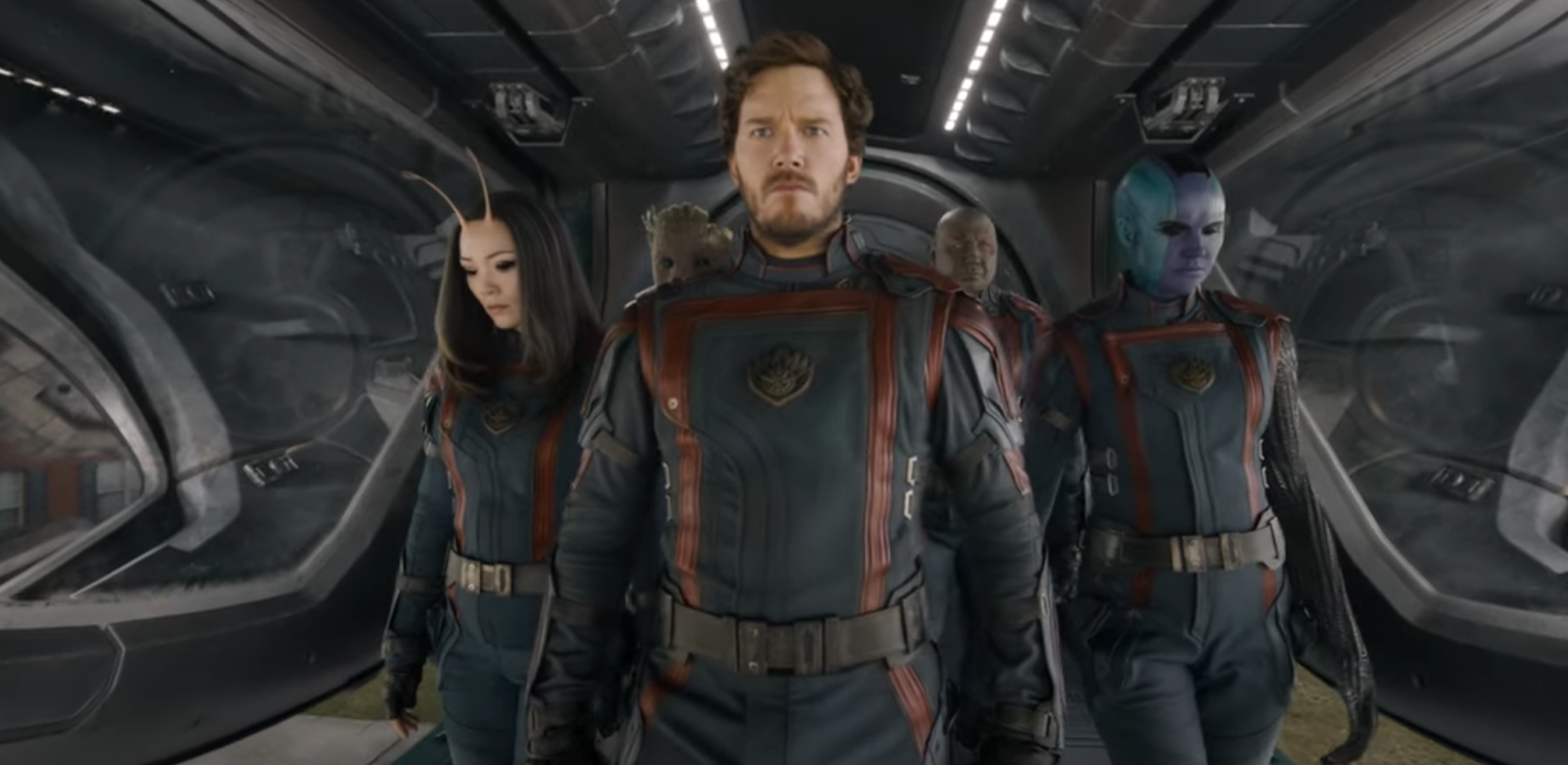
Movie Review: Guardians of the Galaxy Vol.3


Michael's Movie Grade: A-

As a huge fan of the previous Guardians movies, this is everything I wanted from a final chapter in this trilogy. 

What has always made the Guardians of the Galaxy films stand out, even with how many movies Marvel has made, is how well they balance their goofy sense of humor with moments that are very heartfelt and surprisingly touching. Neither gets in the way of the other but instead they complement each other nearly perfectly. In this third installment this is even more important than ever, as the series delves deeper into darker territory. Fortunately once again this delicate balance is maintained nearly perfectly. The darker territory in this movie is our look into Rocket's backstory. Not to give anything away, but this back story is certainly something much darker and sad than anything we have seen in the previous Guardians movies. To say it might tug on your heartstrings is an understatement, it will rather break your heart. Despite this movie's delve into Rocket's story, what is very impressive about this movie is that each member of the Guardians has their own character arc here and they are all handled quite well. None of them feel rushed and each one has an effect on the character. You may say that having this many character arcs makes the film feel a bit overstuffed (and it kind of does), but that doesn't take away from how well each of them works. I especially enjoyed the closer looks at both Nebula and Mantis here, both of which brought a bit more depth to these characters who had not been at the forefront of the previous films. I mentioned this film's humor before and the humor is delightful here. I (and the audience in the theater with me) laughed out loud many times during this movie. There may have been a few jokes that didn't land but they were certainly in the minority. There were tons of really good comedic moments throughout the movie. What makes so much of this comedy work and not work against the drama is that the humor comes directly from the characters. Despite much of the humor being quite silly, it is never simply silly for the sake but being silly. Instead it simply emphasizes the eccentricates of these characters and the way that each one views the world (or worlds) around them as well as each other. Yet the humor never makes these characters into jokes, but instead just heightens why they are so appealing. All of this makes it so the humor not only doesn't get in the way of the drama, but it also makes the drama more effective. 

The film also benefits from a wonderful villain. The High Evolutionary is everything the villain of a superhero movie should be. He is very threatening and often times quite creepy. Yet at the same time you can see why others follow him and how he convinces himself that the obvious evil he is doing is somehow the moral course of action. 

While I am sad to say goodbye to this film series, this movie is a great note to end the trilogy on. 

Tuesday, May 2, 2023

The Great Sara Allgood

 Perhaps her name is not as well known among modern movie fans as it should be but Sara Allgood is an actress who greatly enhanced any movie she was in. It didn't matter what type of film it was, she was always wonderful and brightened up the movie when she came on. Though many may not know her name, old movie fans may recognize her for appearing in such films as Blackmail (1929, Alfred Hitchcock's first talkie), Dr. Jeckyl and Mr. Hyde (1941), How Green Was My Valley (1941), Jane Eyre (1944), Cluny Brown (1946), Challenge to Lassie (1949) and Cheaper by the Dozen (1950). 

The following is a 1950 article about Sara Allgood from Focus: A Film Review. If you have trouble reading the following article click on the pages below and use your touch screen to zoom in.


Monday, May 1, 2023

Movie Review: Sisu


Michael's Movie Grade: B+

An extremely fun over the top action film. 

There is little depth or character development in this movie. This movie is simply about watching an old guy kill tons and tons of Nazis in the most violent and over the top ways possible. There may be some to whom this will sound unappealing to but to the rest of us this film is a sheer delight. The action scenes are not only incredibly gory but also incredibly over the top. There is as much grounding in reality in this movie as in a Three Stooges film and that is a major part of the charm. From the onset this movie asks you to simply turn off your brain and enjoy the ride. Because we can leave logic far behind us, it becomes very easy to enjoy the wealth of fun that awaits us. It also helps that many of the action scenes are tinted with a good helping of dark humor that if you are in the right mindset will make you laugh out loud. Because of this over the top-ness the simplicity of the characters in many ways works to this movie's advantage. Our main character is simply wonderful. He only speaks a few words throughout the whole movie and we only learn a little about his backstory. Yet this just makes him seem all the cooler as we watch him take out so many Nazis singlehandedly. The Nazis themselves are simplistic and stereotypical villains that are nothing but simply evil. Yet this makes it so much fun to watch them die in over the top and very gory ways. There is something that is simply cathartic about watching very evil people be killed in a movie and that is just what we get here.

The only characters I wish had more development are the young women. There are a few scenes that were they have a really cool vibe as a group but there simply aren't enough of them. This movie also has quite a few plot holes but for a film like this that is a minor complaint. 

Simply put this movie is a lot of fun. If your idea of a fun trip to the movies is watching tons of Nazis die in the most over the top and gory ways possible, this film is a real gem. 

Silent Film of the Month: The Chechahcos (1923)


Run Time: 87 minutes. Studio: Alaska Moving Picture Corp. Director: Lewis H. Moomaw. Writer: Lewis H. Moomaw. Main Cast: William Dills, Albert Van Antwerp, Eva Gordon, Baby Margie, Alexis B. Luce, Gladys Johnson. Cinematographers: Hobart H. Brownell, Raymond Johnson. 

The Chechahcos (pronounced chee-chaw-koz) is often considered to be the first feature film to be made in Alaska and it is the only movie made by Alaska Moving Picture Corp. While I am always hesitant to use the word first when discussing silent film, there is no doubt that this is an impressive bit of filmmaking and something that can stand up against anything made in Hollywood during this period. 

In this movie a woman (Eva Gordon) loses her young daughter (Baby Margie) when a ship catches on fire. An evil gambler (Alexis B. Luce) tells the woman that her daughter didn't survive. However the girl is found by two prospectors “Horseshoe” Riley and Bob Dexter (William Dills and Albert Van Altwerp). These two prospectors raise the young girl as their own. Later when the girl has grown into a young woman (Gladys Johnson), the trio runs into her mother, which may change everything for the family. 

This story may sound melodramatic and it definitely is. However just because a story is melodramatic, doesn't mean it doesn't work and this film works very well. As simplistic as the characters can be they are very likable and we quickly grow to care about them. These characters especially work due to the really sweet relationship between the main trio of characters. Though it is simple there is something really touching about the way these three make an unlikely family. This makes even the most melodramatic twists quite effective, because we care about this family unit and don't want to see it broken up.

It is quite impressive to think that this is an indie movie. That is because this film visually looks as great (if not better) than many of the best Hollywood movies that came out at this era (and even quite a few from later eras. The location shooting is simply breathtaking and there are few films that capture the true beauty of Alaska, better than this movie does. Alaska is a breathtaking place and you can see this beauty in all its glory throughout this movie. The movie also benefits from wonderful artwork by painter Sydney Laurence on the intertitles. I have always had a soft spot for these kinds of intertitles and this movie shows them at their best.

It is amazing that this movie does not receive the attention it deserves. It is simply a real treat and deserves to find a larger audience. 


Exhibitor's Trade Review, 1924

The idea of this film came from Austin E. Lathrop. He had lead groups of people looking for gold in the Klondike rush of the late 1890s. When he formed Alaska Moving Picture Corporation, naturally a story about the gold rush automatically interested him. Because of this movie's independent nature, many of those working on it had little experience at filmmaking. Lewis Moomaw, who directed and wrote this film had worked for a small studio in Portland, Oregon called American Lifeograph. He had previously made two feature films before this one. One of those features, The Golden Trail (1920), had some outdoor shooting done in Alaska. Actors Albert Van Antwerp and Alexis B. Luce had their only movie role in this picture. However Alexis B. Luce had long worked on the stage. William Dills had a short-lived movie career, beginning with Lewis Moomaw's The Golden Trail. He would make his last movie appearance in the unfortunately lost Alaskan film, North of Nome (1925). Variety magazine built up actress Gladys Johnson stating, "Gladys Johnson, personating Ruth Stanlaw grown up, suggested brilliant possibilities as a screen personality. Her girlish charm typifies the adolescent period outwardly better than Marguerite Clark ever did, or anybody today." However she would only appear in one more film after this, the aforementioned North of Nome (1925). This movie's release was near the time production on Charlie Chaplin's The Gold Rush (1925) began production. Some historians believe that this movie may have had an influence on that beloved classic.  

It was common of movie magazines of this period to give advice on how theater owners could advertise various films. Exhibitor's Trade Review went all out for The Chechahcos, giving a full 16 pages of how to advertise this film. If you are interested in reading this, click here. Below is an example of theater owners advertising this and other movies. 


Exhibitor's Herald, 1924

The following is from a 1924 issue of Motion Picture News, "Associated Exhibitors are planning to road show, 'The Chechahcos' it is said. The decision came as a result of the recent private showing of the production. With this end in view, Associated has appointed H. Elliott Stuckel as general press representative in charge of production. He is the secretary of the Theatrical Press Representatives of America. 'The Chechahcos' was taken over by Associated from the Alaska Motion Picture Corporation. Every foot of the film was shot in Alaska. President Harding was a guest of the company on his last ill-fated tour of Alaska." 


Picture Play Magazine, 1924

This delightful film can be found on Treasures from American Film Archives DVD set and can be watched for free on the National Film Preservation Foundation's website.


Resources Used

https://www.filmpreservation.org/preserved-films/screening-room/t1-the-chechahcos-1924

https://mediahistoryproject.org/